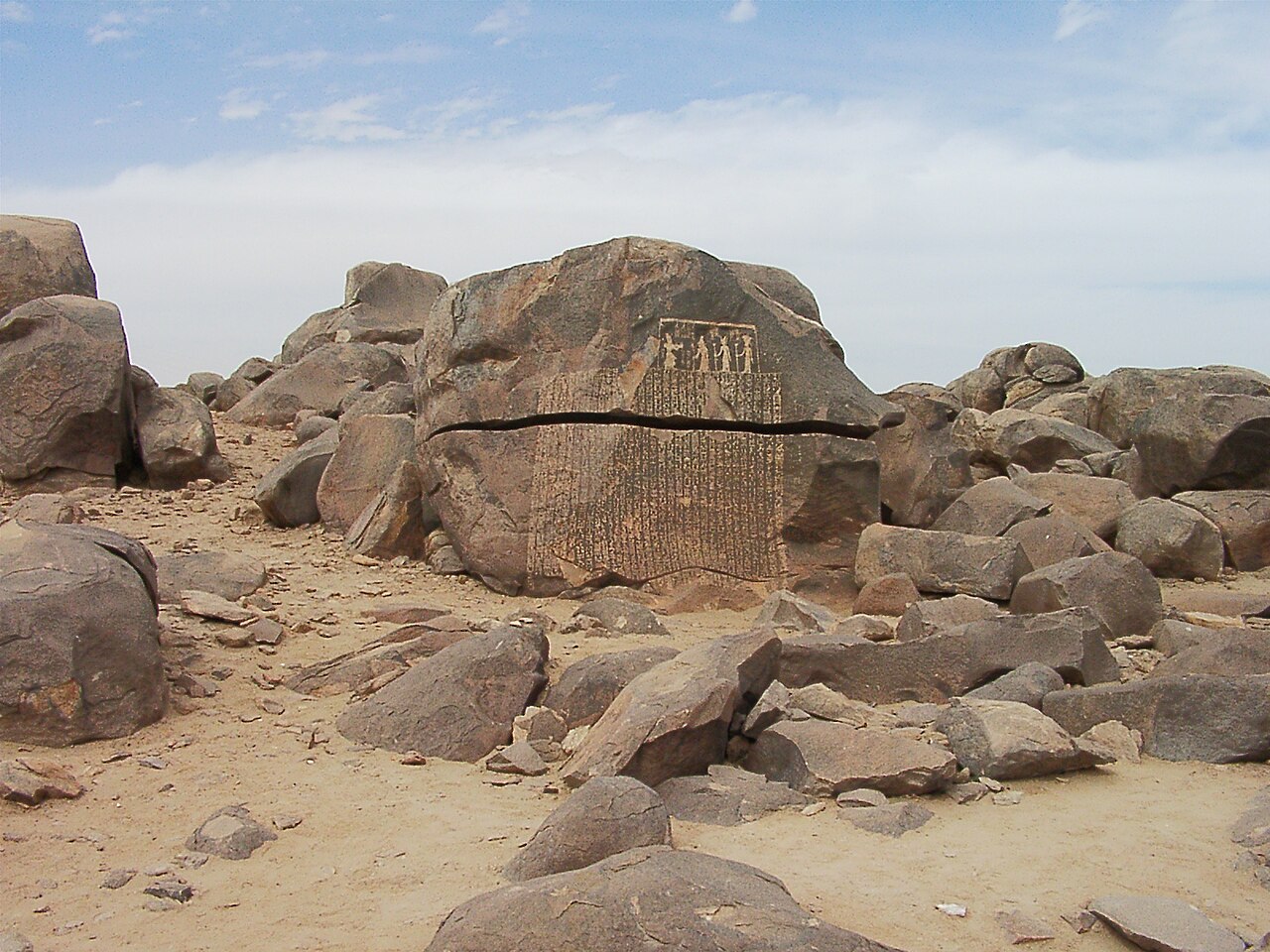
King Djoser laments that the Nile has failed to flood for seven years: grain is scarce and people are starving. After learning that the god Khnum controls the flood, he grants land to Khnum's temple, and the god promises abundant floods.
Similar
Seven years of famine in Egypt
The king seeks a wise interpreter
Land and revenues are reassigned as a result
Different
Composed over 2,000 years after the reign it describes
The answer comes through temple gifts to Khnum, not storage of grain
Babylon · Mesopotamia
Epic of Gilgamesh, Tablet VI
Shared literary world
Composed
Standard version c. 1200–1000 BC
Earliest surviving copy
Tablets from Nineveh, 7th century BC
When Ishtar demands the Bull of Heaven, her father Anu warns that it will bring seven years of empty husks. Ishtar answers that she has already stored grain for the people and fodder for the animals.
Similar
Seven years of famine
Grain stored in advance to survive them
Different
The famine is the side effect of a goddess' revenge
Ugarit · Coastal Syria
The Epic of Aqhat
Shared literary world
Composed
14th–13th century BC
Earliest surviving copy
Clay tablets from Ugarit, c. 1350–1200 BC
Mourning his murdered son, Danel curses the land: "Seven years may Baal fail, eight years the Rider of the Clouds": no dew, no rain.
Similar
A seven-year period of drought and famine
Different
A curse in response to murder, not a revelation to a king
Back to the story
Pharaoh's Dreams →Pharaoh dreams of seven fat and seven lean cows. Joseph, brought from prison, interprets: seven years of plenty, then seven of famine. Pharaoh sets him over all Egypt.