myBibleHistory
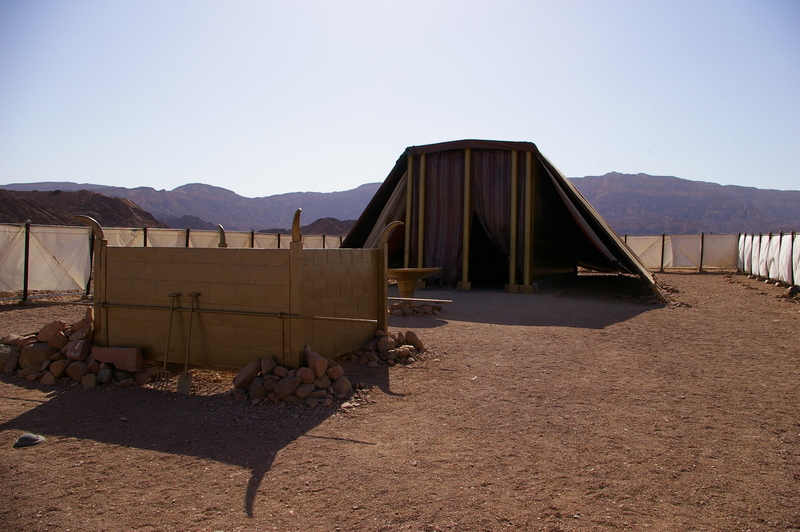
A full-size model of the tabernacle

Books of Scripture

Leviticus

The God who dwells among His people

27 chapters

Exodus ends with God's glory filling the tabernacle. Leviticus begins with God calling to Moses from inside it, and answers one question: how can imperfect people live in the presence of a holy God? Its answers reach from the altar to the harvest field, from the Day of Atonement to the Jubilee.

Lessons

  1. 1God Calls from the TentLeviticus 1 · Exodus ended with God's glory filling the tabernacle so that even Moses could not enter. Leviticus begins with God calling to Moses from inside it. The book answers one question: how can people live in the presence of a holy God? Its first answer is the burnt offering.
  2. 2Gifts of Grain and Shared MealsLeviticus 2–3; 7:11–36 · Not every offering was about sin. The grain offering was a gift of flour, oil and incense, seasoned with "the salt of the covenant." The peace offering was a joyful meal shared by God, the priest and the worshiper's family.
  3. 3Purification and ReparationLeviticus 4:1–6:7 · Two offerings dealt with wrongdoing. The chatta't, usually called the sin offering, purified the sanctuary from the effects of sin and impurity; its blood went higher and deeper the more important the person. The asham, the guilt or reparation offering, required first repaying the person wronged, plus a fifth.
  4. 4Altars of Ancient IsraelLeviticus 6:8–7:38 · The fire on the altar must never go out, and the priests receive their portions. Archaeology has uncovered real Judahite sanctuaries where Israelites worshiped the LORD: a fortress shrine at Arad, with incense still on its altars, a horned altar at Beersheba, and a temple only a few miles from Jerusalem.
  5. 5The Ordination of AaronLeviticus 8–9 · Before the whole community, Moses washes, dresses and anoints Aaron and his sons. For seven days they stay at the tent. On the eighth day Aaron offers his first sacrifices, blesses the people, and fire comes out from the LORD and consumes the offering.
  6. 6Strange FireLeviticus 10 · On the very day of their ordination, Aaron's sons Nadab and Abihu offer "strange fire" that God had not commanded, and fire from the LORD consumes them. Aaron is silent. The priests are told to teach Israel to distinguish holy from common.
  7. 7Clean and Unclean AnimalsLeviticus 11 · Israel may eat land animals that both chew the cud and have split hooves, sea creatures with fins and scales, most birds except a list of forbidden ones, and certain locusts. Why these rules? And when do we first see Israelites actually keeping them? Animal bones from ancient rubbish pits give a surprising answer.
  8. 8Birth, the Body, and PurityLeviticus 12; 15 · After childbirth a mother is ritually unclean for a set time and then brings an offering. Bodily discharges, normal and abnormal, also bring temporary impurity. None of this is called sin. Leviticus distinguishes three things modern readers often confuse: moral wrongdoing, ritual impurity, and illness.
  9. 9Tzara'at: Not LeprosyLeviticus 13–14 · The priest inspects swellings, scabs and white patches on the skin, mildew on cloth, and spreading stains on house walls. Older Bibles call it all "leprosy," but the Hebrew tzara'at is not Hansen's disease. The person who recovers is restored with a striking ritual of two birds.
  10. 10The Day of AtonementLeviticus 16 · Once a year the high priest enters the most holy place with blood and incense to cleanse the sanctuary. Two goats are chosen by lot: one is sacrificed for the LORD, the other, bearing Israel's sins, is sent into the wilderness "for Azazel." This is the center of Leviticus, and of Jewish and Christian ideas of atonement.
  11. 11Blood Is LifeLeviticus 17 · Every animal slaughtered must be brought to the tabernacle as an offering, and no one may eat blood, "for the life of the flesh is in the blood: and I have given it to you upon the altar to make an atonement for your souls." This chapter begins the Holiness Code, and it contains one of the most interesting textual differences in Leviticus.
  12. 12Family Boundaries and MolechLeviticus 18; 20 · Leviticus 18 and 20 set the limits of sexual relations and marriage within families, and forbid giving children "to Molech." These are among the most debated chapters of the Old Testament. Here is what they say, the world they addressed, and the evidence about Molech and child sacrifice.
  13. 13Love Your NeighborLeviticus 19 · Leviticus 19 joins worship and ethics in a single chapter: honor parents, keep the Sabbath, leave the edges of the field for the poor, pay wages the same day, don't curse the deaf or trip the blind, judge fairly, love your neighbor, and love the foreigner as yourself. Jesus called its central command the second greatest in the Law.
  14. 14Holy Priests, Unblemished OfferingsLeviticus 21–22 · Priests must avoid contact with the dead except their closest relatives, marry within set limits, and be free of certain physical defects to serve at the altar. Offerings must be without blemish. What do these rules mean, and what do they not mean?
  15. 15The Sabbath and the Spring FeastsLeviticus 23:1–22 · Leviticus 23 lays out Israel's sacred year, beginning with the weekly Sabbath. In spring come Passover, Unleavened Bread, the first sheaf of barley, and fifty days later the Feast of Weeks. The calendar ties Israel's harvests to its history.
  16. 16Trumpets, Atonement, and BoothsLeviticus 23:23–44 · The seventh month brings three holy occasions: a day of trumpet blasts, the solemn Day of Atonement, and the joyful Feast of Booths, when Israel lives in shelters of branches to remember the wilderness.
  17. 17The Lamp, the Bread, and the BlasphemerLeviticus 24 · Pure olive oil keeps the lamp burning; twelve loaves are set before the LORD each Sabbath. Then the only story in the second half of Leviticus: a man with an Israelite mother and an Egyptian father curses the Name, and the case becomes a ruling that one law applies to all.
  18. 18The Sabbath Year and the JubileeLeviticus 25:1–34 · Every seventh year the land rests. Every fiftieth year, the Jubilee, ancestral land returns to its families and liberty is proclaimed. Babylonian kings issued similar debt-release decrees, sometimes; Leviticus builds release into the calendar. Was it ever practiced? And how did it echo in Luke 4 and on the Liberty Bell?
  19. 19Redeeming the PoorLeviticus 25:35–55 · When an Israelite falls into poverty, others must help without interest; if he must sell himself, he is treated as a hired worker and goes free at the Jubilee, and a relative may redeem him. The chapter also allows foreign slaves held permanently, a hard contrast that must be faced.
  20. 20Blessings and WarningsLeviticus 26 · If Israel walks in God's statutes: rain, harvest, peace, and God walking among them. If not: disease, drought, defeat, siege, and exile, "and the land shall enjoy her sabbaths." Yet even then, if they confess, God will remember His covenant. Later Israel read its own history through this chapter.
  21. 21Vows and Dedicated ThingsLeviticus 27 · The last chapter sets prices in silver shekels for people vowed to God, by age and sex, and explains how dedicated animals, houses and fields may be redeemed. It ends with the tithe. Why does Leviticus end here, and what do the prices tell us?

How Leviticus came to us

Who wrote it, how it was copied, and how it reached the Bible you hold. These lessons follow the book through history.

  1. ★How Leviticus Came to UsWho wrote Leviticus, how scholars explain its priestly and holiness layers, the Dead Sea Scrolls in ancient and Greek scripts, a burned scroll read by computer, the variants and translation choices that matter, and how Leviticus became Scripture for every Jewish and Christian tradition.
  2. 2Moses and the TorahWho wrote the five books of Moses, what the Bible itself says about Moses writing, and the oldest surviving words of Scripture.
  3. 6The SeptuagintJews in Egypt translated their Scriptures into Greek, creating the Bible of the early church and of the New Testament writers.
  4. 7The Dead Sea ScrollsA shepherd's discovery in 1947 gave us Bible manuscripts a thousand years older than any known before, and showed how faithfully the text was kept.
  5. 8Hebrew, Greek, and SamaritanThree ancient lines of copying, Hebrew, Greek, and Samaritan, let us compare the text and see where it was preserved and where it changed.
  6. 13Scribes, Jerome, and the MasoretesJerome gave the West its Latin Bible; Jewish scholars called the Masoretes guarded the Hebrew text letter by letter.

Journey of a Passage