myBibleHistory
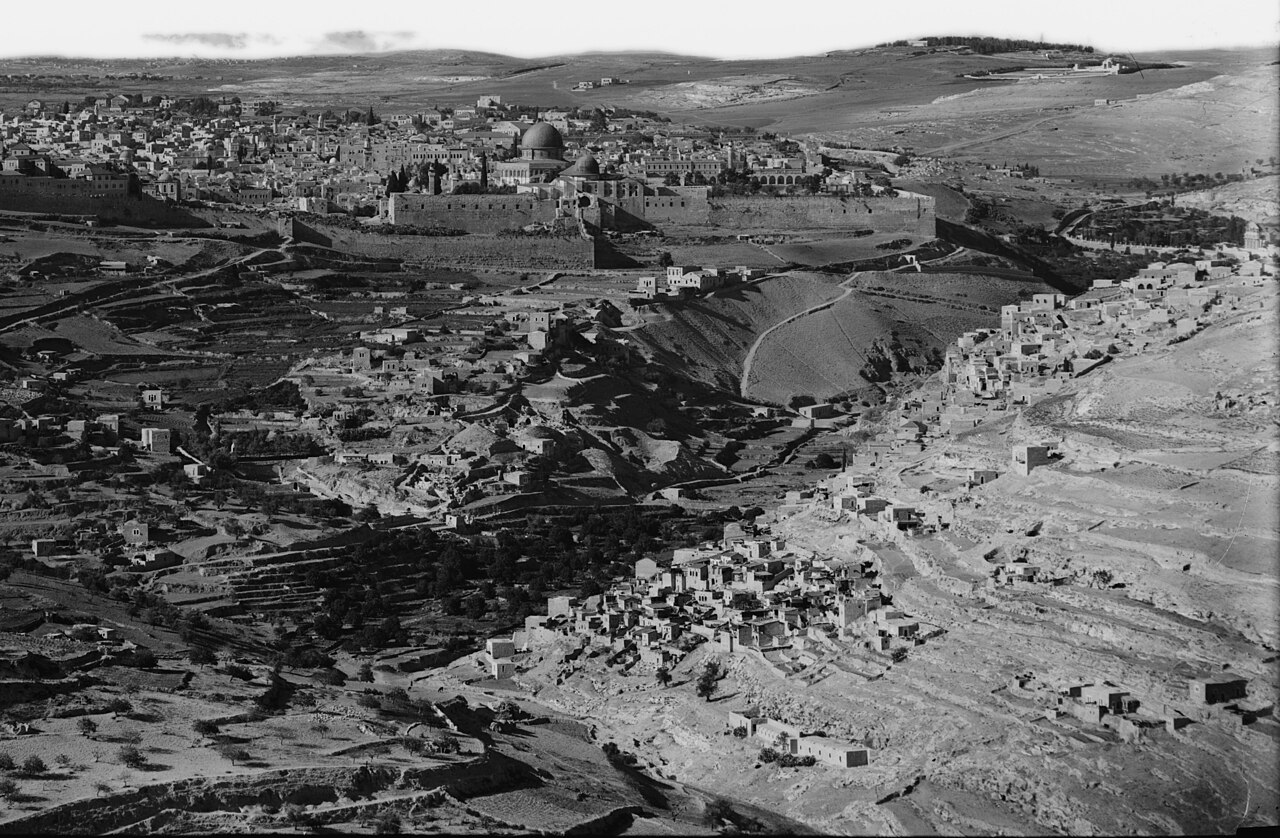
The City of David ridge in Jerusalem

Books of Scripture

1 Chronicles

Israel's history retold, from Adam to David

29 chapters

1 Chronicles, the first half of the Hebrew book of Chronicles (Divrei ha-Yamim; in Greek, Paraleipomena), retells Israel's story for the community rebuilding after the exile. Nine chapters of genealogies run from Adam through the twelve tribes, with Jabez's prayer, Sheerah who built cities, the priests and singers, and the returnees to Jerusalem. Then comes David: Saul's death, the mighty men, the ark brought with Levites and music, the covenant, the wars, the census and Ornan's threshing floor, and David's preparations for the temple, its priests, singers and gatekeepers, ending with his prayer and death. Read beside Samuel, it shows how the same history could be told twice.

Lessons

  1. 1From Adam to Esau1 Chronicles 1 · Chronicles opens with a list of names: from Adam to Noah's sons, the seventy nations, the line from Shem to Abraham, Abraham's sons by Hagar and Keturah, Esau's descendants, and the kings and chiefs of Edom "before there reigned any king over the children of Israel." Without a single story, it places Israel within all humanity.
  2. 2Judah's Families: Tamar to David1 Chronicles 2 · Israel's twelve sons are named, and Judah comes first. The line runs through Tamar and Perez to Boaz, Obed and Jesse, whose seven sons end with David; his sisters Zeruiah and Abigail and their sons are named. Then come the clans of Caleb and Jerahmeel, with towns, wives, concubines and daughters, and the families of scribes and Kenites.
  3. 3David's Descendants1 Chronicles 3 · David's sons born in Hebron and in Jerusalem, and his daughter Tamar; then the kings of Judah from Solomon to Josiah and his sons; and the line continues past the exile: Jeconiah, his sons, Zerubbabel and his descendants for several generations. The royal line survives the loss of the kingdom.
  4. 4Judah, Jabez and Simeon1 Chronicles 4 · More clans of Judah: potters and linen-workers, a man who married Pharaoh's daughter Bithiah. In the middle of the list, Jabez prays to be blessed and kept from harm, "and God granted him that which he requested." Then the tribe of Simeon, its towns until David's reign, and its migrations to Gedor and Mount Seir.
  5. 5Reuben, Gad and East Manasseh1 Chronicles 5 · Reuben, firstborn, lost the birthright, which went to Joseph, while leadership went to Judah. The Transjordan tribes, Reuben, Gad and half Manasseh, fight the Hagrites and win because "they cried to God in the battle." But they are unfaithful, and God stirs up Pul and Tiglath-pileser of Assyria, who carry them away to Halah, Habor, Hara and the river Gozan "unto this day."
  6. 6Levi, Aaron and the Singers1 Chronicles 6 · The tribe of Levi: the high priests from Aaron to Jehozadak, "who went into captivity"; the Levite clans of Gershon, Kohath and Merari; the three families of singers David appointed, Heman, Asaph and Ethan, each traced back to Levi; Aaron's sons who offered sacrifice; and the forty-eight Levitical cities.
  7. 7Six Tribes and Sheerah the Builder1 Chronicles 7 · Brief genealogies of Issachar, Benjamin, Naphtali, Manasseh, Ephraim and Asher, many with military counts "in the days of David." Women stand out: Maachah, Hammoleketh, the daughters of Zelophehad, and Sheerah, Ephraim's daughter, who built the two Beth-horons and Uzzen-sheerah.
  8. 8Benjamin and Saul's Line1 Chronicles 8 · The tribe of Benjamin, its clans at Geba, Ono, Lod, Aijalon and Jerusalem, and the family of Saul: Ner, Kish, Saul, and Saul's sons Jonathan, Malchi-shua, Abinadab and Esh-baal; Jonathan's son Merib-baal; and Saul's descendants for many generations.
  9. 9Returnees and Jerusalem1 Chronicles 9 · "So all Israel were reckoned by genealogies… and Judah was carried away to Babylon for their transgression." Those who first returned to their cities, Israelites, priests, Levites and temple servants, are listed, with the families living in Jerusalem, the gatekeepers' four sides and their duties, and the singers "free from other service." Saul's genealogy is repeated to introduce his death.
  10. 10Saul's Death, Retold1 Chronicles 10 · The story of Chronicles begins with Saul's last battle on Mount Gilboa, told almost word for word as in 1 Samuel 31. Then the Chronicler adds his verdict: Saul died for his unfaithfulness and for consulting a medium, "and enquired not of the LORD: therefore he slew him, and turned the kingdom unto David."
  11. 11Hebron, Jerusalem and the Mighty Men1 Chronicles 11 · All Israel comes to David at Hebron and anoints him king "according to the word of the LORD by Samuel." David takes Jebus, which becomes the city of David; Joab, first to strike, becomes chief. A long list of David's mighty men follows, beginning with Jashobeam, who killed three hundred, and including the three who broke through to bring water from Bethlehem's well.
  12. 12Allies from Ziklag and the Gathering at Hebron1 Chronicles 12 · Chronicles alone lists the warriors who joined David while he was still hiding from Saul: ambidextrous slingers of Benjamin, Gadites "whose faces were like the faces of lions," men of Judah and Manasseh. Amasai, clothed by the Spirit, pledges loyalty. Then a vast assembly from every tribe gathers at Hebron, 340,822 men, with three days of feasting.
  13. 13The First Attempt to Bring the Ark1 Chronicles 13 · David consults the leaders and the whole assembly: let us bring back the ark, which was neglected in Saul's days. They carry it from Kiriath-jearim on a new cart; at the threshing floor of Chidon, Uzza puts out his hand to steady it and dies. David is afraid and leaves the ark with Obed-edom the Gittite, whose household is blessed.
  14. 14David's Household and Philistine Battles1 Chronicles 14 · Hiram of Tyre sends cedar and craftsmen to build David's house. David takes more wives and has more sons in Jerusalem. The Philistines attack twice in the valley of Rephaim: at Baal-perazim, God breaks through; the second time, David waits for "the sound of a going in the tops of the mulberry trees." The Philistines' gods are burned. "And the fame of David went out into all lands."
  15. 15Bringing the Ark with Levites and Music1 Chronicles 15 · David prepares a tent and declares that only Levites may carry the ark, "for we sought him not after the due order." The priests and Levites sanctify themselves and carry the ark on poles. David appoints singers and musicians, Heman, Asaph and Ethan, with cymbals, harps and lyres, and Chenaniah, master of song. Michal sees David dancing and despises him.
  16. 16Worship before the Ark and David's Psalm1 Chronicles 16 · The ark is placed in David's tent; offerings are made and bread given to everyone. David appoints Asaph and his brothers to give thanks. Their psalm combines parts of Psalms 105, 96 and 106. Worship continues in two places: before the ark in Jerusalem, and at the tabernacle and altar at Gibeon, under Zadok.
  17. 17The Davidic Covenant, Retold1 Chronicles 17 · David wants to build a house for the ark; Nathan first agrees, then brings God's word: David will not build it; God will build David a house, and David's son will build the temple. Chronicles follows 2 Samuel 7 closely but omits the warning that God will punish the son "with the rod of men," and says "my house… my kingdom" where Samuel says "thy house… thy kingdom."
  18. 18David's Wars and Administration1 Chronicles 18 · David defeats the Philistines, Moab, Hadarezer of Zobah and the Arameans of Damascus, and Edom. He dedicates the plunder to the LORD; the bronze he takes from Hadarezer's cities is later used for Solomon's Sea and pillars. A list of his officials follows.
  19. 19The Ammonite Insult and the Aramean War1 Chronicles 19 · David sends condolences to Hanun of Ammon; Hanun's advisers call the envoys spies, and he shaves them and cuts their garments. Ammon hires Arameans with chariots for a thousand talents of silver. Joab and Abishai defeat them; Hadarezer brings Arameans from beyond the Euphrates; David crosses the Jordan and wins, killing 7,000 charioteers and the commander Shophach.
  20. 20Rabbah and the Philistine Giants1 Chronicles 20 · Joab takes Rabbah of Ammon; David takes its king's heavy crown. Three Philistine champions of the race of the giants are killed: Sippai, Lahmi "the brother of Goliath" (killed by Elhanan), and a giant with six fingers on each hand. Chronicles leaves out David's sin with Bathsheba entirely.
  21. 21The Census and Ornan's Threshing Floor1 Chronicles 21 · Satan (or "an adversary") incites David to count Israel. Joab objects but obeys, leaving out Levi and Benjamin. God sends a plague; seventy thousand die. The angel stands between earth and heaven with a drawn sword over Jerusalem. David buys Ornan's threshing floor for six hundred shekels of gold, builds an altar, and fire falls from heaven. "This is the house of the LORD God."
  22. 22David's Preparations for the Temple1 Chronicles 22 · David gathers stonecutters among the foreigners, iron, bronze and cedar "without number." He tells Solomon that he could not build because he had shed much blood; Solomon, "a man of rest," will build. He hands over a hundred thousand talents of gold and a million talents of silver and commands the leaders to help.
  23. 23The Levites Counted and Reassigned1 Chronicles 23 · Old and full of days, David makes Solomon king and counts the Levites from thirty years old: 38,000. He assigns 24,000 to oversee the temple's work, 6,000 as officers and judges, 4,000 as gatekeepers and 4,000 as musicians. Since the tabernacle no longer needs carrying, the Levites now serve the priests in the temple, from twenty years old.
  24. 24The Twenty-Four Priestly Divisions1 Chronicles 24 · The descendants of Aaron through Eleazar and Ithamar are divided by lot into twenty-four courses, "governors of the sanctuary," each serving in turn. The lots fall to Jehoiarib, Jedaiah, Harim… the eighth to Abijah… the twenty-fourth to Maaziah. Other Levite family heads also cast lots.
  25. 25Musicians and Prophetic Music1 Chronicles 25 · David and the army leaders set apart the sons of Asaph, Heman and Jeduthun "to prophesy with harps, with psalteries, and with cymbals." Heman, "the king's seer," has fourteen sons and three daughters, all musicians. Two hundred eighty-eight trained singers are divided by lot into twenty-four groups of twelve, "as well the small as the great, the teacher as the scholar."
  26. 26Gatekeepers, Treasuries and Officers1 Chronicles 26 · The gatekeepers' divisions, from the families of Korah and Merari, are assigned by lot to the four sides of the temple: Shelemiah east, Zechariah "a wise counsellor" north, Obed-edom south with the storehouse, and others west at the gate Shallecheth. Levites guard the treasuries of the house of God and of dedicated spoils; others serve as officers and judges west and east of the Jordan.
  27. 27Military and Civil Administration1 Chronicles 27 · Twelve army divisions of 24,000 serve one month each, each led by one of David's mighty men. The leaders of the tribes are listed; the census Joab began was not finished "because there fell wrath for it." The officials over the king's treasuries, fields, vineyards, olive trees, herds and flocks are named, and David's counselors.
  28. 28The Temple Plan and Solomon's Charge1 Chronicles 28 · David assembles all Israel's leaders and publicly charges Solomon: God chose Judah, David's house, and Solomon to build. He gives Solomon the pattern (tavnit) of the temple, its rooms and courts, the weight of gold and silver for every vessel, and the chariot of the cherubim, saying God made him understand it all in writing.
  29. 29David's Offering, Prayer and Death1 Chronicles 29 · David gives his own treasure for the temple; the leaders and people give willingly, and rejoice. David blesses God before the assembly: "all that is in the heaven and in the earth is thine." Solomon is made king a second time and anointed, with Zadok as priest. David dies "in a good old age, full of days, riches, and honour," and his acts are written in the records of Samuel, Nathan and Gad.
  30. 30Investigation: Two Histories of David1 Chronicles 10–29; 1 Samuel 31 – 1 Kings 2 · Chronicles retells David's reign using Samuel as a main source, but selects, adds and reshapes. It leaves out the fugitive years, Bathsheba, Amnon and Absalom; it adds the warriors from Ziklag, the Levites and singers, the temple preparations and the priestly orders. The differences are a window into how inspired history could be written twice for two generations.
  31. 31Investigation: Family Names and Historical Geography1 Chronicles 1–9 · Ancient genealogies did more than record ancestry: they expressed land claims, alliances, priestly rights and identity. 1 Chronicles 1–9 combines lists from Genesis and Numbers with clan and town lists of uncertain date. Some scholars find in them the geography of Persian- or Hellenistic-period Judah; others see older tribal memories.
  32. 32Investigation: The Temple before Solomon1 Chronicles 13–17; 21–29 · In Chronicles the temple is David's project before it is Solomon's building. David brings the ark, organizes its worship, finds the site, gathers materials, receives a written pattern, organizes priests, Levites, singers and gatekeepers, and funds it. This lesson follows the sacred objects and places step by step.
  33. 33Investigation: Hebrew, Greek, Samuel and Chronicles1 Chronicles 10–29 · When Chronicles and Samuel differ, three different things may be happening: the Chronicler used a different form of Samuel; he changed his source deliberately; or one of the books was miscopied later. A fourth layer comes from translation. This lesson sorts the main 1 Chronicles differences.
  34. 34Investigation: Priestly Courses, Singers and Their Afterlife1 Chronicles 23–26 · The twenty-four priestly courses of 1 Chronicles 24 organized temple service in the Second Temple period. They appear in Qumran calendars, in Luke's story of Zechariah, in Josephus, and, after the temple's destruction, in synagogue inscriptions and liturgical poems that kept their memory alive for centuries.

How 1 Chronicles came to us

Who wrote it, how it was copied, and how it reached the Bible you hold. These lessons follow the book through history.

  1. ★How 1 Chronicles Came to UsChronicles is one book in Hebrew, Divrei ha-Yamim, "the events of the days." Most scholars date it to the 4th century BC in Persian-period Judah; Jewish tradition attributes it to Ezra. Its sources include Genesis, Samuel–Kings, Psalms and records it names. No Qumran copy of 1 Chronicles is known; the only possible Chronicles fragment, 4Q118, corresponds to 2 Chronicles and its identification is disputed.
  2. 3Prophets, Priests, and ScribesAs Israel became a kingdom, royal scribes kept records, prophets' words were written down, and a lost book of the law was found in the Temple.
  3. 6The SeptuagintJews in Egypt translated their Scriptures into Greek, creating the Bible of the early church and of the New Testament writers.
  4. 8Hebrew, Greek, and SamaritanThree ancient lines of copying, Hebrew, Greek, and Samaritan, let us compare the text and see where it was preserved and where it changed.
  5. 13Scribes, Jerome, and the MasoretesJerome gave the West its Latin Bible; Jewish scholars called the Masoretes guarded the Hebrew text letter by letter.

Journey of a Passage