myBibleHistory
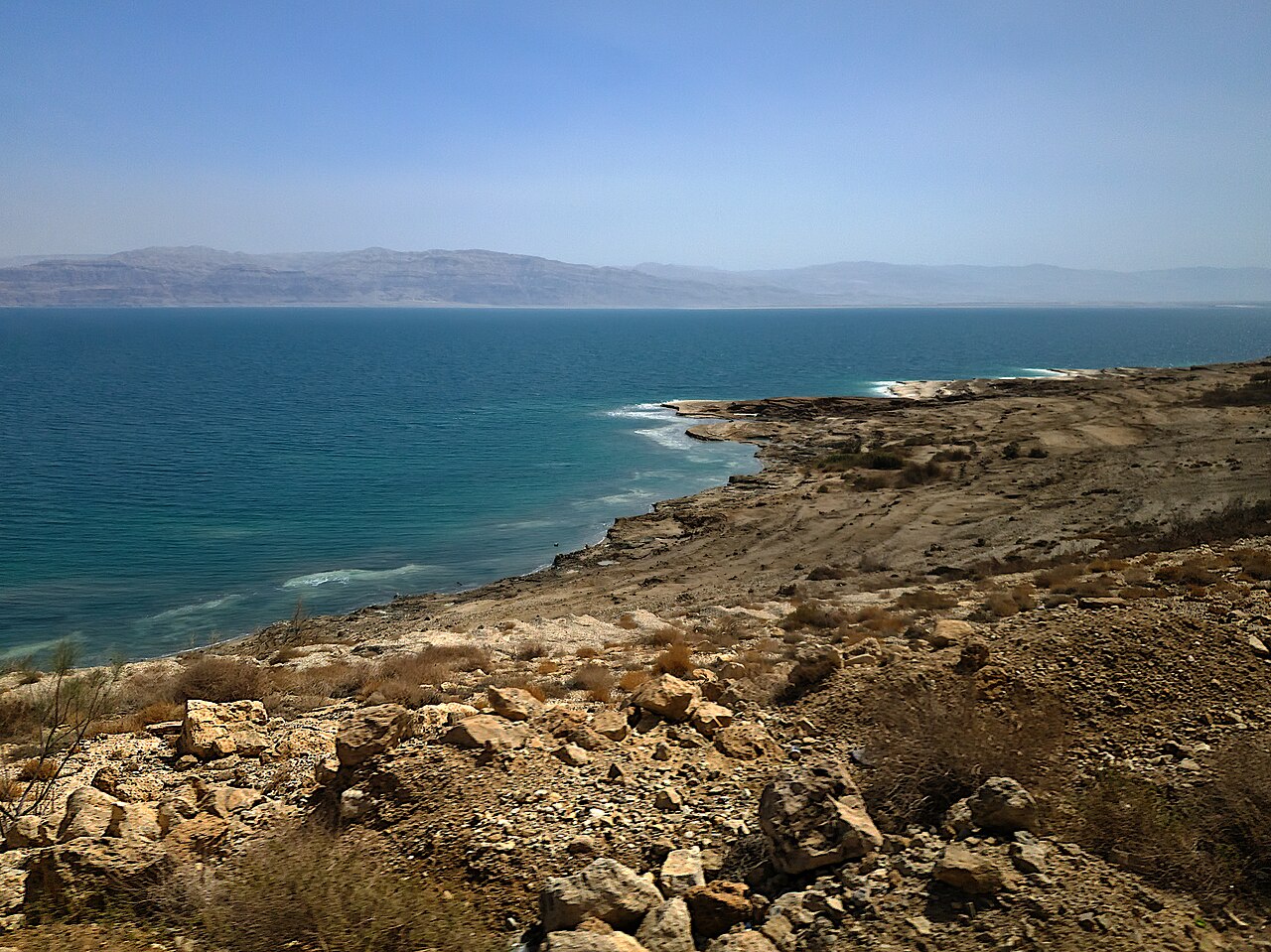
The Dead Sea shore near En-gedi

Books of Scripture

Song of Songs

Love poetry of gardens, longing and a love strong as death

8 chapters

The Song of Songs (Song of Solomon, Canticles) is a sequence of Hebrew love poems in which a woman and a man speak of desire, search, separation and reunion, among vineyards, gardens, mountains and city streets. The woman's voice opens and closes it and speaks most of its lines. It names Solomon in its heading and in several scenes, never mentions covenant or law, and may name God only once, in a disputed word in 8:6. For most of its history Jews read it as the love of God and Israel and Christians as the love of Christ and the church or the soul; modern readers also study it as ancient love poetry beside the love songs of Egypt. The site keeps all of these layers distinct: the poem, its ancient world, and its Jewish and Christian afterlives.

Lessons

  1. 1Song of Songs 1: Your Love Is Better Than WineSong of Songs 1 · The title calls the book "the Song of Songs, which is Solomon's" (1:1). Then, without introduction, a woman speaks: "Let him kiss me with the kisses of his mouth: for thy love is better than wine" (v. 2). She longs to be drawn after him; "the king hath brought me into his chambers" (v. 4). She tells the daughters of Jerusalem she is "black, but comely" (or "dark and lovely"), darkened by the sun while her brothers made her keep the vineyards (vv. 5–6). She asks where her beloved pastures his flock (v. 7) and receives an answer (v. 8). A man praises her as a mare among Pharaoh's chariots (vv. 9–11); she answers with myrrh, henna and the vineyards of En-gedi (vv. 12–14); the two exchange praise and describe a house of cedar beams (vv. 15–17).
  2. 2Song of Songs 2: The Voice of My BelovedSong of Songs 2 · The woman calls herself "the rose of Sharon, and the lily of the valleys" (2:1); he answers, "As the lily among thorns, so is my love" (v. 2); she replies that he is like an apple tree among the trees of the wood (v. 3). He brings her to the "banqueting house" (literally "house of wine"); she is faint with love; she charges the daughters of Jerusalem "by the roes, and by the hinds of the field" not to stir up love until it pleases (vv. 4–7). Her beloved comes leaping over the hills and calls her out: "the winter is past… the time of the singing of birds is come" (vv. 8–13). He longs to see her face and hear her voice (v. 14); someone calls, "Take us the foxes, the little foxes, that spoil the vines" (v. 15). She declares, "My beloved is mine, and I am his" (v. 16), and sends him off until day breaks (v. 17).
  3. 3Song of Songs 3: The Night Search and the Royal ProcessionSong of Songs 3 · By night on her bed she seeks "him whom my soul loveth" and does not find him; she rises, goes about the city, asks the watchmen, and just past them finds him and brings him to her mother's house (3:1–4). The refrain returns (v. 5). Then a new scene: something comes up from the wilderness "like pillars of smoke, perfumed with myrrh and frankincense" (v. 6): Solomon's litter, guarded by sixty mighty men (vv. 7–8), made of cedar of Lebanon, silver, gold and purple, "paved with love" by the daughters of Jerusalem (vv. 9–10). The daughters of Zion are called to see King Solomon wearing the crown his mother gave him "in the day of his espousals" (v. 11).
  4. 4Song of Songs 4: A Garden EnclosedSong of Songs 4 · The man praises the woman from head to breast in a sequence of images: dove's eyes behind her veil, hair like goats streaming down Gilead, teeth like shorn ewes, lips like scarlet thread, temples like pomegranate halves, a neck like David's tower hung with shields, breasts like twin fawns; "thou art all fair, my love; there is no spot in thee" (4:1–7). He calls her from Lebanon, Amana, Senir and Hermon, from the dens of lions (v. 8). She has "ravished" his heart with one glance (v. 9); her love is better than wine, her lips drip honey (vv. 10–11). She is "a garden inclosed… a spring shut up, a fountain sealed," an orchard of pomegranates and every spice (vv. 12–15). She answers: "Awake, O north wind… Let my beloved come into his garden, and eat his pleasant fruits" (v. 16).
  5. 5Song of Songs 5: I Sleep, but My Heart WakethSong of Songs 5 · The man answers her invitation: "I am come into my garden, my sister, my spouse"; someone says, "eat, O friends; drink" (5:1). Then a night scene: "I sleep, but my heart waketh"; her beloved knocks, wet with dew; she hesitates; when she opens, myrrh dripping from her hands on the lock, he is gone (vv. 2–6). The watchmen find her, strike her, wound her and take her cloak (v. 7). She charges the daughters of Jerusalem to tell him she is lovesick (v. 8). They ask what makes her beloved better than others (v. 9). She answers with a head-to-foot praise of him (vv. 10–16): "This is my beloved, and this is my friend."
  6. 6Song of Songs 6: Beautiful as Tirzah, Terrible as an ArmySong of Songs 6 · The daughters ask where her beloved has gone; she knows: "My beloved is gone down into his garden… I am my beloved's, and my beloved is mine" (6:1–3). He praises her: "beautiful… as Tirzah, comely as Jerusalem, terrible as an army with banners"; her eyes overwhelm him; he repeats the praise of hair, teeth and temples from chapter 4 (vv. 4–7). "There are threescore queens, and fourscore concubines, and virgins without number. My dove, my undefiled is but one"; even queens praise her: "Who is she that looketh forth as the morning?" (vv. 8–10). Someone goes down to the nut orchard to see the blossoms, and then a famously obscure line about "the chariots of Amminadib" (vv. 11–12). "Return, return, O Shulamite… What will ye see in the Shulamite? As it were the company of two armies" (v. 13; Hebrew 7:1).
  7. 7Song of Songs 7: I Am My Beloved'sSong of Songs 7 (Hebrew 7:2–14) · In English numbering: the man praises the woman from her sandaled feet upward: thighs like jewels, navel like a bowl of wine, belly like a heap of wheat set about with lilies, breasts like twin fawns, neck like an ivory tower, eyes like the pools of Heshbon, nose like the tower of Lebanon facing Damascus, head like Carmel, hair like purple in which a king is held captive (7:1–5). She is like a palm tree; he will climb it and take hold of its fruit (vv. 6–9). She answers: "I am my beloved's, and his desire is toward me" (v. 10), and invites him into the fields and villages, to the vineyards, where "the mandrakes give a smell" and "I will give thee my loves" (vv. 11–13).
  8. 8Song of Songs 8: Love Is Strong as DeathSong of Songs 8 · She wishes he were like a brother so she could kiss him in public without scorn, and bring him to her mother's house (8:1–2); the embrace and the refrain return (vv. 3–4). "Who is this that cometh up from the wilderness, leaning upon her beloved?"; she awakened him under the apple tree where his mother bore him (v. 5). Then the summit of the book: "Set me as a seal upon thine heart… for love is strong as death; jealousy is cruel as the grave: the coals thereof are coals of fire, which hath a most vehement flame. Many waters cannot quench love… if a man would give all the substance of his house for love, it would utterly be contemned" (vv. 6–7). Brothers discuss their little sister; she answers that she is a wall and has found peace (vv. 8–10). Solomon's vineyard at Baal-hamon is let out for a thousand pieces of silver; "my vineyard, which is mine, is before me" (vv. 11–12). The book ends: "Make haste, my beloved, and be thou like to a roe or to a young hart upon the mountains of spices" (vv. 13–14).
  9. 9Investigation: Who Wrote the Song?Song of Songs 1:1, 5; 3:7–11; 8:11–12; 1 Kings 4:32 · The heading reads "the Song of Songs, which is Solomon's," and Solomon is named six more times. Jewish and Christian tradition long held that Solomon wrote it. The Hebrew phrase can also mean "for" or "about" Solomon; the language has late features; the voice that dominates the poem is a woman's. This investigation separates the heading, the royal imagery, the date of the language, and the question of a woman's authorship.
  10. 10Investigation: One Drama or Many Songs?Song of Songs 1–8 · Is the Song a single story with a plot (meeting, courtship, wedding, union), a drama with a hero and a rival, songs from a wedding week, or a collection of separate love poems? Each theory has been influential. The Hebrew gives no speaker names, scene markers or narrator; refrains and repeated images suggest design; abrupt shifts suggest collection.
  11. 11Investigation: The Egyptian Love SongsSong of Songs 1–8; Egyptian New Kingdom love songs · Egypt's New Kingdom (c. 1300–1100 BC) has left the closest ancient parallels to the Song: love songs on papyri and pottery from Thebes and the workmen's village of Deir el-Medina. Lovers call each other "sister" and "brother," speak in alternating voices, fall sick with love, meet in gardens and compare each other to flowers, perfume and wine. This investigation describes the manuscripts and what the parallels can and cannot show.
  12. 12Investigation: The Garden and Its FragrancesSong of Songs 1:12–14; 2:1–5; 4:12–5:1; 6:2, 11; 7:13 · The Song names more plants and aromatics than any other book of the Bible: some native (pomegranate, fig, vine, palm, henna, lily), some imported from Arabia, Africa and India (myrrh, frankincense, nard, cinnamon, calamus, aloes-wood, saffron). This investigation identifies what can be identified, says which names are uncertain, and explains the trade behind the luxury.
  13. 13Investigation: The Shulammite, Shunem and SolomonSong of Songs 6:13 (Hebrew 7:1); 1 Kings 1:1–4; 2:13–25; 2 Kings 4:8 · The woman is called "the Shulammite" once (6:13; Hebrew 7:1), twice in the same verse. The word may mean a woman of Shunem, a feminine form matching Solomon's name, or "the perfect (peaceful) one." This investigation weighs the options and explains why the site marks Shunem on the map only as a disputed association.
  14. 14Investigation: The Daughters of Jerusalem and the WatchmenSong of Songs 1:5; 2:7; 3:1–5; 5:2–8; 8:1 · The woman speaks to a group of women, "the daughters of Jerusalem," throughout the Song, and twice goes into the city at night to search for her beloved. The first time the watchmen pass her by; the second time they beat her and take her cloak. This investigation looks at public and private space for women, the watchmen, and how to read the violent scene honestly.
  15. 15Investigation: Geography as PoetrySong of Songs 1:5, 14; 2:1; 4:1, 8, 15; 6:4–5; 7:4–5; 8:11 · The Song draws its images from a real map: an oasis by the Dead Sea, the snowy northern mountains, the goat-covered hills of Gilead, two royal cities, a green ridge by the sea, the pools of a Transjordanian town, and the Aramean capital. Some names are secure, some regional, some unknown. This investigation lists them and how the site's Atlas marks them.
  16. 16Investigation: Love Stronger Than DeathSong of Songs 8:6–7; Psalm 118:5; Jeremiah 2:31; Habakkuk 3:5 · "Set me as a seal upon thine heart… for love is strong as death; jealousy is cruel as the grave: the coals thereof are coals of fire, which hath a most vehement flame (shalhevetyah). Many waters cannot quench love." These verses are the Song's summit. They also contain its most debated word: shalhevetyah, which may be "a flame of Yah (the LORD)" or simply "a mighty flame." This investigation examines the grammar, the manuscripts, the translations and the imagery of death, Sheol, flame and flood.
  17. 17Investigation: The Song at QumranSong of Songs 1–8; 4Q106, 4Q107, 4Q108, 6Q6 · Four manuscripts of the Song were found at Qumran: three in Cave 4 (4Q106–108) and one in Cave 6 (6Q6). They are the oldest copies of the book, from around the turn of the eras. Two of them seem to lack whole passages that the Masoretic Text has, raising the question whether they are abbreviated texts or witnesses to a different edition. (Note: 4Q109 is Ecclesiastes, not the Song.)
  18. 18Investigation: The Greek Song and Its TranslatorsSong of Songs 1:2, 5; 2:1, 7, 17; 3:10; 4:1, 8; 6:4, 12; 7:9–10; 8:5–7, 11 · The Greek Song (Asma asmaton) is a close, word-for-word translation. Its differences from the Masoretic Text are usually differences of reading the same consonants ("your breasts" for "your love"), of translating names as words (Tirzah as "good pleasure"), or of interpretation. Later Greek versions (Aquila, Symmachus, Theodotion) survive in fragments. This investigation lists the main differences found in the library's Greek and explains what kind each is.
  19. 19Investigation: Why Is Love Poetry in Scripture?Song of Songs 1–8; Mishnah Yadayim 3:5; Tosefta Sanhedrin 12:10 · The Song never mentions covenant, law, Israel's history or (except perhaps in 8:6) God. Yet it is in the Jewish and Christian Bibles. The Mishnah records a debate about whether it "defiles the hands" (is holy Scripture) and Rabbi Akiva's famous defense: "all the Writings are holy, but the Song of Songs is the Holy of Holies." Did the Song enter Scripture because it was read allegorically, or was it read allegorically because it was Scripture? Scholars disagree.
  20. 20Investigation: The Song's AfterlifeSong of Songs 1–8 · For most of its history the Song has been read as a song of divine love: God and Israel in Judaism; Christ and the church, or Christ and the soul, in Christianity. This investigation sets the main readers in order, with dates, so that later interpretations are not projected back onto the ancient poem and the poem is not stripped of its long religious life.

How Song of Songs came to us

Who wrote it, how it was copied, and how it reached the Bible you hold. These lessons follow the book through history.

  1. ★How Song of Songs Came to UsThe Song grew from a world of love songs shared across the ancient Near East; it was shaped into a Hebrew poetic sequence under Solomon's name (date debated, most likely in its present form during the Persian or early Hellenistic period); it was copied at Qumran (four manuscripts), translated literally into Greek, then into Latin, Syriac and Aramaic; defended as holy by Rabbi Akiva; read as divine love by Jews and Christians for most of its history; preserved by the Masoretes; and studied today as both poetry and Scripture.
  2. 6The SeptuagintJews in Egypt translated their Scriptures into Greek, creating the Bible of the early church and of the New Testament writers.
  3. 7The Dead Sea ScrollsA shepherd's discovery in 1947 gave us Bible manuscripts a thousand years older than any known before, and showed how faithfully the text was kept.
  4. 13Scribes, Jerome, and the MasoretesJerome gave the West its Latin Bible; Jewish scholars called the Masoretes guarded the Hebrew text letter by letter.

Journey of a Passage