myBibleHistory
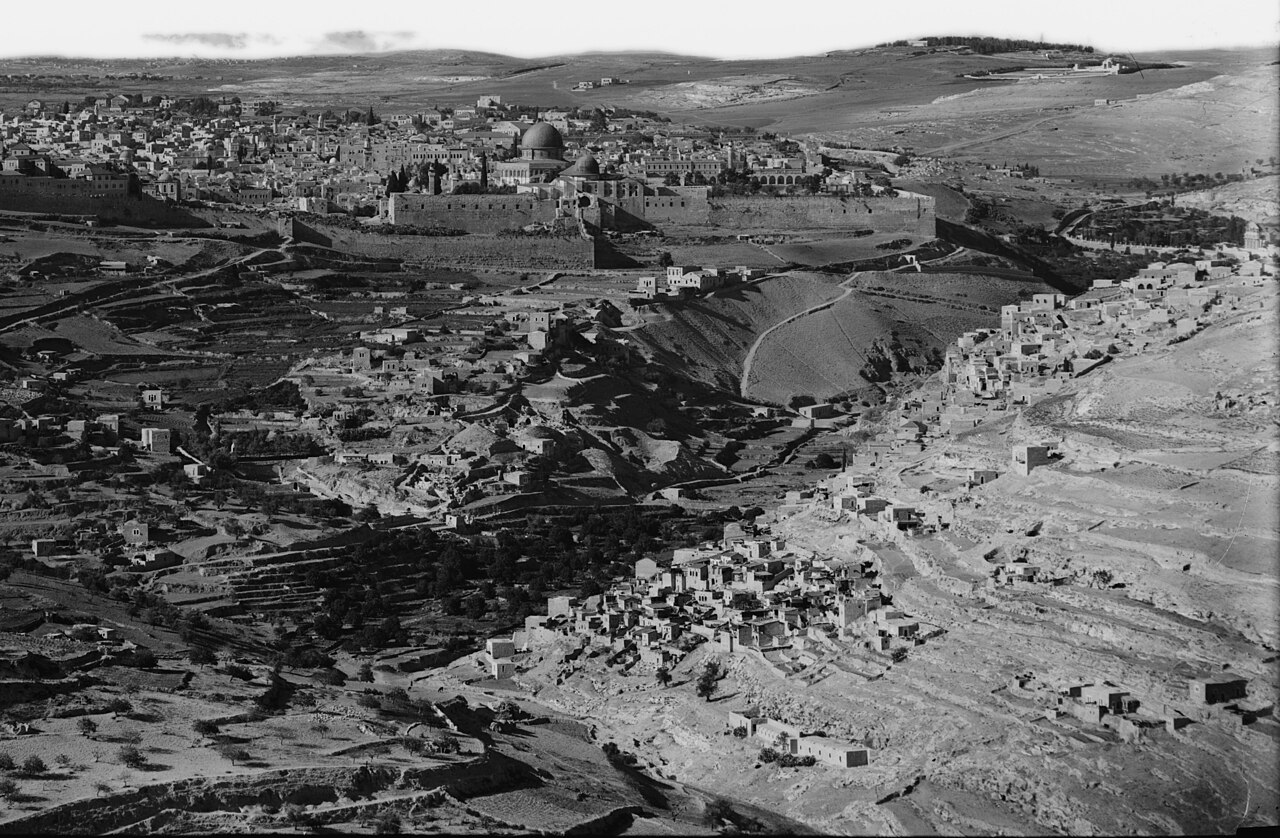
The City of David ridge in Jerusalem

Books of Scripture

2 Samuel

A king celebrated and judged

24 chapters

2 Samuel, the second half of the Hebrew book of Samuel (in Greek, 2 Kingdoms), follows David from Saul's death to the end of his reign: a lament for Saul and Jonathan, civil war, Jerusalem made the capital, the ark brought home, God's promise of an everlasting house, Bathsheba and Uriah, Nathan's "Thou art the man," the rape of Tamar, Absalom's rebellion and death, Rizpah's vigil, David's song, and the threshing floor that became the site of the temple. It also brings the "House of David" inscription, a disputed palace, and some of the Bible's most famous textual puzzles.

Lessons

  1. 1How Are the Mighty Fallen2 Samuel 1 · An Amalekite arrives at Ziklag with Saul's crown and armlet and claims he killed the wounded king at his own request. David has him executed for raising his hand against the LORD's anointed. Then he sings a lament for Saul and Jonathan, "written in the book of Jasher": "How are the mighty fallen!"
  2. 2Two Kings and the Pool of Gibeon2 Samuel 2 · David asks the LORD and goes up to Hebron, where Judah anoints him king. Abner, Saul's general, makes Saul's son Ish-bosheth king over the rest of Israel. At the pool of Gibeon twelve men from each side fight and all fall; battle follows. Abner kills Joab's swift brother Asahel. "Shall the sword devour for ever?"
  3. 3Abner, Michal and a Murder in the Gate2 Samuel 3 · Ish-bosheth accuses Abner of taking Rizpah, Saul's concubine. Abner turns to David and offers to bring all Israel with him. David's condition: give me back my wife Michal. She is taken from her husband Paltiel, who follows weeping. Joab kills Abner in the gate of Hebron to avenge Asahel. David mourns and curses Joab's house.
  4. 4Ish-bosheth Murdered; Mephibosheth2 Samuel 4 · Two of Ish-bosheth's captains, Baanah and Rechab, murder him as he rests at noon and bring his head to David, expecting a reward. David has them executed. An aside introduces Jonathan's son Mephibosheth, lame since the age of five, when his nurse fell while fleeing at the news of Gilboa.
  5. 5Jerusalem Becomes David's City2 Samuel 5 · All the tribes come to Hebron and anoint David king over Israel. He marches on Jebusite Jerusalem; the Jebusites mock that even the blind and lame could keep him out. He takes the stronghold of Zion, perhaps through the water shaft, and calls it the City of David. Hiram of Tyre builds him a house. He defeats the Philistines twice in the valley of Rephaim.
  6. 6The Ark Comes to Jerusalem2 Samuel 6 · David brings the ark from Baale-judah (Kiriath-jearim) on a new cart. When the oxen stumble, Uzzah reaches out to steady it and dies. Afraid, David leaves the ark with Obed-edom the Gittite for three months, then brings it up to Jerusalem with sacrifices, shouting and trumpets, dancing in a linen ephod. Michal watches from a window and despises him.
  7. 7The Davidic Covenant2 Samuel 7 · Living in a house of cedar, David wants to build a house for God. Through Nathan, God answers: you will not build me a house; I will build you a house. Your son will build the temple; I will be his father and he will be my son; I will discipline him but not take my steadfast love from him; your throne will be established forever. David sits before the LORD in wonder.
  8. 8David's Wars and Officials2 Samuel 8 · A summary of victories: the Philistines, Moab (two-thirds of whose captives are executed), Hadadezer of Zobah, the Arameans of Damascus, and Edom; tribute from Hamath; garrisons in Aram and Edom. Then a list of officials: Joab over the army, Jehoshaphat the recorder, Zadok and Ahimelech priests, Seraiah scribe, Benaiah over the Cherethites and Pelethites, and David's sons as priests.
  9. 9Mephibosheth at the King's Table2 Samuel 9 · David asks whether anyone is left of Saul's house to whom he can show kindness for Jonathan's sake. Ziba, Saul's servant, tells him of Jonathan's lame son Mephibosheth in Lo-debar. David restores Saul's land to him, appoints Ziba and his household to farm it, and gives Mephibosheth a permanent place at the king's table.
  10. 10Ammon, Aram and the Shaved Envoys2 Samuel 10 · When the Ammonite king Nahash dies, David sends envoys to comfort his son Hanun. Hanun's advisers call them spies; he shaves off half their beards and cuts their garments to the buttocks. Ammon hires Aramean armies. Joab and Abishai defeat them; when Hadadezer brings more Arameans from beyond the river, David defeats them at Helam.
  11. 11David, Bathsheba and Uriah2 Samuel 11 · While Joab besieges Rabbah, David stays in Jerusalem. From his roof he sees Bathsheba bathing, sends for her, and lies with her. She sends word: "I am with child." David brings her husband Uriah home from the front to cover it up; Uriah refuses to go to his house while the army is in the field. David sends him back carrying the letter that orders his death. The LORD is displeased. Content warning: sexual coercion and murder.
  12. 12Nathan's Parable: "Thou Art the Man"2 Samuel 12 · Nathan tells David of a rich man who took a poor man's only ewe lamb to feed a guest. David rages that the man deserves death. "Thou art the man." David confesses. Nathan says David will not die, but the sword will never depart from his house, and the child will die. David fasts and pleads; the child dies. Bathsheba bears Solomon, whom God loves. Rabbah falls.
  13. 13Tamar and Amnon2 Samuel 13 · Amnon, David's eldest son, desires his half-sister Tamar. On his cousin Jonadab's advice he pretends to be ill and asks David to send her to cook for him. He rapes her, then hates her and throws her out. Tamar tears her robe and mourns; Absalom her brother tells her to keep silent. David is angry but does nothing. Two years later Absalom has Amnon killed and flees to Geshur. Content warning: rape.
  14. 14The Wise Woman of Tekoa2 Samuel 14 · Joab sees David longing for Absalom and brings a wise woman from Tekoa. Dressed as a mourner, she tells the king that one of her two sons killed the other and the clan demands the survivor's life. David promises protection; she turns the case on him. Absalom returns but is not received for two years, until he sets Joab's barley field on fire.
  15. 15Absalom's Rebellion2 Samuel 15 · Absalom stands at the city gate, telling petitioners no one will hear them, and steals Israel's heart. After "forty years" (some ancient texts: four) he asks to fulfil a vow at Hebron and is proclaimed king there. David flees Jerusalem, leaving ten concubines. Ittai the Gittite insists on coming. David sends the ark back with Zadok and Abiathar, climbs the Mount of Olives weeping, and sends Hushai back to frustrate Ahithophel's counsel.
  16. 16Ziba, Shimei and the Ten Women2 Samuel 16 · Ziba meets David with provisions and claims Mephibosheth is hoping to regain Saul's kingdom; David gives Ziba everything. At Bahurim Shimei, of Saul's family, curses David and throws stones; David forbids Abishai to kill him. In Jerusalem, on Ahithophel's advice, Absalom pitches a tent on the palace roof and goes in to his father's concubines "in the sight of all Israel." Content warning: sexual violence.
  17. 17Counsel and Countercounsel2 Samuel 17 · Ahithophel advises Absalom to strike at once with twelve thousand men and kill only David. Hushai, David's spy, argues for gathering all Israel first, flattering Absalom's vanity. Absalom chooses Hushai's plan. Two young priests, Jonathan and Ahimaaz, hide in a well and carry the warning; David crosses the Jordan to Mahanaim. Ahithophel goes home and hangs himself.
  18. 18"O My Son Absalom"2 Samuel 18 · David's army fights Absalom's in the forest of Ephraim; the forest devours more than the sword. Absalom's mule runs under an oak and his head is caught; he hangs between heaven and earth. Joab, against David's order, thrusts three darts into his heart. Two runners bring the news. David weeps: "O my son Absalom, my son, my son Absalom! would God I had died for thee."
  19. 19The King's Return2 Samuel 19 · Joab rebukes David for mourning while his soldiers slink back in shame. David sits in the gate. Judah brings him back across the Jordan. Shimei begs forgiveness and is spared. Mephibosheth, unwashed since David left, says Ziba deceived him; David divides the land. Barzillai, eighty years old, declines to come to court. Judah and Israel quarrel over the king.
  20. 20Sheba's Revolt and the Wise Woman of Abel2 Samuel 20 · Sheba son of Bichri blows a trumpet: "We have no part in David." David shuts the ten concubines away in widowhood. Amasa is slow to muster Judah; Joab murders him with a hidden sword. Joab besieges Sheba in Abel-beth-maacah. A wise woman calls to Joab from the wall, negotiates, and persuades her city to throw Sheba's head over the wall. The city is saved.
  21. 21Rizpah's Vigil and the Giants of Gath2 Samuel 21 · A three-year famine is traced to Saul's killing of the Gibeonites. The Gibeonites demand seven of Saul's descendants; David hands over two sons of Rizpah and five grandsons of Saul, and they are executed. Rizpah guards their bodies from birds and beasts from harvest until the rains. Moved, David buries the bones of Saul and Jonathan. Then four battles against giants of Gath, including Elhanan's killing of "Goliath the Gittite." Content warning: executions.
  22. 22David's Song of Deliverance2 Samuel 22 · David sings a long song of thanks for deliverance from his enemies and from Saul. God hears from His temple, the earth shakes, He rides on a cherub and flies on the wings of the wind, draws David out of many waters, rewards his righteousness, and gives him victory. The song appears again, with many small differences, as Psalm 18.
  23. 23David's Last Words and His Mighty Men2 Samuel 23 · "The last words of David": a short oracle on the just ruler, like the morning light. Then the roll of David's mighty men: the Three (Josheb-basshebeth, Eleazar, Shammah), the three who broke through to bring water from Bethlehem's well, Abishai and Benaiah, and the Thirty. The list ends: "Uriah the Hittite: thirty and seven in all."
  24. 24The Census, the Plague and the Threshing Floor2 Samuel 24 · "The anger of the LORD was kindled against Israel, and he moved David" to number the people; in 1 Chronicles 21 it is Satan who incites him. Joab counts 800,000 in Israel and 500,000 in Judah. David's heart smites him. Gad offers three punishments; David chooses plague, and 70,000 die. The angel stops at the threshing floor of Araunah. David buys it for fifty shekels and builds an altar.
  25. 25Investigation: David's Jerusalem and the House of David2 Samuel 5–7 · What evidence outside the Bible bears on David? A 9th-century Aramaic stele names the "House of David." In Jerusalem, massive stone structures on the City of David ridge have been claimed as David's palace and disputed. Fourteenth-century letters show Jerusalem was a city long before him. Here is what each piece of evidence can and cannot show.
  26. 26Investigation: The Davidic Covenant and Its Later Interpretations2 Samuel 7 · God's promise of a lasting house for David became one of the foundations of biblical hope. This investigation traces how it was read: as an unconditional dynastic charter, as conditional on obedience, as a lament when the dynasty fell, and as a promise of a future anointed king.
  27. 27Investigation: The Court, the Women and the Costs of Royal Power2 Samuel 3–21 · 2 Samuel tells David's story through the women around him: wives used as political tokens, a woman taken by the king, a daughter raped by her brother, ten women violated to make a point, two wise women who stop wars, and a mother who guards her sons' bodies for months. Their experiences are the measure of royal power and its costs.
  28. 28Investigation: Samuel and Chronicles, When Two Histories Differ2 Samuel 5–24; 1 Chronicles 11–21 · 1 Chronicles retells much of 2 Samuel, centuries later, with its own emphases. It leaves out Bathsheba, Amnon and Absalom; it names Satan where Samuel names the LORD; its numbers and names differ. These are differences between two biblical books, not copying errors in one.

How 2 Samuel came to us

Who wrote it, how it was copied, and how it reached the Bible you hold. These lessons follow the book through history.

  1. ★How 2 Samuel Came to Us2 Samuel is the second half of the Hebrew book of Samuel. It contains one of the most admired narratives of the ancient world, the "Court History" of David, plus older poems and an appendix arranged by theme. Its Greek is especially complicated: from 11:2 the main Greek manuscripts carry a revision toward the Hebrew (kaige), so the older Greek must be recovered from other witnesses.
  2. 3Prophets, Priests, and ScribesAs Israel became a kingdom, royal scribes kept records, prophets' words were written down, and a lost book of the law was found in the Temple.
  3. 6The SeptuagintJews in Egypt translated their Scriptures into Greek, creating the Bible of the early church and of the New Testament writers.
  4. 7The Dead Sea ScrollsA shepherd's discovery in 1947 gave us Bible manuscripts a thousand years older than any known before, and showed how faithfully the text was kept.
  5. 8Hebrew, Greek, and SamaritanThree ancient lines of copying, Hebrew, Greek, and Samaritan, let us compare the text and see where it was preserved and where it changed.
  6. 13Scribes, Jerome, and the MasoretesJerome gave the West its Latin Bible; Jewish scholars called the Masoretes guarded the Hebrew text letter by letter.

Journey of a Passage