Era 6 · The First Kings2 Samuel
The King's Return
"Let him take all, forasmuch as my lord the king is come again in peace"
"Thou hast shamed this day the faces of all thy servants… thou lovest thine enemies, and hatest thy friends… if Absalom had lived, and all we had died this day, then it had pleased thee well." David sits in the gate. He makes Amasa, Absalom's general, commander in place of Joab.
Shimei hurries down with a thousand Benjaminites: "Let not my lord impute iniquity unto me." Abishai: "Shall not Shimei be put to death?" "Shall there any man be put to death this day in Israel?" Mephibosheth comes, "and had neither dressed his feet, nor trimmed his beard, nor washed his clothes, from the day the king departed." "My servant deceived me… he hath slandered thy servant." "Thou and Ziba divide the land." "Yea, let him take all."
Barzillai, eighty years old, who fed the king at Mahanaim: "Can I discern between good and evil? can thy servant taste what I eat…? Let thy servant… die in mine own city." He sends Chimham instead. The men of Israel complain that Judah stole the king away; "the words of the men of Judah were fiercer than the words of the men of Israel."
Who told the truth?
Mephibosheth's unkempt state supports his loyalty; Ziba's provisions supported his. David's division of the land satisfies neither justice nor certainty. The text leaves the reader to judge.
Judah and Israel
"We have ten parts in the king" (19:43): the northern tribes and Judah already act as two blocs. The rivalry leads to Sheba's revolt (chapter 20) and later to the division of the kingdom (1 Kings 12).
Gilgal and the Jordan
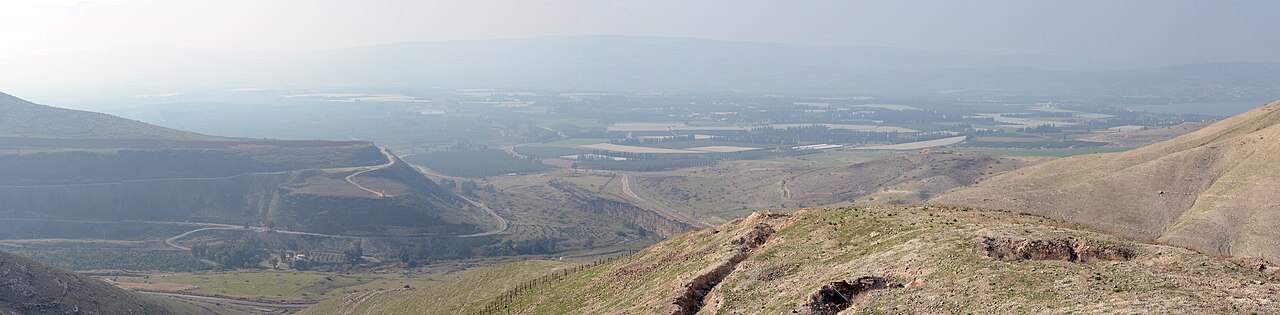
David crosses near Gilgal; Gilgal's location near Jericho is not known. The crossing point is approximate.
The Case for the Biblical Account
Scripture's account
David's return to Jerusalem (2 Samuel 19).
What evidence would we expect?
North–south tensions; Transjordanian supporters.
The discoveries
Distinct northern and southern settlement histories in Iron Age archaeology.
Testing the discoveries
The tension is historically plausible; the events are known only from Samuel.
The strongest reconstruction
A memory of the fragile union of Judah and Israel.
What remains possible
The truth between Ziba and Mephibosheth.
What the evidence shows
- Israel and Judah had distinct identities before the division of the kingdom.
- Mephibosheth was loyal to David.
Continue the journey
Connected elsewhere in ScriptureA Throne Secured1 Kings 2:7: Kindness to Barzillai's sons.More from this lesson
On the map
Location securely identified Probable identification Proposed or debated location Biblical route (roads schematic) Scholarly proposal
- David's flight from Absalom. Illustrative. Jerusalem → the Kidron and Mount of Olives → Bahurim (unlocated) → the Jordan fords near Jericho → Mahanaim (proposed). The forest of Ephraim is not located.
Why this matters to the rest of Scripture
- Kindness to Barzillai's sons.
- "What portion have we in David?"
- Mephibosheth at the table.