myBibleHistory
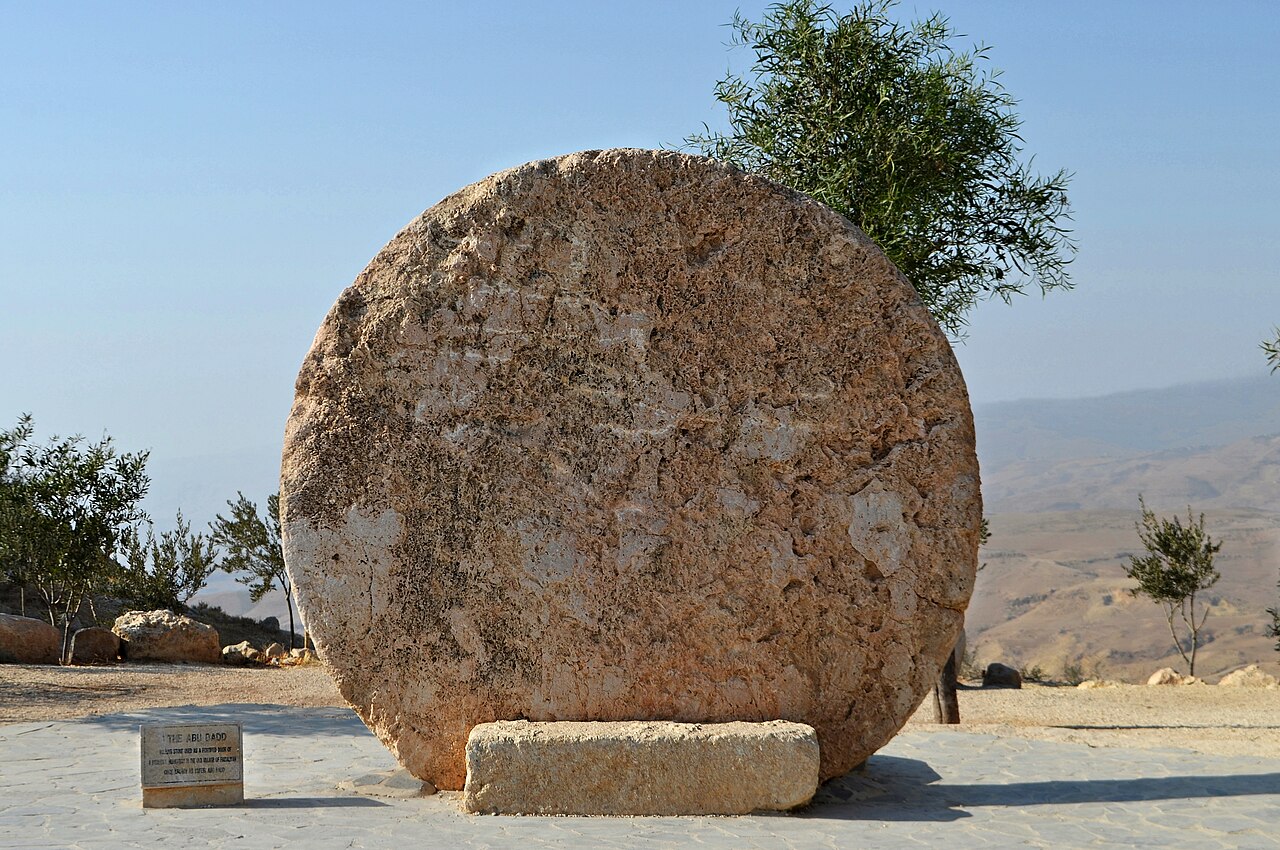
The view from Mount Nebo

Books of Scripture

Deuteronomy

The covenant spoken again

34 chapters

Deuteronomy, in Hebrew Devarim, "Words," is Moses' farewell on the plains of Moab: the journey remembered, the Ten Commandments and the Shema, the laws for life in the land, the blessings and curses, a great song and a final blessing, and his death within sight of the promise. It also brings some of the Bible's most debated questions: an Assyrian loyalty oath, a scroll found in Josiah's Temple, two sacred mountains, and a Dead Sea Scroll that reads "sons of God."

Lessons

  1. 1Moses on the Plains of MoabDeuteronomy 1 · Forty years after the Exodus, on the east bank of the Jordan, Moses begins his last speeches. He retells the road from Horeb: the judges he appointed, the scouts sent into Canaan, and the fear that kept a generation out of the land, himself included.
  2. 2Nations, Wanderings, and the Eastern BattlesDeuteronomy 2–3 · Israel circles Mount Seir and is told not to touch the lands of Edom, Moab and Ammon, which God has given to others. Then it defeats Sihon and Og, and Moses gives their land to Reuben, Gad and half of Manasseh. Moses pleads to cross the Jordan and is told: "Let it suffice thee."
  3. 3Remember Horeb: No Images and No Other GodsDeuteronomy 4 · Moses reminds Israel that at Horeb they heard a voice from the fire but saw no form, so they must make no image of God or worship the sun, moon and stars. He foresees exile and return, and sets apart three cities of refuge east of the Jordan.
  4. 4The Covenant Spoken AgainDeuteronomy 5 · Moses repeats the Ten Commandments to the new generation. The words are almost those of Exodus 20, but the Sabbath is grounded in the release from slavery rather than creation, and the coveting commandment is worded differently. The Samaritan Torah adds a commandment about Mount Gerizim.
  5. 5Hear, O IsraelDeuteronomy 6 · The Shema: "Hear, O Israel: The LORD our God is one LORD." Love God with all your heart, soul and might; teach these words to your children, bind them on your hand and write them on your doorposts. Jesus called it the first commandment, and Jews still recite it morning and evening.
  6. 6A Chosen People and a Difficult CommandDeuteronomy 7 · Israel is told to make no treaties or marriages with seven nations of Canaan, to destroy their altars and images, and to "utterly destroy" them. In the same chapter, Moses tells Israel it was chosen not for its size but because God loved it. This lesson presents the command as written and how readers have faced it.
  7. 7Remember the WildernessDeuteronomy 8–10 · Moses tells Israel why God let them hunger in the wilderness and fed them with manna: to teach that people live by every word from God's mouth. He warns that wealth in a good land could make them forget, retells the golden calf, and calls them to love God and the stranger.
  8. 8Blessing and Curse Across the LandDeuteronomy 11 · Egypt was watered by the Nile; the land of Canaan "drinketh water of the rain of heaven," so its people depend on God for the seasons. Moses sets before Israel a blessing and a curse, to be proclaimed on two mountains at Shechem: Gerizim and Ebal.
  9. 9The Place God ChoosesDeuteronomy 12 · Israel must destroy the old high places and bring its offerings only to "the place which the LORD your God shall choose." Meat may now be eaten at home without sacrifice, but never the blood. The Samaritan Torah reads "has chosen," and that one word sits at the heart of a two-thousand-year disagreement.
  10. 10Prophets, Idolatry, and LoyaltyDeuteronomy 13 · A prophet who works a sign and then calls Israel to other gods must not be followed. Even a brother, a son or a wife who secretly entices to idolatry is not to be spared, and a town that turns to other gods is to be destroyed. Scholars have compared these laws with the loyalty oath an Assyrian king imposed in 672 BC.
  11. 11Clean Food, Tithes, and the PoorDeuteronomy 14 · No cutting oneself for the dead. The animals that may and may not be eaten. "Thou shalt not seethe a kid in his mother's milk." And a tithe of the harvest eaten in joy at the sanctuary, with every third year's tithe stored in the towns for the Levite, the stranger, the orphan and the widow.
  12. 12The Seventh Year: Debt and FreedomDeuteronomy 15 · Every seventh year, debts between Israelites are released. Lend to the poor even when the year of release is near. A Hebrew slave goes free in the seventh year with generous gifts, unless he chooses to stay for life. Ancient kings sometimes cancelled debts; Deuteronomy puts release on a fixed calendar.
  13. 13The Festivals and the CourtsDeuteronomy 16 · Passover, Weeks and Booths are to be kept at the chosen place, with joy shared with servants, Levites, strangers, orphans and widows. Then judges in every town: "Justice, and only justice, shalt thou follow."
  14. 14Judges, the King, and Written LawDeuteronomy 17 · Capital cases need two or three witnesses. Hard cases go to the priests and the judge at the chosen place. If Israel wants a king, he must not multiply horses, wives or gold, and he must write out a copy of this law and read it all his life. That "copy of the law" gave the book its Greek name.
  15. 15Prophecy, Divination, and Moses' SuccessorDeuteronomy 18 · The priests and Levites live from the offerings. Every form of divination is forbidden: no augurs, no sorcerers, no consulting the dead. Instead, God will raise up a prophet like Moses. And a test: a prophet whose word does not come true has not been sent by God.
  16. 16Justice, Refuge, and Honest WitnessesDeuteronomy 19 · Three cities of refuge west of the Jordan, so that a person who kills by accident can escape the avenger of blood. Do not move your neighbor's boundary stone. One witness is never enough, and a false witness receives what he meant to do to the accused: "eye for eye, tooth for tooth."
  17. 17Ancient Warfare and Its Moral QuestionsDeuteronomy 20 · Before battle, a priest encourages the army and officers send home the man with a new house, an unharvested vineyard, a fiancée, or a fearful heart. Distant cities are offered peace and forced labor; the cities of Canaan are to be devoted to destruction. And fruit trees must not be cut down in a siege.
  18. 18Family, Captivity, Inheritance, and the ExecutedDeuteronomy 21 · Five laws, each a world of its own: a heifer killed for an unsolved murder; a woman captured in war; the firstborn son of an unloved wife; a rebellious son brought before the elders; and the body of an executed man, which must not hang overnight.
  19. 19Neighbors, Clothing, Sexual Violence, and MarriageDeuteronomy 22 · Return a neighbor's lost animal. Build a parapet on your roof. Let the mother bird go. No mixed seed, no ox and donkey yoked together, no linen and wool woven together. Then a series of laws on accusations against a bride, adultery, and sexual assault, which must be read carefully and without softening.
  20. 20Who Belongs? Foreigners, Refugees, and VowsDeuteronomy 23 · Who may "enter the congregation of the LORD": not Ammonites or Moabites, but Edomites and Egyptians in the third generation. Keep the war camp clean. Do not return a runaway slave. No interest from a fellow Israelite. Keep your vows. And you may eat grapes in a neighbor's vineyard, but not fill a basket.
  21. 21Divorce, Pledges, Wages, and the VulnerableDeuteronomy 24 · A divorced woman who remarries may not go back to her first husband. A newly married man is excused from war for a year. No one may take a millstone as collateral or enter a poor man's house to seize a pledge. Pay workers the same day. Each person dies for his own sin. Leave the forgotten sheaf for the stranger, the orphan and the widow.
  22. 22Fair Punishment, Family Duty, Honest Weights, and AmalekDeuteronomy 25 · Beatings are capped at forty, "lest… thy brother should seem vile unto thee." Do not muzzle the threshing ox. A widow whose husband died childless marries his brother, or publicly removes his sandal if he refuses. Keep honest weights. And "remember what Amalek did," and blot out its memory.
  23. 23Firstfruits, Identity, and Covenant CommitmentDeuteronomy 26 · The farmer brings the first of his harvest in a basket and recites Israel's story: "A wandering Aramean was my father." Every third year he declares that the tithe went to the poor. And Israel and God declare their covenant to one another. The opening words have been read in three different ways.
  24. 24An Altar on Ebal, or Gerizim?Deuteronomy 27 · After crossing the Jordan, Israel is to set up great plastered stones with the law written on them and build an altar. Six tribes stand on Gerizim to bless, six on Ebal to curse, and the Levites pronounce twelve curses, each answered "Amen." Which mountain gets the altar? The Hebrew says Ebal; the Samaritan Torah says Gerizim. Archaeology has sanctuaries, an altar claim and a disputed lead tablet.
  25. 25The Blessings and the CursesDeuteronomy 28 · Fourteen verses of blessing and fifty-four of curse: disease, drought, defeat, siege, famine so terrible that parents eat their children, and exile. Several of these curses closely resemble the curses of an Assyrian loyalty oath from 672 BC. How close, and what that means, is one of the liveliest debates about Deuteronomy.
  26. 26The Covenant for the GenerationsDeuteronomy 29 · In Moab, Moses makes a covenant with everyone present, from leaders to wood-cutters and water-carriers, and "with him that is not here with us this day." One hidden idolater can poison the whole community. And the hidden things belong to God; the revealed things belong to us and our children.
  27. 27Choose LifeDeuteronomy 30 · Even after exile, if Israel returns, God will gather them, and "circumcise thine heart." The command is not in heaven or across the sea, but near, "in thy mouth, and in thy heart." "I have set before you life and death, blessing and cursing: therefore choose life."
  28. 28Joshua and the Written LawDeuteronomy 31 · At 120, Moses hands leadership to Joshua: "Be strong and of a good courage." He writes "this law" and gives it to the priests to be read to all Israel every seventh year at the feast of Booths, and placed beside the ark. God warns that Israel will turn away, and gives Moses a song as a witness.
  29. 29The Song of Moses: The Nations and Heavenly BeingsDeuteronomy 32 · Moses' great poem calls heaven and earth to listen, tells how the Most High divided the nations and chose Jacob, how Israel grew fat and forgot the Rock, and how God will judge and then have mercy. Two of its verses read very differently in the oldest manuscripts: who received the nations, and who is called to worship at the end.
  30. 30The Blessing of MosesDeuteronomy 33 · Before he dies, Moses blesses the tribes. The poem opens with God coming from Sinai, Seir and Paran with "ten thousands of saints," and closes: "The eternal God is thy refuge." Compared with Jacob's blessing in Genesis 49, Levi is honored, Joseph is exalted, and Simeon is missing.
  31. 31The Death of Moses and the Road to JoshuaDeuteronomy 34 · Moses climbs Mount Nebo, sees the whole land from Dan to the western sea, and dies "according to the word of the LORD." He is buried in a valley in Moab, and no one knows the place. Joshua leads. "There arose not a prophet since in Israel like unto Moses, whom the LORD knew face to face."

How Deuteronomy came to us

Who wrote it, how it was copied, and how it reached the Bible you hold. These lessons follow the book through history.

  1. ★How Deuteronomy Came to UsMoses on the plains of Moab; a scroll found in Josiah's Temple; an Assyrian loyalty oath; thirty-odd Dead Sea Scrolls, some with readings no modern Hebrew Bible has; a Samaritan Torah that names a different mountain; a Greek name taken from one verse; and a nineteenth-century "manuscript" that vanished. How Deuteronomy reached us, and what is still debated.
  2. 2Moses and the TorahWho wrote the five books of Moses, what the Bible itself says about Moses writing, and the oldest surviving words of Scripture.
  3. 3Prophets, Priests, and ScribesAs Israel became a kingdom, royal scribes kept records, prophets' words were written down, and a lost book of the law was found in the Temple.
  4. 6The SeptuagintJews in Egypt translated their Scriptures into Greek, creating the Bible of the early church and of the New Testament writers.
  5. 7The Dead Sea ScrollsA shepherd's discovery in 1947 gave us Bible manuscripts a thousand years older than any known before, and showed how faithfully the text was kept.
  6. 8Hebrew, Greek, and SamaritanThree ancient lines of copying, Hebrew, Greek, and Samaritan, let us compare the text and see where it was preserved and where it changed.

Journey of a Passage