The first five books of the Bible, Genesis, Exodus, Leviticus, Numbers, and Deuteronomy, form the Torah, Hebrew for "teaching" or "instruction." For Jews it is the heart of Scripture. For Christians it is the foundation of everything that follows.
Jewish and Christian tradition has long held that Moses wrote the Torah. The Torah itself repeatedly describes Moses writing: a record of the battle with Amalek (Exodus 17:14), the words of the covenant (Exodus 24:4), the stages of Israel's journey (Numbers 33:2), and "this law" given to the priests (Deuteronomy 31:9). Jesus speaks of "the book of Moses" (Mark 12:26).
Some passages were clearly added after Moses. The most famous is the account of his own death and burial in Deuteronomy 34. Jewish tradition assigned those verses to Joshua. Other small details, such as place names updated for later readers, show inspired scribes carrying the text forward.
Since the 1800s, many scholars have proposed that the Torah was woven together from several earlier sources over centuries. Believers have answered in different ways: some hold that Moses wrote essentially all of it, some that Moses is the foundation with later inspired editing, and some accept a longer process while affirming that God guided it throughout.
The oldest surviving words of Scripture
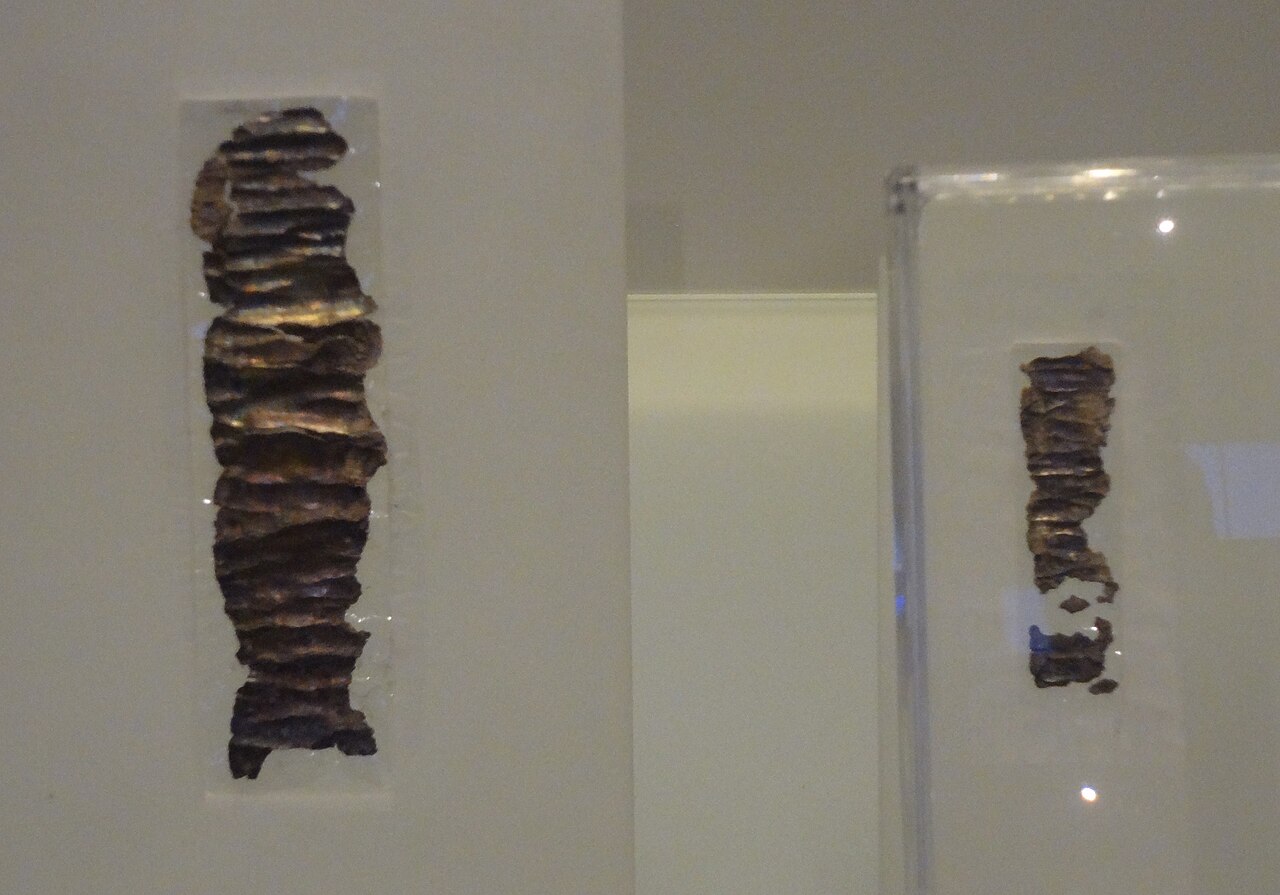
In 1979, archaeologist Gabriel Barkay excavated burial caves at Ketef Hinnom, just outside Jerusalem's Old City. Inside, a 13-year-old volunteer found two tiny rolled-up silver scrolls, small enough to hang on a necklace. When they were finally unrolled and read, they contained the priestly blessing from Numbers 6:24–26:
The amulets date to about 600 BC, before Babylon destroyed Jerusalem. They are the oldest known artifacts quoting a passage that appears in the Bible, older than the Dead Sea Scrolls by four centuries. They also contain the divine name, YHWH.
How the Torah is organized
| Book | Hebrew name | Main story |
|---|---|---|
| Genesis | Bereshit, "In the beginning" | Creation to Joseph |
| Exodus | Shemot, "Names" | Slavery, deliverance, Sinai |
| Leviticus | Vayikra, "And He called" | Worship and holiness |
| Numbers | Bemidbar, "In the wilderness" | The wilderness journey |
| Deuteronomy | Devarim, "Words" | Moses' farewell speeches |
Hebrew names come from each book's first important word. The English names come from the Greek translation.
How readers understand the Torah's origins
Moses wrote the Torah under divine inspiration, possibly drawing on older family records, with small later additions such as Deuteronomy 34. This is the historic Jewish and Christian view and is held by many today.
Moses is the source and foundation; faithful scribes later arranged, updated, and completed the books. This view accepts the Torah's evidence of later touches while keeping Moses at its center.
The classic Documentary Hypothesis (J, E, D, P sources) and its successors propose several sources combined over centuries, with major work in the 7th–5th centuries BC. Scholars disagree widely about the details, and no source document survives as a physical manuscript.
What the evidence shows
- The Torah describes Moses writing several specific texts. Exodus 17:14, 24:4; Numbers 33:2; Deuteronomy 31:9.
- Wording from Numbers 6:24–26 was in use in Jerusalem around 600 BC. Ketef Hinnom amulets.Source: Barkay et al., "The Amulets from Ketef Hinnom," BASOR 334 (2004)
- Moses wrote the Torah in its present form.
- The J, E, D, and P sources existed as separate documents. A scholarly reconstruction; no such document survives.
- The Torah is God's inspired word.
Continue the journey
Next in the storyProphets, Priests, and ScribesAs Israel became a kingdom, royal scribes kept records, prophets' words were written down, and a lost book of the law was found in the Temple.More from this lesson
Connections
- How Genesis Came to Us →A closer look at Genesis' own manuscripts and the chronology switcher.
- "Beginning at Moses and all the prophets, he expounded… the things concerning himself."
- Jesus: "For had ye believed Moses, ye would have believed me: for he wrote of me."
Sources to explore
Overviews are a starting point. Each links onward to the primary sources and specialist studies behind it.