Era 2 · The Family of AbrahamGenesis
How Genesis Came to Us
Authorship, ancient copies, and what changed along the way
Genesis describes the very beginning, but it was not written at the beginning. Somewhere between the events it describes and the Bible you hold today lies a long chain of storytellers, writers, scribes, and translators. This lesson follows that chain.
Jewish and Christian tradition has long held that Moses wrote Genesis, together with the rest of the Torah, the first five books. Jesus refers to "the book of Moses" (Mark 12:26), and Moses is the great lawgiver throughout Scripture. On this view, Moses may have drawn on older family records and traditions handed down from Abraham's household. Genesis itself is organized around ten sections that begin "These are the generations of…" (in Hebrew, toledot), which some see as a sign of earlier family records woven together.
Many modern scholars see Genesis as the result of a longer process: older traditions, gathered and edited over generations, reaching their final form centuries after Moses. Some faithful readers combine the two views: Moses as the foundation, with inspired scribes later updating place names and completing the work. (The account of Moses' own death in Deuteronomy 34 is a clear example of a later hand.)
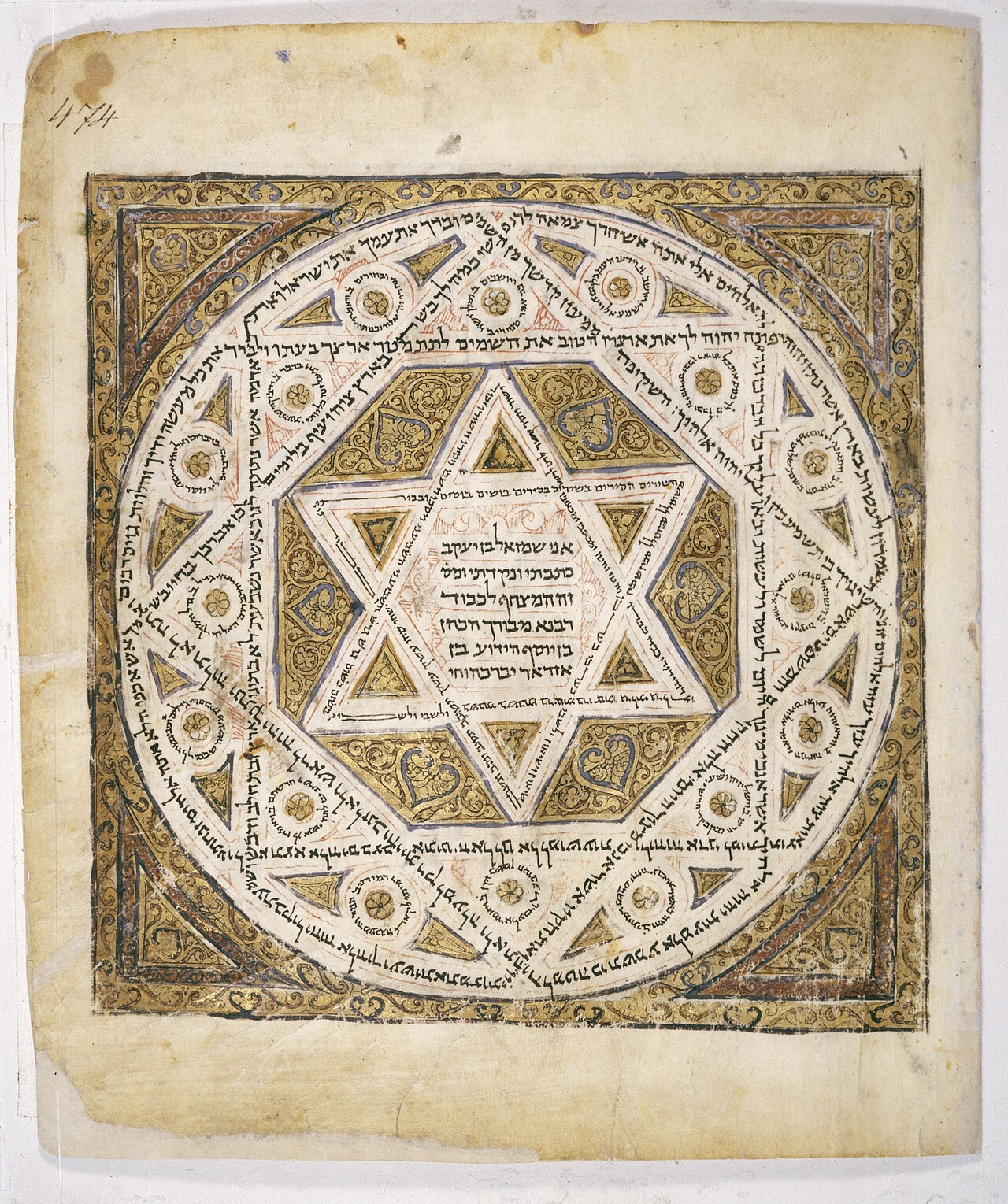
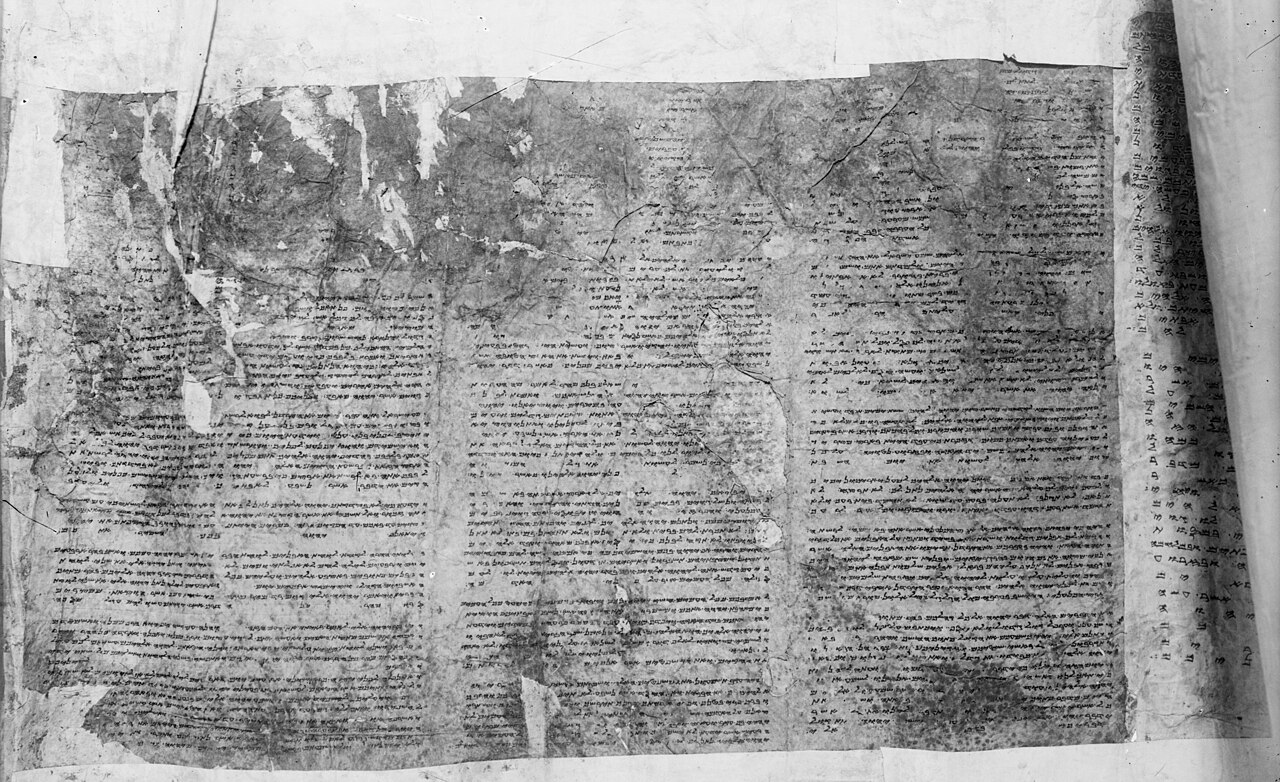
Before printing, every copy of Genesis was made by hand. The oldest complete Hebrew Bible, the Leningrad Codex, was copied in AD 1008. But in 1947 the Dead Sea Scrolls gave us fragments of Genesis more than a thousand years older, and they show how faithfully the text was preserved. The Greek translation (the Septuagint, begun around 250 BC) and the Samaritans' own copy of the Torah give us two more independent witnesses.
Four witnesses to the text
| Witness | What it is | Oldest copies |
|---|---|---|
| Masoretic Text | The standard Hebrew text, carefully preserved by Jewish scribes. Basis of most English Old Testaments. | Aleppo Codex (c. 930), Leningrad Codex (1008) |
| Dead Sea Scrolls | Hebrew scrolls hidden in caves near Qumran. About 20 Genesis manuscripts survive in fragments. | c. 250 BC – AD 68 |
| Septuagint | Greek translation made in Alexandria. The Bible of most early Christians and of the New Testament writers. | Codex Vaticanus and Sinaiticus (4th century) |
| Samaritan Pentateuch | The Torah as preserved by the Samaritan community, a separate line of copying. | Medieval scrolls, from an ancient tradition |
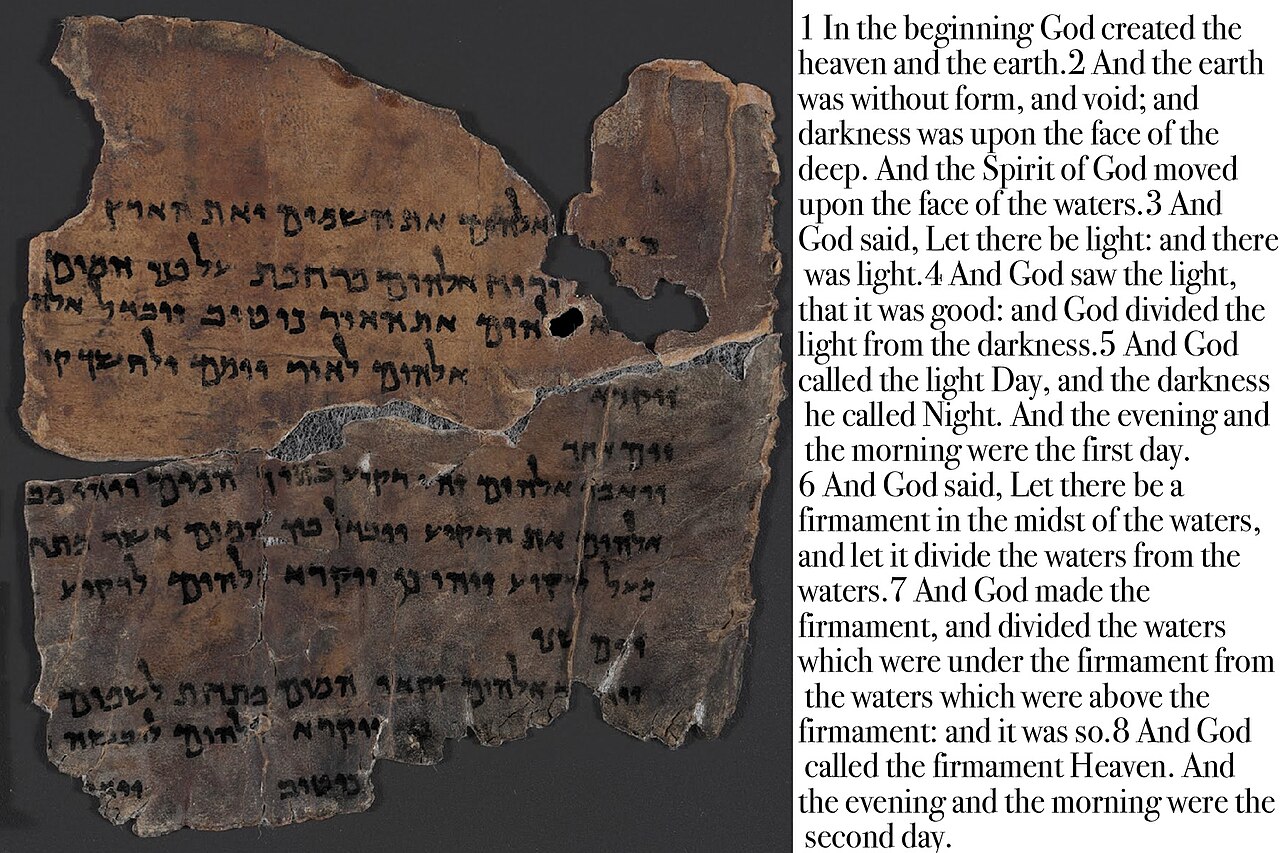
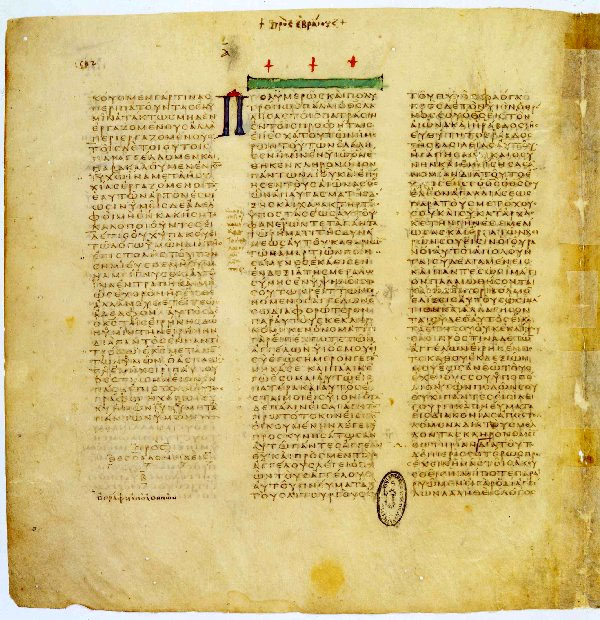
Because these traditions were copied separately for centuries, comparing them lets scholars see where copyists made changes and work back toward the earliest wording. On the great majority of Genesis, they agree.
Three places where the copies differ
1. Genesis 4:8: what did Cain say?
- Hebrew (Masoretic)
- "And Cain talked with Abel his brother: and it came to pass, when they were in the field…" The words Cain spoke are missing.
- Greek, Samaritan, Syriac, Latin
- Add Cain's words: "Let us go out into the field."
- Why it matters
- Most scholars think a scribe's eye skipped a line in the Hebrew. Many modern translations (NIV, ESV, NRSV) include the words with a footnote. The meaning of the story does not change.
2. Genesis 5 and 11: the ages
- Adam's age when Seth was born
- Hebrew 130, Greek 230, Samaritan 130.
- Years from creation to the Flood
- Hebrew 1,656; Greek about 2,242; Samaritan 1,307.
- Why it matters
- Someone deliberately adjusted the numbers in at least one tradition, perhaps to harmonize lifespans. Which is original is still debated. The genealogy itself is the same in all three.
Masoretic Text, the basis of most English Bibles
- Adam130
- Seth105
- Enosh90
- Kenan70
- Mahalalel65
- Jared162
- Enoch65
- Methuselah187
- Lamech182
- Noah to Flood600
Creation to the Flood: 1,656 years
Bold rows differ from the Hebrew text. Some Greek copies give Methuselah 187, which makes the total 2,262.
3. Genesis 6–9: how the Flood story is woven
- What readers notice
- Two pairs of every animal (6:19) and seven pairs of clean animals (7:2). Rain for 40 days (7:17); waters prevailing for 150 days (7:24).
- Traditional reading
- These are complementary details of a single account: pairs as the general rule, extra clean animals for sacrifice; 40 days of rain within a longer 150-day flood.
- Source-critical reading
- Two earlier flood accounts were woven together by an editor, each with its own details.
Four more manuscript questions from Genesis 12–50
| Passage | What differs | Kind of difference |
|---|---|---|
| Genesis 37:36 | "Medanites" in the Hebrew; "Midianites" in the Samaritan, Greek and Latin | A one-letter copying variant |
| Genesis 46:27 | 70 in the Hebrew; 75 in the Greek, in a Qumran scroll of Exodus 1:5, and in Acts 7:14 | Two ways of counting Jacob's family |
| Genesis 47:31 | "Bed" in the Hebrew vowels; "staff" in the Greek and Hebrews 11:21 | Same letters, read differently |
| Genesis 49:10 | "Until Shiloh come": a name, a town, "he to whom it belongs," or "tribute" | Same letters, read and interpreted differently |
Each has its own Journey of a Passage, with every witness and its reading. Together with Genesis 1:1 and the differences above, they show the full range: identical text, a scribe's slip, different counts, different vowels, and different interpretations.
Names from a later age
Several details in Genesis use names or describe things from centuries after the patriarchs' traditional dates:
- "Ur of the Chaldeans" (11:31): the Chaldeans appear in records from the 9th century BC.
- Abram pursues the kings "unto Dan" (14:14): the city was named Dan after the tribe captured it (Judges 18:29).
- "The land of the Philistines" (21:32; 26:1): the Philistines known from archaeology arrived around 1200 BC.
- Camel caravans (24; 37:25): widespread domestic camel use in the region is documented from the 10th century BC.
- "Before there reigned any king over the children of Israel" (36:31): written from a time when Israel had kings.
- "The land of Rameses" (47:11): named after Ramesses II's city of the 13th century BC.
Many traditional scholars accept that inspired editors updated place names and added explanatory notes so later readers could follow the story, just as we say "Istanbul" for ancient Byzantium. On this view the core of Genesis is old, and the updates are like a modern atlas.
Critical scholars see these details as evidence that Genesis reached its written form in the first millennium BC, though many agree it preserves older traditions.
Recent studies of the Joseph story (such as Nili Shupak's, 2025) argue for an old core tradition, written down later and edited again. The questions of when events happened and when the text was written are separate.
The book's own structure
Genesis organizes itself with a repeated heading, "These are the generations (toledot) of…", eleven times: of the heavens and the earth, Adam, Noah, Noah's sons, Shem, Terah, Ishmael, Isaac, Esau (twice) and Jacob. Some scholars, notably P. J. Wiseman, proposed these mark older family records that Moses compiled; others see them as an editor's framework. Either way, the book presents itself as a chain of generations from creation to Egypt.
Retold before the New Testament
Jewish writers retold and expanded Genesis long before the time of Jesus: Jubilees (2nd century BC) and the Genesis Apocryphon from Qumran rewrite the stories of Enoch, Noah and Abraham, and Philo and Josephus later explained them for Greek readers. These retellings are not Scripture in Jewish or most Christian canons, but they show how carefully Genesis was read.
How Genesis became Scripture
Genesis' place in the Torah is secure in every surviving Jewish, Samaritan and Christian canon: it opens every Bible, Jewish, Protestant, Catholic, Orthodox, and Ethiopian. Nehemiah 8 describes Ezra (5th century BC) reading "the book of the law of Moses" publicly as God's law, though it does not say exactly what that scroll contained, and the Dead Sea Scrolls preserve about 20 copies of Genesis from the last centuries BC. Exactly when and how Genesis first came to be treated as Scripture is not documented. Chapter divisions were added around AD 1205 and verse numbers in the 1550s; neither was part of the original.
What the evidence shows
- Genesis survives in Hebrew, Greek, and Samaritan traditions that mostly agree.
- The books of Moses were read publicly as authoritative law by the Persian period. Nehemiah 8; the exact date of Ezra's mission is debated.
- Dead Sea Scroll fragments of Genesis predate the Leningrad Codex by over a thousand years.
- The genealogy numbers differ between traditions.
- Moses wrote Genesis. Tradition and many scholars disagree on how much, and how.
- Genesis is inspired by God.
Continue the journey
Journey of a PassageGenesis 1:1: In the beginningThe Bible's first sentence, followed through Hebrew, Samaritan, Greek, Latin, and English witnesses.More from this lesson
Why this matters to the rest of Scripture
- Jesus cites "the book of Moses."
- "Beginning at Moses and all the prophets, he expounded… the things concerning himself."
- "All scripture is given by inspiration of God."
Sources to explore
Overviews are a starting point. Each links onward to the primary sources and specialist studies behind it.