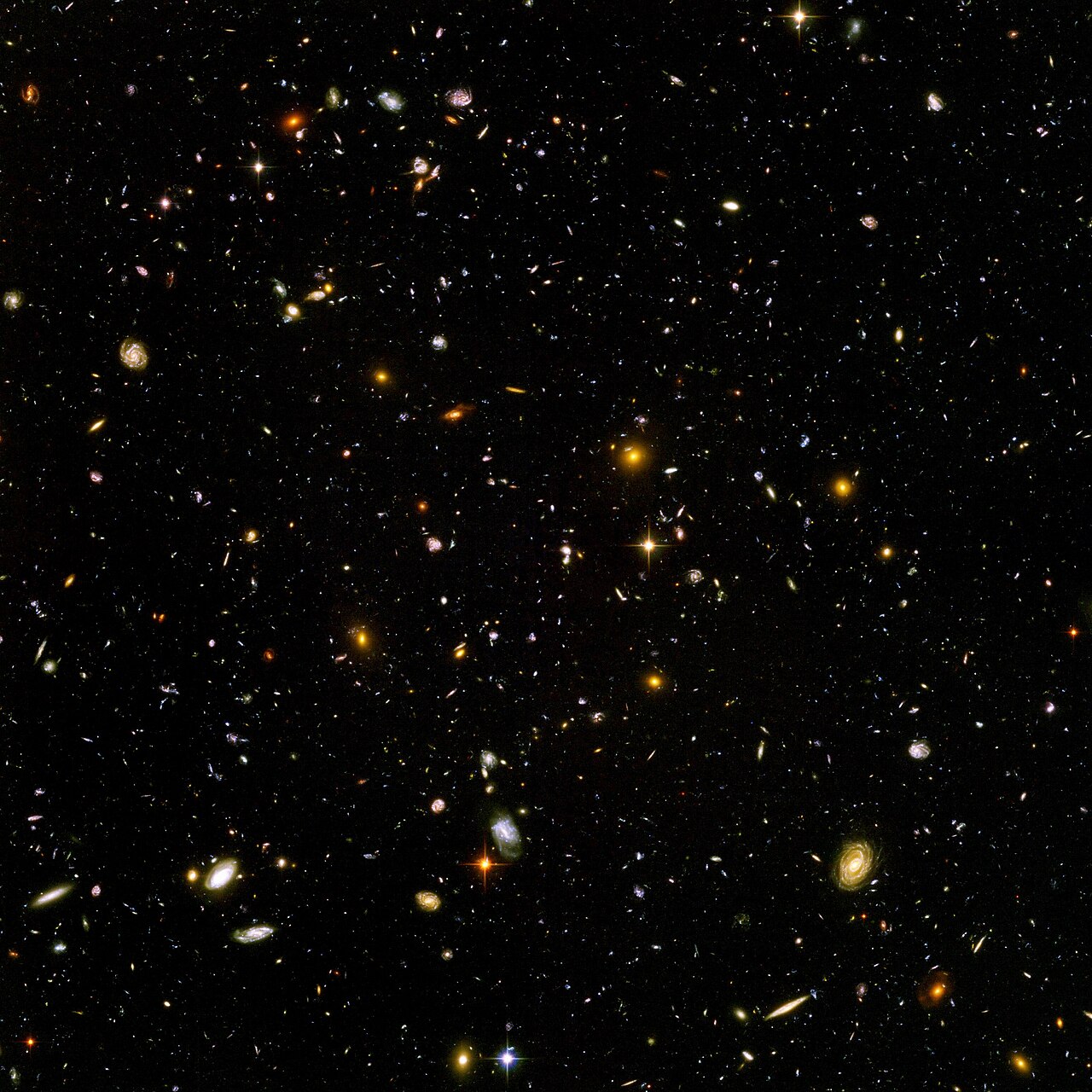
Before anything we would recognize exists, there is darkness, deep water, and the Spirit of God moving over it. Then God speaks: "Let there be light." And there is light.
Day by day, God gives the world its shape. He separates light from darkness, divides the waters above from the waters below, and gathers the seas so dry land appears. He fills the land with plants, hangs the sun, moon, and stars in the sky, and fills the sea, the air, and the earth with living creatures.
Then comes the high point. God makes humanity, male and female, in His own image, and gives them care of everything He has made. He looks at all of it and calls it "very good." On the seventh day He rests, and He blesses that day and sets it apart.
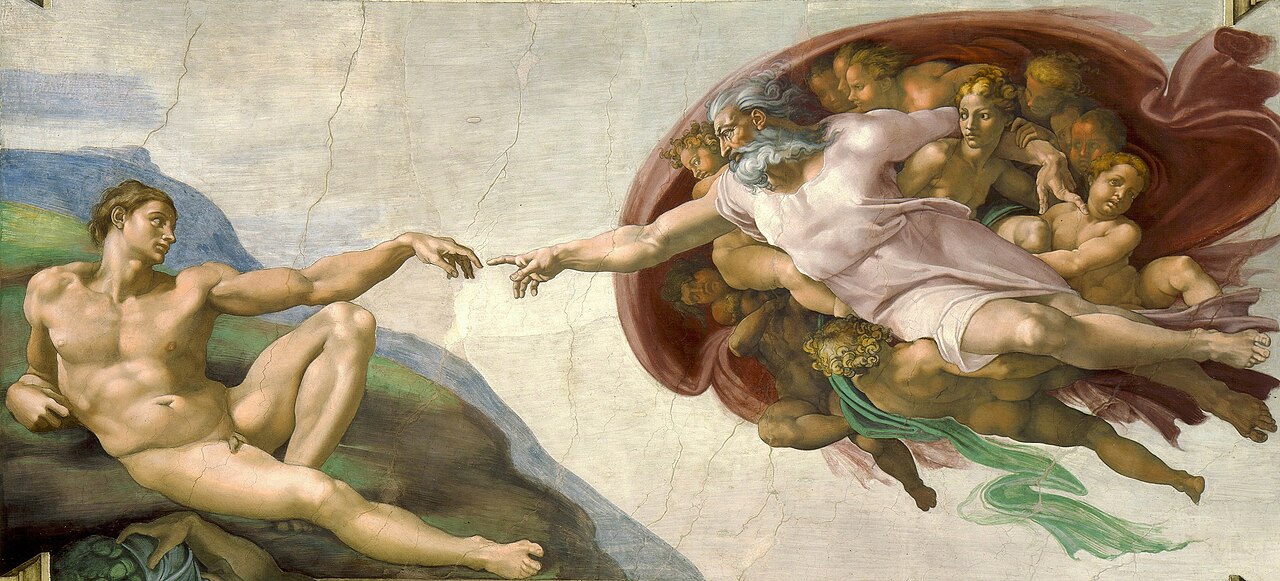
Genesis 2 then moves in close. God forms the man from the dust of the ground and breathes life into him. He plants a garden in Eden, gives the man work and a single command, brings the animals to be named, and finally makes the woman. The man greets her with the first poem in the Bible.
The world Genesis spoke into
Genesis was not the only creation account in the ancient world. Babylon told a story called the Enuma Elish, in which the world is made after a war among the gods: the god Marduk kills the sea goddess Tiamat and builds the sky and earth from her body. Humans are made to do the gods' work for them.
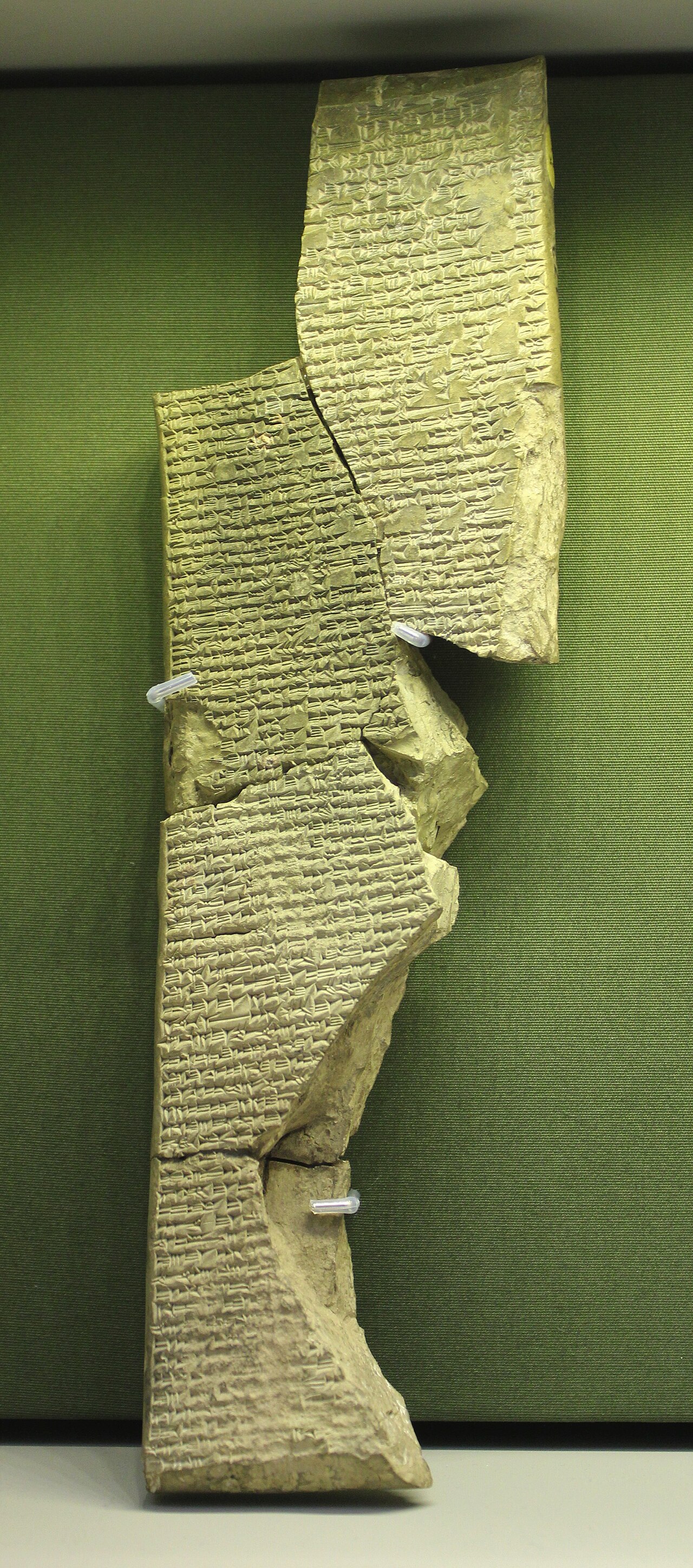
Both accounts begin with primordial waters and end with an ordered world. But the differences are striking. In Genesis there is no battle and no rival. God is already sovereign before the first word is spoken. The sea is not a monster; it is simply water that God gathers. The sun and moon are not named as gods at all. They are "lights" set in place to mark seasons. And humanity is not a slave race but the bearer of God's own image.
Two creation stories side by side
- Enuma Elish (Babylon)
- Many gods, born in generations. The world is built from a slain goddess. Humans are made to relieve the gods of labor.
- Genesis 1
- One God, already in command. The world is made by His word. Humans are made in His image and given dignity and responsibility.
What modern science describes
Modern cosmology describes a universe that had a beginning: an extremely hot, dense state that has been expanding for about 13.8 billion years. NASA places the formation of the earth at about 4.6 billion years ago. Many believers find it striking that science now points to a universe with a real beginning, something the opening words of Genesis affirmed long before. Science describes how the physical universe has developed. Whether that beginning had a Creator is a question science alone cannot settle.
The Case for the Biblical Account
Scripture's account
One God creates the heavens and earth, orders them over six days, makes humanity in His image, and rests on the seventh day (Genesis 1:1–2:3). Genesis 2 retells the making of humanity up close.
What evidence would we expect?
Creation itself is not an event archaeology can dig up. What we can examine is the ancient setting of the text: how it compares with other creation stories of its world, and whether its claims fit what we observe about the universe.
The discoveries
Babylonian (Enuma Elish), Sumerian, and Egyptian creation texts show Genesis belongs to a real ancient conversation about origins. Modern cosmology shows the universe had a beginning.
Testing the discoveries
The comparison is solid: the tablets are real and their contents are well understood. The differences between them and Genesis are deliberate and theological, not accidental.
The strongest reconstruction
Genesis 1 reads as a confident answer to the creation stories of its day: one Creator, a good creation, and dignified human beings. Scholars who take the Bible's authority seriously, such as Richard Hess, emphasize these distinctions. Others, such as David Carr, study possible literary relationships.
What remains possible
That God created the universe is a matter of faith that no science can prove or disprove. How literally to read the six days is a question faithful Christians answer differently (see below).
How Christians read the six days
Young-earth creation: six ordinary days in a relatively recent past. This takes the days at face value. Its main challenge is that it conflicts with the extensive geological and cosmological dating evidence.
Day-age view: each day represents a long period of time. This keeps the sequence of creation as history while fitting an old universe. It has to explain the order of some events in the text.
Framework view: the days are a deliberate literary structure. Days 1–3 form realms (light, sky and sea, land) and days 4–6 fill them (lights, birds and fish, animals and humans). The focus is who made the world and why, not a timetable.
God spoke to the first readers in the picture of the world they already had, to reveal truths about Himself: He is sovereign, creation is good, humans bear His image. The challenge is defining how ancient presentation relates to modern science.
What the evidence shows
- Older creation stories existed in Mesopotamia and Egypt.
- Genesis 1 presents one sovereign Creator, unlike its neighbors' stories of warring gods.
- The universe had a physical beginning. Standard modern cosmology.
- God created the universe.
- Creation took six 24-hour days a few thousand years ago. This particular reading conflicts with current dating evidence. Other faithful readings do not.
Continue the journey
Journey of a PassageGenesis 1:1: In the beginningThe Bible's first sentence, followed through Hebrew, Samaritan, Greek, Latin, and English witnesses.More from this lesson
Investigations
Optional deep dives: the ancient sources, the physical evidence, and every interpretation side by side, including unconventional ones, each labeled for what it is.
The Anunnaki: Ancient Gods and Modern TheoriesAncient texts: documented · Divine-council parallels: real and studied · Nibiru/genetic-engineering theory: rejected by specialists
Who were the Anunnaki in the actual cuneiform texts, and how do Mesopotamian accounts of human creation compare with Genesis?
The Anunnaki (Anunna) were a group of Mesopotamian gods. In the Atrahasis epic, the junior gods (Igigi) rebel against hard labor, and humans are made from clay mixed with a slain god's flesh and blood to do the work. The modern idea that the Anunnaki were space travelers from a planet Nibiru comes from Zecharia Sitchin (1976), not from the texts.
Open the full investigation →Ancient Astronauts: The Claims Examined One by OneAncient accounts: documented · Extraterrestrial explanations: no verified evidence
Where do ancient-astronaut theories touch the Bible, and how does each claim hold up?
Since the 1960s, writers have proposed that gods and angels in ancient texts were extraterrestrial visitors. The ancient texts are real and extraordinary; the extraterrestrial readings are modern. This dossier lists each main claim, its best evidence, and its assessment.
Open the full investigation →Echoes Across Civilizations
Optional: how other ancient peoples told similar stories. Open one to compare, then come back to the lesson.
CreationBabylon · Egypt · India · K'iche' Maya
How did other ancient peoples tell the beginning of the world?
- Babylon: Enuma Elish Shared literary world
- Egypt: The Memphite Theology (Shabaka Stone) Resemblance only
- India: Rig Veda 10.129, the Hymn of Creation (Nāsadīya Sūkta) Resemblance only
- K'iche' Maya: Popol Vuh Resemblance only
Why this matters to the rest of Scripture
- "In the beginning was the Word": John deliberately echoes Genesis 1 to introduce Jesus.
- "Through faith we understand that the worlds were framed by the word of God."
- The Sabbath command is grounded in God resting on the seventh day.
- The Bible ends with a new creation: a new heaven and a new earth.
Sources to explore
Overviews are a starting point. Each links onward to the primary sources and specialist studies behind it.