Genesis 1–11 told the story of all humanity. Now the camera narrows to one family. Terah takes his son Abram, Abram's wife Sarai, and his grandson Lot out of Ur of the Chaldeans, heading for Canaan. They stop at Haran, and there Terah dies. Genesis has already told us the hardest fact about this family: "Sarai was barren; she had no child."
Then God speaks. "Get thee out of thy country, and from thy kindred, and from thy father's house, unto a land that I will shew thee." The command comes with a promise in three parts: a great nation, a great name, and a blessing that reaches past this family to everyone: "in thee shall all families of the earth be blessed."
Abram is seventy-five. He goes, "as the LORD had spoken unto him," with Sarai, Lot, their people and their possessions. At Shechem, by the oak of Moreh, God appears again: "Unto thy seed will I give this land." Abram builds an altar, then another between Bethel and Ai, where he "called upon the name of the LORD."
The promise is tested at once. Famine drives Abram south into Egypt. Afraid that the Egyptians will kill him for Sarai's beauty, he asks her to say she is his sister. Pharaoh takes her into his house, and it is God, not Abram, who protects her: plagues strike Pharaoh's household until he sends them away. Genesis does not hide its heroes' failures.
Back in Canaan, Abram and Lot have so many flocks that the land cannot hold them both, and their herdsmen quarrel. Abram, the elder, lets Lot choose. Lot looks out over the well-watered plain of the Jordan, "even as the garden of the LORD," and moves toward Sodom. Abram stays in the hills, and God tells him to look north, south, east and west: all of it, and offspring like the dust of the earth. Abram settles by the oaks of Mamre at Hebron.
Two moon cities
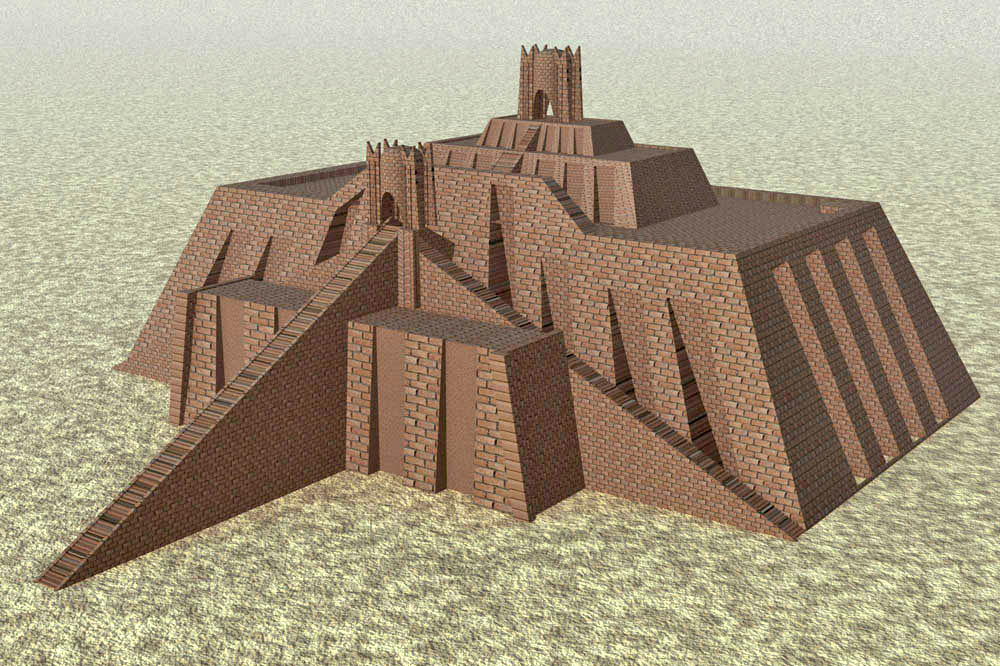
Ur, in southern Mesopotamia, was one of the great cities of the ancient world. Leonard Woolley's excavations (1922–34) uncovered its royal tombs and the great ziggurat built around 2100 BC by King Ur-Nammu for the moon god Nanna. Haran, far to the north in what is now Turkey, was the other great center of moon worship, dedicated to the moon god Sin. Abraham's family route links the two. Joshua 24:2 remembers that Abraham's father "served other gods" beyond the river, which makes the call a break with a whole religious world.
Names on the map
Several names in Abraham's family match real towns near Haran known from later Assyrian records: Serug (Sarugi), Nahor (Nahur, also named in the 18th-century BC letters from Mari), and Terah (Til-Turahi). Genesis 24:10 itself calls Rebekah's home "the city of Nahor." This shows the family story is rooted in real north-Mesopotamian geography.
How people moved
Families like Abram's lived by herding sheep and goats, moving between towns and pasture, negotiating for water and grazing. The Mari letters describe tribal groups doing exactly this along the Euphrates in the 18th century BC. Famine sending people into Egypt is also well documented: Egypt's Nile harvests could feed neighbors when Canaan's rain failed.

This Egyptian tomb painting from Beni Hasan (about 1890 BC) shows a group of 37 people from the Levant arriving in Egypt with donkeys and goods, led by a chief named Abisha. It is not Abram's family, but it shows that the kind of journey Genesis describes really happened.
The Case for the Biblical Account
Scripture's account
Abram's family moves from Ur to Haran; Abram, called by God, continues to Canaan, goes down to Egypt in a famine, returns, and separates from Lot (Genesis 11:27–13:18).
What evidence would we expect?
A family of herders leaves few traces. We would not expect an inscription naming Abram. We would expect the places, travel routes, ways of life, and personal names in the story to fit the ancient world.
The discoveries
Ur and Haran as real, linked moon-worship cities; family names matching towns near Haran; Mari texts on mobile herders; Egyptian records of Levantine people entering Egypt (Beni Hasan); personal-name patterns that several scholars place early in the second millennium BC.
Testing the discoveries
These fit the story but do not identify Abram. Some customs and names were long-lived, so they cannot pin the story to one century. "Ur of the Chaldeans" uses a name for the Chaldeans that appears in records only from the 9th century BC, which suggests at least an updated place name.
The strongest reconstruction
A pastoral family from upper Mesopotamia migrating to Canaan in the early or middle second millennium BC fits the known world well. The traditions could preserve a real ancestral memory, later written in the language of a later age.
What remains possible
Abraham as a historical individual of the Middle Bronze Age; an ancestral figure whose story was shaped over centuries; or a later literary portrait. Archaeology has not settled which.
Which Ur?
The famous Sumerian city excavated by Woolley. The usual identification, supported by the Greek Septuagint's reading "land of the Chaldeans" and by the Chaldeans' later homeland in the south.
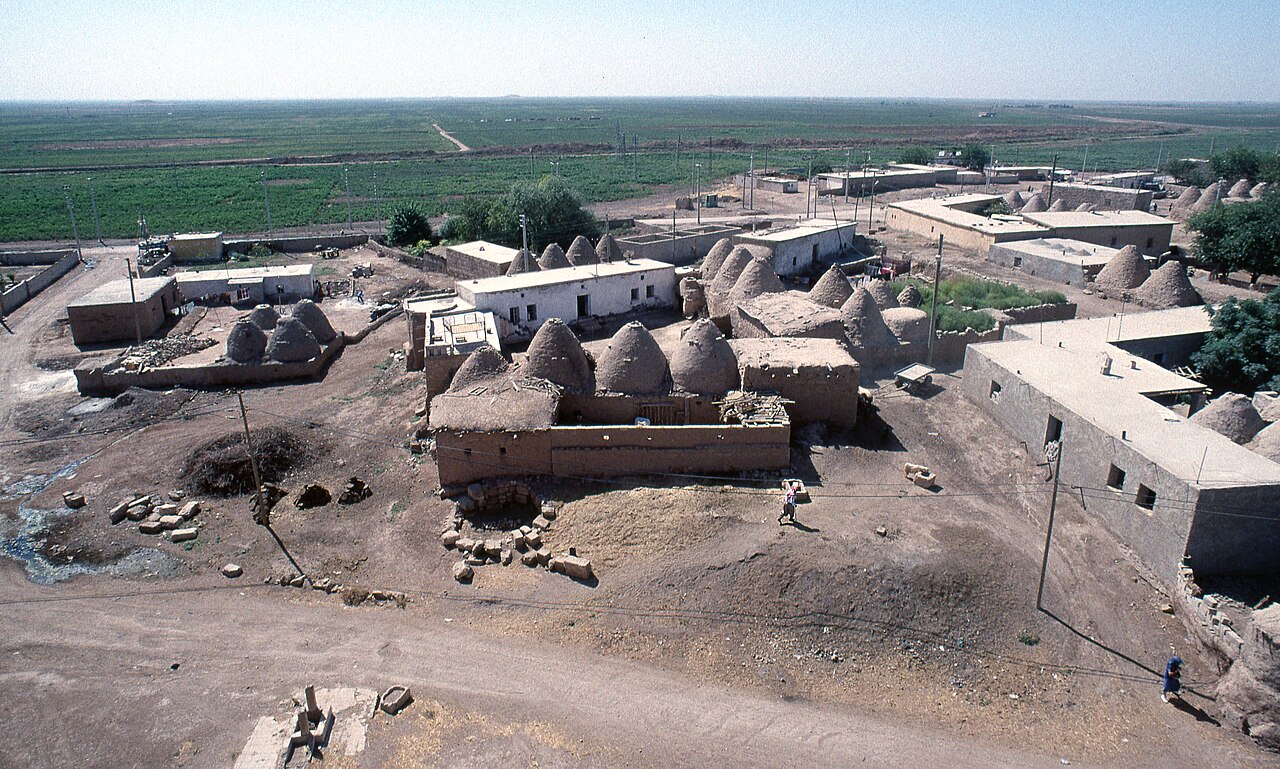
Some scholars point out that Haran and Abraham's relatives lie in the north and propose a northern town, such as one near Urfa (Şanlıurfa), which local tradition links to Abraham. No northern "Ur" has been securely identified.
Chaldeans (Kaldu) appear in Assyrian records from the 9th century BC. Many scholars, including some who defend an early Abraham, regard "of the Chaldeans" as a later scribe's clarification, the way we might say "Constantinople in Turkey."
The wife-sister stories
Genesis tells a very similar story three times: Abram and Sarai in Egypt (12), Abraham and Sarah at Gerar (20), and Isaac and Rebekah at Gerar (26). Traditional readers see a family habit repeated, with God protecting the promise each time. Source critics see one tradition preserved in three versions. Either way, the stories show the promise surviving the patriarchs' own fear.
What the evidence shows
- Ur and Haran were major ancient cities, both centers of moon worship.Source: Ur Online: the British Museum and Penn Museum archive of Woolley's excavations at Ur ↗
- Several names in Abraham's family match real towns near Haran.Source: K. A. Kitchen, On the Reliability of the Old Testament (Eerdmans, 2003), ch. 7
- Mobile herding families and migration into Egypt are well attested in the second millennium BC.
- Abraham's way of life fits the Middle Bronze Age better than any later period. Kitchen and Hess argue yes; Thompson and Van Seters argue the details fit later periods too.Source: K. A. Kitchen, On the Reliability of the Old Testament (Eerdmans, 2003), ch. 7; T. L. Thompson, The Historicity of the Patriarchal Narratives (de Gruyter, 1974); J. Van Seters, Abraham in History and Tradition (Yale, 1975)
- Abraham lived as a historical person. No outside record would be expected to name him. That is not evidence against him.
- God called Abraham and promised to bless all nations through him.
Continue the journey
Connected elsewhere in ScriptureThe Covenant at Shechem and the BurialsJoshua 24:2–3: Abraham's family "served other gods" beyond the river.More from this lesson
On the map
Location securely identified Probable identification Proposed or debated location Biblical route (roads schematic) Scholarly proposal
- Abraham's journeys. Ur → Haran → Shechem → Bethel → the Negev → Egypt in a famine → back to Bethel → Hebron. The towns are named in Genesis; the roads between them are schematic.
Why this matters to the rest of Scripture
- Stephen: God appeared to Abraham "when he was in Mesopotamia, before he dwelt in Charran."
- Paul calls the promise "in thee shall all nations be blessed" the gospel preached beforehand.
- "By faith Abraham, when he was called… went out, not knowing whither he went."
- Abraham's family "served other gods" beyond the river.
- Before the Bible →How stories like Abraham's were told and remembered before they were written.
Sources to explore
Overviews are a starting point. Each links onward to the primary sources and specialist studies behind it.