Era 2 · The Family of AbrahamGenesis
The War of the Kings
Four kings, five kings, and a priest of God Most High
Genesis 14 reads like a page from a royal war chronicle. Four kings from the east (Amraphel of Shinar, Arioch of Ellasar, Chedorlaomer of Elam, and Tidal "king of nations") have ruled five small kings around the Dead Sea for twelve years. In the thirteenth year the five rebel. In the fourteenth the eastern army comes.
They sweep down the east side of the Jordan, defeating peoples remembered as giants (the Rephaim, Zuzim and Emim), then turn through the southern wilderness and back north. The five kings meet them in the Valley of Siddim, "which is the salt sea," full of bitumen pits. The kings of Sodom and Gomorrah flee and fall into the pits. The victors take everything, including Lot, who now lives in Sodom.
A survivor brings the news to "Abram the Hebrew," the first time anyone in the Bible is called a Hebrew. Abram arms 318 trained men born in his own household, pursues the army all the way north to Dan, attacks by night, and chases them past Damascus. He brings back Lot, the women, the people and the goods.
Two kings come out to meet him. The king of Sodom offers a deal: "Give me the persons, and take the goods to thyself." Abram refuses even "a thread" or "a shoelatchet," so that no one can say Sodom made him rich.
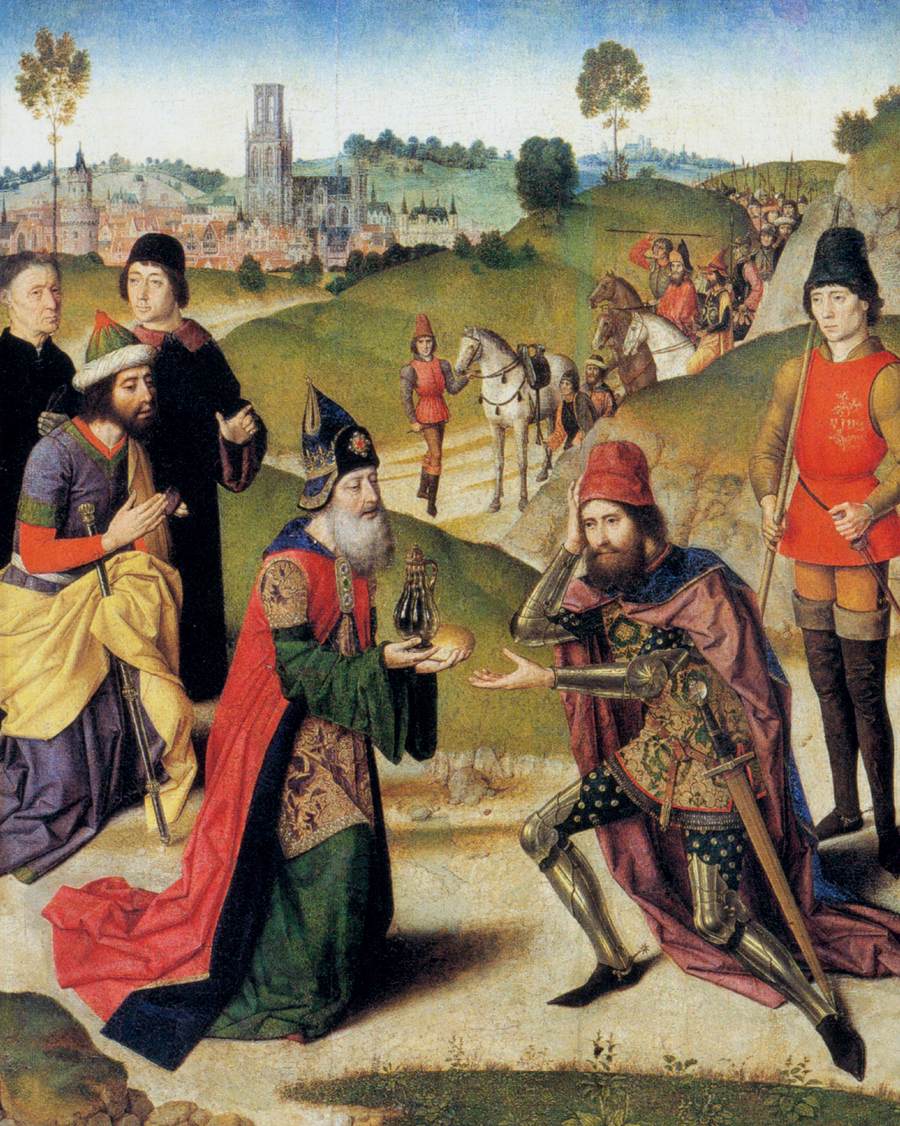
The other is Melchizedek, king of Salem, "priest of the most high God," who brings out bread and wine and blesses Abram: "Blessed be Abram of the most high God, possessor of heaven and earth." Abram gives him a tenth of everything. Melchizedek appears for three verses and vanishes, and yet the rest of Scripture never forgets him.
Names that sound real
None of the four eastern kings has been identified in any surviving record. But their names fit the world of the early second millennium BC. Chedorlaomer looks like the Elamite Kudur-Lagamar: "Kudur" begins several Elamite royal names, and Lagamar was an Elamite deity. Elam, in what is now southwest Iran, really did reach deep into Mesopotamian politics in that age. Tidal resembles Tudhaliya, a name used by several Hittite kings. Arioch resembles Arriwuk, a name found in the Mari letters.
Amraphel and Hammurabi
- The old theory
- For a century, Amraphel was widely identified with Hammurabi of Babylon (Shinar), the famous lawgiver.
- Why it was dropped
- The names do not match well linguistically, and Hammurabi's well-documented reign shows no campaign like this. Most scholars, conservative and critical, have abandoned the identification.
- What remains
- Coalitions of Mesopotamian and Elamite kings did campaign far from home in this period. The kind of war Genesis describes is real even if these kings remain unidentified.
Salem and Jerusalem
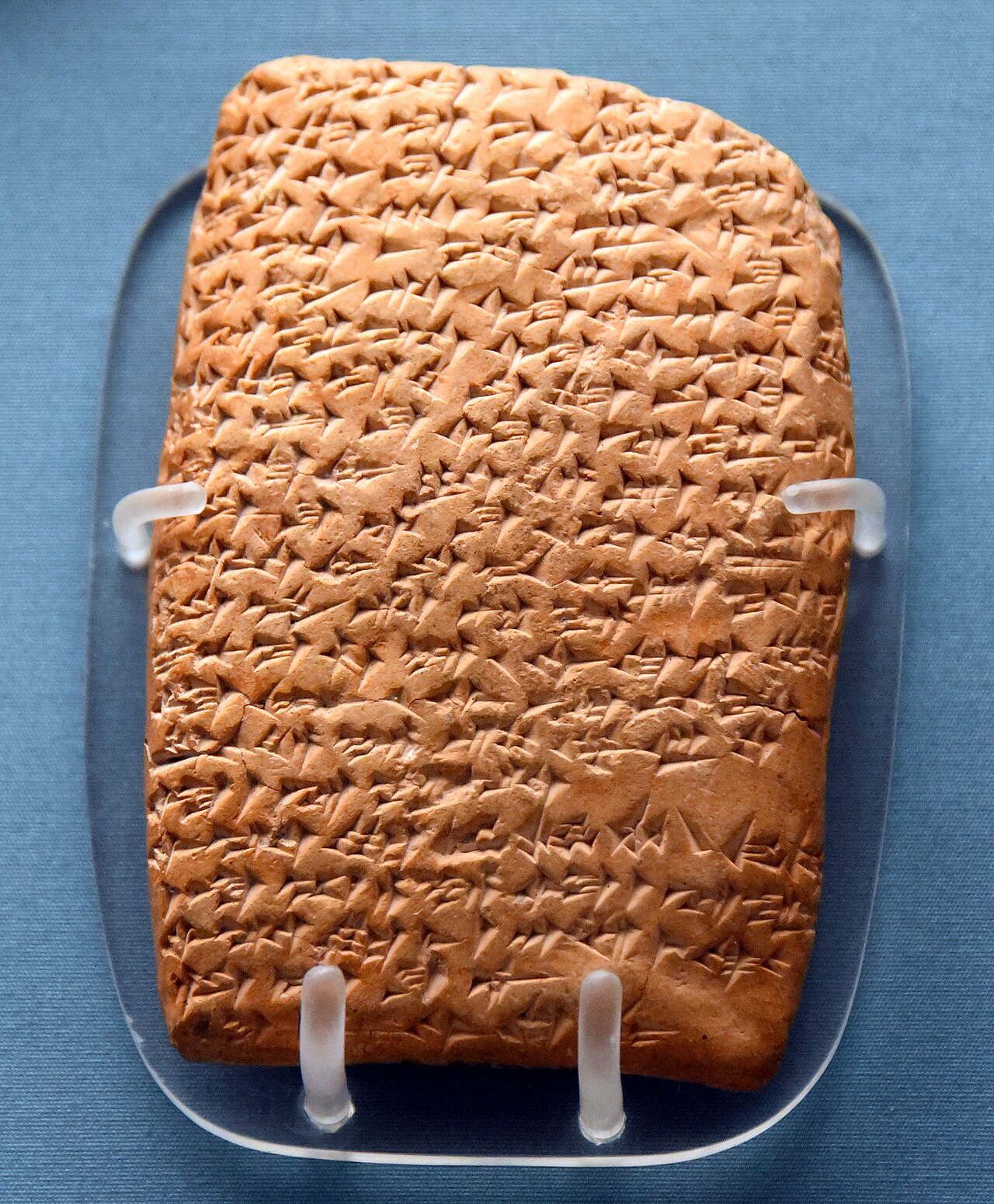
Psalm 76:2 places God's dwelling "in Salem" and "in Zion," and Jewish tradition from the Dead Sea Scrolls' Genesis Apocryphon onward identifies Salem with Jerusalem. Jerusalem appears in Egyptian Execration Texts of the 19th–18th centuries BC and in the 14th-century BC Amarna letters, so a king in Jerusalem in Abraham's era is entirely possible.
The Case for the Biblical Account
Scripture's account
An eastern coalition subdues and then punishes five Dead Sea cities; Abram rescues Lot and is blessed by Melchizedek of Salem (Genesis 14).
What evidence would we expect?
Records of Elamite or Mesopotamian campaigns into the Levant; names of the kings in cuneiform archives; a route matching known roads; a recognizable Jerusalem.
The discoveries
Elamite power in Mesopotamia in the early second millennium; Elamite and Hurrian-Hittite name forms resembling the kings' names; the King's Highway route east of the Jordan; Jerusalem named in Egyptian texts of the period.
Testing the discoveries
The names are similar in type, not identical matches. No archive names this campaign. Some scholars think the chapter was composed much later using archaic-sounding names.
The strongest reconstruction
Genesis 14 may preserve an old memory of an eastern raid along the Transjordan trade route, told from the viewpoint of the family who lived through it.
What remains possible
A real Middle Bronze Age raid, a later composition with old flavor, or an ancient tradition reshaped over time. The kings remain unidentified.
Melchizedek in later Scripture and tradition
- Psalm 110:4: the coming king is "a priest for ever after the order of Melchizedek."
- Hebrews 5–7 reads Jesus as that priest: without recorded genealogy, "made like unto the Son of God."
- The Dead Sea Scroll 11QMelchizedek (1st century BC) portrays Melchizedek as a heavenly deliverer at the end of days.
- Some Jewish tradition identified him with Shem, son of Noah.
What the evidence shows
- Elam was a powerful kingdom involved in Mesopotamian affairs in the early second millennium BC.
- The kings' names resemble real name types of that era.Source: K. A. Kitchen, On the Reliability of the Old Testament (Eerdmans, 2003), ch. 7
- Amraphel is Hammurabi. The identification has been largely abandoned.
- The four eastern kings and their campaign have been identified in outside records.
- Salem is Jerusalem. Psalm 76:2 and early Jewish tradition; not proven by archaeology.
- Melchizedek was a priest of the true God before Israel existed.
Continue the journey
Connected elsewhere in ScripturePsalm 110: Sit at My Right HandPsalm 110:4: "Thou art a priest for ever after the order of Melchizedek."More from this lesson
Why this matters to the rest of Scripture
- "Thou art a priest for ever after the order of Melchizedek."
- Melchizedek, "King of righteousness" and "King of peace."
- "In Salem also is his tabernacle, and his dwelling place in Zion."
- The Dead Sea Scrolls →The Genesis Apocryphon and 11QMelchizedek retell and expand this chapter.