The world has filled with violence. Genesis briefly mentions the mysterious "sons of God" who took human wives, and the Nephilim, "mighty men which were of old." God sees that every thought of the human heart is evil continually, and it grieves Him to His heart.
But Noah finds grace in the eyes of the LORD. God tells him to build an ark of gopher wood, 300 cubits long, 50 wide, and 30 high, and to bring his family and pairs of every kind of animal aboard, with extra of the clean animals.
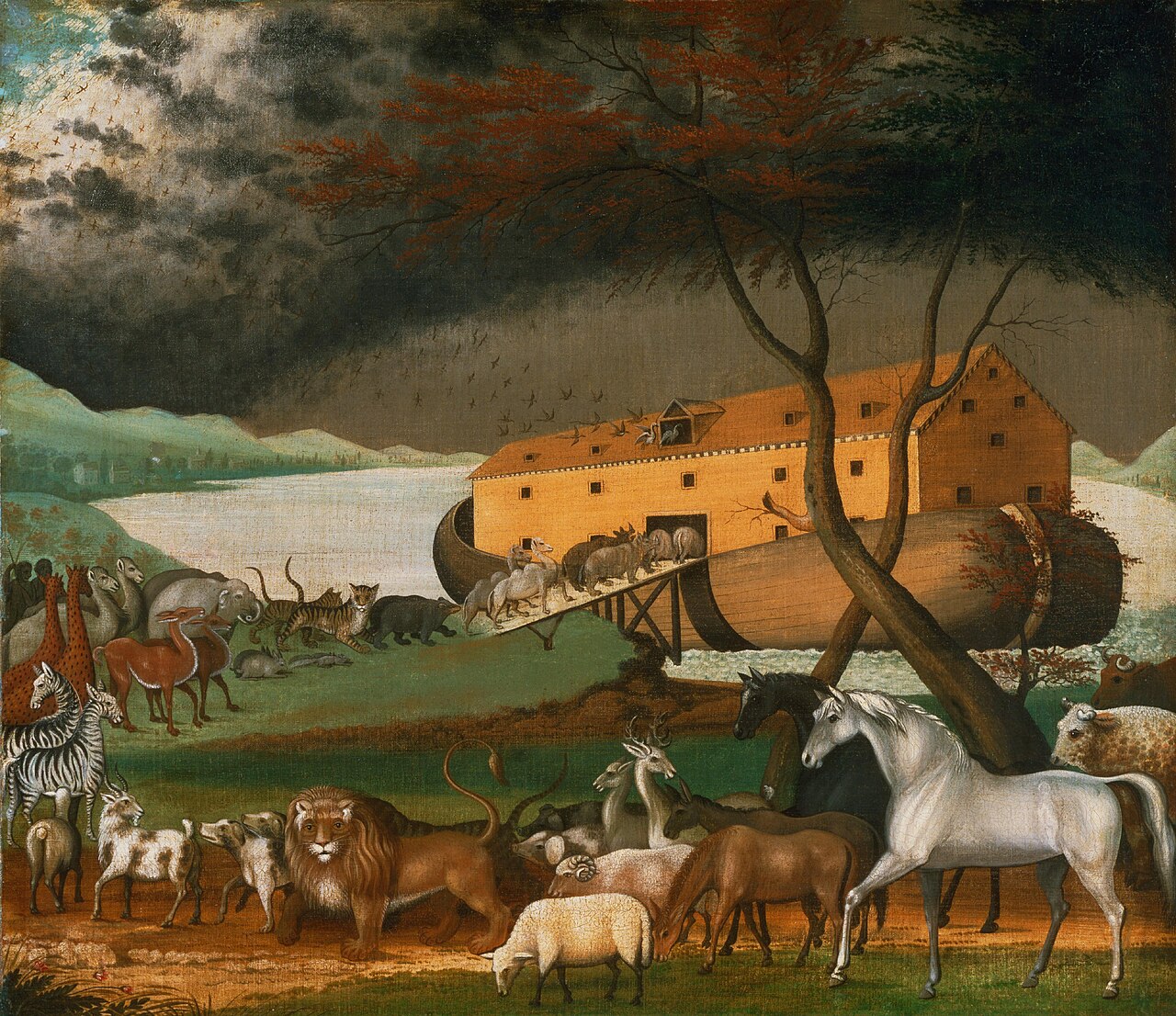
The fountains of the deep break open and the windows of heaven pour. It rains forty days and forty nights. The waters rise until the high hills are covered, and every living thing outside the ark perishes.
Then "God remembered Noah." A wind passes over the earth and the waters begin to fall. The ark comes to rest on the mountains of Ararat. Noah sends out a raven, then a dove. The dove returns with an olive leaf, and the next time it does not return at all.
Noah steps onto dry ground and builds an altar. God makes a covenant with Noah and with every living creature: never again will a flood destroy the earth. The sign of that promise is the rainbow in the clouds.
The world remembered a flood
One of the most striking facts in ancient history is that the Flood story is not found in the Bible alone. Mesopotamia preserved flood accounts on clay tablets far older than any surviving copy of Genesis.
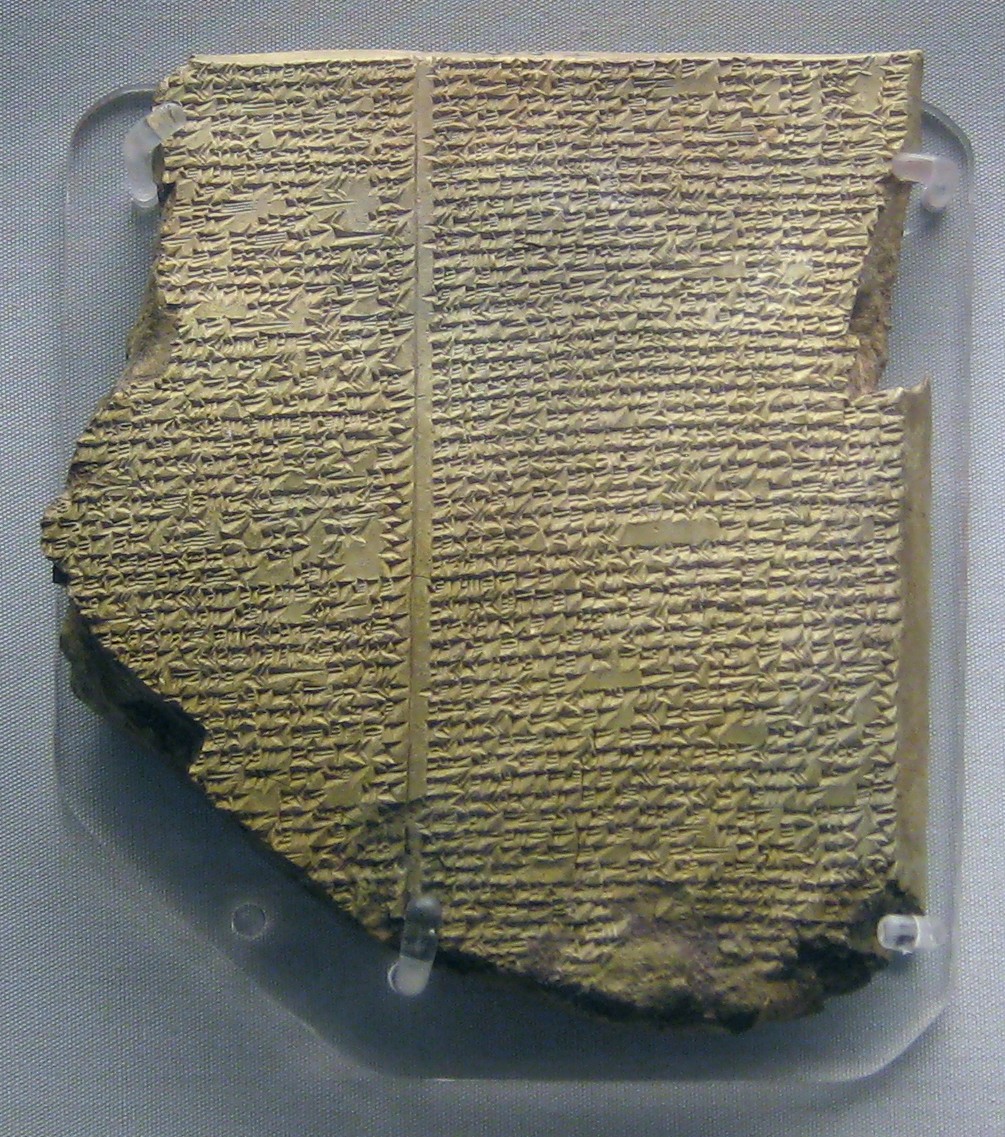
The most famous is Tablet XI of the Epic of Gilgamesh, discovered in the library of the Assyrian king Ashurbanipal and now in the British Museum. When George Smith first translated it in 1872, he was so excited he reportedly began undressing in the museum's reading room. In it, a man named Utnapishtim is warned of a coming flood, builds a great boat, brings his family and animals aboard, survives the deluge, lands on a mountain, sends out birds (a dove, a swallow, a raven), and offers a sacrifice afterward.
Even older is the Atrahasis epic, preserved in copies from around 1700 BC, which tells a similar story.
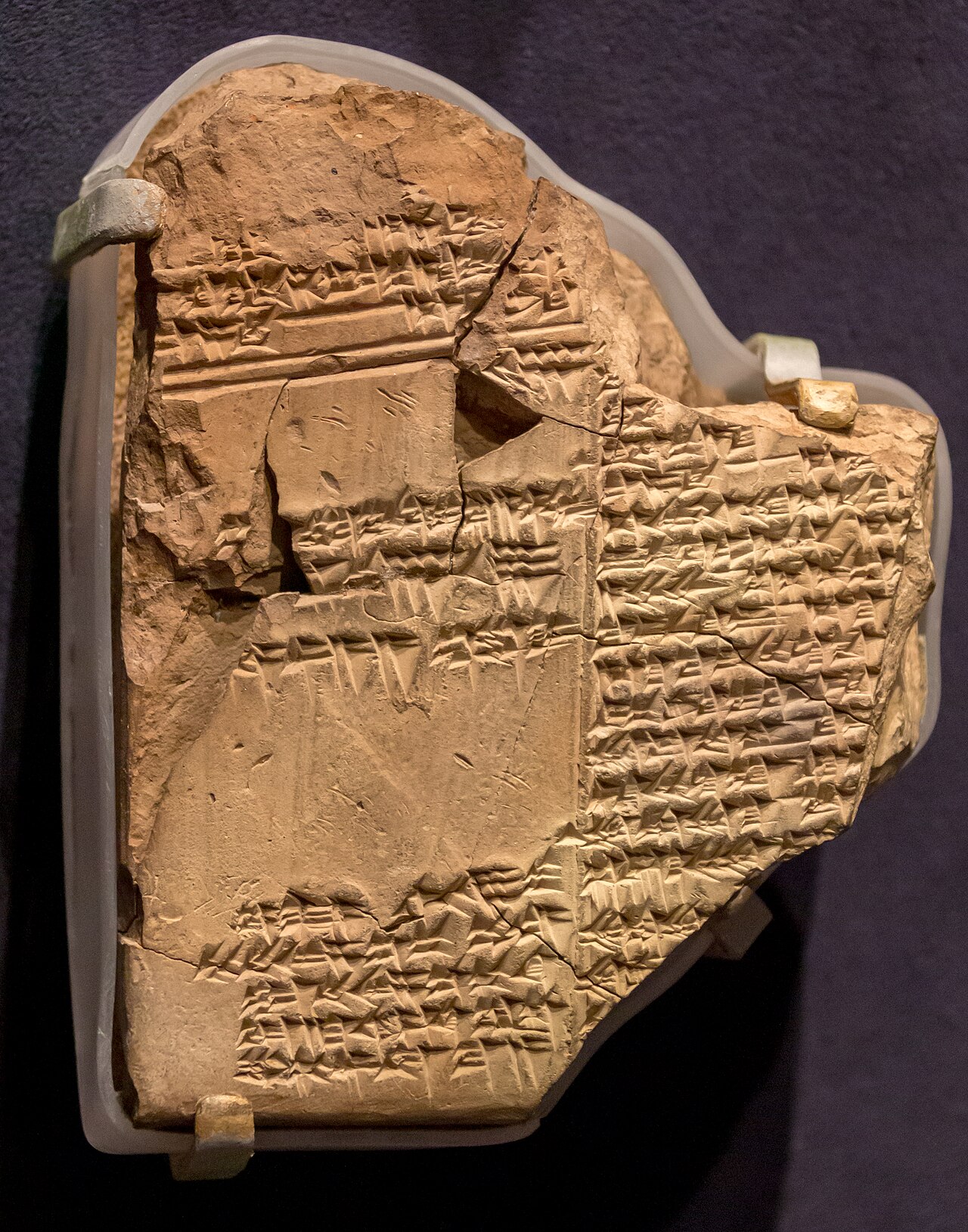
Gilgamesh and Genesis compared
- Why the flood?
- Gilgamesh/Atrahasis: humans are too noisy and disturb the gods' rest. Genesis: humanity has filled the earth with violence and corruption.
- Who decides?
- Gilgamesh: a council of quarreling gods, one of whom secretly warns the hero. Genesis: one God, who judges justly and chooses to save.
- Afterward
- Gilgamesh: the starving gods swarm "like flies" around the sacrifice. Genesis: God makes a covenant with all life and sets the rainbow as a sign.
For believers, these parallels can be read as a sign that ancient peoples across the region remembered a real catastrophe, with Genesis preserving its true meaning. That reading is a serious possibility, not a settled conclusion. Either way, the Bible does not stand alone in remembering a world-changing flood.
The Ark itself
Using the common cubit of about 18 inches, the Ark measures about 450 feet long, 75 feet wide, and 45 feet high, with a length six times its width. Those numbers are specific enough to study as engineering: how it could be built, how stable it would be, and what it could hold. Proportions alone do not show seaworthiness; that also depends on materials, structure, loading, and conditions.
The Case for the Biblical Account
Scripture's account
God floods the earth because of human violence, preserving Noah, his family, and the animals in an ark that comes to rest in the mountains of Ararat (Genesis 6–9).
What evidence would we expect?
Independent flood memories in neighboring cultures; geological signs of massive flooding in the region; and possibly physical remains of the vessel in the Ararat region.
The discoveries
Multiple Mesopotamian flood accounts (Atrahasis, Gilgamesh, the Sumerian King List). Archaeological flood deposits at Shuruppak, Ur, and Kish. The boat-shaped Durupınar formation near Mount Ararat.
Testing the discoveries
The tablets are certain. The flood layers are real but date to different periods and appear to be regional. Durupınar remains disputed: supporters point to its shape and radar readings, while geologists have proposed a natural formation.
The strongest reconstruction
A real catastrophe remembered across the ancient Near East is a serious historical possibility, with Genesis giving the event its theological meaning. Specialists have suggested that a severe flood around Shuruppak may have contributed to the Mesopotamian memory. Which event lies behind Genesis has not been established.
What remains possible
A global flood, a vast regional flood that covered the whole known world of the people involved, or a combination. The precise scale, date, and the Ark's location remain open questions.
Discoveries worth investigating
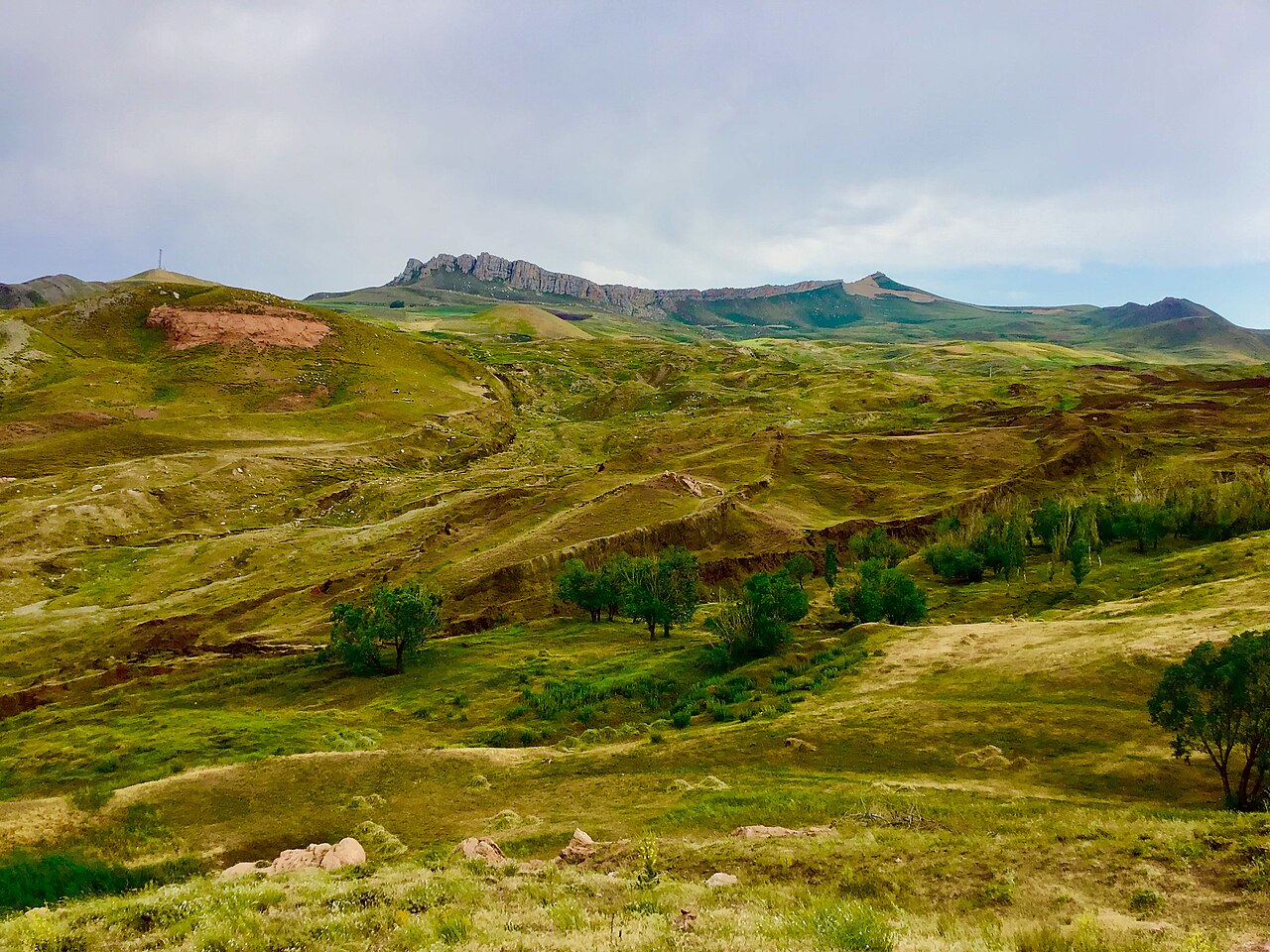
The Durupınar formation, about 18 miles south of Mount Ararat, is a boat-shaped outline roughly the length of the biblical Ark. Supporters have pointed to its shape, apparent internal structures, and ground-penetrating radar readings. Geologists have argued it is a natural rock formation. News reports in 2026 describe new permitted work at the site and claims by researchers; peer-reviewed results have not yet been published, as far as we have checked. We place it under Active and Disputed Discoveries: worth following closely, but not yet confirmed.
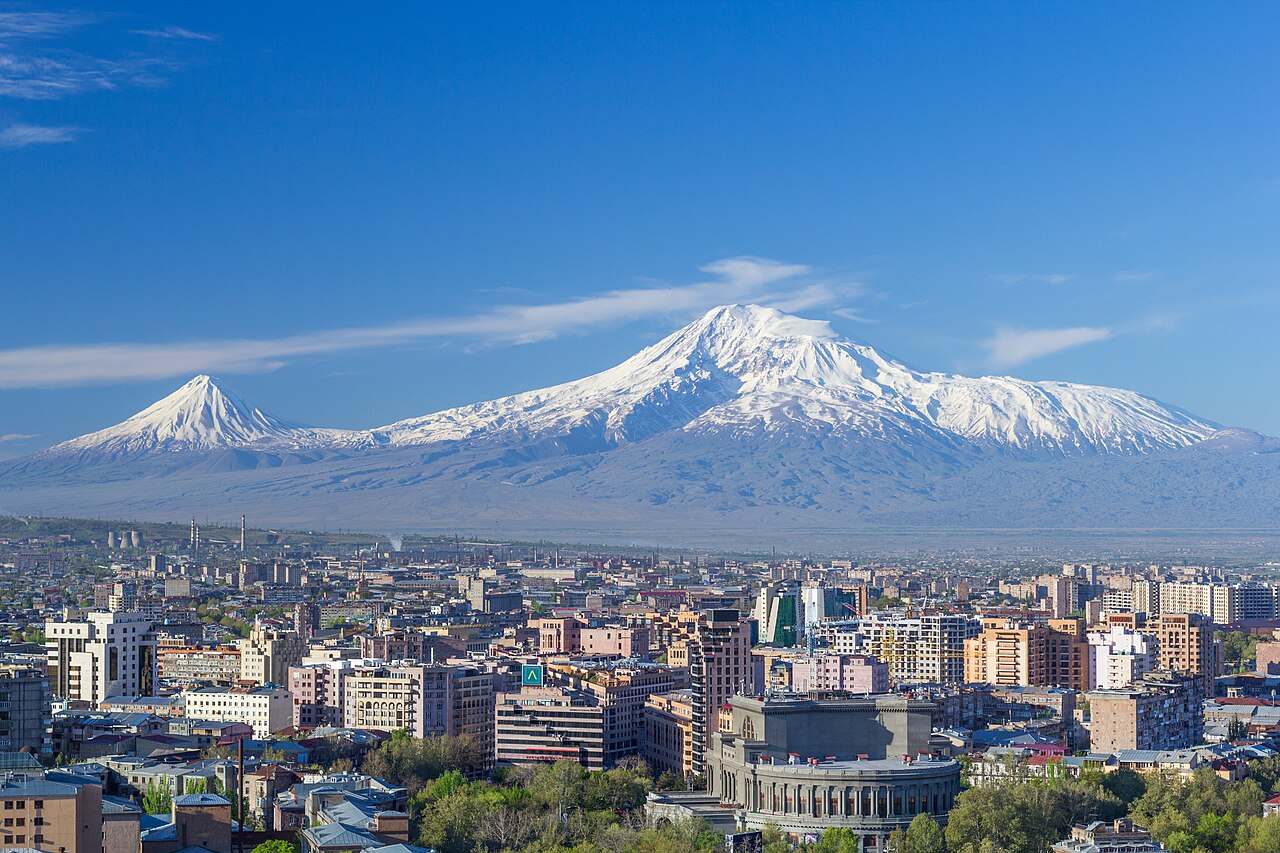
Note that Genesis says the Ark rested on "the mountains of Ararat," not on a single peak. Ararat (ancient Urartu) was the name of a whole mountainous region in what is now eastern Turkey and Armenia. The modern Mount Ararat may be one candidate among several.
The sons of God and the Nephilim
Heavenly beings rebelled and took human wives. This is the view of 1 Enoch and Jubilees, many early Jewish interpreters, and many early church fathers. Jude 6 and 2 Peter 2:4 are often read in this light.
The "sons of God" are the faithful line of Seth intermarrying with the line of Cain. Augustine and many later Christian interpreters held this view.
Ancient kings who claimed divine status and took wives at will. Several Jewish interpreters held this view.
What the evidence shows
- Mesopotamian flood stories predate the oldest surviving copies of Genesis.
- Catastrophic floods struck ancient Mesopotamian cities.
- The Ark's dimensions are specific enough for an engineering study. Seaworthiness has not been tested.
- The Durupınar formation is the remains of Noah's Ark.
- The exact scale and date of Noah's flood.
- God judged the world and saved Noah by grace.
Continue the journey
Ancient MysteriesThe Watchers: The Story Behind Four Mysterious VersesWho were the "sons of God" of Genesis 6, and what did ancient Jewish writers believe they taught humanity?More from this lesson
Investigations
Optional deep dives: the ancient sources, the physical evidence, and every interpretation side by side, including unconventional ones, each labeled for what it is.
The Watchers: The Story Behind Four Mysterious VersesAncient text: documented · Events described: not historically testable · Extraterrestrial reading: modern hypothesis, no supporting evidence
Who were the "sons of God" of Genesis 6, and what did ancient Jewish writers believe they taught humanity?
Genesis 6:1–4 gives four short verses about the sons of God, human women and the Nephilim. The Book of the Watchers (1 Enoch 1–36), preserved in Aramaic among the Dead Sea Scrolls, expands them into a full account of heavenly beings who descended, took wives, fathered giants, and taught forbidden knowledge.
Open the full investigation →The Book of GiantsAncient text: documented in fragments · Not part of any Bible · Events: not historically testable
What does the lost Book of Giants from Qumran say about the Nephilim, and why does it mention Gilgamesh?
An Aramaic work of the Enochic tradition, known from fragments of several Dead Sea Scrolls, tells the giants' own story: ominous dreams, a visit to Enoch for their meaning, and the coming judgment. Two of its giants bear the names of Gilgamesh and Humbaba from the Mesopotamian epic.
Open the full investigation →The Seven Sages and the Watchers: Who Brought Knowledge to Humanity?Ancient traditions: documented · Literary connection: argued by specialists · Identity of the beings: unknown
Did Mesopotamia's tradition of seven sages before the Flood shape the Jewish story of the Watchers?
Mesopotamian tradition remembered seven apkallu, wise beings who came before the Flood and taught humanity the arts of civilization. Specialists have argued that 1 Enoch's Watchers are a deliberate Jewish reversal of this tradition: the same idea of heavenly teachers before the Flood, but judged rather than honored.
Open the full investigation →The Family Tree of the Flood StoriesTexts and their relationships: documented · The underlying event: unresolved
How are the ancient flood accounts related, and how old is each one, really?
The Sumerian flood story, Atrahasis, Gilgamesh XI and Berossus form one documented Mesopotamian line of transmission. Genesis tells the story in the same broad world but with a different theology. Indian and Greek flood stories are more distant. For each, the date the story is set, the date it was composed, and the date of its oldest surviving copy are different things.
Open the full investigation →Ancient Astronauts: The Claims Examined One by OneAncient accounts: documented · Extraterrestrial explanations: no verified evidence
Where do ancient-astronaut theories touch the Bible, and how does each claim hold up?
Since the 1960s, writers have proposed that gods and angels in ancient texts were extraterrestrial visitors. The ancient texts are real and extraordinary; the extraterrestrial readings are modern. This dossier lists each main claim, its best evidence, and its assessment.
Open the full investigation →Echoes Across Civilizations
Optional: how other ancient peoples told similar stories. Open one to compare, then come back to the lesson.
The great floodBabylon · India · Greece · K'iche' Maya · China
Why do so many cultures remember a world-destroying flood?
- Babylon: Atrahasis Shared literary world
- Babylon: Gilgamesh, Tablet XI (Utnapishtim) Shared literary world
- India: Manu and the fish (Śatapatha Brāhmaṇa 1.8.1) Resemblance only
- Greece: Deucalion and Pyrrha Possible historical contact
- K'iche' Maya: Popol Vuh Resemblance only
- China: Gun, Yu, and the great flood Similar human experience
Giants, Watchers, and heavenly beingsJewish (Second Temple) · Mesopotamia · Greece
What did other cultures say about beings between heaven and earth?
- Jewish (Second Temple): 1 Enoch, the Book of the Watchers Shared literary world
- Mesopotamia: The Apkallu (the seven sages) Shared literary world
- Greece: Titans, Giants, and demigod heroes Resemblance only
Also covered: Ancient-astronaut interpretations, clearly labeled as a modern theory.
Compare side by side →Why this matters to the rest of Scripture
- The spies report Nephilim in Canaan.
- The blood prohibition given to Noah becomes Israel's law.
- Jesus: "As the days of Noah were, so shall also the coming of the Son of man be."
- Peter sees the Ark's rescue through water as a picture of baptism.
- "By faith Noah… prepared an ark to the saving of his house."
- Noah is called "a preacher of righteousness."
Sources to explore
Overviews are a starting point. Each links onward to the primary sources and specialist studies behind it.