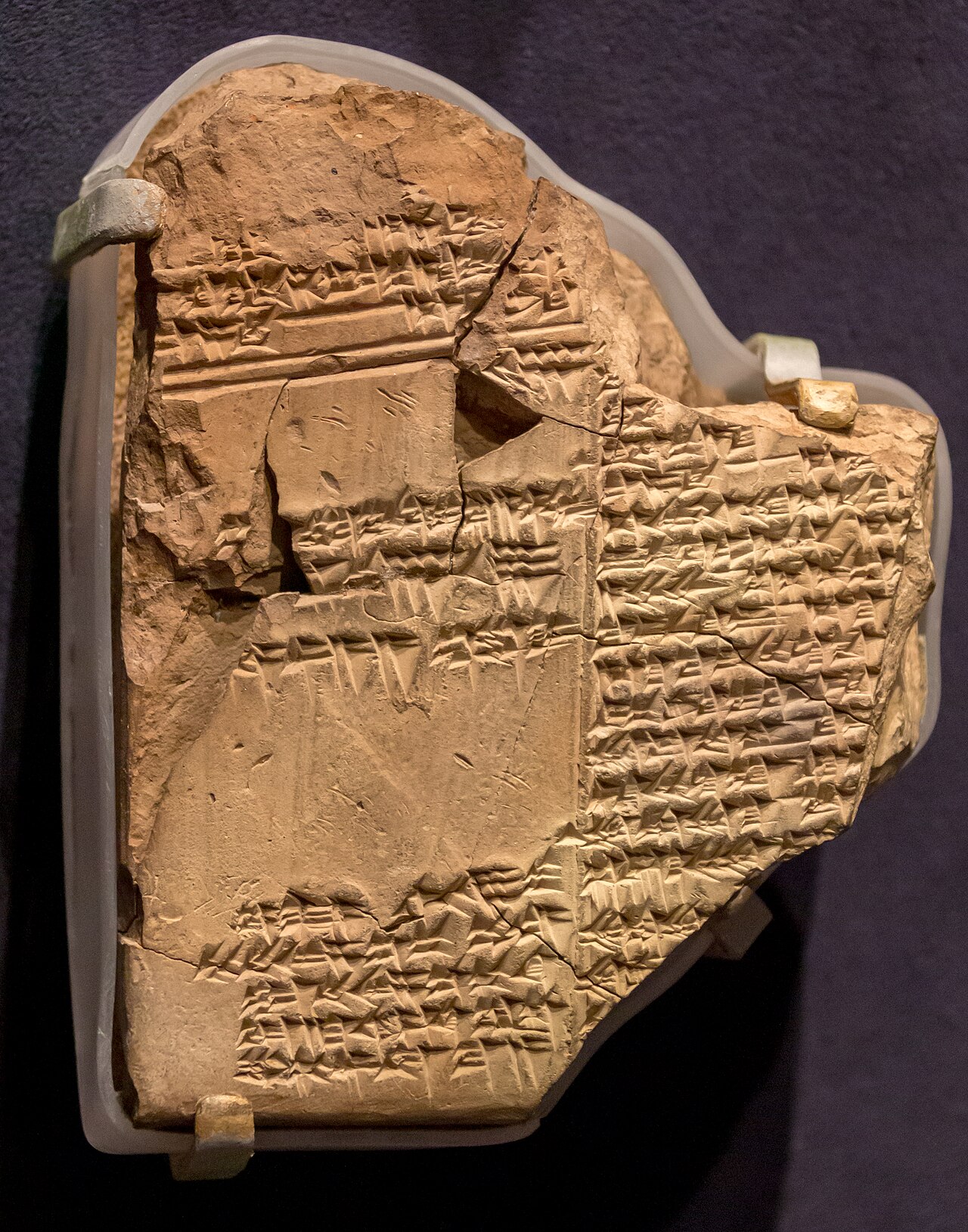
The gods, disturbed by humanity's noise, send plague, drought, and finally a flood. The god Enki secretly warns Atrahasis, who builds a boat, saves his family and animals, and survives seven days of flood.
Similar
Divine decision to destroy humanity
One man warned in advance
A boat carrying family and animals
Sacrifice after the flood
Different
Many gods; the flood is caused by noise, not wickedness
A god must secretly break the council's decision
Babylon · Mesopotamia
Gilgamesh, Tablet XI (Utnapishtim)
Shared literary world
Composed
Standard version c. 1200–1000 BC, drawing on Atrahasis
Earliest surviving copy
Tablets from Ashurbanipal's library, Nineveh, 7th century BC
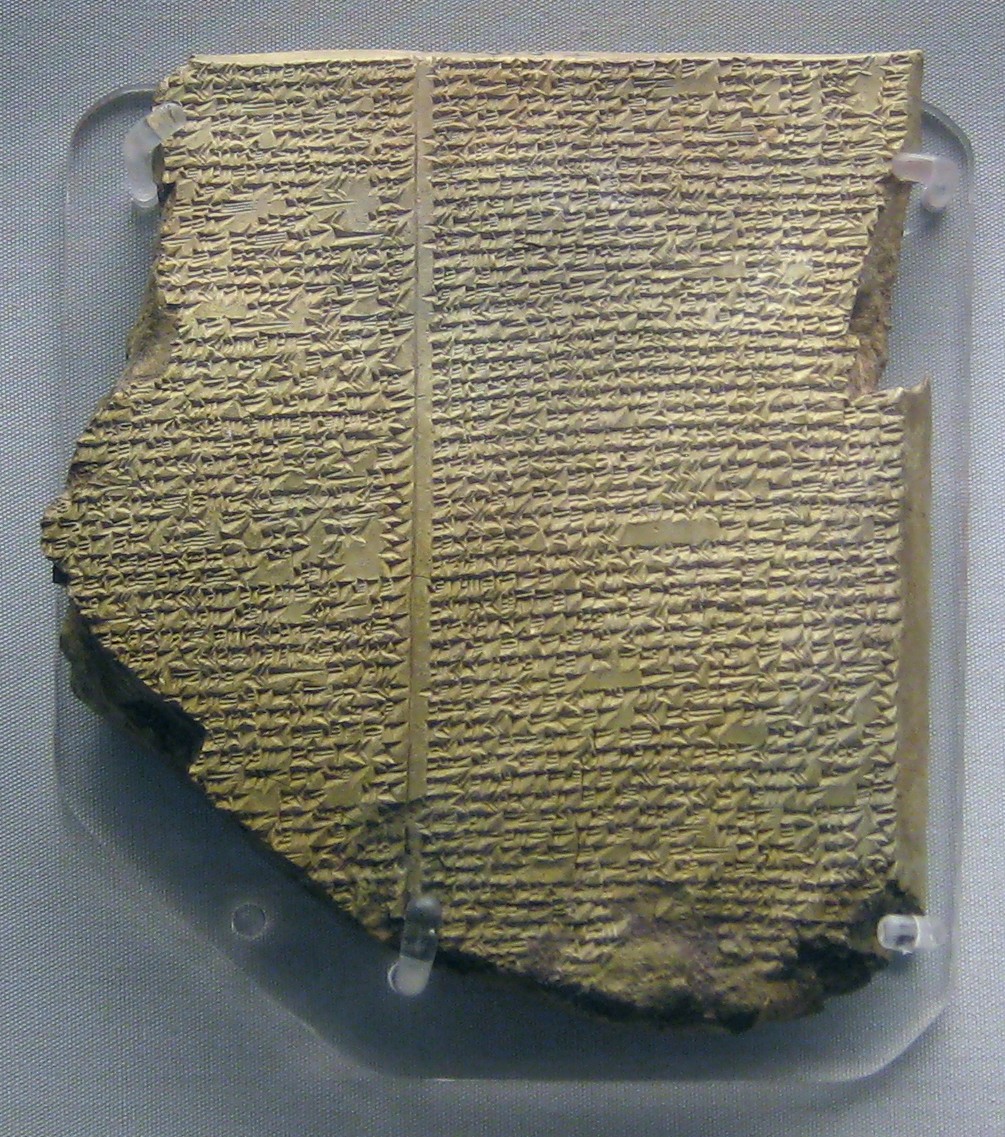
Utnapishtim tells Gilgamesh how he was warned, built a great boat, survived the flood, landed on Mount Nimush, and sent out a dove, a swallow, and a raven before leaving the boat and sacrificing.
Similar
Warning, boat, family, and animals
Lands on a mountain
Sends out birds to find dry land
Sacrifice afterward
Different
The gods "gathered like flies" around the sacrifice
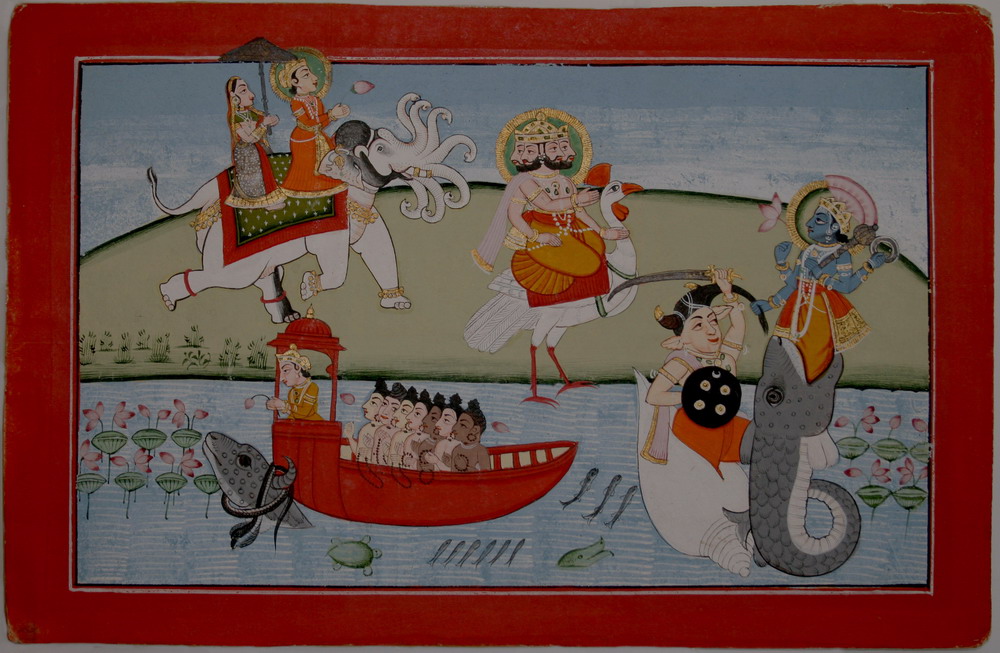
Later artwork, not historical evidenceImage credit
Manu rescues a small fish, which warns him of a coming flood that will sweep away all creatures. He builds a ship, the fish tows it to a northern mountain, and Manu survives alone. He then offers a sacrifice from which a woman arises, and through her the human race begins again.
Similar
A righteous man warned of a universal flood
He builds a vessel
The vessel reaches a mountain
Sacrifice afterward; humanity renewed through him
Different
Warned by a fish, not God
Manu survives alone, without family or animals in this earliest version
Later versions (Mahābhārata, Matsya Purāṇa) add the god Vishnu and seven sages; they should not be merged with this earliest account
Read it: Śatapatha Brāhmaṇa 1.8.1, trans. Eggeling, Sacred Books of the East vol. 12 (1882)
Greece · Mediterranean
Deucalion and Pyrrha
Possible historical contact
Composed
Mentioned by the 5th century BC (Pindar); full accounts later
Earliest surviving copy
Fullest versions in Ovid (AD 8) and Apollodorus (1st–2nd century AD)
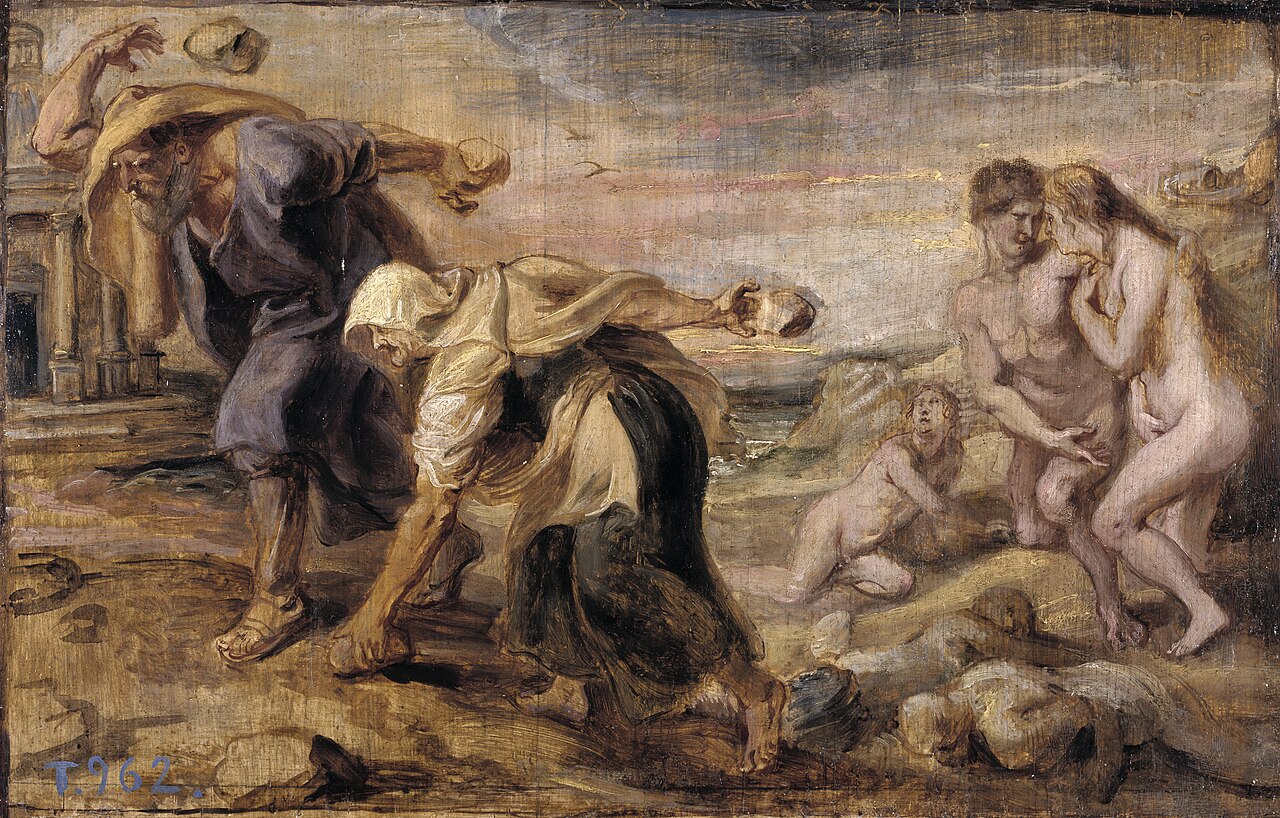
Later artwork, not historical evidenceImage credit
Zeus floods the earth to punish a violent, wicked generation. Deucalion, warned by his father Prometheus, builds a chest and survives with his wife Pyrrha, landing on Mount Parnassus. They repopulate the earth by throwing stones that become people.
Similar
A flood sent to punish human wickedness
A warned righteous couple survives in a vessel
Landing on a mountain
Different
Repopulation by thrown stones
Many gods
Written down long after Genesis' setting; Greek writers may have known Near Eastern stories
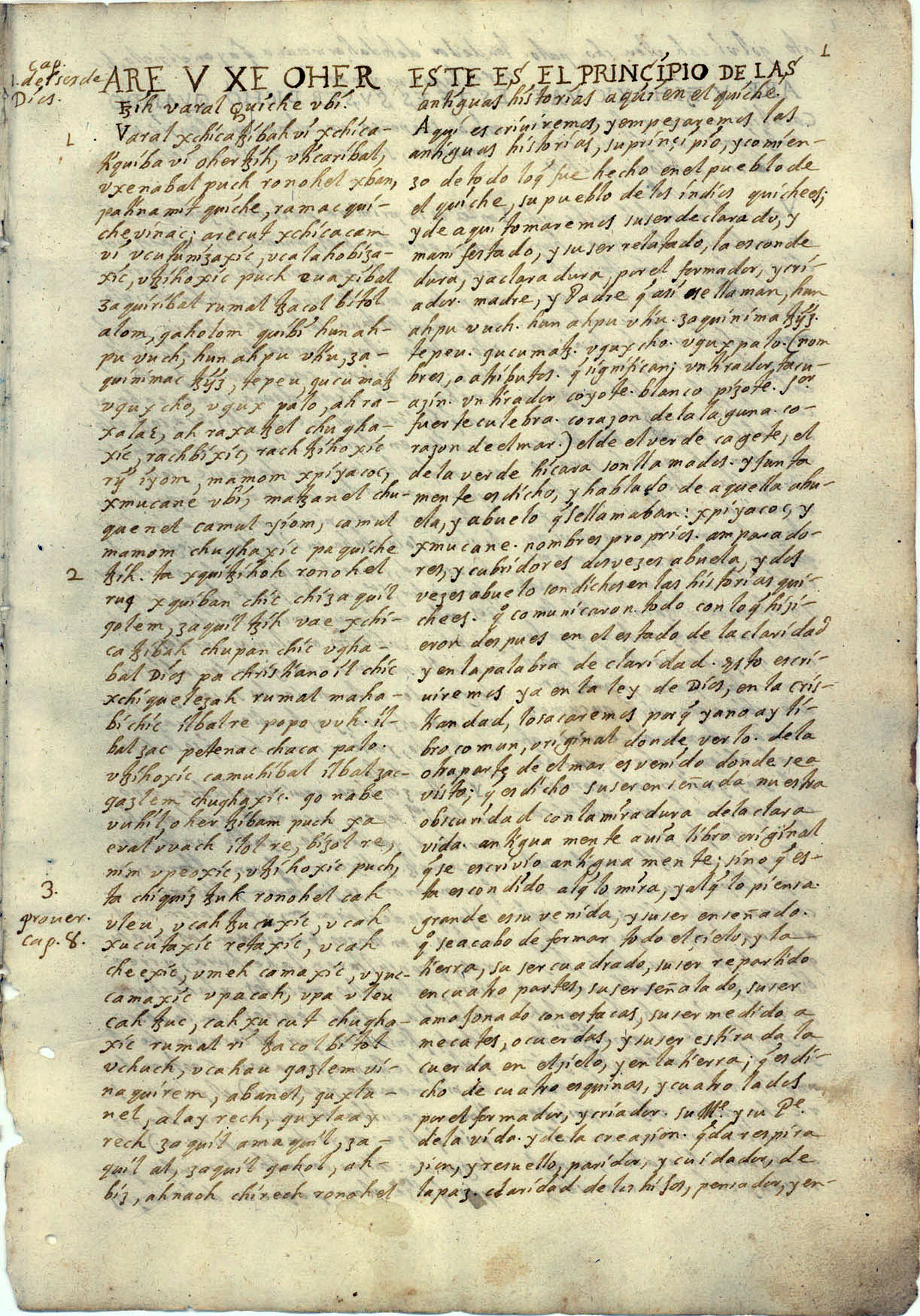
The gods' earlier creation, people made of wood who did not honor their makers, is destroyed by a great flood and a rain of resin.
Similar
An earlier humanity destroyed by flood for failing to honor its creators
Different
No warned survivor or boat
Part of a cycle of several creations
Written down after Spanish contact, so some influence cannot be ruled out
China · East Asia
Gun, Yu, and the great flood
Similar human experience
Composed
Traditions recorded in the 1st millennium BC (Book of Documents, Mencius)
Earliest surviving copy
Bamboo and later manuscripts; the Bin Gong bronze vessel (c. 900 BC) mentions Yu
A great flood covers the land in the age of the sage-kings. Gun fails to stop it; his son Yu succeeds by dredging channels to drain the waters, and founds the Xia dynasty.
Similar
A vast flood in the early age of humanity
Different
The flood is controlled by engineering, not escaped by boat