myBibleHistory
The mound of ancient Jericho

Books of Scripture

Joshua

The God who keeps His promise

24 chapters

Joshua, in Hebrew Yehoshua, "the LORD saves," carries Israel across the Jordan: Rahab and the scarlet cord, the walls of Jericho, Ai and the altar on Ebal, the day the sun stood still, Hazor in flames, the division of the land, and a final covenant at Shechem. It also brings some of the most debated archaeology in the Bible: Jericho's walls, Ai's location, Hazor's destroyer, and the first mention of Israel outside Scripture.

Lessons

  1. 1Joshua CommissionedJoshua 1 · "Moses my servant is dead." God tells Joshua to lead Israel across the Jordan into a land stretching from the wilderness to Lebanon and the Euphrates, to keep the book of the law day and night, and three times: be strong and courageous. The eastern tribes promise to fight with their brothers.
  2. 2Rahab and the SpiesJoshua 2 · Two spies lodge in Jericho with Rahab, a prostitute whose house is in the city wall. She hides them, confesses faith in Israel's God, and bargains for her family's lives. The sign of the bargain is a scarlet cord in her window.
  3. 3The Jordan OpensJoshua 3 · At harvest time, with the Jordan in flood, the priests carry the ark into the river. The water upstream stops "very far from the city Adam," and Israel crosses on dry ground. Landslides have blocked the Jordan near Adam in recorded history; whether that explains the crossing is another question.
  4. 4Twelve Memorial StonesJoshua 4 · A man from each tribe carries a stone from the riverbed, and Joshua sets up the twelve at Gilgal, so that when children ask, "What mean ye by these stones?" the story will be told. The chapter also mentions twelve stones set up in the middle of the Jordan.
  5. 5Gilgal and the CommanderJoshua 5 · The men born in the wilderness are circumcised with flint knives. Israel keeps its first Passover in Canaan, eats the produce of the land, and the manna stops. Near Jericho, Joshua meets a man with a drawn sword: "as captain of the host of the LORD am I now come."
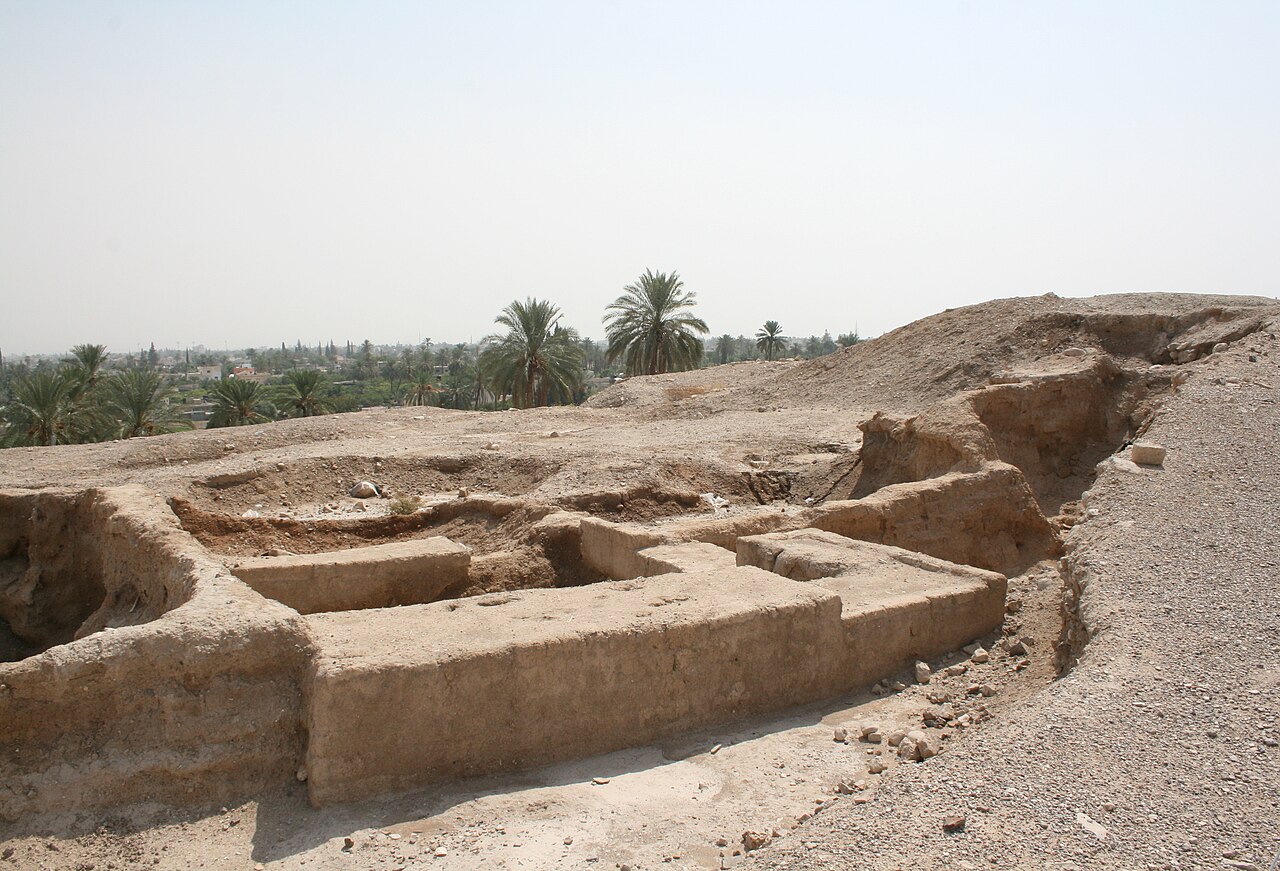
  6. 6Walls of JerichoJoshua 6 · For six days Israel circles Jericho once, with seven priests blowing rams' horns before the ark; on the seventh day, seven times. At the great shout the wall falls. The city is devoted to destruction, Rahab's family is spared, and Joshua curses anyone who rebuilds it. Archaeology found a real destroyed city at Jericho. When it fell is one of the Bible's most debated questions.
  7. 7Achan and Defeat at AiJoshua 7 · Israel attacks little Ai and is routed. God tells Joshua that someone has taken from what was devoted at Jericho. By lot, Achan is found: a fine Babylonian cloak, silver and a bar of gold buried in his tent. He and his family are stoned in the Valley of Achor.
  8. 8Ai and the Covenant AltarJoshua 8 · An ambush takes Ai, and it is burned to "an heap for ever." Then Joshua builds an altar on Mount Ebal, writes a copy of the law on stones, and reads every word to all Israel between Ebal and Gerizim. In the Hebrew the ceremony comes here; in the Greek, after 9:2; in a Dead Sea Scroll, apparently near the crossing of the Jordan.
  9. 9The Gibeonites' TreatyJoshua 9 · The people of Gibeon put on worn-out clothes, carry moldy bread and patched wineskins, and tell Joshua they come from far away. Israel's leaders make a treaty "and asked not counsel at the mouth of the LORD." Three days later the truth is out, but the oath stands, and the Gibeonites become woodcutters and water-carriers.
  10. 10The Southern Campaign and the SunJoshua 10 · Five Amorite kings attack Gibeon. Joshua marches all night, routs them down the pass of Beth-horon, hailstones kill more than the sword, and Joshua cries, "Sun, stand thou still upon Gibeon," a line quoted from the lost Book of Jashar. The kings are found in a cave at Makkedah, and southern cities fall one by one.
  11. 11Hazor and the Northern CoalitionJoshua 11 · Jabin king of Hazor gathers the northern kings with horses and chariots "as the sand that is upon the sea shore." Israel defeats them at the waters of Merom, hamstrings the horses and burns the chariots, and burns Hazor. Archaeologists have found Hazor's great Late Bronze city destroyed in an intense fire. Who set it is debated.
  12. 12Thirty-One KingsJoshua 12 · A list of the kings Israel defeated: Sihon and Og east of the Jordan under Moses, and thirty-one kings west of the Jordan under Joshua. The list is a summary of victory, written like a royal record. It is not a list of thirty-one excavated destruction layers.
  13. 13The Land Still UnconqueredJoshua 13 · Joshua is old, and God tells him "there remaineth yet very much land to be possessed": the Philistine cities, Phoenicia, Lebanon. Then the eastern lands are described: Reuben's, Gad's and half of Manasseh's. Balaam son of Beor appears one last time, among the slain.
  14. 14Caleb's InheritanceJoshua 14 · The allotment of the land begins at Gilgal. Caleb, now eighty-five, reminds Joshua of the promise Moses made forty-five years before, when they were the only scouts who trusted God. He asks for Hebron, the hill country of the giant Anakim, and receives it.
  15. 15Judah and AchsahJoshua 15 · Judah's borders and its towns, district by district. Caleb promises his daughter Achsah to whoever takes Debir; Othniel does, and Achsah asks her father for springs of water and gets them. Judah cannot drive out the Jebusites of Jerusalem. And the Greek Bible has eleven towns, including Bethlehem, that the Hebrew lacks.
  16. 16Ephraim's TerritoryJoshua 16 · The lot of Joseph's sons runs from the Jordan at Jericho up through Bethel to the sea. Ephraim's border is traced in detail. And a single verse records failure: the Canaanites of Gezer were not driven out, but became forced laborers.
  17. 17Manasseh and Zelophehad's DaughtersJoshua 17 · Manasseh's clans receive their land, and Zelophehad's five daughters come before Eleazar and Joshua to claim what Moses promised them. They receive it. Manasseh cannot drive out the Canaanites of the valley cities, and Joseph's tribes complain their land is too small. Joshua tells them to clear the forest and not fear the "chariots of iron."
  18. 18Shiloh and BenjaminJoshua 18 · The whole congregation gathers at Shiloh and sets up the tent of meeting. Seven tribes still have no land. Joshua sends three men from each to walk the land and write it down in seven parts, and casts lots for them before the LORD. Benjamin's lot falls between Judah and Joseph.
  19. 19Seven Tribal Portions and Joshua's CityJoshua 19 · The lots fall for Simeon (inside Judah), Zebulun, Issachar, Asher, Naphtali and Dan. Dan's land is too small, and the tribe goes north to take Leshem and rename it Dan. Last of all, Israel gives Joshua the town he asks for, Timnath-serah in the hill country of Ephraim.
  20. 20Cities of RefugeJoshua 20 · Moses' law of refuge becomes a map: six cities, Kedesh, Shechem and Hebron west of the Jordan, Bezer, Ramoth-gilead and Golan east of it, where someone who killed by accident could flee the avenger of blood until a trial. The Greek version of this chapter is markedly shorter.
  21. 21The Levitical CitiesJoshua 21 · The Levites receive forty-eight towns with their pasturelands, spread through all the tribes. The chapter ends: "There failed not ought of any good thing." Two verses listing four Reubenite towns are missing from the Leningrad and Aleppo codices, though other manuscripts and the Greek have them.
  22. 22The Altar by the JordanJoshua 22 · The eastern tribes go home and build "a great altar to see to" by the Jordan. The western tribes gather for war, sure it is rebellion. Phinehas leads a delegation, and the eastern tribes explain: it is not for sacrifice but a witness that they too belong to the LORD. War is averted.
  23. 23Joshua's Last WarningJoshua 23 · Old and near death, Joshua gathers Israel's leaders. God has fought for them and given them the land, but nations still remain. If Israel holds fast to God, He will drive them out; if Israel mixes with them and their gods, they will become "snares and traps."
  24. 24The Covenant at Shechem and the BurialsJoshua 24 · At Shechem Joshua tells Israel's history from Abraham's idol-worshiping father to the gift of the land, and asks them to choose whom they will serve. The people choose the LORD. Joshua writes the words in the book of the law and sets up a great stone under an oak. Joshua, Joseph's bones and Eleazar are buried in the land.
  25. 25Historical Evidence: Conquest, Settlement and IdentityJoshua 1–24 · How did Israel come to be in Canaan? Jericho, Ai and Hazor tell different stories. An Egyptian king names "Israel" as a people in Canaan about 1208 BC. Canaan's rulers complained to Pharaoh about the 'Apiru. Hundreds of new villages appear in the hills. Here the evidence is brought together, with the main models scholars and believers have proposed.
  26. 26The Difficult Questions: Warfare, Canaanites and EthicsJoshua 6–11 · Joshua describes whole cities devoted to destruction at God's command. Readers of faith have struggled with this for centuries, and others have used the book to justify their own conquests. Here the texts are gathered with the main ways they have been read, without softening and without false certainty.

How Joshua came to us

Who wrote it, how it was copied, and how it reached the Bible you hold. These lessons follow the book through history.

  1. ★How Joshua Came to UsWho wrote Joshua, and when? How does its Greek form differ from the Hebrew? Where does the altar ceremony belong? Why do the oldest Hebrew codices lack two verses? Here is the history of the book from its setting to your Bible, with every major variant linked.
  2. 3Prophets, Priests, and ScribesAs Israel became a kingdom, royal scribes kept records, prophets' words were written down, and a lost book of the law was found in the Temple.
  3. 4Destruction and ExileBabylon destroyed the Temple and carried Judah into exile, but the Scriptures went with them and became the center of their faith.
  4. 6The SeptuagintJews in Egypt translated their Scriptures into Greek, creating the Bible of the early church and of the New Testament writers.
  5. 7The Dead Sea ScrollsA shepherd's discovery in 1947 gave us Bible manuscripts a thousand years older than any known before, and showed how faithfully the text was kept.
  6. 8Hebrew, Greek, and SamaritanThree ancient lines of copying, Hebrew, Greek, and Samaritan, let us compare the text and see where it was preserved and where it changed.

Journey of a Passage