"But the children of Israel committed a trespass in the accursed thing: for Achan… took of the accursed thing." Scouts tell Joshua that Ai is small; three thousand go up and flee, and thirty-six are killed. "The hearts of the people melted." Joshua tears his clothes: "Alas, O Lord GOD, wherefore hast thou at all brought this people over Jordan?"
"Get thee up; wherefore liest thou thus upon thy face? Israel hath sinned." By lot, tribe, clan, household and man are taken, and Achan is taken. Joshua says, "My son, give, I pray thee, glory to the LORD God of Israel, and make confession." Achan answers: "I saw among the spoils a goodly Babylonish garment, and two hundred shekels of silver, and a wedge of gold of fifty shekels weight, then I coveted them, and took them; and, behold, they are hid in the earth in the midst of my tent."
Messengers find the goods. Achan, the goods, "his sons, and his daughters, and his oxen, and his asses, and his sheep, and his tent, and all that he had" are taken to the valley of Achor. "And all Israel stoned him with stones, and burned them with fire." A great heap of stones is raised over him "unto this day."
One person's sin, a whole people's defeat
The chapter treats Israel as one body: "Israel hath sinned." Corporate responsibility was common in ancient thought. Readers have long asked why the family died: some suggest they knew of the goods buried in the family tent; others note that the text does not say so. Deuteronomy 24:16 and Ezekiel 18 insist on individual responsibility. The difficulty remains.
A Babylonian garment
Literally "a mantle of Shinar," Babylonia. Fine Mesopotamian textiles were traded across the Near East and prized; Mari and Ugarit texts list them among luxury goods. The detail fits the ancient trade world; no such garment has been identified at any site linked with Achan.
The Valley of Achor
Achor means "trouble," a play on Achan (in 1 Chronicles 2:7 he is "Achar, the troubler of Israel"). The valley's location is debated, often placed southwest of Jericho (the Buqeia). Hosea 2:15 turns the name around: "the valley of Achor for a door of hope."
The Case for the Biblical Account
Scripture's account
Defeat at Ai; Achan's theft discovered and punished (Joshua 7).
What evidence would we expect?
A small town of Ai; luxury textiles in trade; ancient lot-casting.
The discoveries
The identification of Ai is disputed (see the Ai investigation); Mesopotamian textiles in Late Bronze trade; lot-casting with Urim and Thummim in Israel.
Testing the discoveries
The cultural details fit; the event is known only from Scripture.
The strongest reconstruction
Joshua 7 presents holiness and corporate responsibility at the start of the conquest.
What remains possible
That the Achor heap preserved a local memory.
What the evidence shows
- Mesopotamian luxury garments were traded in the Late Bronze Age.
- Achan's family shared his guilt. Not stated; compare Deuteronomy 24:16.
- Achan's buried goods have been found.
Continue the journey
Ancient MysteriesAi: et-Tell or Khirbet el-Maqatir?Has Joshua's Ai been found?More from this lesson
Investigations
Optional deep dives: the ancient sources, the physical evidence, and every interpretation side by side, including unconventional ones, each labeled for what it is.
Ai: et-Tell or Khirbet el-Maqatir?Identification: disputed · et-Tell: does not fit · Maqatir: advocacy proposal
Has Joshua's Ai been found?
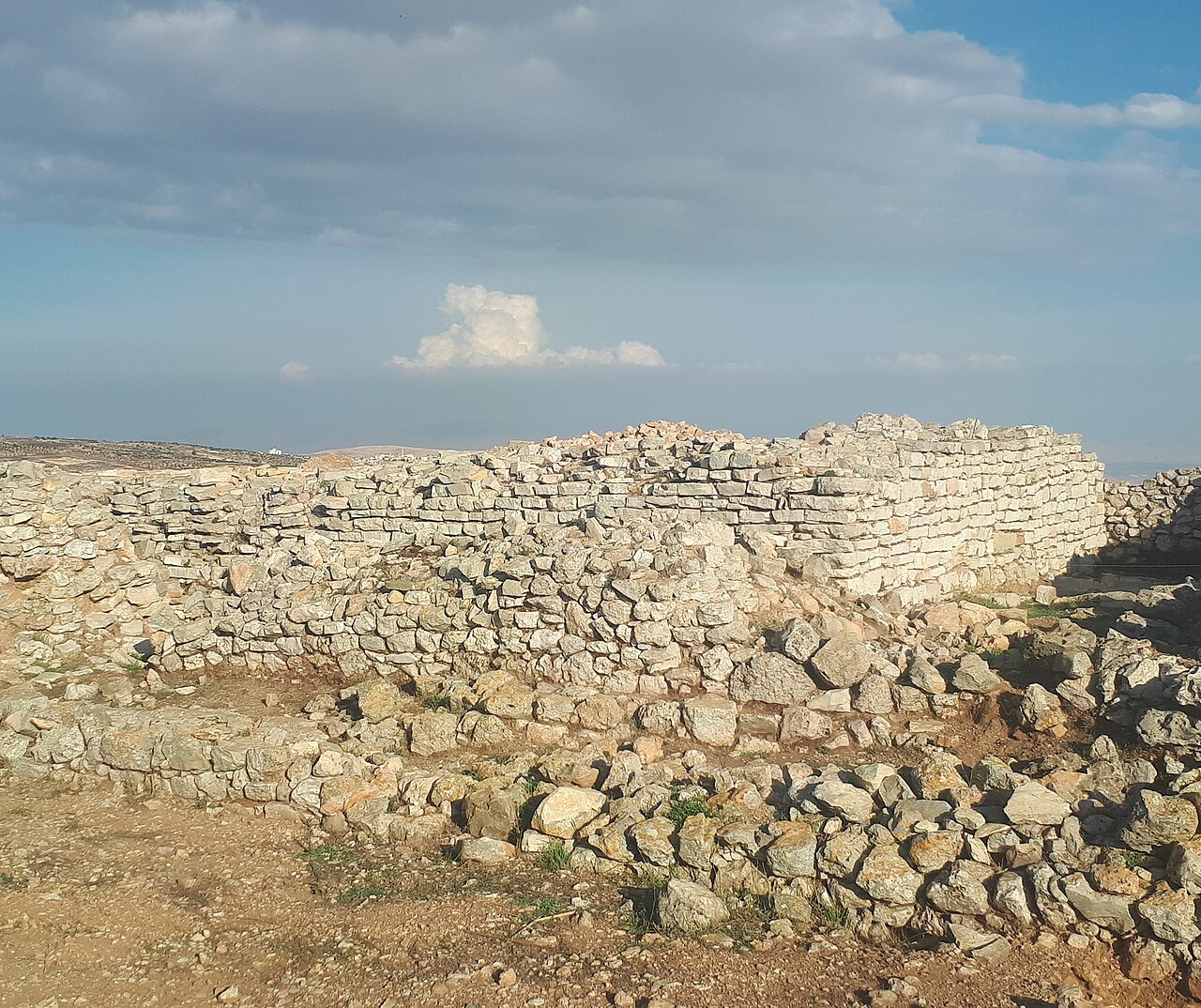
Ai, "the ruin," is usually identified with et-Tell near Bethel, a great Early Bronze Age city destroyed about 2400 BC, followed by a small Iron Age village: no city in either proposed period of Joshua. Advocates of an early conquest argue that Ai is Khirbet el-Maqatir, a small site nearby with a claimed Late Bronze I fortress.
Open the full investigation →Why this matters to the rest of Scripture
- "The children shall not be put to death for the fathers."
- "Achar, the troubler of Israel."
- "The valley of Achor for a door of hope."
- Ananias and Sapphira.