Era 5 · The Promised LandJoshua
Historical Evidence: Conquest, Settlement and Identity
What archaeology, Egypt and Canaan's own letters tell us about Israel's beginnings
Joshua tells the story of a conquest, but also, in its own words, of land that remained, cities that were not taken and peoples who lived among Israel "unto this day." Judges 1 adds more. Archaeology has added a great deal since the 1920s, and what it shows is not a single answer.
Three cities, three stories
| Site | What was found | How it relates to Joshua |
|---|---|---|
| Jericho | A walled city violently destroyed; majority date 16th century BC, minority c. 1400 BC; little Late Bronze occupation | Fits an early date only on the minority dating |
| Ai (et-Tell) | Early Bronze city destroyed c. 2400 BC; Iron I village | Does not fit either date; Khirbet el-Maqatir proposed as an alternative |
| Hazor | Great Late Bronze city destroyed by fire in the 13th century BC | Fits the 13th-century model; the attacker is disputed |
The Amarna letters
About 380 cuneiform tablets found at Amarna in Egypt in 1887 preserve the correspondence of Pharaohs Amenhotep III and Akhenaten (14th century BC) with rulers across the Near East, including Canaan's city kings. Abdi-Heba of Jerusalem writes that the land is being lost to the 'Apiru (Habiru), a term for uprooted people, outlaws and mercenaries of many origins. The resemblance of 'Apiru to "Hebrew" has long been noted. Most scholars now see 'Apiru as a social category, not an ethnic group, so the letters cannot simply be read as Joshua's Israelites; some early-date proponents see Israel among them. The letters do show the world of rival city-states that Joshua 10–12 assumes.
New villages in the hills
Surveys of the central hill country (Israel Finkelstein, Adam Zertal and others) found that the number of settlements rose from a few dozen in the Late Bronze Age to some 250 or more small villages in Iron Age I (12th–11th centuries BC): four-room houses, collared-rim storage jars, terraces, cisterns, and few pig bones. Most scholars identify these villages with early Israel, though no single trait marks ethnicity.
Models of Israel's origins
Israel entered from outside and took Canaanite cities in a military campaign, as Joshua describes. Early-date version: c. 1406 BC (from 1 Kings 6:1), with Jericho and Maqatir as evidence; late-date version: 13th century BC, with Hazor as evidence.
Albrecht Alt (1925): Israelite clans settled gradually in the sparsely populated hills, with conflicts later.
George Mendenhall and Norman Gottwald (1960s–70s): Israel arose largely from Canaanite peasants and the 'Apiru breaking from the city-states. Many archaeologists now favor a form of local emergence, with pastoralists settling down.
Israel formed from several groups, including a core that came from Egypt and carried the Exodus memory, local Canaanites and pastoralists; conflicts such as Hazor's fall were remembered and gathered into a national story.
These models are interpretations of incomplete evidence. A believer may hold that God brought Israel into the land through events the evidence only partly records; the evidence is presented here so that each reader can weigh it.
The Case for the Biblical Account
Scripture's account
Israel enters Canaan under Joshua, wins key battles, and settles the land over time (Joshua 1–24; Judges 1).
What evidence would we expect?
Destructions at the named cities in one period; a new population in the land; external records.
The discoveries
Jericho, Ai and Hazor with different dates; the Merneptah Stele; the Amarna letters; the Iron I highland villages.
Testing the discoveries
No single destruction horizon matches the whole book. Israel is attested in Canaan by c. 1208 BC. The highland villages show a new or newly settled population.
The strongest reconstruction
Israel emerged in the hill country of Canaan by the late 13th century BC, through processes that included conflict; Joshua gathers these into a theological history of God's gift.
What remains possible
An early conquest with revised archaeology; a late conquest focused on a few cities; a largely internal emergence; mixed origins.
What the evidence shows
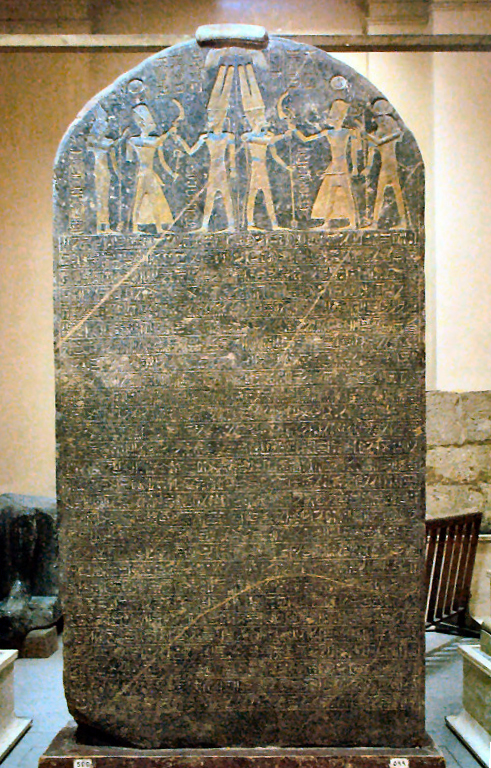
- The Merneptah Stele names Israel as a people in Canaan c. 1208 BC.Source: The Merneptah Stele (Cairo JE 31408): Oriental Institute educational text ↗
- The 'Apiru of the Amarna letters are the Hebrews of Joshua.Source: N. Na'aman, Canaan in the Second Millennium B.C.E. (2005), on the ʿapiru ↗
- Hundreds of new villages appear in the central hills in Iron I.
- A single conquest destroyed Canaan's cities at one time. Destructions occur at different dates.
- God gave Israel the land.
Continue the journey
Ancient MysteriesJericho: Did the Walls Fall?Does the destroyed city at Tell es-Sultan match Joshua 6?More from this lesson
Investigations
Optional deep dives: the ancient sources, the physical evidence, and every interpretation side by side, including unconventional ones, each labeled for what it is.
Jericho: Did the Walls Fall?Site: secure · Destruction: real · Date: disputed (majority 16th century BC) · Link to Joshua: disputed
Does the destroyed city at Tell es-Sultan match Joshua 6?
Tell es-Sultan, ancient Jericho, has the remains of a fortified city destroyed by fire, with collapsed walls and storage jars still full of grain. Excavators agree on the destruction. They disagree on its date: most place it in the 16th century BC; a minority argue for about 1400 BC, matching an early Exodus. No large walled city of the 13th century BC has been found.
Open the full investigation →Ai: et-Tell or Khirbet el-Maqatir?Identification: disputed · et-Tell: does not fit · Maqatir: advocacy proposal
Has Joshua's Ai been found?
Ai, "the ruin," is usually identified with et-Tell near Bethel, a great Early Bronze Age city destroyed about 2400 BC, followed by a small Iron Age village: no city in either proposed period of Joshua. Advocates of an early conquest argue that Ai is Khirbet el-Maqatir, a small site nearby with a claimed Late Bronze I fortress.
Open the full investigation →Hazor: Who Destroyed the City?Destruction: documented · Date: 13th century BC (range debated) · Attacker: disputed
Was Late Bronze Hazor burned by Joshua's Israelites?
Hazor, the largest city in Canaan, was destroyed in the 13th century BC in a fire hot enough to vitrify bricks, with statues of gods and kings deliberately mutilated. Its excavators attributed it to Israel; others suggest Egyptians, Sea Peoples, rival cities, or an uprising. A 2021 study modeled the evidence for its date and process.
Open the full investigation →Israel in Egyptian Records: the Merneptah Stele and the Amarna LettersStele and letters: authentic · "Israel" as a people c. 1208 BC: documented · Joshua or a conquest: not mentioned
What do Egypt's own texts say about Canaan and Israel in this period?
Pharaoh Merneptah's victory stele (c. 1208 BC) names Israel as a people in Canaan, the earliest widely accepted mention outside the Bible. A century earlier, the Amarna letters show Canaan's city-kings writing to Pharaoh and complaining about the 'Apiru. Neither mentions Joshua or describes a conquest.
Open the full investigation →Why this matters to the rest of Scripture
- The conquest incomplete.
- 480 years from the Exodus to the Temple.
- "A Syrian ready to perish was my father."
- "Thy father was an Amorite, and thy mother an Hittite."