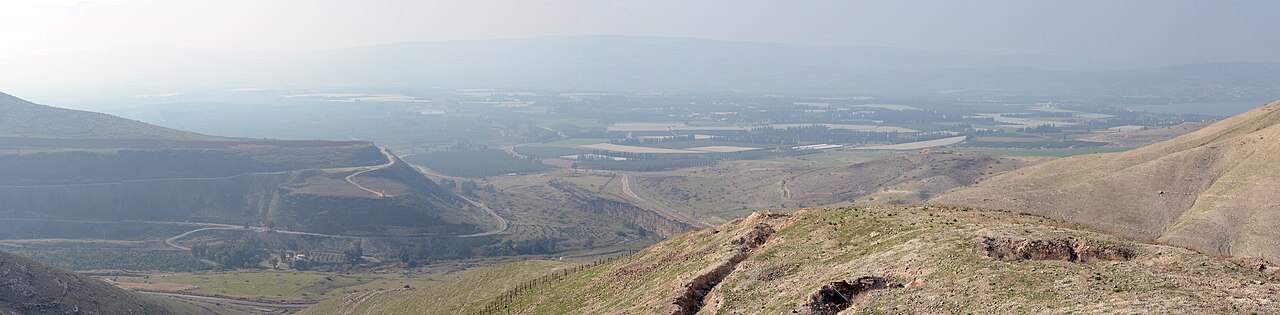
Joshua blesses Reuben, Gad and half of Manasseh and sends them home with great wealth: "take diligent heed to do the commandment and the law… to love the LORD your God." At the Jordan they build "a great altar to see to."
The whole congregation gathers at Shiloh to go to war. Phinehas the priest and ten leaders cross over: "What trespass is this that ye have committed against the God of Israel, to turn away this day from following the LORD, in that ye have builded you an altar, that ye might rebel?"
The eastern tribes answer: "The LORD God of gods, the LORD God of gods, he knoweth… We have done it for fear… that in time to come your children might speak unto our children, saying, What have ye to do with the LORD God of Israel? For the LORD hath made Jordan a border between us and you." The altar is "not for burnt offering, nor for sacrifice: But that it may be a witness between us." Phinehas and the leaders are satisfied: "This day we perceive that the LORD is among us."
An altar that is not an altar
Deuteronomy 12 allows sacrifice only at the chosen place. The western tribes assume the eastern altar is a rival sanctuary, like the later altars of Bethel and Dan (1 Kings 12). The answer turns on the difference between a working altar and a memorial copy, "the pattern of the altar of the LORD."
What was it called?
22:34 in the King James Version reads: "called the altar Ed: for it shall be a witness between us." The word "Ed" (witness) is printed in italics in the KJV because it is not in the standard Hebrew, which says only "called the altar… for it is a witness." Some Hebrew manuscripts and the Syriac supply "Ed"; translators differ. The altar's location is unknown; the site's atlas does not place it.
Phinehas the peacemaker
Phinehas, remembered for zeal at Peor (Numbers 25), here leads an inquiry rather than a strike, and accepts an explanation. The same figure models both.
The Case for the Biblical Account
Scripture's account
The eastern tribes' altar nearly causes civil war (Joshua 22).
What evidence would we expect?
An altar near the Jordan; tension between eastern and western tribes in later history.
The discoveries
No identified altar; the later history of Gilead and the Transjordanian tribes (Judges 12; 1 Kings 22); the textual question of the altar's name.
Testing the discoveries
The episode is known only from Scripture.
The strongest reconstruction
Joshua 22 addresses the place of the eastern tribes in Israel and the meaning of one sanctuary.
What remains possible
That the story reflects later debates about altars outside Jerusalem.
What the evidence shows
- The standard Hebrew of 22:34 does not contain the name "Ed."
- The altar's location is known.
Continue the journey
Connected elsewhere in ScriptureReuben, Gad, and the Lands East of the JordanNumbers 32: The eastern tribes' promise.More from this lesson
Why this matters to the rest of Scripture
- The eastern tribes' promise.
- One place of sacrifice.
- Phinehas at Peor.
- "Go and tell him his fault between thee and him."