Era 5 · The Promised LandJoshua
The Difficult Questions: Warfare, Canaanites and Ethics
"Art thou for us, or for our adversaries?"
The command of Deuteronomy 7 and 20 is carried out in Joshua's narrative: "they utterly destroyed all that was in the city, both man and woman, young and old" (6:21); "he left none remaining, but utterly destroyed all that breathed" (10:40). The same book tells of Rahab, a Canaanite, spared with her family; of the Gibeonites, spared by an oath; and of Canaanites who "dwell among" Israel "unto this day."
The texts, side by side
| Total-destruction language | Survival and coexistence |
|---|---|
| 6:21 Jericho | 6:25 Rahab "dwelleth in Israel even unto this day" |
| 8:24–26 Ai | 9:15–27 the Gibeonites spared |
| 10:28–40 southern cities | 15:63 Jebusites remain in Jerusalem |
| 11:11–14 northern cities | 16:10 Canaanites in Gezer; 17:12–13 in Manasseh's cities |
| 11:23 "Joshua took the whole land" | 13:1 "very much land" remains; Judges 1 |
How readers have faced it
Herem was God's judgment on specific peoples for specific practices (Genesis 15:16, "the iniquity of the Amorites is not yet full"; Deuteronomy 12:31), limited to one time and place, never a general rule. Many traditional Jewish and Christian interpreters held this.
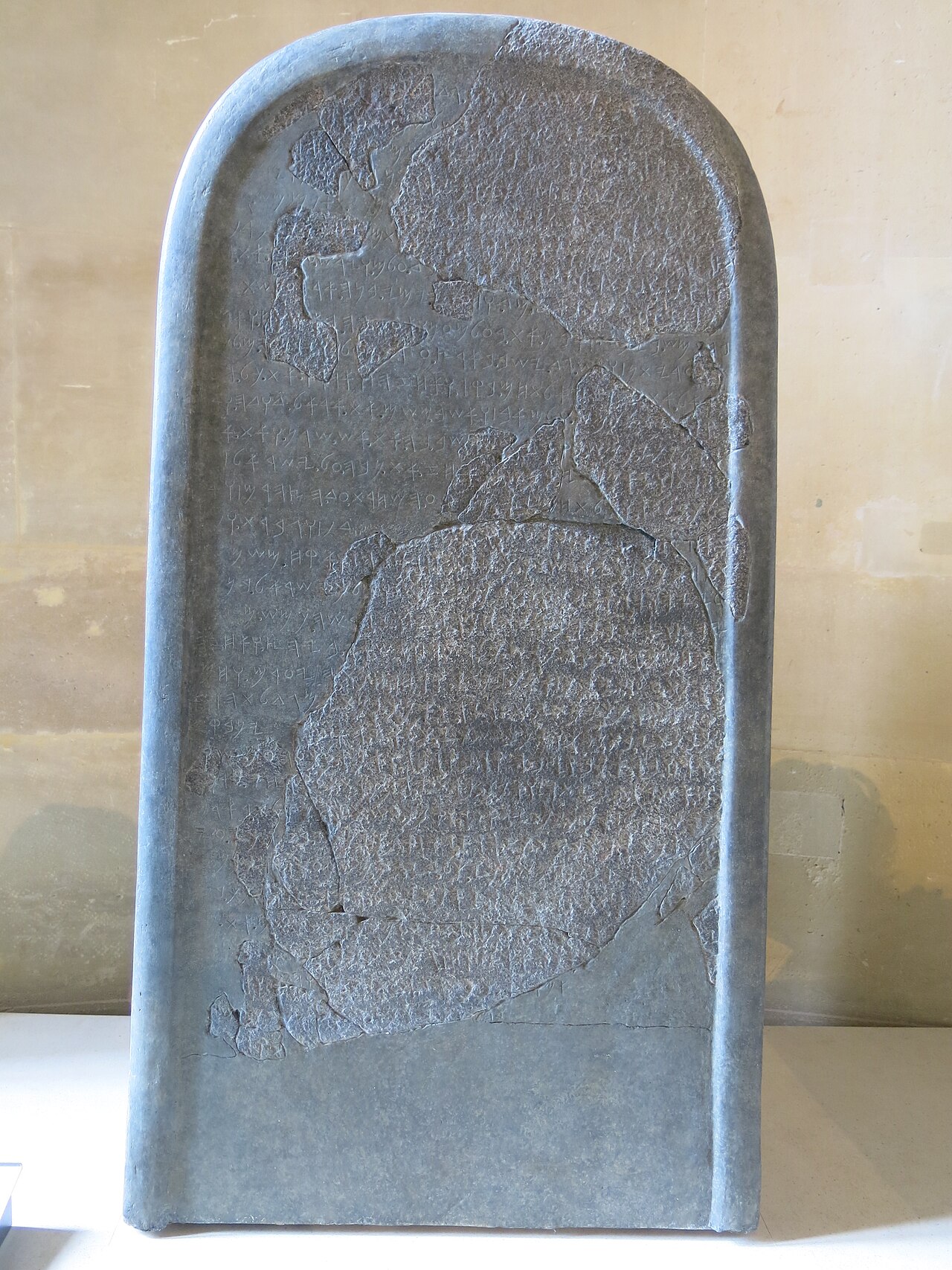
Ancient victory reports routinely claimed total annihilation: Mesha says he devoted Nebo's seven thousand to his god; Merneptah says Israel's "seed is not." Joshua's own later chapters show peoples remaining. Scholars such as K. Lawson Younger have argued the language is hyperbolic. This reading is supported by the texts but does not remove the fact that the command is presented as God's.
The stories turn on worship: Rahab and the Gibeonites join Israel through faith or oath; Achan, an Israelite, is destroyed like Jericho. On this reading the line is drawn by allegiance to God, not by birth.
Some Jewish and Christian readers hold that these texts reflect the limits of their ancient authors and must be read in light of later Scripture: the prophets' visions of nations blessed, Jonah's Nineveh spared, Jesus' command to love enemies. Rabbinic tradition held that Joshua offered peace before every battle (Jerusalem Talmud, Shevi'it 6:1).
Joshua used to justify conquest
In later centuries Joshua's conquest was invoked by Crusaders, by European colonists in the Americas, South Africa and elsewhere, and by others, to justify taking land and killing its inhabitants. Many Christians and Jews have since rejected those uses. This history is part of how the book has been read; it is not the book's only meaning.
The commander's "Nay"
When Joshua asked the commander of the LORD's army, "Art thou for us, or for our adversaries?" he answered, "Nay" (5:13–14). Many readers find in that reply the key to the book: God is not a tribal possession, and Israel's own sin is judged as severely as Canaan's (Achan; Judges).
The Case for the Biblical Account
Scripture's account
Cities devoted to destruction at God's command (Joshua 6–11), with survivors and remaining peoples (2; 9; 13–17).
What evidence would we expect?
Comparable war language in neighboring cultures; archaeological evidence of mass killings or population continuity.
The discoveries
Herem in the Mesha Stele; total-victory claims in Egyptian, Hittite and Assyrian inscriptions; population continuity at many Canaanite sites.
Testing the discoveries
The language matches ancient royal rhetoric; archaeology does not show the total annihilation the summaries describe.
The strongest reconstruction
Joshua uses the ancient language of devoted war, within a book that also records survival and coexistence.
What remains possible
Each of the readings above; the moral question remains for every reader.
What the evidence shows
- The Mesha Stele uses herem for devoting a captured population to a god.
- Ancient victory inscriptions routinely exaggerate total destruction.
- Joshua's herem language is wholly hyperbolic.
- Joshua has been used to justify later colonial conquests.
Continue the journey
Connected elsewhere in ScriptureGod's Covenant with AbrahamGenesis 15:16: "The iniquity of the Amorites is not yet full."More from this lesson
Why this matters to the rest of Scripture
- "The iniquity of the Amorites is not yet full."
- Deuteronomy 7:1–6; 20:16–18The command.
- "Should not I spare Nineveh?"
- "Love your enemies."
- "Blessed be Egypt my people."