Era 2 · The Family of AbrahamGenesis
God's Covenant with Abraham
Stars, a smoking fire pot, Hagar, and a new name
"Fear not, Abram: I am thy shield, and thy exceeding great reward." But Abram is still childless, and his heir is a servant, Eliezer of Damascus. God takes him outside: "Look now toward heaven, and tell the stars… So shall thy seed be." Then comes one of the most quoted verses in the Bible: "And he believed in the LORD; and he counted it to him for righteousness."
God tells Abram to bring a heifer, a goat, a ram, a turtledove and a pigeon. Abram cuts the animals in two and lays the halves opposite each other, and drives off the birds of prey. As the sun sets, a deep sleep and a great darkness fall on him. God tells him his descendants will be strangers and afflicted in a land not theirs for four hundred years, and then come out with great wealth. In the dark, a smoking fire pot and a flaming torch pass between the pieces. God alone walks the covenant path.
Ten years in Canaan, and still no child. Sarai makes a decision that her world considered reasonable: she gives her Egyptian servant Hagar to Abram, so that she may "obtain children by her." Hagar conceives, and the household fractures. Hagar looks down on Sarai; Sarai blames Abram and treats Hagar harshly; Hagar runs away into the wilderness.
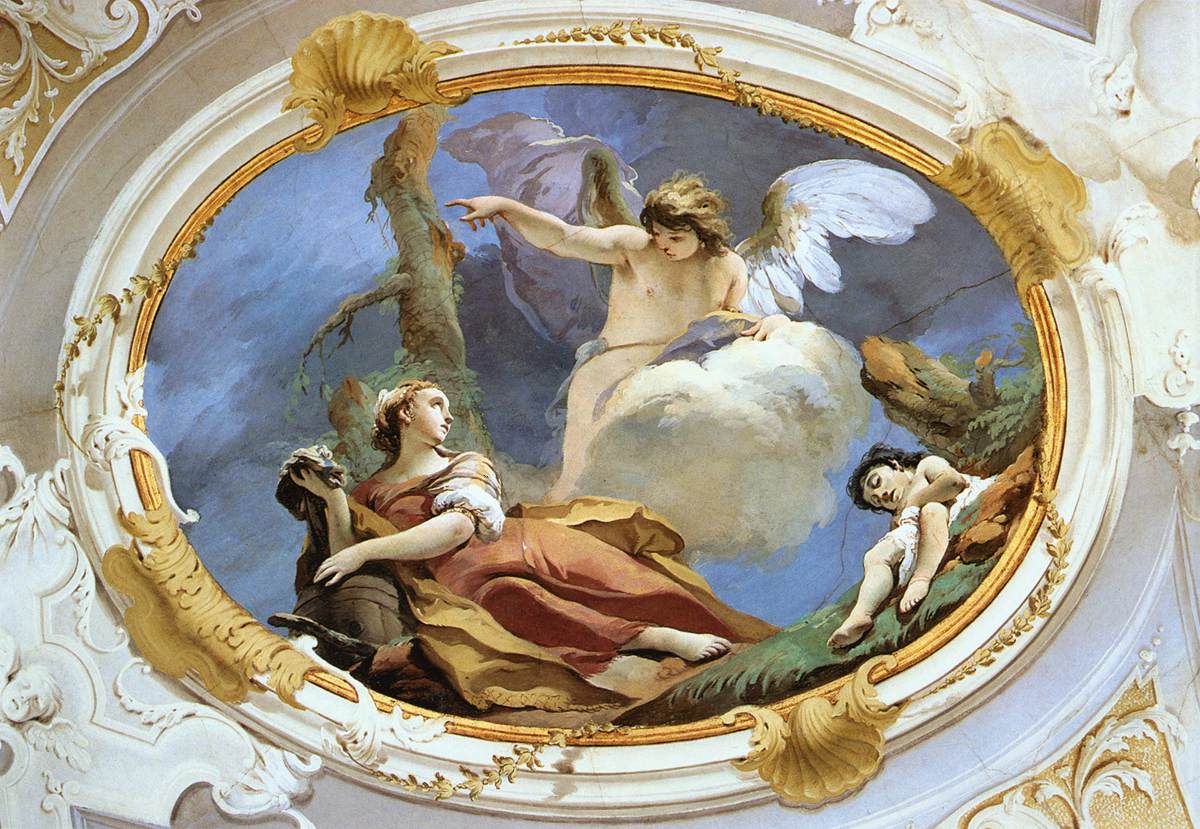
By a spring on the road to Shur, the angel of the LORD finds her. He calls her by name, the first time in the Bible an angel addresses a woman. He sends her back with a promise of her own: a son named Ishmael, "God hears," because the LORD has heard her affliction. And Hagar does something no one else in Scripture does. She gives God a name: "Thou God seest me." The well is called Beer-lahai-roi, "the well of the Living One who sees me."
Thirteen years later God appears as El Shaddai, God Almighty. Abram becomes Abraham, "father of a multitude," and Sarai becomes Sarah, "princess." Every male in the household is to be circumcised as the sign of the everlasting covenant. And Sarah herself will bear a son within a year. Abraham falls on his face and laughs. The son will be called Isaac, "he laughs." Ishmael too is blessed: he will father twelve princes and a great nation.
Cutting a covenant
Hebrew speaks of "cutting" a covenant, and Genesis 15 shows why. In the ancient Near East, treaties were sealed by cutting animals: the parties placed themselves under a curse, "may it be done to me as to these animals" if they broke their word. The Aramaic treaty of Sefire (8th century BC) says, "As this calf is cut in two, so may Matiel be cut in two." Jeremiah 34:18 describes Judah's leaders cutting a calf and walking between the parts. In Genesis 15 the striking thing is who walks between: only God, in fire and smoke.
A childless wife and a servant mother
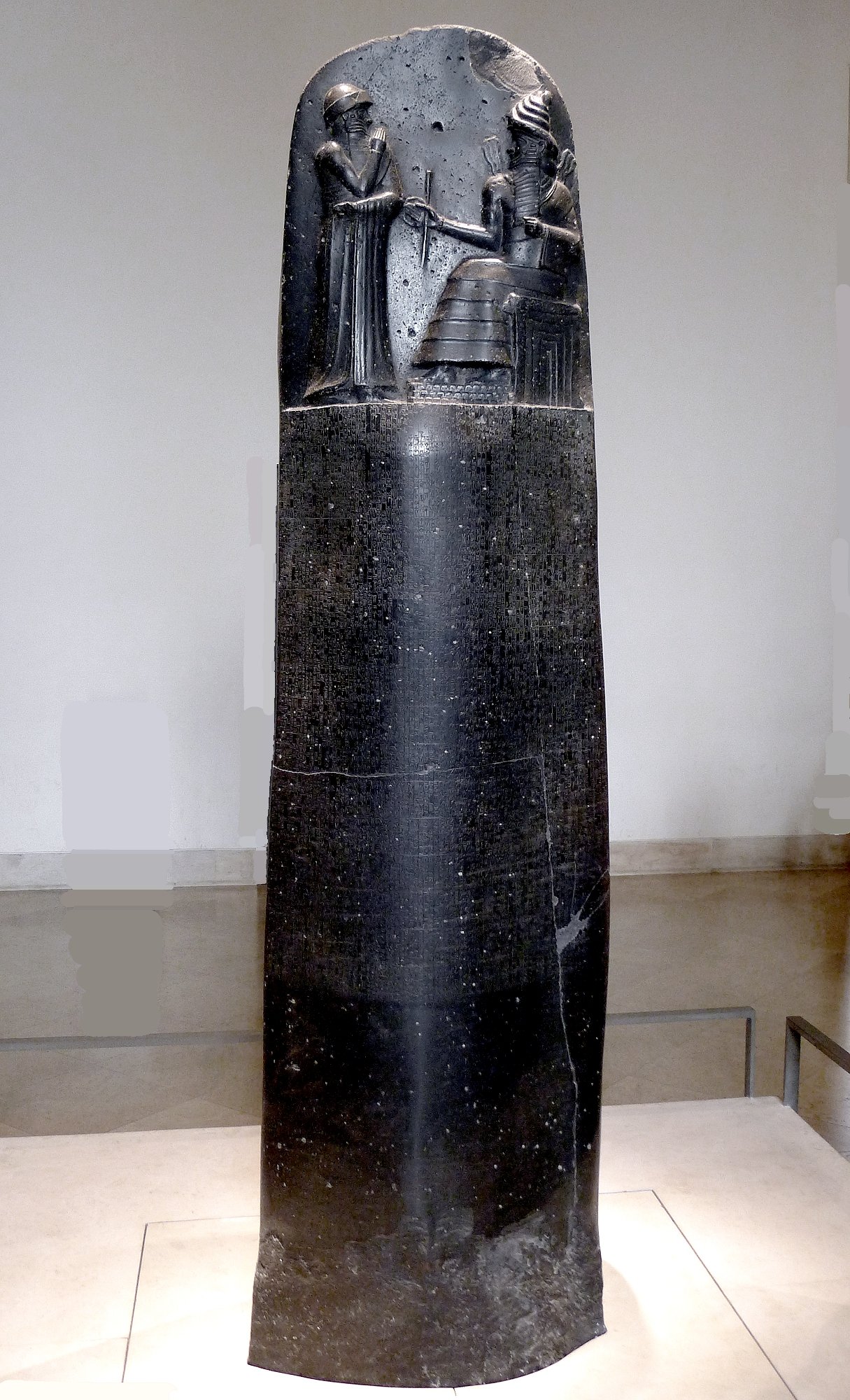
Sarai's plan matches real ancient law and contracts. The Laws of Hammurabi (c. 1750 BC) deal with a priestess-wife who gives her husband a slave woman to bear children, and add that if the slave then claims equality with her mistress, she may be demoted but not sold (§146). An Old Assyrian marriage contract from Kanesh in Anatolia (19th century BC) says that if the wife has no child within two years, she will buy a slave woman for her husband. Genesis shows the human cost of such arrangements.
Circumcision before Abraham
Circumcision was practiced in Egypt long before Abraham: a relief in the tomb of Ankhmahor at Saqqara (about 2300 BC) shows the procedure. Genesis does not claim Abraham invented it. It gives an existing practice new meaning: a mark in the body of a family belonging to God, given to infants on the eighth day rather than at adulthood or marriage.
The Case for the Biblical Account
Scripture's account
God makes a covenant with Abram by a cutting ritual; Hagar bears Ishmael; God renames Abraham and Sarah and gives circumcision as the covenant sign (Genesis 15–17).
What evidence would we expect?
Covenant rituals involving cut animals; laws and contracts on surrogate childbearing; circumcision in the surrounding world.
The discoveries
Animal-cutting oath rituals in the Mari letters (18th century BC, "killing a donkey foal" to make a treaty) and Sefire treaty (8th century BC); surrogate-wife clauses in Hammurabi's laws and Old Assyrian and Nuzi contracts; Egyptian circumcision from the third millennium.
Testing the discoveries
These are genuine parallels, but they span a thousand years, so they show the story fits the ancient Near East rather than dating it precisely. Earlier claims that Nuzi tablets prove a 15th-century setting were overstated.
The strongest reconstruction
Genesis 15–17 uses the real legal and ritual language of the ancient world to express something unusual: a covenant in which God takes the oath upon Himself.
What remains possible
That the chapters preserve ancestral covenant traditions, or that later writers framed Israel's covenant faith in ancestral form. Both readings take the parallels seriously.
Faith counted as righteousness
Genesis 15:6 becomes a key text for both Paul and James. Paul (Romans 4; Galatians 3) argues that Abraham was counted righteous by faith before circumcision existed. James 2:21–23 shows that faith proved true when Abraham offered Isaac. Jewish tradition also treasured Abraham's faithfulness. The verse has shaped the whole conversation about faith and works.
Hagar's place in the story
Hagar is an Egyptian slave woman with no power over her own body or future. Yet she receives a divine visit, a promise for her son, and names God. Muslims honor her as the mother of Ishmael and of the Arab peoples through him. In Galatians 4, Paul uses Hagar and Sarah as an allegory of two covenants, a reading that should not erase the Hagar of Genesis, whom God saw.
What the evidence shows
- Ancient treaties were sealed by cutting animals and invoking the same fate on oath-breakers.Source: Sefire treaty inscriptions (8th century BC), in J. A. Fitzmyer, The Aramaic Inscriptions of Sefire (1995)
- Ancient law and contracts provided for a slave woman to bear children for a childless wife.Source: Laws of Hammurabi §§144–147, in M. Roth, Law Collections from Mesopotamia and Asia Minor (SBL, 1997)
- Circumcision was practiced in Egypt before Abraham's time.
- Nuzi customs prove the patriarchs lived in the 15th century BC. Once popular; later study showed many parallels were overstated or also found in other periods.Source: J. Van Seters, Abraham in History and Tradition (Yale, 1975)
- God made a covenant with Abraham.
Continue the journey
Echoes Across CivilizationsCutting a covenantDid other peoples seal oaths by cutting animals, as Abram does in Genesis 15?More from this lesson
Echoes Across Civilizations
Optional: how other ancient peoples told similar stories. Open one to compare, then come back to the lesson.
Cutting a covenantAmorite kingdom of Mari · Aramaeans · Assyria
Did other peoples seal oaths by cutting animals, as Abram does in Genesis 15?
- Amorite kingdom of Mari: "Killing a donkey foal" in the Mari letters Shared literary world
- Aramaeans: The Sefire treaty stelae Shared literary world
- Assyria: Treaty of Ashur-nirari V with Mati'ilu Shared literary world
A childless wife and a servant motherBabylon · Old Assyrian merchants · Hurrian city of Nuzi
Was Sarai's plan to have a child through Hagar an accepted custom in the ancient world?
- Babylon: Laws of Hammurabi §§144–147 Shared literary world
- Old Assyrian merchants: Marriage contract from Kültepe Shared literary world
- Hurrian city of Nuzi: Marriage clause in a Nuzi tablet Shared literary world
Why this matters to the rest of Scripture
- "Abraham believed God, and it was counted unto him for righteousness."
- Paul's allegory of Hagar and Sarah.
- Abraham "was called the Friend of God."
- The covenant of the calf cut in two.
- Moses and the Torah →How the covenant stories of Genesis became part of Israel's written Torah.