Era 2 · The Family of AbrahamGenesis
Wrestling with God
The night at the Jabbok, a new name, and Esau's embrace
Jacob is going home, and home means Esau. Messengers return with news: Esau is coming with four hundred men. Jacob is "greatly afraid and distressed." He divides his people into two camps, and then he prays, one of the longest prayers in Genesis: "I am not worthy of the least of all the mercies… Deliver me, I pray thee, from the hand of my brother."
He sends wave after wave of gifts ahead: two hundred she-goats, two hundred ewes, thirty camels with their colts, cows, bulls, donkeys. "I will appease him with the present that goeth before me." That night he sends his wives, children and possessions across the ford of the Jabbok, "and Jacob was left alone."
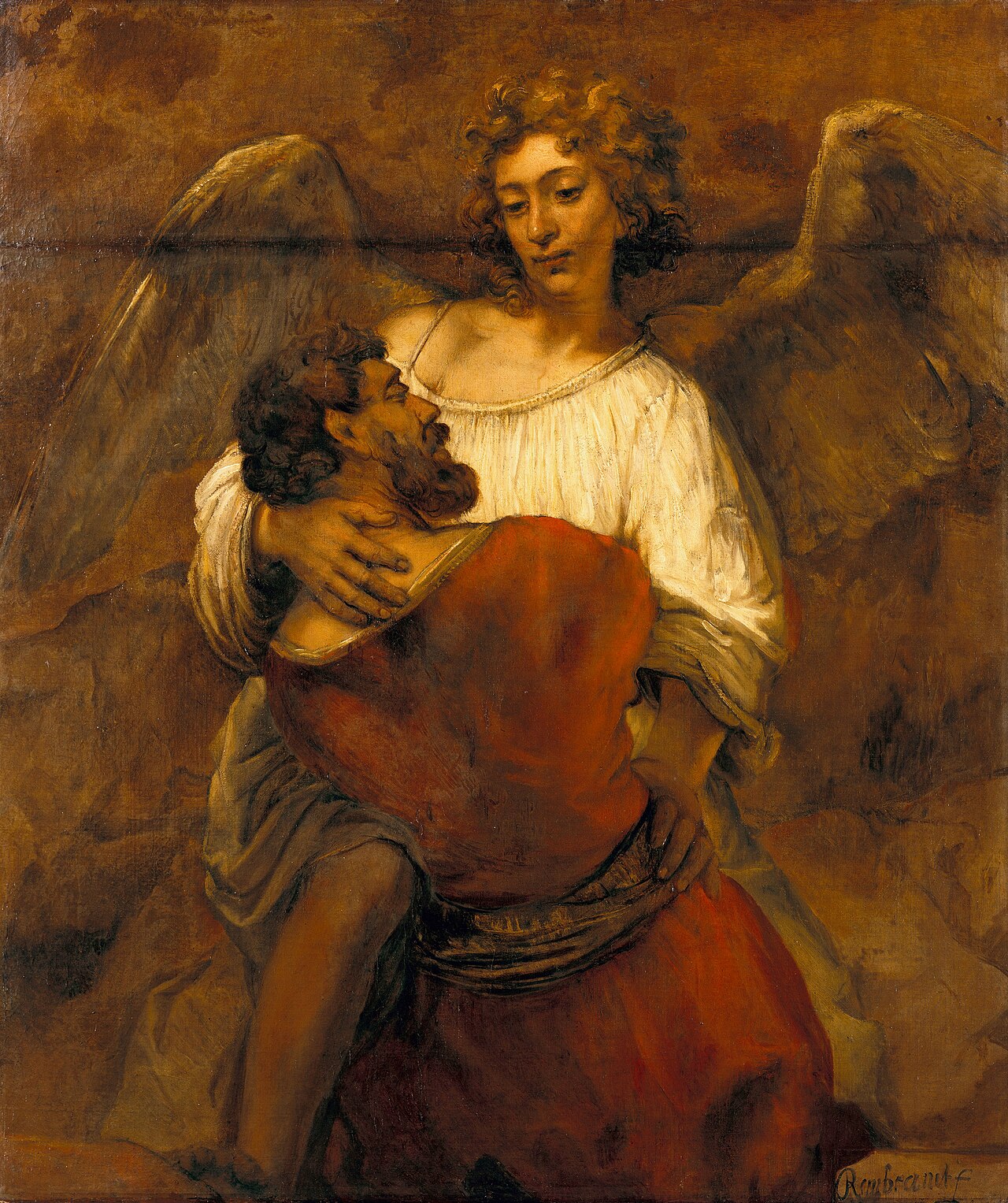
"And there wrestled a man with him until the breaking of the day." The man cannot overcome Jacob, and touches his hip, putting it out of joint. "Let me go, for the day breaketh." "I will not let thee go, except thou bless me." "What is thy name?" For the man who once answered his father, "I am Esau," the question cuts deep. "Jacob." "Thy name shall be called no more Jacob, but Israel: for as a prince hast thou power with God and with men, and hast prevailed."
Jacob names the place Peniel, "the face of God": "I have seen God face to face, and my life is preserved." The sun rises on him as he limps across. Genesis adds that Israelites do not eat the sinew of the hip "unto this day."
Esau appears with his four hundred men. Jacob bows to the ground seven times. "And Esau ran to meet him, and embraced him, and fell on his neck, and kissed him: and they wept." Esau does not want the gifts: "I have enough, my brother." Jacob insists: "I have seen thy face, as though I had seen the face of God." The brothers part in peace. Jacob settles near Shechem, buys a piece of land, and builds an altar called El-elohe-Israel, "God, the God of Israel."
The Jabbok
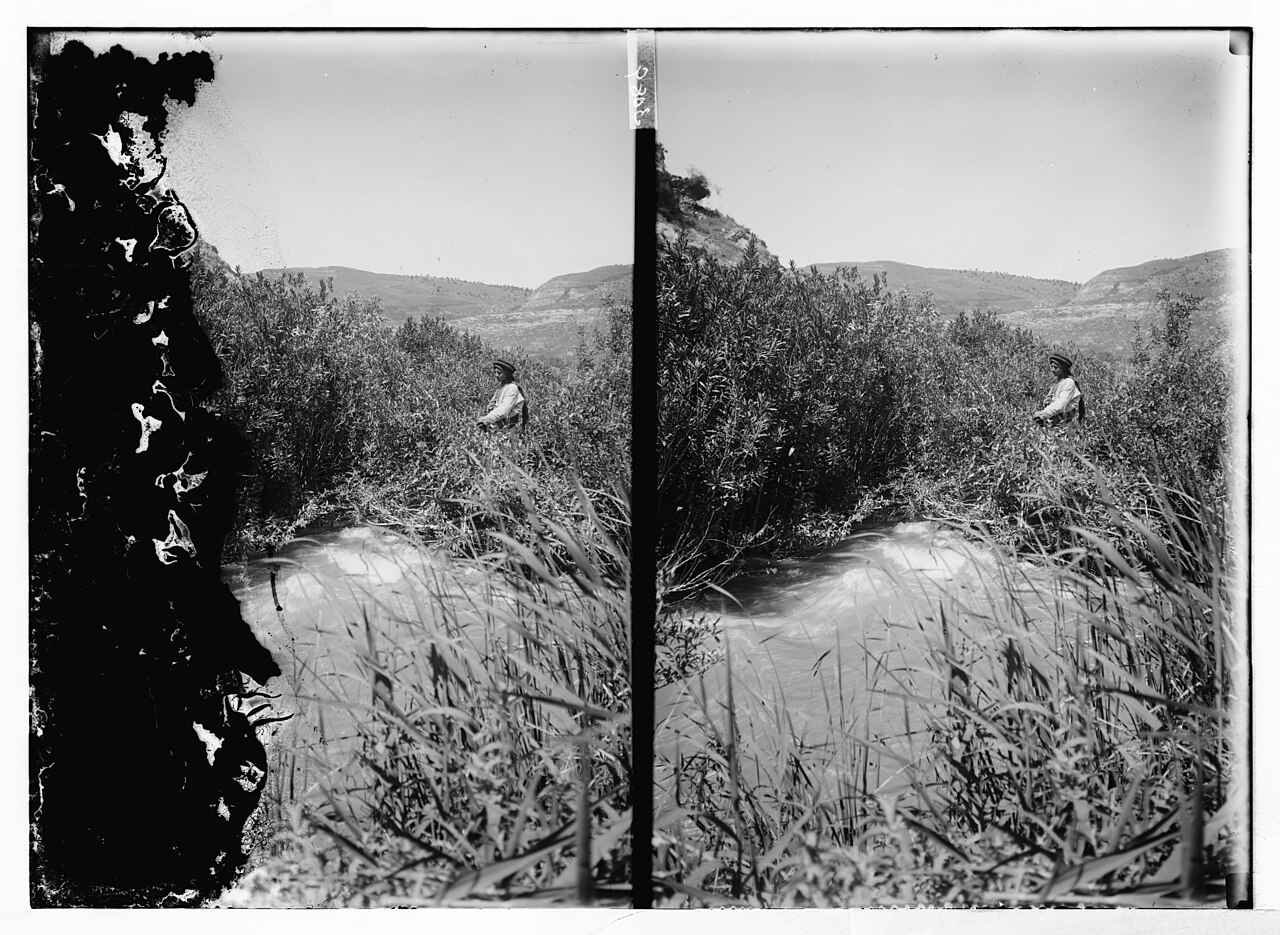
The Jabbok is today's Wadi Zarqa (Zarqa River), which flows west through Jordan into the Jordan River. It later formed a border between Ammon and the Israelite tribes (Deuteronomy 3:16). Nearby Succoth, where Jacob builds shelters for his livestock (33:17), is often identified with Tell Deir Alla, a site in the Jordan valley later famous for a plaster inscription about "Balaam son of Beor."
The name Israel
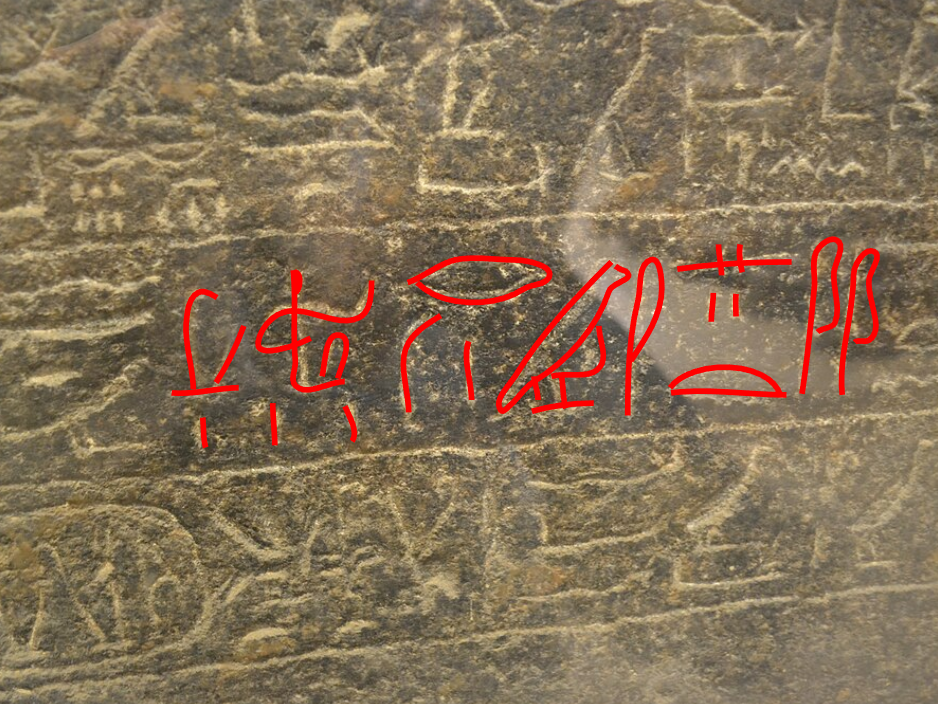
Genesis explains Israel as "he strives with God." Many scholars think the name originally meant "God strives" or "God rules." The oldest outside mention of Israel is the Merneptah Stele, an Egyptian victory hymn of about 1208 BC that lists Israel as a people in Canaan. It names a people, not an individual, and it shows the name was established by then.
Who was the man?
Jacob says, "I have seen God face to face." Many Christian interpreters see a pre-incarnate appearance of the Son.
Hosea 12:4 says Jacob "had power over the angel, and prevailed: he wept, and made supplication unto him." Jewish tradition often identifies him as an angel, sometimes Esau's guardian angel.
The text withholds the man's name: "Wherefore is it that thou dost ask after my name?" Some readers see the ambiguity as the point.
The Case for the Biblical Account
Scripture's account
Jacob wrestles at the Jabbok, is renamed Israel, and reconciles with Esau (Genesis 32–33).
What evidence would we expect?
Real places along the Jabbok and Jordan valley; an old name "Israel"; old customs such as the sinew prohibition.
The discoveries
The Jabbok, Penuel and Succoth as identifiable Transjordan locations; Israel named by Egypt around 1208 BC; the unusual coin-unit kesitah (33:19), found elsewhere only in Joshua 24:32 and Job 42:11.
Testing the discoveries
The places are real; the night encounter is by nature beyond archaeology. The kesitah is an archaic term, which fits an old tradition but cannot date it precisely.
The strongest reconstruction
Israel's name and identity were remembered as rooted in an encounter with God at a specific ford. The story explains the people's name, a food custom, and their relation to Edom.
What remains possible
A remembered personal experience at the heart of Israel's identity, a tradition shaped to explain the name, or both.
What the evidence shows
- "Israel" appears as a people in an Egyptian inscription around 1208 BC.Source: Merneptah Stele (c. 1208 BC), Egyptian Museum, Cairo: earliest outside mention of "Israel"
- The Jabbok, Succoth and Penuel are real Transjordan locations. The exact identification of Penuel and Succoth with excavated sites is debated.
- Jacob wrestled with God and was renamed Israel.
Continue the journey
Connected elsewhere in ScriptureThe Covenant at Shechem and the BurialsJoshua 24:32: Joseph's bones are buried in the land Jacob bought at Shechem.More from this lesson
On the map
Location securely identified Probable identification Proposed or debated location Biblical route (roads schematic) Scholarly proposal
- Jacob's journeys. Beersheba → Bethel (the stairway dream) → Haran (twenty years) → Penuel at the Jabbok → Shechem → Bethel → Ephrath → Hebron.
Why this matters to the rest of Scripture
- "He had power over the angel, and prevailed: he wept, and made supplication."
- Joseph's bones are buried in the land Jacob bought at Shechem.
- The father "ran, and fell on his neck, and kissed him", the same embrace as Esau's.