Joseph cannot hold back any longer. He sends everyone out and weeps so loudly the Egyptians hear it. "I am Joseph; doth my father yet live?" His brothers are terrified and cannot answer.
"Come near to me, I pray you… I am Joseph your brother, whom ye sold into Egypt. Now therefore be not grieved, nor angry with yourselves… for God did send me before you to preserve life." Three times he says it: not you, but God. He kisses all his brothers and weeps on them, "and after that his brethren talked with him."
Pharaoh is pleased and sends wagons for the whole family. When the brothers tell Jacob, "Joseph is yet alive," his heart goes numb; he does not believe them, until he sees the wagons. "It is enough; Joseph my son is yet alive: I will go and see him before I die."
At Beersheba, God speaks to Jacob in the night: "fear not to go down into Egypt; for I will there make of thee a great nation… and I will also surely bring thee up again." Genesis lists the family who go down: "all the souls of the house of Jacob, which came into Egypt, were threescore and ten." Joseph rides out to Goshen, falls on his father's neck, "and wept on his neck a good while." "Now let me die, since I have seen thy face."
Joseph coaches his brothers to tell Pharaoh they are herdsmen, so they will be settled apart in Goshen, "for every shepherd is an abomination unto the Egyptians." Jacob, 130 years old, stands before Pharaoh and blesses him, and sums up his life: "few and evil have the days of the years of my life been."
The famine deepens. Egyptians spend their silver on grain, then trade their livestock, then their land and themselves: "Buy us and our land for bread." All the land becomes Pharaoh's except the priests' land, and the people pay a fifth of their harvest. Israel, meanwhile, settles in Goshen, "in the land of Rameses," and multiplies. As his death nears, Jacob makes Joseph swear to bury him in Canaan, and "Israel bowed himself upon the bed's head."
Avaris: a Levantine city in Egypt
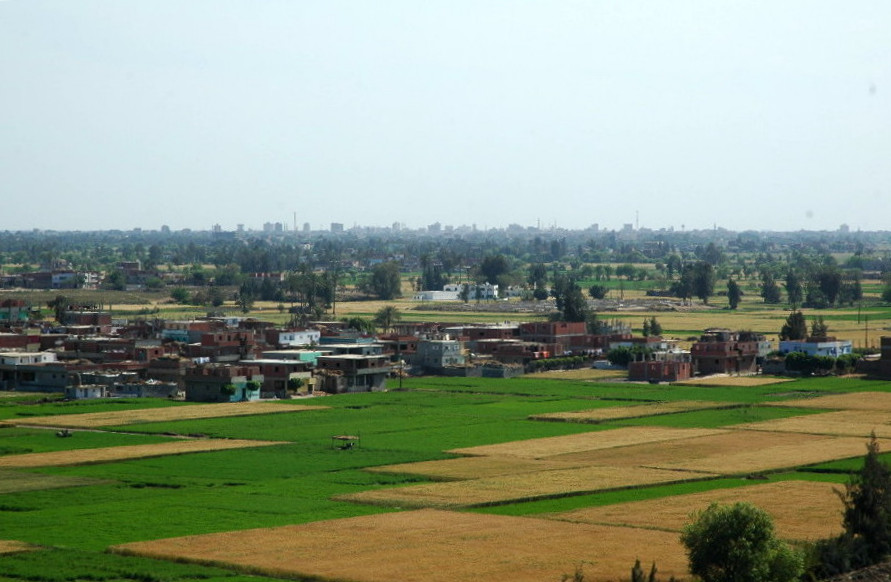
At Tell el-Dab'a in the eastern Nile Delta, Manfred Bietak's excavations uncovered ancient Avaris. From the late Middle Kingdom (around 1800 BC) people of Levantine origin lived there in growing numbers, with Syro-Canaanite house styles, weapons and pottery, and burials that included donkeys. By about 1650 BC their leaders, the Hyksos, ruled northern Egypt from Avaris. A 2020 study of strontium isotopes in teeth found many people there had grown up outside Egypt, and suggests the Hyksos rose from within an established immigrant community rather than by invasion.
This is the strongest archaeological context for Jacob's family in the Delta: a large, long-settled community of people from Canaan, in exactly the region of Goshen. It does not identify them as Israel.
Goshen and "the land of Rameses"
Goshen is usually located in the eastern Delta, around the Wadi Tumilat and the region of Avaris. Genesis 47:11 calls it "the land of Rameses," a name tied to Pi-Ramesse, the city built by Ramesses II in the 13th century BC, right next to Avaris. Traditional readers see a later name used for an earlier place (like saying "Bethlehem" for Ephrath); others see a sign of when the story was written.
Priests' land
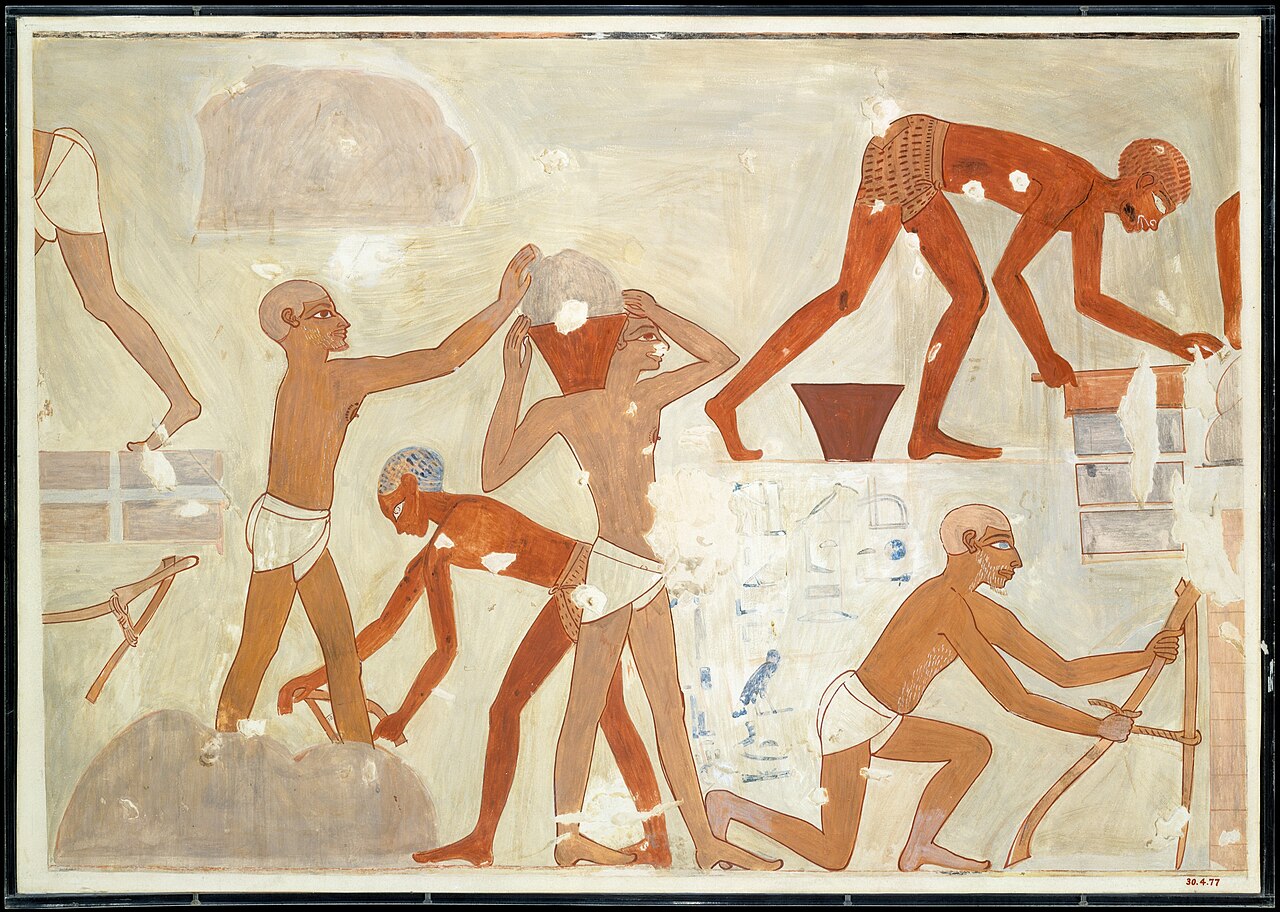
Genesis notes that the priests' land was not sold (47:22). Egyptian temples did hold vast estates with their own revenues, documented in later papyri such as the Wilbour Papyrus (12th century BC).
The Case for the Biblical Account
Scripture's account
Jacob's family of seventy settles in Goshen; Joseph's famine policy brings Egypt's land under Pharaoh (Genesis 45–47).
What evidence would we expect?
A Levantine community in the eastern Delta; Egyptian control of land and harvests; temple estates.
The discoveries
Avaris' large Levantine population from about 1800 BC; the Hyksos period; Egyptian state and temple land administration.
Testing the discoveries
The fit is strong, but Avaris has produced no Israelite-specific evidence, and the Hebrew and Greek traditions differ even on how many people went down (70 or 75).
The strongest reconstruction
A Canaanite family settling in the eastern Delta during the Middle Bronze Age fits one of the best-documented migrations in Egyptian history.
What remains possible
That Jacob's family was part of this broader movement; that Israel's memory of Egypt draws on it; or that the account was shaped later.
Two manuscript questions in these chapters
- Genesis 46:27: the Hebrew text counts 70 people; the Greek Septuagint counts 75, as does Stephen in Acts 7:14, and a Dead Sea Scroll of Exodus 1:5 also reads 75.
- Genesis 47:31: Jacob bowed "upon the bed's head" in the Hebrew vowels, but "upon the top of his staff" in the Greek, which Hebrews 11:21 follows. Same Hebrew letters, read two ways.
What the evidence shows
- People of Levantine origin lived at Avaris in the eastern Delta from about 1800 BC.Source: M. Bietak, Avaris: The Capital of the Hyksos (British Museum Press, 1996)
- Many people buried at Avaris grew up outside Egypt, and the Hyksos rose from within that community.Source: Stantis et al., "Who were the Hyksos?" PLOS ONE (2020): strontium isotopes at Avaris ↗
- "Land of Rameses" uses a name from the 13th century BC. Read as a later name for an earlier place, or as a clue to the date of writing.
- Jacob's family were among the Levantines at Avaris.
- "God did send me before you to preserve life."
Continue the journey
Journey of a PassageGenesis 46:27: Seventy or seventy-five? Jacob's family in EgyptThe Hebrew counts seventy people of Jacob's house in Egypt.More from this lesson
On the map
Location securely identified Probable identification Proposed or debated location Biblical route (roads schematic) Scholarly proposal
- Jacob's family moves to Egypt. Hebron → Beersheba, where God says "fear not to go down into Egypt" → Goshen.
Why this matters to the rest of Scripture
- Stephen: Joseph called "all his kindred, threescore and fifteen souls."
- Jacob "worshipped, leaning upon the top of his staff."
- "Now there arose up a new king over Egypt, which knew not Joseph."
- Hebrew, Greek, and Samaritan →Why the Hebrew and Greek traditions can count differently.
Sources to explore
Overviews are a starting point. Each links onward to the primary sources and specialist studies behind it.