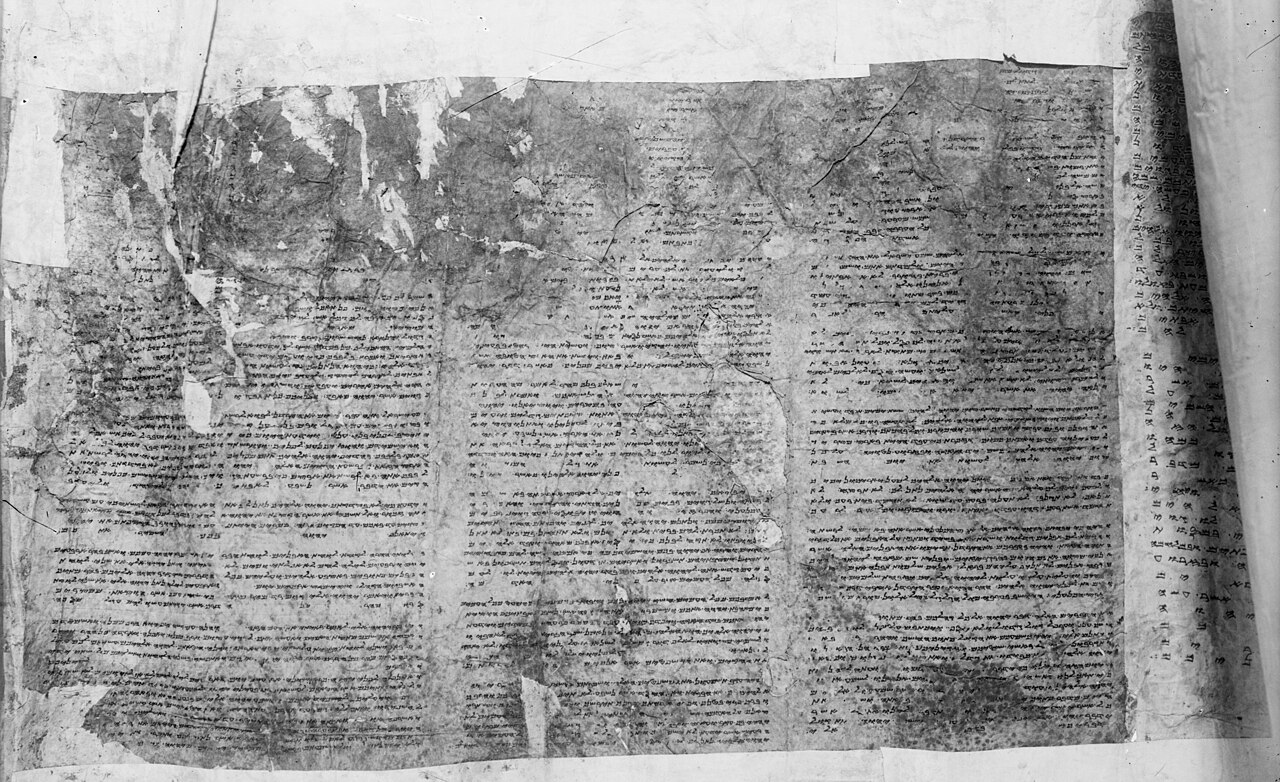
Before the time of Jesus, the Scriptures were being copied along several separate lines. Like three branches of a family tree, they share a common root but developed small differences over the centuries.
- The Hebrew text that became the standard Jewish Bible, later called the Masoretic Text.
- The Greek Septuagint, translated in Egypt.
- The Samaritan Pentateuch, the Torah as kept by the Samaritans in the north, who accepted only the five books of Moses.
The Samaritans worshiped on Mount Gerizim rather than in Jerusalem (John 4:20). Their Torah reflects that: in their version of the Ten Commandments, an extra command to build an altar on Mount Gerizim is added.
Because these lines were copied separately, comparing them is powerful. Where all three agree, we can be very confident of the wording. Where they differ, we can often see which reading came first and why it changed.
How the Jewish Bible is arranged
The Hebrew Bible came to be organized in three parts: the Torah (Law), the Nevi'im (Prophets), and the Ketuvim (Writings). The first letters, T-N-K, give the name Tanakh.
| Part | Books |
|---|---|
| Torah | Genesis, Exodus, Leviticus, Numbers, Deuteronomy |
| Nevi'im (Prophets) | Joshua, Judges, Samuel, Kings, Isaiah, Jeremiah, Ezekiel, the Twelve |
| Ketuvim (Writings) | Psalms, Proverbs, Job, Song of Songs, Ruth, Lamentations, Ecclesiastes, Esther, Daniel, Ezra–Nehemiah, Chronicles |
That makes 24 books. Protestant Old Testaments contain the same text but count 39, because they split Samuel, Kings, Chronicles, and Ezra–Nehemiah in two and count the Twelve Minor Prophets separately. Nothing was added; it is counted differently.
Jesus seems to refer to this three-part arrangement: "the law of Moses, and in the prophets, and in the psalms" (Luke 24:44).
Three kinds of difference
- Different book lists (canon)
- Which books count as Scripture. The Samaritans kept only the Torah; the Greek collection included extra books.
- Different wording (textual variants)
- The same book copied with small differences, like the ages in Genesis 5 or Cain's words in Genesis 4:8.
- Different translation
- The same underlying wording rendered differently in another language, like almah and parthenos in Isaiah 7:14.
What the evidence shows
- The Hebrew, Greek, and Samaritan texts of the Torah agree on the great majority of their wording.
- The Samaritan Pentateuch adds a command about Mount Gerizim.
- Some Dead Sea Scrolls agree with the Samaritan or Greek text against the later Hebrew.
- The three-part Hebrew Bible was fixed by the 1st century AD. The Torah and Prophets were settled earlier; the edges of the Writings were discussed into the 2nd century.
Continue the journey
Journey of a PassageGenesis 46:27: Seventy or seventy-five? Jacob's family in EgyptThe Hebrew counts seventy people of Jacob's house in Egypt.More from this lesson
Connections
- The Samaritan woman: "Our fathers worshipped in this mountain."
- "The law of Moses, and in the prophets, and in the psalms."
- How Genesis Came to Us →Try the Hebrew/Greek/Samaritan chronology switcher.
Sources to explore
Overviews are a starting point. Each links onward to the primary sources and specialist studies behind it.