Books of Scripture
Isaiah
The Holy One of Israel: empire, judgment, comfort and new creation
66 chapters
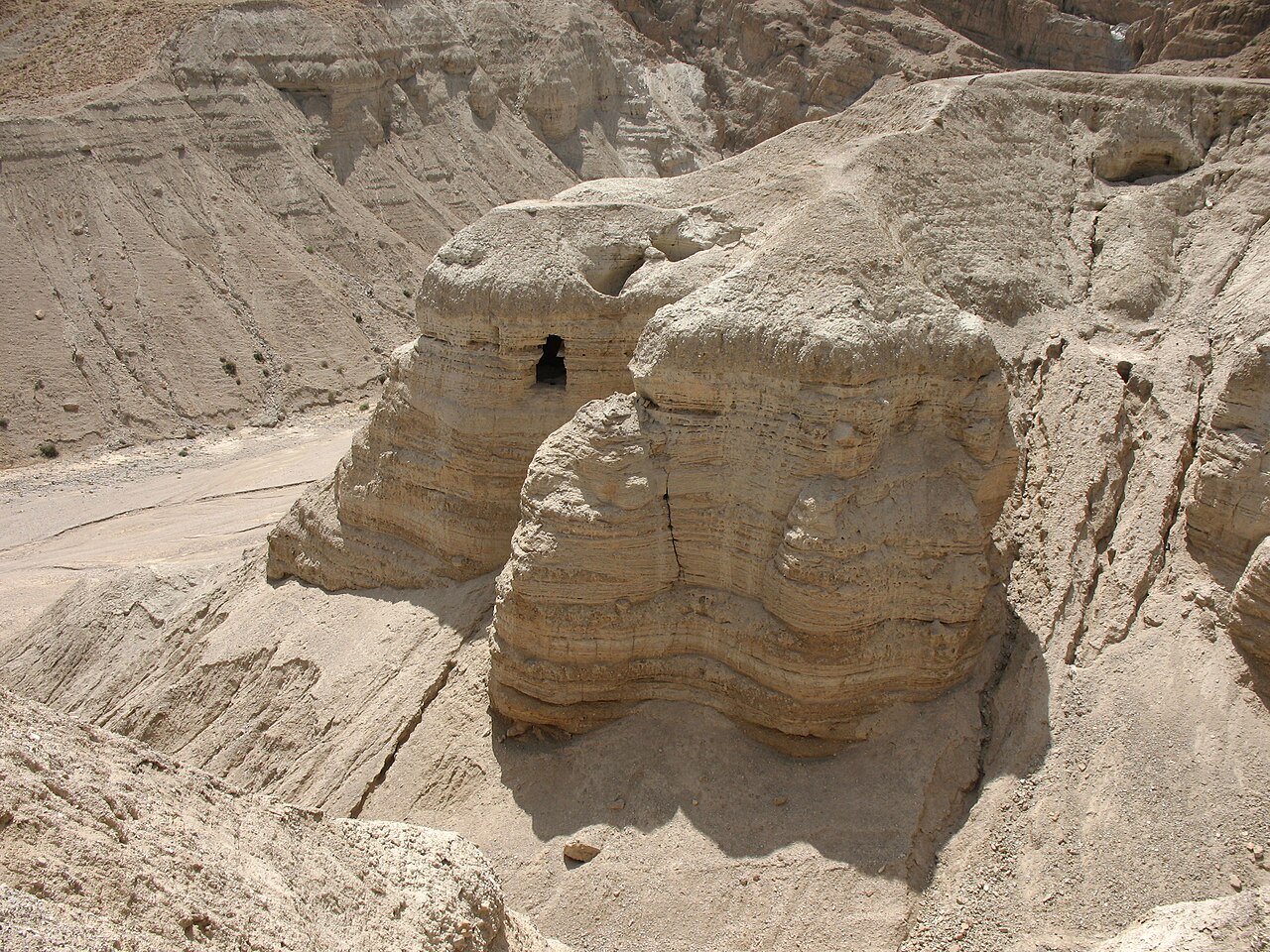
Isaiah bears the name of a prophet who spoke in Jerusalem from about 740 to 700 BC, under Uzziah, Jotham, Ahaz and Hezekiah, while Assyria swallowed Damascus and Samaria and besieged Judah. Its first chapters accuse and warn, promise a child called Immanuel and a shoot from Jesse, and tell of a vision of God enthroned among seraphim. From chapter 40 the book speaks comfort to exiles, names Cyrus of Persia, mocks idols, and sings of a servant who suffers for others; its last chapters picture a restored Zion, foreigners welcomed, and new heavens and a new earth. Whether one prophet or a long tradition produced the book is one of the Bible's great questions, and the site sets out each answer. The oldest complete copy of any biblical book, the Great Isaiah Scroll from Qumran, is Isaiah; the New Testament quotes it more than almost any other book. The site keeps four layers distinct: what the text meant in its setting, how ancient Jews read it, how the New Testament used it, and later and modern claims. All 66 chapters, seventeen investigations (including "Jesus and Isaiah," a registry of every Gospel use of Isaiah involving Jesus) and How Isaiah Came to Us are live; checks of the manuscripts and critical editions are still open.
Lessons
- 1Isaiah 1: Come Now, Let Us Reason TogetherIsaiah 1 · The heading dates "the vision of Isaiah the son of Amoz" to the reigns of Uzziah, Jotham, Ahaz and Hezekiah, kings of Judah (1:1, roughly 740–700 BC). God summons heaven and earth as witnesses: the children he raised have rebelled; even an ox knows its owner (vv. 2–3). The nation is beaten from head to foot; the land is desolate; Jerusalem is left "as a cottage in a vineyard"; only a small remnant spared it from the fate of Sodom (vv. 4–9). Sacrifices, festivals and prayers are rejected while hands are full of blood: "learn to do well; seek judgment, relieve the oppressed, judge the fatherless, plead for the widow" (vv. 10–17). "Come now, and let us reason together… though your sins be as scarlet, they shall be as white as snow" (vv. 18–20). The faithful city has become a harlot; its rulers love bribes; God will smelt away the dross and restore judges as at the first (vv. 21–31).
- 2Isaiah 2: Swords into PlowsharesIsaiah 2 · "In the last days" the mountain of the LORD's house will be raised above the hills and all nations will stream to it to learn God's ways; "out of Zion shall go forth the law"; God will judge between nations, "and they shall beat their swords into plowshares, and their spears into pruninghooks" (2:2–4). The same oracle appears in Micah 4:1–3. Isaiah turns to the present: the house of Jacob is full of diviners, silver, horses and idols (vv. 5–9). Then the "day of the LORD" against everything proud and lofty: cedars, oaks, mountains, towers, walls, ships; people will hide in caves and throw their idols to the moles and bats (vv. 10–21). "Cease ye from man, whose breath is in his nostrils" (v. 22).
- 3Isaiah 3: The Collapse of LeadershipIsaiah 3 · God will remove every "stay and staff" from Jerusalem: bread, water, soldiers, judges, prophets, elders, counselors and craftsmen; children will rule and people will oppress one another; no one will want to lead a ruined city (3:1–8). "The shew of their countenance doth witness against them" (v. 9). The righteous will be well; the wicked will reap what they did (vv. 10–11). Rulers have "eaten up the vineyard; the spoil of the poor is in your houses. What mean ye that ye beat my people to pieces, and grind the faces of the poor?" (vv. 12–15). The haughty daughters of Zion, with their anklets, crescents, perfume boxes, rings and fine linen, will lose them all; mourning will replace beauty and the city's men will fall in war (vv. 16–26).
- 4Isaiah 4: The Branch of the LORDIsaiah 4 · After the war, seven women will take hold of one man, asking only for his name to remove their disgrace (4:1). "In that day shall the branch (tsemach) of the LORD be beautiful and glorious, and the fruit of the earth shall be excellent" for the survivors (v. 2). Those left in Zion will be called holy, once the Lord has washed away the filth of the daughters of Zion and purged Jerusalem's bloodshed "by the spirit of judgment, and by the spirit of burning" (vv. 3–4). God will create over Mount Zion a cloud by day and fire by night, a canopy and a shelter from heat and storm (vv. 5–6).
- 5Isaiah 5: The Song of the VineyardIsaiah 5 · Isaiah sings "a song of my beloved touching his vineyard": a carefully prepared vineyard that yielded wild grapes (5:1–2). The owner asks the listeners to judge and announces he will tear it down (vv. 3–6). Then the verdict: "the vineyard of the LORD of hosts is the house of Israel… he looked for judgment (mishpat), but behold oppression (mispach); for righteousness (tsedaqah), but behold a cry (tse'aqah)" (v. 7). Six woes follow: on those who add house to house and field to field (vv. 8–10), who drink from morning to night (vv. 11–17), who drag sin with cords (vv. 18–19), who call evil good (v. 20), who are wise in their own eyes (v. 21), and who are heroes at drinking and acquit the guilty for a bribe (vv. 22–24). God's hand is stretched out; he whistles for a distant nation that comes swiftly, roaring like lions (vv. 25–30).
- 6Isaiah 6: Holy, Holy, HolyIsaiah 6 · "In the year that king Uzziah died I saw also the Lord sitting upon a throne, high and lifted up, and his train filled the temple" (6:1). Seraphim with six wings call to one another, "Holy, holy, holy, is the LORD of hosts: the whole earth is full of his glory" (vv. 2–3); the threshold shakes and the house fills with smoke (v. 4). Isaiah cries, "Woe is me! for I am undone; because I am a man of unclean lips" (v. 5). A seraph touches his mouth with a live coal from the altar: "thine iniquity is taken away" (vv. 6–7). God asks, "Whom shall I send?"; Isaiah answers, "Here am I; send me" (v. 8). His message: "Hear ye indeed, but understand not… Make the heart of this people fat… lest they… understand… and be healed" (vv. 9–10). "How long?" Until cities lie waste; a tenth will remain and be burned again, like a felled oak whose stump remains: "the holy seed shall be the substance thereof" (vv. 11–13).
- 7Isaiah 7: The Sign of ImmanuelIsaiah 7 · Rezin of Aram and Pekah of Israel march on Jerusalem; the hearts of King Ahaz and his people shake "as the trees of the wood are moved with the wind" (7:1–2). Isaiah meets Ahaz at the end of the conduit of the upper pool, with his son Shear-jashub ("a remnant shall return"): "Take heed, and be quiet; fear not… for these two tails of smoking firebrands"; their plan will fail; "If ye will not believe, surely ye shall not be established" (vv. 3–9). Ahaz refuses to ask for a sign (vv. 10–12). Isaiah answers: "the Lord himself shall give you a sign; Behold, a virgin (ha-almah, the young woman) shall conceive, and bear a son, and shall call his name Immanuel"; before the child knows good from evil, the two kings' lands will be deserted (vv. 13–16). But Assyria, the "razor that is hired," will come on Judah too, and cultivated land will return to briers and grazing (vv. 17–25).
- 8Isaiah 8: Speed the Spoil, Hasten the PlunderIsaiah 8 · God tells Isaiah to write on a large tablet "Maher-shalal-hash-baz" ("swift is the spoil, speedy the prey") before witnesses; Isaiah's wife, "the prophetess," bears a son of that name; before he can say "my father" and "my mother," Damascus and Samaria will be plundered by Assyria (8:1–4). Because the people refused "the waters of Shiloah that go softly," the River (Assyria) will flood Judah up to the neck: "O Immanuel" (vv. 5–8). Nations may plot, "for God is with us" (vv. 9–10). Do not fear what this people fears; "Sanctify the LORD of hosts himself"; he will be a sanctuary, and a stone of stumbling to both houses of Israel (vv. 11–15). "Bind up the testimony, seal the law among my disciples"; Isaiah and his children are signs (vv. 16–18). Do not consult mediums: "To the law and to the testimony"; those who do will see only darkness (vv. 19–22).
- 9Isaiah 9: Unto Us a Child Is BornIsaiah 9 (Hebrew 8:23–9:20) · In English numbering: the land of Zebulun and Naphtali, humbled before, will be glorified, "Galilee of the nations" (9:1). "The people that walked in darkness have seen a great light" (v. 2); joy as at harvest; the yoke and the oppressor's rod broken as in the day of Midian; boots and bloodied garments burned (vv. 3–5). "For unto us a child is born, unto us a son is given: and the government shall be upon his shoulder: and his name shall be called Wonderful, Counsellor, The mighty God, The everlasting Father, The Prince of Peace"; his rule and peace will have no end on David's throne (vv. 6–7). Then a poem against the northern kingdom in four stanzas, each ending "For all this his anger is not turned away, but his hand is stretched out still" (vv. 8–21).
- 10Isaiah 10: Assyria, the Rod of My AngerIsaiah 10 · The last stanza of the refrain: woe to those who make unjust laws to rob the poor, widows and orphans (10:1–4). "O Assyrian, the rod of mine anger": God sends Assyria against a godless nation, but Assyria intends to destroy many nations and boasts, "By the strength of my hand I have done it" (vv. 5–14). "Shall the axe boast itself against him that heweth therewith?" (v. 15). God will burn Assyria's forest (vv. 16–19). "The remnant shall return (shear yashuv)… unto the mighty God"; though Israel be as the sand of the sea, only a remnant will return (vv. 20–23). Do not fear Assyria (vv. 24–27). The enemy advances town by town to Nob and shakes his fist at Zion; God lops the boughs and fells the forest of Lebanon (vv. 28–34).
- 11Isaiah 11: A Shoot from the Stump of JesseIsaiah 11 · "There shall come forth a rod out of the stem (stump) of Jesse, and a Branch shall grow out of his roots" (11:1). The spirit of the LORD will rest on him: wisdom and understanding, counsel and might, knowledge and the fear of the LORD (v. 2). He will judge the poor with righteousness and strike the earth with the rod of his mouth (vv. 3–5). "The wolf also shall dwell with the lamb, and the leopard shall lie down with the kid… and a little child shall lead them"; no harm on God's holy mountain, "for the earth shall be full of the knowledge of the LORD, as the waters cover the sea" (vv. 6–9). The root of Jesse will stand as a banner for the peoples (v. 10). God will gather the dispersed of Israel and Judah from Assyria, Egypt, Pathros, Cush, Elam, Shinar, Hamath and the islands; Ephraim and Judah will be reconciled; a highway will lead the remnant home as at the exodus (vv. 11–16).
- 12Isaiah 12: With Joy Shall You Draw WaterIsaiah 12 · "In that day thou shalt say, O LORD, I will praise thee: though thou wast angry with me, thine anger is turned away, and thou comfortedst me. Behold, God is my salvation; I will trust, and not be afraid: for the LORD JEHOVAH is my strength and my song; he also is become my salvation" (12:1–2). "Therefore with joy shall ye draw water out of the wells of salvation" (v. 3). The people will make God's deeds known among the nations and sing, for the Holy One of Israel is great in the midst of Zion (vv. 4–6).
- 13Isaiah 13: The Burden of BabylonIsaiah 13 · The first of the "burdens" (massa, oracles) on the nations, headed "which Isaiah the son of Amoz did see." God musters an army from the end of heaven (13:1–5); the day of the LORD comes with terror, darkened stars and a shaken earth (vv. 6–16); God stirs up the Medes, who cannot be bought off, and Babylon becomes like Sodom and Gomorrah, haunted by desert animals (vv. 17–22). The poem's horrors, including children dashed to pieces, are part of the text and are discussed openly.
- 14Isaiah 14: How Art Thou FallenIsaiah 14 · God will have compassion on Jacob and bring foreigners to join Israel (14:1–2). Then a taunt song (mashal) over the king of Babylon: the earth rests, the cedars rejoice, Sheol rises to greet the fallen tyrant, "the worm is spread under thee" (vv. 3–11). "How art thou fallen from heaven, O Lucifer (helel), son of the morning!" He meant to ascend above the stars to the mount of assembly and be like the Most High, but is brought down to the pit, an unburied corpse (vv. 12–21); Babylon is swept away (vv. 22–23). Two short oracles follow: God will break Assyria in his land (vv. 24–27), and Philistia must not rejoice in the year Ahaz died (vv. 28–32).
- 15Isaiah 15: The Burden of MoabIsaiah 15 · "Because in the night Ar of Moab is laid waste… Kir of Moab is laid waste" (15:1). Moab's towns go up to their high places to weep, shave their heads, put on sackcloth; the cry runs from Heshbon and Elealeh to Jahaz, Zoar, Luhith and Horonaim; the waters of Nimrim are dry; refugees carry their goods across the Brook of the Willows; the waters of Dimon are full of blood (vv. 2–9). The speaker grieves: "My heart shall cry out for Moab" (v. 5).
- 16Isaiah 16: A Throne Established in MercyIsaiah 16 · Moab sends tribute lambs to Zion; its daughters wander at the fords of the Arnon like birds driven from the nest (16:1–2). A plea: give counsel, shade the outcasts, let Moab's refugees shelter with you; when the oppressor is gone, a throne will be established in steadfast love in the tent of David (vv. 3–5). But Moab's pride brings mourning for Kir-hareseth and the vines of Heshbon, Sibmah and Jazer; the speaker weeps and his heart sounds like a harp (vv. 6–12). An older word is given a new time limit: within three years Moab's glory will be brought low (vv. 13–14).
- 17Isaiah 17: The Burden of DamascusIsaiah 17 · Damascus will be a heap of ruins and Ephraim's fortress will cease (17:1–3): the two allies of the Syro-Ephraimite war fall together. Israel's glory will be thin, like a field after the reaper, with two or three olives left at the top of the tree (vv. 4–6). In that day people will look to their Maker, not to altars and Asherah poles (vv. 7–8). Because Israel forgot the God of its salvation and planted "pleasant plants" for foreign gods, its harvest will fail (vv. 9–11). The nations roar like the sea, but God rebukes them: "at eveningtide trouble; and before the morning he is not" (vv. 12–14).
- 18Isaiah 18: The Land of Whirring WingsIsaiah 18 · "Ah, land of whirring wings, beyond the rivers of Cush" sends envoys by the Nile in papyrus boats (18:1–2). Isaiah sends them back to "a nation tall and smooth," feared far and wide (v. 2). God tells the prophet he will look on quietly, "like a clear heat upon herbs," and then prune the vine before harvest (vv. 3–6). In that time this distant people will bring gifts to Mount Zion (v. 7).
- 19Isaiah 19: Blessed Be Egypt My PeopleIsaiah 19 · The LORD rides a swift cloud into Egypt; its idols tremble; Egyptian fights Egyptian; a cruel lord rules them (19:1–4). The Nile dries; fishermen, flax-workers and weavers despair (vv. 5–10). Pharaoh's wise men in Zoan and Noph are fools (vv. 11–15). Then, in five "in that day" sayings, the oracle turns: Egypt fears Judah; five cities speak the language of Canaan, one called "the city of destruction" (or "of the sun"); an altar to the LORD stands in Egypt; God sends a savior; Egypt and Assyria worship together; and God blesses them: "Blessed be Egypt my people, and Assyria the work of my hands, and Israel mine inheritance" (vv. 16–25).
- 20Isaiah 20: Naked and BarefootIsaiah 20 · In the year the Assyrian commander-in-chief (tartan) came to Ashdod and took it, sent by Sargon king of Assyria, God told Isaiah to remove his sackcloth and sandals; he went "naked and barefoot" for three years as a sign against Egypt and Cush (20:1–3). So the king of Assyria will lead Egyptian and Kushite captives away, naked and barefoot, "to the shame of Egypt"; those who trusted in them will ask, "how shall we escape?" (vv. 4–6).
- 21Isaiah 21: Watchman, What of the Night?Isaiah 21 · "The burden of the desert of the sea": a harsh vision of Elam and Media attacking; the prophet doubles over in pain (21:1–4). A feast is set while a watchman is posted; riders come, and the cry goes up: "Babylon is fallen, is fallen; and all the graven images of her gods he hath broken unto the ground" (vv. 5–10). From Seir someone calls, "Watchman, what of the night?" and the watchman answers, "The morning cometh, and also the night" (vv. 11–12). Arabian caravans of Dedan flee; Tema brings water to fugitives; within a year Kedar's glory will fail (vv. 13–17).
- 22Isaiah 22: The Key of the House of DavidIsaiah 22 · "The valley of vision": Jerusalem celebrates on its rooftops though its leaders fled and were captured; Isaiah weeps for "the daughter of my people" (22:1–4). A day of tumult with Elamite and Kirite troops; Judah's defenses exposed; the people inspect the armory, count the breaches, pull down houses to strengthen the wall and build a reservoir, "but ye have not looked unto the maker thereof" (vv. 5–11). God called for mourning; they feasted: "let us eat and drink; for to morrow we shall die" (vv. 12–14). Shebna, the steward "over the house," carving himself a lofty tomb, will be tossed like a ball into a far land (vv. 15–19); Eliakim son of Hilkiah will receive his robe and "the key of the house of David" (vv. 20–24); yet even this secure peg will one day give way (v. 25).
- 23Isaiah 23: Howl, Ye Ships of TarshishIsaiah 23 · Ships of Tarshish learn on their way home from Cyprus that Tyre is destroyed (23:1). Sidon's merchants grew rich on Egypt's grain; now the sea itself says it is childless (vv. 2–5). Is this the joyous city of ancient days, "the crowning city, whose merchants are princes"? The LORD planned it, to humble pride (vv. 6–12). A hard verse points to the Chaldeans' land, ruined by Assyria (v. 13). Tyre will be forgotten seventy years, "according to the days of one king," then sing like a forgotten prostitute and return to trade; but its earnings will be holy to the LORD, food and fine clothing for those who serve him (vv. 15–18).
- 24Isaiah 24: The Earth MournethIsaiah 24 · The LORD empties the earth and scatters its people, priest and people, master and servant alike (24:1–3). The earth mourns and is defiled, because its inhabitants "have transgressed the laws, changed the ordinance, broken the everlasting covenant"; a curse devours it (vv. 4–6). The wine fails, the music stops, the "city of chaos" is shut (vv. 7–13). Songs of glory come from the ends of the earth, but the prophet cries "My leanness!" (vv. 14–16). Terror, pit and snare; the windows of heaven open; the earth reels like a drunkard (vv. 17–20). God punishes the host of heaven and the kings of the earth, imprisons them, and reigns on Mount Zion in glory before his elders (vv. 21–23).
- 25Isaiah 25: He Will Swallow Up DeathIsaiah 25 · A song of thanks: God has made the fortified city a heap, been a refuge for the poor, a shade from heat (25:1–5). "In this mountain shall the Lord of hosts make unto all people a feast of fat things, a feast of wines on the lees"; he will destroy the shroud over all peoples, "swallow up death in victory," and wipe away tears from all faces (vv. 6–8). "Lo, this is our God; we have waited for him" (v. 9). Moab, by contrast, is trampled like straw in a dung pit (vv. 10–12).
- 26Isaiah 26: Thy Dead Men Shall LiveIsaiah 26 · A song for Judah: "We have a strong city"; open the gates for the righteous; "Thou wilt keep him in perfect peace, whose mind is stayed on thee"; trust the LORD, the everlasting Rock (26:1–6). A prayer: the path of the just; longing for God in the night; the wicked do not learn (vv. 7–11). Other lords ruled us; "they are dead, they shall not live" (vv. 12–15). Like a woman in labor we writhed and gave birth to wind (vv. 16–18). Then: "Thy dead men shall live… Awake and sing, ye that dwell in dust… the earth shall cast out the dead" (v. 19). Hide for a little while until the wrath passes; the earth will uncover its blood (vv. 20–21).
- 27Isaiah 27: Leviathan the Crooked SerpentIsaiah 27 · "In that day the LORD with his sore and great and strong sword shall punish leviathan the piercing serpent, even leviathan that crooked serpent; and he shall slay the dragon that is in the sea" (27:1). A new vineyard song: God guards his vineyard night and day; "fury is not in me"; let thorns make peace with him; Israel will fill the world with fruit (vv. 2–6). Israel's punishment was measured; its guilt removed when the altar stones are crushed like chalk and the Asherah poles fall (vv. 7–9). The fortified city lies desolate (vv. 10–11). God will thresh from the Euphrates to the Wadi of Egypt and gather Israel one by one; a great trumpet will call the lost in Assyria and the outcasts in Egypt to worship on the holy mountain at Jerusalem (vv. 12–13).
- 28Isaiah 28: A Precious Corner StoneIsaiah 28 · Woe to Samaria, the proud crown of Ephraim's drunkards, a fading flower that the storm will trample; God himself will be a crown for the remnant (28:1–6). Judah's priests and prophets reel with wine and mock Isaiah's teaching as baby talk, "tsav la-tsav, qav la-qav"; so God will speak to them through foreign lips (vv. 7–13). Jerusalem's rulers boast of a covenant with death; God lays in Zion a tested, precious cornerstone: "he that believeth shall not make haste"; their covenant will be annulled (vv. 14–22). A farmer's parable: as the plowman knows when to plow and how to thresh each crop, so God's work is measured and wise (vv. 23–29).
- 29Isaiah 29: Woe to ArielIsaiah 29 · Woe to Ariel, the city where David camped: God himself will besiege it until its voice whispers from the dust like a ghost's; then suddenly the attacking nations vanish like a dream (29:1–8). The people are stupefied; the vision is like a sealed book that the literate cannot read and the illiterate cannot read either (vv. 9–12). "This people draw near me with their mouth… but have removed their heart far from me" (vv. 13–14). Woe to those who hide plans from God, as if clay could say to the potter, "He made me not" (vv. 15–16). Soon Lebanon will be a garden, the deaf will hear the book, the blind see, the poor rejoice (vv. 17–24).
- 30Isaiah 30: In Returning and RestIsaiah 30 · Woe to the rebellious children who make plans without God and go down to Egypt for shelter; Pharaoh's protection will be their shame (30:1–5). A caravan carries treasure through the dangerous Negev to a people who cannot help: Egypt is "Rahab who sits still" (vv. 6–7). Write it on a tablet as a witness: this people say to the seers, "See not," and want smooth words (vv. 8–14). "In returning and rest shall ye be saved; in quietness and in confidence shall be your strength: and ye would not" (vv. 15–17). Yet God waits to be gracious: no more weeping; your teacher's voice behind you: "This is the way, walk ye in it"; rain, harvest, a sevenfold sun (vv. 18–26). God comes in fire against Assyria; Topheth is prepared for the king (vv. 27–33).
- 31Isaiah 31: Their Horses Flesh, and Not SpiritIsaiah 31 · Woe to those who go down to Egypt and rely on horses and chariots instead of the Holy One of Israel (31:1–3): "the Egyptians are men, and not God; and their horses flesh, and not spirit." Like a lion over its prey, unafraid of the shepherds, God will come down to fight on Mount Zion; like birds hovering, he will protect and "pass over" Jerusalem (vv. 4–5). Turn back; throw away idols (vv. 6–7). Assyria will fall by a sword not of man (vv. 8–9).
- 32Isaiah 32: A King Shall Reign in RighteousnessIsaiah 32 · A king will reign in righteousness and princes rule with justice; each will be a shelter from storm, water in the desert, the shade of a great rock; eyes and ears will open, the fool (nabal) will no longer be called noble (32:1–8). Complacent women are told to tremble: within a year the harvest will fail, the city be abandoned (vv. 9–14), "until the spirit be poured upon us from on high": then justice will live in the wilderness, "and the work of righteousness shall be peace" (vv. 15–20).
- 33Isaiah 33: Thine Eyes Shall See the KingIsaiah 33 · Woe to the destroyer who was never destroyed; a prayer: "O Lord, be gracious unto us" (33:1–6). Envoys weep, highways are empty, a covenant broken, the land mourns; God rises (vv. 7–12). "Who among us shall dwell with the devouring fire?" The one who walks righteously, refuses bribes and shuts his ears to bloodshed (vv. 13–16). "Thine eyes shall see the king in his beauty"; the foreign tax officials gone; Zion a tent never moved; the LORD is "our judge… our lawgiver… our king"; no one will say "I am sick" (vv. 17–24).
- 34Isaiah 34: The Day of the LORD's VengeanceIsaiah 34 · The nations are summoned to hear: God's wrath is on all their armies; the host of heaven dissolves and "the heavens shall be rolled together as a scroll" (34:1–4). God's sword, bathed in heaven, comes down on Edom: a "sacrifice in Bozrah," the year of recompense for Zion's cause (vv. 5–8). Edom's streams turn to pitch; its smoke rises forever; it becomes the home of owls, jackals, goat-demons and the night creature lilit, each with its mate, as written "in the book of the LORD" (vv. 9–17).
- 35Isaiah 35: The Desert Shall BlossomIsaiah 35 · The wilderness rejoices and blossoms like the crocus; it receives the glory of Lebanon, Carmel and Sharon (35:1–2). "Strengthen ye the weak hands… Say to them that are of a fearful heart, Be strong, fear not: behold, your God will come" (vv. 3–4). The blind see, the deaf hear, the lame leap like a deer, the mute sing; water breaks out in the desert (vv. 5–7). A highway called "The way of holiness" leads the redeemed safely home: "the ransomed of the Lord shall return, and come to Zion with songs… and sorrow and sighing shall flee away" (vv. 8–10).
- 36Isaiah 36: On Whom Dost Thou Trust?Isaiah 36 · In Hezekiah's fourteenth year Sennacherib takes all the fortified cities of Judah (36:1). From Lachish he sends the Rabshakeh with an army to the conduit of the upper pool, where Hezekiah's officials Eliakim, Shebna and Joah meet him (vv. 2–3). The Rabshakeh's speech: Egypt is a broken reed; the LORD cannot help you, since Hezekiah removed his altars; indeed the LORD sent me (vv. 4–10). Asked to speak Aramaic, not Hebrew, he shouts in Hebrew to the soldiers on the wall: do not let Hezekiah deceive you; surrender, and I will take you to a land like your own; which god has saved any land from Assyria? (vv. 11–20). The people stay silent; the officials go to Hezekiah with torn clothes (vv. 21–22).
- 37Isaiah 37: The Angel of the LORD Went ForthIsaiah 37 · Hezekiah tears his clothes, enters the temple and sends to Isaiah: "the children are come to the birth, and there is not strength to bring forth" (37:1–4). Isaiah answers: do not fear; God will put a spirit in Sennacherib, he will hear a rumor and return to fall by the sword in his own land (vv. 5–7). Sennacherib, at Libnah, hears that Tirhakah king of Cush is coming, and sends a letter (vv. 8–13). Hezekiah spreads it before the LORD and prays: "thou art the God, even thou alone, of all the kingdoms of the earth" (vv. 14–20). Isaiah's oracle: "The virgin, the daughter of Zion, hath despised thee"; your boasts were my plan; "I will put my hook in thy nose"; a sign of three harvests; "He shall not come into this city, nor shoot an arrow there" (vv. 21–35). That night the angel of the LORD strikes 185,000 in the Assyrian camp; Sennacherib returns to Nineveh, where his sons kill him as he worships Nisroch (vv. 36–38).
- 38Isaiah 38: The Shadow on the StepsIsaiah 38 · Hezekiah is mortally ill; Isaiah tells him to set his house in order (38:1). Hezekiah turns to the wall, prays and weeps; God answers: I have seen your tears; I will add fifteen years and deliver this city (vv. 2–6). The sign: the shadow on the steps of Ahaz goes back ten steps (vv. 7–8). Then Hezekiah's written psalm: "I shall go to the gates of the grave… mine age is… removed from me as a shepherd's tent… the grave cannot praise thee… The living, the living, he shall praise thee" (vv. 9–20). Two closing verses, out of order, tell of Isaiah's fig poultice and Hezekiah's request for a sign (vv. 21–22).
- 39Isaiah 39: Envoys from BabylonIsaiah 39 · Merodach-baladan, king of Babylon, sends letters and a gift to Hezekiah on hearing of his recovery (39:1). Hezekiah, pleased, shows the envoys everything in his storehouses and armory (v. 2). Isaiah asks who they were; Hezekiah says, "from a far country… even from Babylon" (vv. 3–4). Isaiah: everything will be carried to Babylon, and some of your descendants will be eunuchs in the king of Babylon's palace (vv. 5–7). Hezekiah: "Good is the word of the Lord… For there shall be peace and truth in my days" (v. 8).
- 40Isaiah 40: Comfort Ye My PeopleIsaiah 40 · A new voice: "Comfort ye, comfort ye my people… her warfare is accomplished" (40:1–2). A voice cries: prepare the LORD's way in the wilderness; every valley raised, every mountain lowered; all flesh shall see his glory (vv. 3–5). Another voice: "All flesh is grass… but the word of our God shall stand for ever" (vv. 6–8). Zion, herald of good news, announces: "Behold your God!", who comes with power and feeds his flock like a shepherd (vv. 9–11). Who measured the waters in his hand? The nations are a drop in a bucket; to whom will you liken God? An idol has to be made so that it will not totter (vv. 12–20). He sits above the circle of the earth, names every star, gives strength to the weary: "they that wait upon the Lord shall renew their strength; they shall mount up with wings as eagles" (vv. 21–31).
- 41Isaiah 41: Fear Thou NotIsaiah 41 · God summons the coastlands to court: who raised up the one from the east, giving him nations and kings? "I the LORD, the first, and with the last" (41:1–4). The nations hurry to make idols, smith encouraging goldsmith (vv. 5–7). "But thou, Israel, art my servant, Jacob whom I have chosen, the seed of Abraham my friend… Fear thou not; for I am with thee" (vv. 8–13). "Fear not, thou worm Jacob": you will thresh mountains; God will make rivers in the desert (vv. 14–20). The gods are challenged: tell us what is coming, do good or harm, so we may know you are gods; you are nothing (vv. 21–29).
- 42Isaiah 42: Behold My ServantIsaiah 42 · "Behold my servant, whom I uphold; mine elect, in whom my soul delighteth; I have put my spirit upon him: he shall bring forth judgment to the Gentiles": quietly, not breaking a bruised reed, until justice is established on earth (42:1–4). God, creator of heaven and earth, calls him as "a covenant of the people, a light of the Gentiles," to open blind eyes and free prisoners (vv. 5–9). Sing a new song from the ends of the earth; God goes out like a warrior and cries out like a woman in labor (vv. 10–17). Yet "who is blind, but my servant?": Israel, robbed and imprisoned, did not understand that God himself had given it up (vv. 18–25).
- 43Isaiah 43: Ye Are My WitnessesIsaiah 43 · "Fear not: for I have redeemed thee, I have called thee by thy name; thou art mine. When thou passest through the waters, I will be with thee" (43:1–2). God gives nations as Israel's ransom and gathers sons and daughters from every direction (vv. 3–7). In court, the nations have no witnesses: "Ye are my witnesses… before me there was no God formed, neither shall there be after me… beside me there is no saviour" (vv. 8–13). For your sake I sent to Babylon; forget the former things: "I will do a new thing," a road in the wilderness (vv. 14–21). Yet you wearied me with your sins; I blot them out for my own sake (vv. 22–28).
- 44Isaiah 44: I Am the First and the LastIsaiah 44 · God will pour water on the thirsty and his Spirit on Jacob's offspring; people will write "The LORD's" on their hands (44:1–5). "I am the first, and I am the last; and beside me there is no God… ye are even my witnesses" (vv. 6–8). A satire: the blacksmith grows faint making a god; the carpenter cuts a cedar, burns half to bake bread and warm himself, and bows down to the rest: "Deliver me; for thou art my god" (vv. 9–20). "I have blotted out, as a thick cloud, thy transgressions": heavens and mountains sing (vv. 21–23). The God who made all things says of Jerusalem, "Thou shalt be inhabited," and of Cyrus, "He is my shepherd, and shall perform all my pleasure… to the temple, Thy foundation shall be laid" (vv. 24–28).
- 45Isaiah 45: To His Anointed, to CyrusIsaiah 45 · "Thus saith the Lord to his anointed, to Cyrus, whose right hand I have holden": God will open gates before him and give him hidden treasures, "though thou hast not known me," for Israel's sake and so that all may know "I am the Lord, and there is none else" (45:1–6). "I form the light, and create darkness: I make peace, and create evil" (v. 7). Let the heavens rain righteousness; woe to clay that argues with its potter; Cyrus will rebuild the city and free the exiles without payment (vv. 8–13). Nations will come and confess: "God is in thee… Verily thou art a God that hidest thyself" (vv. 14–17). God created the earth to be lived in, not as chaos; "Look unto me, and be ye saved, all the ends of the earth… unto me every knee shall bow, every tongue shall swear" (vv. 18–25).
- 46Isaiah 46: Bel Boweth DownIsaiah 46 · "Bel boweth down, Nebo stoopeth": Babylon's gods are loaded on weary animals, unable to save their own carriers, and go into captivity (46:1–2). But God has carried Israel from the womb and will carry them to gray hairs (vv. 3–4). People pay a goldsmith to make a god, carry it, set it down; it cannot move or answer (vv. 5–7). "Remember the former things… declaring the end from the beginning… calling a ravenous bird from the east"; salvation will not delay (vv. 8–13).
- 47Isaiah 47: The Lady of KingdomsIsaiah 47 · "Come down, and sit in the dust, O virgin daughter of Babylon": no throne, but the millstones of a slave; stripped and exposed (47:1–3). God was angry with his people and gave them to Babylon, but she showed no mercy, laying a heavy yoke even on the old (vv. 5–7). She said, "I am, and none else beside me; I shall not sit as a widow"; in one day she will lose children and husband despite her sorceries (vv. 8–11). Let the astrologers, stargazers and monthly forecasters save her: they are stubble in the fire, and her merchants wander off (vv. 12–15).
- 48Isaiah 48: Go Ye Forth of BabylonIsaiah 48 · Jacob swears by the LORD's name, "but not in truth" (48:1–2). God announced former things beforehand because Israel was obstinate, "thy neck is an iron sinew", so they could not credit an idol (vv. 3–5); now he announces new things, hidden until now (vv. 6–8). For his name's sake he restrains his anger: "I have refined thee, but not with silver; I have chosen thee in the furnace of affliction" (vv. 9–11). The LORD loves the one who will do his will on Babylon (vv. 12–15). "And now the Lord God, and his Spirit, hath sent me" (v. 16). "O that thou hadst hearkened… then had thy peace been as a river" (vv. 17–19). "Go ye forth of Babylon, flee ye from the Chaldeans"; water from the rock. "There is no peace, saith the Lord, unto the wicked" (vv. 20–22).
- 49Isaiah 49: A Light to the GentilesIsaiah 49 · The servant speaks to the coastlands: called before birth, his mouth made a sharp sword, hidden like an arrow in God's quiver; God says, "Thou art my servant, O Israel, in whom I will be glorified" (49:1–3). He thought he had labored in vain, yet his cause is with God (v. 4). Called to bring Jacob back, he hears: "It is a light thing that thou shouldest be my servant to raise up the tribes of Jacob… I will also give thee for a light to the Gentiles, that thou mayest be my salvation unto the end of the earth" (vv. 5–6). Kings will see and bow (v. 7). The exiles come home on a road with springs (vv. 8–13). Zion says, "The Lord hath forsaken me"; God answers, "Can a woman forget her sucking child?… I have graven thee upon the palms of my hands" (vv. 14–16). Her children return so many that the land is too small; kings and queens nurse them (vv. 17–26).
- 50Isaiah 50: I Gave My Back to the SmitersIsaiah 50 · Where is your mother's certificate of divorce? You were sold for your own sins; is my hand too short to redeem? (50:1–3). Then the servant speaks: "The Lord God hath given me the tongue of the learned"; morning by morning he wakens my ear; I did not rebel. "I gave my back to the smiters, and my cheeks to them that plucked off the hair: I hid not my face from shame and spitting"; I set my face like flint; "He is near that justifieth me; who will contend with me?" (vv. 4–9). Whoever fears the LORD and walks in darkness, trust in his name; those who light their own fires will lie down in torment (vv. 10–11).
- 51Isaiah 51: Awake, O Arm of the LORDIsaiah 51 · "Look unto the rock whence ye are hewn… Look unto Abraham your father, and unto Sarah that bare you": God will make Zion's desert like Eden (51:1–3). His law and justice go out as a light to the peoples; the heavens will vanish like smoke, but his salvation is forever; do not fear human reproach (vv. 4–8). "Awake, awake, put on strength, O arm of the Lord… Art thou not it that hath cut Rahab, and wounded the dragon?… that hath made the depths of the sea a way for the ransomed to pass over?" (vv. 9–11). Why fear mortals who wither like grass? (vv. 12–16). "Awake, awake, stand up, O Jerusalem, which hast drunk… the cup of his fury": God takes the cup from her and gives it to her tormentors (vv. 17–23).
- 52Isaiah 52: How Beautiful upon the MountainsIsaiah 52 · "Awake, awake; put on thy strength, O Zion": shake off the dust, loose the bonds; sold for nothing, redeemed without money; my name is reviled (52:1–6). "How beautiful upon the mountains are the feet of him that bringeth good tidings… that saith unto Zion, Thy God reigneth!" The watchmen shout as they see the LORD return; "all the ends of the earth shall see the salvation of our God" (vv. 7–10). Depart, touch no unclean thing, carry the temple vessels; you will not leave in haste: the LORD goes before you and behind you (vv. 11–12). Then the fourth Servant Song begins: "Behold, my servant shall deal prudently, he shall be exalted and extolled, and be very high," though his appearance was marred beyond human likeness; he will startle (or sprinkle) many nations, and kings will shut their mouths (vv. 13–15).
- 53Isaiah 53: A Man of SorrowsIsaiah 53 · The song that began at 52:13 continues in the voice of an astonished "we": "Who hath believed our report?" The servant grew up like a root in dry ground, without beauty; "despised and rejected of men; a man of sorrows, and acquainted with grief" (53:1–3). "Surely he hath borne our griefs": we thought him struck by God, but "he was wounded for our transgressions… and with his stripes we are healed. All we like sheep have gone astray… and the Lord hath laid on him the iniquity of us all" (vv. 4–6). Oppressed, he did not open his mouth, "as a lamb to the slaughter"; taken away by oppression and judgment, cut off from the land of the living, given a grave with the wicked and with a rich man, though he had done no violence (vv. 7–9). God willed his crushing; if his life is made a guilt offering, he will see offspring and prolong his days (v. 10). After his suffering he will see (light) and be satisfied; the righteous servant will make many righteous and bear their iniquities; because he poured out his life to death and was numbered with the transgressors, bore the sin of many and interceded for them, he receives a portion with the great (vv. 11–12).
- 54Isaiah 54: Sing, O BarrenIsaiah 54 · "Sing, O barren, thou that didst not bear": the desolate woman will have more children than the married; enlarge your tent, lengthen your cords (54:1–3). "Fear not… For thy Maker is thine husband"; "For a small moment have I forsaken thee; but with great mercies will I gather thee"; as God swore no flood would cover the earth again, he swears not to be angry with Zion; "the mountains shall depart… but my kindness shall not depart from thee, neither shall the covenant of my peace be removed" (vv. 4–10). Zion will be rebuilt with sapphires and rubies; all her children taught by the LORD; "No weapon that is formed against thee shall prosper" (vv. 11–17).
- 55Isaiah 55: Ho, Every One That ThirstethIsaiah 55 · "Ho, every one that thirsteth, come ye to the waters, and he that hath no money; come ye, buy, and eat; yea, come, buy wine and milk without money and without price" (55:1). Why spend money on what does not satisfy? Listen and live: "I will make an everlasting covenant with you, even the sure mercies of David"; nations will run to you (vv. 2–5). "Seek ye the Lord while he may be found"; let the wicked return, "for he will abundantly pardon. For my thoughts are not your thoughts, neither are your ways my ways" (vv. 6–9). As rain and snow water the earth, "so shall my word be that goeth forth out of my mouth: it shall not return unto me void" (vv. 10–11). "For ye shall go out with joy… and all the trees of the field shall clap their hands" (vv. 12–13).
- 56Isaiah 56: A House of Prayer for All PeoplesIsaiah 56 · "Keep ye judgment, and do justice: for my salvation is near to come"; blessed is the one who keeps the sabbath and keeps his hand from evil (56:1–2). Let no foreigner who has joined the LORD say, "The LORD hath utterly separated me from his people"; let no eunuch say, "I am a dry tree." To eunuchs who keep the sabbaths, choose what pleases God and hold fast the covenant, God gives "in mine house and within my walls a place and a name better than of sons and of daughters"; foreigners who serve him, love his name and keep the sabbath he brings to his holy mountain, and accepts their offerings, "for mine house shall be called an house of prayer for all people." "Yet will I gather others to him" (vv. 3–8). Then a sudden turn: Israel's watchmen are blind, "dumb dogs, they cannot bark," greedy shepherds who say "tomorrow shall be as this day" (vv. 9–12).
- 57Isaiah 57: The High and Lofty OneIsaiah 57 · "The righteous perisheth, and no man layeth it to heart": the just are taken away from evil and enter peace (57:1–2). Then an accusation in harsh imagery: "sons of the sorceress," who burn with lust under every green tree, slay children in the valleys under the clefts of the rocks, pour offerings to the smooth stones of the valley, set up a bed on a high mountain, send envoys to "the king" (or Molech), and weary themselves on the road; their collection of idols will not save them, but whoever trusts in God will inherit the land (vv. 3–13). "Cast ye up, cast ye up, prepare the way" (v. 14). "For thus saith the high and lofty One that inhabiteth eternity, whose name is Holy; I dwell in the high and holy place, with him also that is of a contrite and humble spirit"; God will not contend forever; he will heal; "Peace, peace to him that is far off, and to him that is near"; but the wicked are like the troubled sea: "There is no peace, saith my God, to the wicked" (vv. 15–21).
- 58Isaiah 58: The Fast That I Have ChosenIsaiah 58 · "Cry aloud, spare not, lift up thy voice like a trumpet (shofar)": the people seek God daily and ask, "Wherefore have we fasted, and thou seest not?" God answers: "in the day of your fast ye find pleasure, and exact all your labours" (or "drive all your workers"); you fast for strife and to strike with the fist (58:1–5). "Is not this the fast that I have chosen? to loose the bands of wickedness, to undo the heavy burdens, and to let the oppressed go free… to deal thy bread to the hungry, and that thou bring the poor that are cast out to thy house? when thou seest the naked, that thou cover him; and that thou hide not thyself from thine own flesh?" Then "shall thy light break forth as the morning"; you will call and God will answer, "Here I am"; you will be "the repairer of the breach" (vv. 6–12). If you call the sabbath "a delight," not doing your own business, you will ride on the heights of the earth (vv. 13–14).
- 59Isaiah 59: The Redeemer Shall Come to ZionIsaiah 59 · "The LORD's hand is not shortened, that it cannot save… But your iniquities have separated between you and your God" (59:1–2). Hands defiled with blood, lips speaking lies; no one sues justly; they hatch vipers' eggs and weave spiders' webs; "their feet run to evil, and they make haste to shed innocent blood… the way of peace they know not" (vv. 3–8). The people confess: "we wait for light, but behold obscurity… We grope for the wall like the blind… judgment is turned away backward, and justice standeth afar off: for truth is fallen in the street, and equity cannot enter" (vv. 9–15a). God sees that there is no justice and no one to intervene; "therefore his arm brought salvation unto him"; he puts on righteousness as a breastplate and a helmet of salvation, and garments of vengeance (vv. 15b–19). "And the Redeemer shall come to Zion, and unto them that turn from transgression in Jacob"; God's spirit and words will not depart from their mouths (vv. 20–21).
- 60Isaiah 60: Arise, ShineIsaiah 60 · "Arise, shine; for thy light is come, and the glory of the LORD is risen upon thee": darkness covers the earth, but nations and kings come to Zion's light (60:1–3). Her sons and daughters come from far; the wealth of the sea and of the nations comes; camels of Midian and Ephah, "all they from Sheba shall come: they shall bring gold and incense"; flocks of Kedar and rams of Nebaioth on God's altar; ships of Tarshish bring her children and their silver and gold (vv. 4–9). Foreigners build her walls, kings serve her; her gates stand open day and night; the glory of Lebanon beautifies the sanctuary; the sons of her oppressors bow and call her "The city of the LORD, The Zion of the Holy One of Israel" (vv. 10–14). For brass, gold; for iron, silver; violence no more; walls called Salvation, gates Praise (vv. 15–18). "The sun shall be no more thy light by day… but the LORD shall be unto thee an everlasting light"; "A little one shall become a thousand" (vv. 19–22).
- 61Isaiah 61: The Spirit of the Lord Is upon MeIsaiah 61 · "The Spirit of the Lord GOD is upon me; because the LORD hath anointed me to preach good tidings unto the meek; he hath sent me to bind up the brokenhearted, to proclaim liberty to the captives, and the opening of the prison to them that are bound; to proclaim the acceptable year of the LORD, and the day of vengeance of our God; to comfort all that mourn"; to give those who mourn in Zion beauty for ashes, the oil of joy for mourning, the garment of praise for a faint spirit (61:1–3). They will rebuild ancient ruins; strangers will tend their flocks; "ye shall be named the Priests of the LORD"; instead of shame, a double portion (vv. 4–7). "For I the LORD love judgment, I hate robbery"; an everlasting covenant; their descendants known among the nations (vv. 8–9). "I will greatly rejoice in the LORD… for he hath clothed me with the garments of salvation… as a bridegroom… and as a bride"; as a garden makes seeds spring up, God will make righteousness and praise spring up before all nations (vv. 10–11). In Luke 4:16–21 Jesus reads from this passage in the synagogue at Nazareth and says, "This day is this scripture fulfilled in your ears."
- 62Isaiah 62: Hephzibah and BeulahIsaiah 62 · "For Zion's sake will I not hold my peace… until the righteousness thereof go forth as brightness": the nations will see her; she will be called by a new name, a crown of glory in God's hand (62:1–3). "Thou shalt no more be termed Forsaken… but thou shalt be called Hephzi-bah (my delight is in her), and thy land Beulah (married)… as the bridegroom rejoiceth over the bride, so shall thy God rejoice over thee" (vv. 4–5). Watchmen on the walls never keep silent; "give him no rest, till he establish, and till he make Jerusalem a praise in the earth"; God swears that enemies will no longer eat Zion's grain (vv. 6–9). "Go through, go through the gates; prepare ye the way… Behold, thy salvation cometh; behold, his reward is with him"; they will be called "The holy people, The redeemed of the LORD," and Zion "Sought out, A city not forsaken" (vv. 10–12).
- 63Isaiah 63: Who Is This That Cometh from Edom?Isaiah 63 · "Who is this that cometh from Edom, with dyed garments from Bozrah?… I that speak in righteousness, mighty to save. Wherefore art thou red in thine apparel?… I have trodden the winepress alone; and of the people there was none with me: for I will tread them in mine anger… and their blood shall be sprinkled upon my garments… For the day of vengeance is in mine heart, and the year of my redeemed is come"; no one helped, so his own arm saved and his fury upheld him; he trampled peoples and made them drunk (63:1–6). Then a different voice: "I will mention the lovingkindnesses of the LORD"; God chose Israel and "in all their affliction he was afflicted, and the angel of his presence saved them"; they rebelled and grieved his holy Spirit; then they remembered Moses, the shepherd who led them through the sea (vv. 7–14). "Look down from heaven… Doubtless thou art our father, though Abraham be ignorant of us"; "why hast thou made us to err from thy ways?"; the adversaries have trodden down the sanctuary; "we are thine: thou never barest rule over them" (vv. 15–19).
- 64Isaiah 64: Oh That Thou Wouldest Rend the HeavensIsaiah 64 (Hebrew 63:19b–64:11) · "Oh that thou wouldest rend the heavens, that thou wouldest come down, that the mountains might flow down at thy presence, as when the melting fire burneth" (64:1–2; Hebrew 63:19b–64:1). "Since the beginning of the world men have not heard… neither hath the eye seen, O God, beside thee, what he hath prepared for him that waiteth for him" (vv. 3–4). God meets those who do right; "but we are all as an unclean thing, and all our righteousnesses are as filthy rags; and we all do fade as a leaf"; no one calls on his name (vv. 5–7). "But now, O LORD, thou art our father; we are the clay, and thou our potter"; do not remember iniquity forever (vv. 8–9). "Thy holy cities are a wilderness, Zion is a wilderness… Our holy and our beautiful house, where our fathers praised thee, is burned up with fire… Wilt thou refrain thyself for these things, O LORD?" (vv. 10–12).
- 65Isaiah 65: New Heavens and a New EarthIsaiah 65 · God answers: "I am sought of them that asked not for me… I said, Behold me, behold me"; all day he spread out his hands to a rebellious people who sacrifice in gardens, burn incense on bricks, sit among graves, lodge in secret places, eat swine's flesh, and say "Stand by thyself, come not near to me; for I am holier than thou" (65:1–7). "As the new wine is found in the cluster, and one saith, Destroy it not; for a blessing is in it": God will not destroy all, but will bring forth a seed from Jacob, his chosen and his servants (vv. 8–10). Those who forsake the LORD and set a table for Gad (Fortune) and fill drink for Meni (Destiny) are destined for the sword; "my servants shall eat, but ye shall be hungry… my servants shall sing… but ye shall cry" (vv. 11–16). "For, behold, I create new heavens and a new earth"; Jerusalem a rejoicing; no more weeping; no infant who lives a few days, "for the child shall die an hundred years old"; they will build houses and live in them, plant vineyards and eat their fruit; "as the days of a tree are the days of my people"; before they call, God will answer; "The wolf and the lamb shall feed together… and dust shall be the serpent's meat" (vv. 17–25).
- 66Isaiah 66: Heaven Is My ThroneIsaiah 66 · "The heaven is my throne, and the earth is my footstool: where is the house that ye build unto me?… but to this man will I look, even to him that is poor and of a contrite spirit, and trembleth at my word" (66:1–2). Sacrifice without obedience is as murder and idolatry (vv. 3–4). "Hear the word of the LORD, ye that tremble at his word; Your brethren that hated you, that cast you out for my name's sake" will be ashamed (v. 5). Zion gives birth before her pains come: "shall a nation be born at once?" (vv. 6–9). "Rejoice ye with Jerusalem… As one whom his mother comforteth, so will I comfort you" (vv. 10–14). The LORD comes with fire and sword; those who purify themselves in gardens and eat swine's flesh and the mouse will be consumed (vv. 15–17). God will gather all nations and tongues, send survivors to Tarshish, Pul, Lud, Tubal, Javan and the distant isles, who will bring Israel's brothers as an offering; "I will also take of them for priests and for Levites" (vv. 18–21). As the new heavens and new earth remain, so will your seed; "from one new moon to another, and from one sabbath to another, shall all flesh come to worship before me" (vv. 22–23). "And they shall go forth, and look upon the carcases of the men that have transgressed against me: for their worm shall not die, neither shall their fire be quenched; and they shall be an abhorring unto all flesh" (v. 24).
- 67Investigation: One Isaiah or Several?Isaiah 1:1; 6:1; 8:16; 30:8; 36–39; 40:1–11; 44:28–45:1; 56:1–8 · The book names one prophet, Isaiah son of Amoz, who worked under four kings of Judah in the 8th century BC. From chapter 40 on, Babylon is about to fall, Cyrus of Persia is named, and Isaiah's name never appears again. Since the 18th century most scholars have explained this by several authors or editors over two centuries; traditional readers hold that the 8th-century prophet foresaw these events. This investigation lays out what the book says, what each explanation rests on, and what neither side can prove.
- 68Investigation: The Great Isaiah ScrollIsaiah 1–66 in 1QIsa-a; 1QIsa-b; Cave 4 copies · Found in a cave near the Dead Sea in 1947, the Great Isaiah Scroll (1QIsa-a) is the only complete book of the Hebrew Bible among the Dead Sea Scrolls, about a thousand years older than the medieval codices behind printed Hebrew Bibles. It agrees with the Masoretic Text in most of its words and differs in thousands of small ways: spelling, grammar, scribal slips, corrections, and a few real variants. This investigation explains what the scroll is, how its differences are classified, and which ones matter.
- 69Investigation: Isaiah's AssyriaIsaiah 7–10; 20; 22:8–11; 36–39; 2 Kings 15–20 · Isaiah's oracles name kings known from Assyrian inscriptions: Tiglath-pileser III's Syrian wars, Sargon II's capture of Ashdod, Sennacherib's campaign of 701 BC. Assyrian annals, the Lachish reliefs and the Siloam tunnel give independent evidence for some claims and silence for others. This investigation builds the evidence claim by claim, not by naming artifacts.
- 70Investigation: The Sign of ImmanuelIsaiah 7:1–25; 8:1–10; Matthew 1:18–25 · "Behold, a virgin shall conceive, and bear a son, and shall call his name Immanuel." Few verses have been argued over longer. The Hebrew says ha-almah, "the young woman"; the Greek translation known as the Septuagint says parthenos, usually "virgin"; Matthew cites the Greek of Jesus' birth. This investigation separates four questions that are often merged: what the words mean, what the sign meant for Ahaz, how Jews read it, and how Christians read it.
- 71Investigation: The Royal Child and Jesse's ShootIsaiah 9:1–7; 11:1–16; 16:5; 32:1–8; 55:3–5 · Isaiah announces a child with throne names, a shoot from Jesse's stump filled with the Spirit, and a king who reigns in righteousness. In their setting these are oracles about the Davidic king and Judah's future; later, Jews and Christians read them as promises of the messiah. This investigation keeps apart the ancient royal conventions, Isaiah's own hopes, Jewish messianic reception and Christian christology.
- 72Investigation: The Fallen Morning StarIsaiah 14:3–23; Ezekiel 28:11–19; Luke 10:18; 2 Peter 1:19; Revelation 22:16 · "How art thou fallen from heaven, O Lucifer, son of the morning!" (KJV). The Hebrew says helel ben shachar, "shining one, son of dawn," in a taunt over the king of Babylon. Latin lucifer, "light-bearer," was the ordinary word for the morning star; Christian readers came to take the verse as Satan's fall, and the Latin word became a proper name. This investigation follows the words from Hebrew to Greek to Latin to English, and the interpretation from a king's funeral satire to a cosmic rebellion.
- 73Investigation: Jerusalem Besieged, 701 BCIsaiah 36–37; 2 Kings 18:13–19:37; 2 Chronicles 32:1–23; Sennacherib's annals · The campaign of 701 BC is one of the best-documented events of the Iron Age: four biblical accounts (Isaiah 36–37, 2 Kings 18–19, 2 Chronicles 32, and Isaiah's own oracles), the Assyrian king's annals in several editions, the Lachish reliefs from his palace, and the excavated ruins of Judah. They agree on much and disagree on much. This investigation sets them side by side and sorts each statement into three columns: what Assyria claimed, what the Bible reports, and what independent evidence establishes.
- 74Investigation: From Babylon to CyrusIsaiah 41:2–4, 25; 44:24–45:13; 46:1–2, 11; 47; 48:14–15, 20; Ezra 1:1–4 · Isaiah 40–48 speaks to Judeans in Babylon, announces Babylon's fall, and twice names Cyrus of Persia as the LORD's shepherd and anointed. The Babylonian sources (the Nabonidus Chronicle, the Cyrus Cylinder, the Verse Account of Nabonidus) and Greek historians describe how Cyrus actually took Babylon in 539 BC. This investigation sets the events in order, compares what Isaiah says with what the sources say, and lays out the four main ways of explaining a prophecy that names a king: long-range prediction, composition in the 540s, later editorial insertion of the name, and literary unity.
- 75Investigation: Who Is the Servant?Isaiah 41:8–9; 42:1–9, 18–25; 44:1–2, 21; 45:4; 48:20; 49:1–7; 50:4–11; 52:13–53:12; 54:17 · Isaiah 40–55 calls someone "my servant" more than twenty times. Sometimes the servant is plainly Israel/Jacob; sometimes the servant has a mission to Israel; in 52:13–53:12 he suffers and dies for others and is vindicated. Since B. Duhm (1892) scholars have spoken of four "Servant Songs" (42:1–9; 49:1–6; 50:4–9; 52:13–53:12). This investigation maps every servant text, then sets out the main identifications, each with the evidence for it in its own historical setting, and keeps the text, ancient Jewish reading, early Christian claims and modern historical judgment separate.
- 76Investigation: The Servant's Speech, Isaiah 50:4–9Isaiah 50:4–11; Mark 14:65; 15:16–20; Matthew 26:67; 27:30; Luke 9:51; 22:63–64; John 18:22; 19:1–3; Romans 8:31–34 · In the third Servant Song an unnamed "I" speaks: taught morning by morning, he does not rebel; he gives his back to those who strike and his cheeks to those who pull out his beard, and does not hide his face from insult and spitting; he sets his face like flint, sure that God will vindicate him in court. This investigation reads the poem line by line, compares the Hebrew, the Great Isaiah Scroll and the Greek, and then tests which connections to the Gospels' passion narratives rest on shared wording and which are later Christian reading.
- 77Investigation: The Fourth Servant Song, Phrase by PhraseIsaiah 52:13–53:12 · The fifteen verses of Isaiah 52:13–53:12 are among the most studied in the Bible. This investigation takes each significant phrase in turn: what the Hebrew says and where it is uncertain, what the Qumran copies and the Greek read, and how ancient Jewish and early Christian readers used it. It gives special attention to the phrases Max asked to be examined: rejected, wounded, bearing suffering, silent before accusers, cut off, assigned a grave, making many righteous, and bearing the sins of many.
- 78Investigation: The Missing Light, Isaiah 53:11Isaiah 53:10–12 · "He shall see of the travail of his soul, and shall be satisfied" (KJV, from the Masoretic Text). Three Qumran copies (1QIsa-a, 1QIsa-b and 4QIsa-d) and the Greek read "he shall see light" (or). The extra word makes the line read naturally: after his suffering he will see light. This investigation compares the witnesses, shows what each actually contains, and explains why most scholars now consider "light" the likely older reading, while also explaining why that is not certainty about the earliest text.
- 79Investigation: Isaiah 53 in the New TestamentIsaiah 52:13–53:12; Matthew 8:17; Mark 10:45; 14:24; 15:28 (variant); Luke 22:37; John 12:38; Acts 3:13; 8:26–35; Romans 4:25; 10:16; 15:21; Hebrews 9:28; 1 Peter 2:21–25 · The New Testament quotes Isaiah 52:13–53:12 explicitly about seven times and alludes to it more often. Each writer uses it for a different purpose: Matthew for Jesus' healings, Luke for his being counted among lawbreakers, John and Paul for unbelief, Acts for a scene of interpretation on the road to Gaza, 1 Peter for suffering slaves who follow Jesus' example. This investigation takes each use separately, compares its wording with the Hebrew and the Greek, and does not merge them into one doctrine.
- 80Investigation: The Holy One and the Sea MonstersIsaiah 6:1–8; 14:12–15; 24:21–23; 27:1; 30:6–7; 40:1–8, 12–28; 42:5; 44:6–8, 24; 45:5–7, 18; 51:9–10 · Isaiah's God is "the Holy One of Israel," enthroned above seraphim (6), presiding over a heavenly court (6:8; 40:1–8), creator of everything including light and darkness (45:7), who once struck the sea dragon Rahab (51:9) and will slay Leviathan, "the piercing serpent… the crooked serpent" (27:1). Many of these images have close parallels in the literature and art of Israel's neighbors: winged serpents in Egyptian and Judahite art, divine assemblies at Ugarit, the Babylonian creation epic, and the Ugaritic Lotan, "the fleeing serpent, the twisting serpent." This investigation sets each Isaiah text beside its closest ancient comparison and asks what the comparison shows, and what it does not.
- 81Investigation: Inclusion, Exclusion and the PoorIsaiah 1:16–23; 3:13–4:1; 5:8–10; 10:1–4; 14:1; 19:18–25; 25:6–8; 32:5–8; 47:1–3; 49:22–23; 54:1–8; 56:1–8; 58:1–14; 60:4–16; 61:1–9; 62:1–5; 66:7–13, 18–21 · Isaiah's first chapter tells rulers to "judge the fatherless, plead for the widow" (1:17), and its last chapters open the temple to foreigners and eunuchs (56) and perhaps the priesthood to the nations (66:21). Between them the book condemns those who "grind the faces of the poor" (3:15), defines true fasting as freeing the oppressed and feeding the hungry (58), pictures Zion as a woman humiliated and then married, and promises that the wealth of the nations will flow into Jerusalem. This investigation gathers these texts, sets them in their historical settings, and looks honestly at their ethical difficulties as well as their reach.
- 82Investigation: New Heavens and the Disturbing EndingIsaiah 24–27; 35; 65:17–25; 66:22–24; Daniel 12:2; Mark 9:43–48; 2 Peter 3:10–13; Revelation 21:1–5 · Isaiah has several pictures of the future, and they are not the same. In chapters 24–27 the earth is emptied and judged, and then God "will swallow up death in victory" (25:8) and "thy dead men shall live" (26:19). In chapter 35 the desert blooms and the blind see. In 65:17–25 God creates "new heavens and a new earth," where a person who dies at a hundred dies young. In 66:22–24 all flesh worships, and the worshippers look on the corpses of the rebels whose worm does not die. Later writers took up these images: Daniel 12:2, Mark 9:48, 2 Peter 3:13 and Revelation 21:1–5. This investigation compares them without assuming that they describe one event with one timetable.
- 83Investigation: Jesus and IsaiahMatthew; Mark; Luke; John; Isaiah 5–66 · Isaiah is quoted in the Gospels more than any other prophet. This study registers 55 uses that involve Jesus: 20 in Matthew, 14 in Mark, 12 in Luke and 9 in John. For each it records who speaks (Jesus as the Gospel reports him, the narrator, John the Baptist, a heavenly voice, Simeon, or a later scribe), the Isaiah passage and its original setting, the Gospel's Greek wording, whether the use is an explicit quotation, a quotation without formula, an allusion, a proposed allusion, or a later Christian connection, and how that Gospel uses it. Each Gospel is kept separate.
How Isaiah came to us
Who wrote it, how it was copied, and how it reached the Bible you hold. These lessons follow the book through history.
- ★How Isaiah Came to UsIsaiah son of Amoz prophesied in Jerusalem about 740–700 BC. His words were remembered, written down and extended by others over the following centuries, most scholars think, into a 66-chapter book that addressed exile and restoration as well as the Assyrian crisis; others hold that the prophet himself wrote it all. By about 180 BC Ben Sira knew the whole book as Isaiah's. About 125 BC a scribe at or near Qumran copied the Great Isaiah Scroll, the oldest nearly complete manuscript of any biblical book; some twenty other copies survive in fragments. Greek-speaking Jews translated it in the 2nd century BC; the New Testament quoted it more than almost any other book; Jerome translated it into Latin from Hebrew; the Masoretes fixed its vowels and accents; and printed Bibles gave it the chapters and verses readers use today.
- 6The SeptuagintJews in Egypt translated their Scriptures into Greek, creating the Bible of the early church and of the New Testament writers.
- 7The Dead Sea ScrollsA shepherd's discovery in 1947 gave us Bible manuscripts a thousand years older than any known before, and showed how faithfully the text was kept.
- 13Scribes, Jerome, and the MasoretesJerome gave the West its Latin Bible; Jewish scholars called the Masoretes guarded the Hebrew text letter by letter.
Journey of a Passage
- ¶Isaiah 1:18–20: "Come now, and let us reason together"God's invitation to settle the case: "though your sins be as scarlet, they shall be as white as snow." The Hebrew legal verb (nivvakhechah, "let us argue it out") becomes "come and accuse me" in the library's Greek. The Great Isaiah Scroll has the same words as the Masoretic Text with fuller spellings. Whether the lines are a promise or an ironic question is debated.
- ¶Isaiah 2:2–4: Swords into plowshares: Isaiah and MicahThe nations streaming to Zion's mountain and beating swords into plowshares. The same oracle stands in Micah 4:1–3, with small differences and an added verse (Micah 4:4). The Great Isaiah Scroll and the Masoretic Text agree closely. Two books, one oracle: a literary parallel, not a scribal variant.
- ¶Isaiah 4:2: "The branch of the LORD""In that day shall the branch (tsemach) of the LORD be beautiful and glorious." The Hebrew is about growth; the Targum reads "the messiah of the LORD"; the library's Greek has a completely different sentence ("God will shine in counsel with glory"); the Vulgate has germen Domini. The Great Isaiah Scroll adds "and Judah" at the end.
- ¶Isaiah 5:1–7: The vineyard song: justice and bloodshedA love song becomes a verdict: "the vineyard of the LORD of hosts is the house of Israel… he looked for judgment (mishpat), but behold oppression (mispach); for righteousness (tsedaqah), but behold a cry (tse'aqah)." The wordplay cannot be translated. Jesus' parable of the tenants (Mark 12:1 and parallels) reuses the opening.
- ¶Isaiah 6:1–8: The throne vision: seraphim, "Holy, holy, holy," and the coalIsaiah sees the Lord enthroned and seraphim calling "Holy, holy, holy." The Great Isaiah Scroll differs in v. 3: "and they call (plural) to one another: Holy, holy, YHWH of hosts," with "holy" only twice and without "and said." Most scholars treat the shorter form as a scribal slip (haplography) or variant; the threefold form is in the Masoretic Text, the Greek and the Vulgate.
- ¶Isaiah 6:9–10: "Hear ye indeed, but understand not": the hardening textIsaiah's commission: "Make the heart of this people fat… lest they… convert, and be healed." The Hebrew is a command; the library's Greek makes it a description ("the heart of this people has grown fat"), and Matthew 13:15 (Jesus' words in Matthew's report) and Acts 28:27 (Paul's words in Acts) quote that Greek form. Mark 4:12 adapts it briefly; John 12:40 has its own form. The Great Isaiah Scroll reads hashem ("make desolate") for hashmen ("make fat").
- ¶Isaiah 7:14–16: Almah, parthenos and Immanuel"Behold, a virgin (ha-almah, 'the young woman') shall conceive, and bear a son, and shall call his name Immanuel." Hebrew almah, Greek parthenos, Latin virgo; the Masoretic Text "she (or you) will call," the Great Isaiah Scroll "he (or one) will call," the Greek "you will call," Matthew 1:23 "they will call." The sign's time frame (vv. 15–16) is the reign of Ahaz. Matthew reads it of Jesus' birth.
- ¶Isaiah 8:1–4: Maher-shalal-hash-baz: a name written before witnessesIsaiah writes "Maher-shalal-hash-baz" ("swift is the spoil, speedy the plunder") on a large tablet before two witnesses, then names his newborn son with it: before the child can say "my father, my mother," Assyria will plunder Damascus and Samaria. The witnesses agree; the Great Isaiah Scroll and 1QIsa-b preserve the verse.
- ¶Isaiah 8:13–15: A sanctuary and a stone of stumbling"He shall be for a sanctuary; but for a stone of stumbling and for a rock of offence to both the houses of Israel." The library's Greek turns the threat into a promise ("if you trust in him… you will not stumble"). Romans 9:33 and 1 Peter 2:8 cite the stone in wording closer to the Hebrew, joined with Isaiah 28:16.
- ¶Isaiah 9:1–2 (Hebrew 8:23–9:1): Galilee of the nations: "a great light""The people that walked in darkness have seen a great light." In Hebrew numbering this is 8:23–9:1. Matthew 4:15–16 quotes it to explain Jesus' move to Capernaum in Galilee, in a form that partly follows the Greek. The Great Isaiah Scroll matches the Masoretic Text closely.
- ¶Isaiah 9:6–7 (Hebrew 9:5–6): The child's names: Wonderful Counselor, Mighty God…"For unto us a child is born… and his name shall be called Wonderful, Counsellor, The mighty God, The everlasting Father, The Prince of Peace." The Masoretic Text and the Great Isaiah Scroll give four names (the scroll writes "Prince of the Peace" with the article); the library's Greek gives one, "Angel of Great Counsel," and adds a sentence; the Vulgate lists six (Admirabilis, Consiliarius, Deus, Fortis, Pater futuri saeculi, Princeps pacis).
- ¶Isaiah 10:20–23: "A remnant shall return""The remnant shall return (shear yashuv)… unto the mighty God. For though thy people Israel be as the sand of the sea, yet a remnant of them shall return." The Hebrew "return" becomes "be saved" in the library's Greek (Giguet: "un reste en sera seul sauvé"), and Paul quotes that Greek form in Romans 9:27–28. The Great Isaiah Scroll agrees with the Masoretic Text.
- ¶Isaiah 11:1–5: The shoot from Jesse and the Spirit's gifts"There shall come forth a rod out of the stem of Jesse… and the spirit of the LORD shall rest upon him." The Hebrew names six qualities; the library's Greek and the Vulgate add "piety," giving the Christian tradition of the seven gifts of the Spirit. Qumran's Isaiah commentary (4Q161) applies the passage to "the shoot of David" at the end of days.
- ¶Isaiah 11:6–10: The wolf and the lamb; the root of Jesse for the nations"The wolf also shall dwell with the lamb." In v. 6 the Masoretic Text lists "the calf and the young lion and the fatling (meri)"; the Great Isaiah Scroll reads "the calf and the young lion will graze (yimru)," agreeing with the library's Greek ("brouteront ensemble"). In v. 10 the Greek reads "the one who rises to rule the nations; in him the nations will hope," the form Paul quotes in Romans 15:12.
- ¶Isaiah 13:17–22: The Medes against Babylon, and the haunted ruin"Behold, I will stir up the Medes against them, which shall not regard silver." Babylon will be like Sodom and Gomorrah, never inhabited, a lair for desert animals and se'irim. The Masoretic Text, the Great Isaiah Scroll and 1QIsa-b agree on the Medes; the translations differ over the creatures: the library's Greek has "demons" and "dragons," the Vulgate pilosi ("hairy ones") and dracones, the KJV "satyrs."
- ¶Isaiah 14:4–6: "The golden city" or "the oppression"?"How hath the oppressor ceased! the golden city ceased!" (KJV). The Masoretic Text's madhebah is an unknown word; the KJV guessed "golden city." The Great Isaiah Scroll reads marhebah, "raging, oppression," differing by one similar-looking letter (ד/ר), and the library's Greek ("cet exacteur… ce maître impitoyable") and the Vulgate ("tributum") also point away from "gold." Most modern translations follow the scroll.
- ¶Isaiah 14:12–15: "O Lucifer, son of the morning": helel ben shachar"How art thou fallen from heaven, O Lucifer, son of the morning!" The Hebrew helel ben shachar, "shining one, son of dawn," became Greek heōsphoros and Latin lucifer, both ordinary names of the morning star; the KJV kept the Latin as a name. The verse addresses the king of Babylon (v. 4). Jesus' words against Capernaum (Matthew 11:23; Luke 10:15) echo vv. 13–15; the reading of the verse as Satan's fall came later.
- ¶Isaiah 15:9: Dimon or Dibon: "waters full of blood""For the waters of Dimon shall be full of blood." The Masoretic Text and 1QIsa-b read Dimon; the Great Isaiah Scroll and the Vulgate read Dibon, Moab's known capital (15:2). Dimon may be a wordplay on dam, "blood," or a scribal change. The library's Greek keeps Dimon but turns "lion" into "Ariel" and adds "the Arabs."
- ¶Isaiah 19:18: City of destruction, city of the sun, or city of righteousness?"Five cities in the land of Egypt [shall] speak the language of Canaan… one shall be called, The city of destruction." The Masoretic Text reads ir ha-heres ("destruction"); the Great Isaiah Scroll and 4QIsa-b read ir ha-cheres ("the sun," one letter different), as do the Vulgate (Civitas solis) and Symmachus; the library's Greek reads "Asedek," (city of) righteousness. The City of the Sun is Heliopolis; a Jewish temple was later built in its district (Leontopolis).
- ¶Isaiah 20:1–3: Sargon, the tartan, and the prophet's sign"In the year that Tartan came unto Ashdod, (when Sargon the king of Assyria sent him)…" Isaiah walks "naked and barefoot three years." The witnesses agree in Hebrew (the Great Isaiah Scroll, 4QIsa-a and 4QIsa-b preserve the verses). The library's Greek garbles the names ("Tanathan" and "Arna") and reads "three years" with both the walking and the sign.
- ¶Isaiah 21:8–9: A lion or the seer? "Babylon is fallen, is fallen""And he cried, A lion" (KJV, Masoretic aryeh). The Great Isaiah Scroll reads "and the seer (ha-ro'eh) cried," which most modern translations follow; the library's Greek reads "call Uriah," apparently another reading of the same letters. Then the watchman's report: "Babylon is fallen, is fallen," taken up in Revelation 14:8 and 18:2.
- ¶Isaiah 22:20–25: Eliakim and the key of the house of David"And the key of the house of David will I lay upon his shoulder; so he shall open, and none shall shut; and he shall shut, and none shall open." Eliakim replaces Shebna as steward over the palace. The Hebrew witnesses agree (1QIsa-a, 4QIsa-a); the library's Greek adds "I will give him the glory of David." Revelation 3:7 applies the key to the risen Christ; the passage ends with the peg giving way (v. 25).
- ¶Isaiah 23:15–18: Tyre forgotten seventy years: a sentence missing in the Great Isaiah Scroll"Tyre shall be forgotten seventy years, according to the days of one king: after the end of seventy years shall Tyre sing as an harlot." The Great Isaiah Scroll lacks the middle of v. 15 ("Tyre shall be forgotten seventy years… after the end of seventy years"), reading only "in that day it shall be to Tyre like the song of the harlot"; 4QIsa-c has the full text. It may be a copying slip (the scribe's eye skipping between similar words); that is not confirmed until the manuscripts are checked. The seventy years appear again in v. 17.
- ¶Isaiah 25:6–8: "He will swallow up death in victory""He will swallow up death in victory; and the Lord God will wipe away tears from off all faces." The Hebrew billa ha-mavet la-netsach means "he has swallowed death forever"; the Great Isaiah Scroll and 1QIsa-b agree. The library's Greek makes death the swallower ("death, having prevailed, will devour"); Paul's "Death is swallowed up in victory" (1 Corinthians 15:54) reads la-netsach as "in victory," like the later Greek of Theodotion. Revelation 21:4 takes up the tears.
- ¶Isaiah 26:19–20: "Thy dead men shall live": awake and sing"Thy dead men shall live, together with my dead body shall they arise. Awake and sing, ye that dwell in dust." The Masoretic Text and 4QIsa-b have the command "Awake and sing!"; the Great Isaiah Scroll reads "they will awake and sing." The library's Greek is explicitly about resurrection: "the dead will rise, and those in the tombs will be raised." Hebrews 10:37 uses the Greek "a very little while" of v. 20.
- ¶Isaiah 27:1: Leviathan, the fleeing serpent and the twisting serpent"The Lord with his sore and great and strong sword shall punish leviathan the piercing serpent, even leviathan that crooked serpent; and he shall slay the dragon that is in the sea." The Hebrew witnesses agree (1QIsa-a; 4QIsa-b partly). The titles match a Ugaritic text about Lotan, "the fleeing serpent… the twisting serpent" (KTU 1.5 I 1–3). The library's Greek has "the fleeing dragon… the twisting dragon"; the Vulgate keeps Leviathan and turns the sea dragon into a whale (cetus).
- ¶Isaiah 28:9–13: "Precept upon precept" or mocking babble? Tsav la-tsav"For precept must be upon precept, precept upon precept; line upon line… here a little, and there a little: For with stammering lips and another tongue will he speak to this people." The Hebrew tsav la-tsav, qav la-qav may be nonsense syllables (or alphabet drill: tsade and qof are neighbors) with which drunken leaders mock Isaiah. The KJV and the Vulgate (manda, remanda) translate them as words; the library's Greek reads "affliction upon affliction, hope upon hope." Paul quotes vv. 11–12 in 1 Corinthians 14:21.
- ¶Isaiah 28:16: A stone in Zion: "shall not make haste" or "shall not be ashamed""Behold, I lay in Zion for a foundation a stone, a tried stone, a precious corner stone, a sure foundation: he that believeth shall not make haste." The Hebrew lo yachish means "will not hurry" (or panic); the library's Greek reads "will not be put to shame," adds "in him," and that form is quoted in Romans 9:33, 10:11 and 1 Peter 2:6, which apply the stone to Christ. The Qumran Community Rule applies the same verse to its council.
- ¶Isaiah 29:13–14: Lips near, heart far: Isaiah 29:13 in the Gospels"This people draw near me with their mouth, and with their lips do honour me, but have removed their heart far from me, and their fear toward me is taught by the precept of men." Mark 7:6–7 and Matthew 15:8–9 report Jesus quoting the verse, in a form that follows the Greek ("in vain do they worship me, teaching for doctrines the commandments of men"). Paul quotes v. 14 in 1 Corinthians 1:19.
- ¶Isaiah 30:15–16: "In returning and rest shall ye be saved""In returning and rest shall ye be saved; in quietness and in confidence shall be your strength: and ye would not. But ye said, No; for we will flee upon horses." Isaiah's counsel against the Egyptian alliance. The Hebrew witnesses agree (1QIsa-a; 1QIsa-b and 4QIsa-c partly). The Vulgate is close (si revertamini et quiescatis); the library's Greek reads very differently: "when, having turned away, you lament, you will be saved."
- ¶Isaiah 34:14–15: Lilit: screech owl, lamia, onocentaur, Lilith"The satyr shall cry to his fellow; the screech owl also shall rest there." The Hebrew lilit, a night creature related to the Akkadian demon lilitu, became the KJV's "screech owl," the Vulgate's lamia, the library's Greek "onocentaurs," and in modern translations "night creature" or "Lilith." The Great Isaiah Scroll has the plural, liliyyot. Medieval Jewish folklore later made Lilith Adam's first wife, a legend the text does not know.
- ¶Isaiah 35:5–10: The blind see, the lame leap: Isaiah 35 and Jesus' answer to John"Then the eyes of the blind shall be opened, and the ears of the deaf shall be unstopped. Then shall the lame man leap as an hart." When John the Baptist asks whether Jesus is "he that should come," Jesus answers with a list that combines this passage with Isaiah 26:19, 29:18 and 61:1 (Matthew 11:5; Luke 7:22). The highway of holiness and the return of the ransomed (35:8–10) close the poem; 35:10 recurs in 51:11.
- ¶Isaiah 36:1–3 and 2 Kings 18:13–18: Two versions of 701 BC: what Isaiah leaves out"In the fourteenth year of king Hezekiah… Sennacherib king of Assyria came up against all the defenced cities of Judah, and took them." 2 Kings 18:13 has the same sentence, but then 2 Kings 18:14–16 adds Hezekiah's message to Lachish ("I have offended"), his tribute of 300 talents of silver and 30 of gold, and the stripping of the temple doors. Isaiah 36:2 goes straight on to the Rabshakeh's arrival. A literary difference between two books, not a manuscript variant.
- ¶Isaiah 37:36–38 and 2 Kings 19:35–37: The night of the 185,000"Then the angel of the Lord went forth, and smote in the camp of the Assyrians a hundred and fourscore and five thousand." Isaiah and 2 Kings 19:35 agree on the number (Kings adds "that night"). No Assyrian source mentions a disaster; Herodotus tells of mice in Egypt; Sennacherib's murder by his son in 681 BC is confirmed by the Babylonian Chronicle. The Hebrew witnesses of Isaiah agree.
- ¶Isaiah 38:7–8 and 2 Kings 20:9–11: The shadow on the steps of Ahaz"Behold, I will bring again the shadow of the degrees, which is gone down in the sun dial of Ahaz, ten degrees backward." The Hebrew says "steps" (ma'alot), not "sun dial"; the Great Isaiah Scroll reads "the steps of the upper chamber of Ahaz," the library's Greek "the steps of your father's house," and the Vulgate "the clock (horologium) of Ahaz." In 2 Kings 20:9–11 Hezekiah chooses whether the shadow goes forward or back.
- ¶Isaiah 38:21–22 and 2 Kings 20:7–8: The fig poultice: two verses out of place"For Isaiah had said, Let them take a lump of figs, and lay it for a plaister upon the boil, and he shall recover. Hezekiah also had said, What is the sign that I shall go up to the house of the Lord?" In Isaiah these verses follow Hezekiah's psalm; in 2 Kings 20:7–8 they come before the sign. In the Great Isaiah Scroll they were added by a second hand after the first scribe had finished the chapter at v. 20; 1QIsa-b has them in the Masoretic position.
- ¶Isaiah 39:1–2: Merodach-baladan's envoys: "recovered" or "lived""At that time Merodach-baladan… king of Babylon, sent letters and a present to Hezekiah: for he had heard that he had been sick, and was recovered." The Masoretic Text and 1QIsa-b say "and had become strong"; the Great Isaiah Scroll says "and had lived" (compare 38:21 "and he will live"). 2 Kings 20:12 has the name as Berodach-baladan; Isaiah has the correct Merodach (Marduk-apla-iddina).
- ¶Isaiah 40:3–5: "The voice of him that crieth in the wilderness""The voice of him that crieth in the wilderness, Prepare ye the way of the Lord." The Hebrew accents read "A voice cries: In the wilderness prepare the way"; the Greek and the Vulgate put the voice in the wilderness. All four Gospels apply the Greek form to John the Baptist (Mark 1:3; Matthew 3:3; Luke 3:4–6; John 1:23); the Qumran Community Rule applies the Hebrew to its own retreat to the desert to study the law (1QS 8:13–16).
- ¶Isaiah 40:6–8: "All flesh is grass": "and he said" or "and I said," and a scribe's repair"The voice said, Cry. And he said, What shall I cry? All flesh is grass… but the word of our God shall stand for ever." The Masoretic Text has "and he said"; the Great Isaiah Scroll, the Greek and the Vulgate read "and I said," making the prophet the speaker. In the scroll, words skipped by the first scribe in vv. 7–8 were added later between the lines and in the margin. 1 Peter 1:24–25 quotes the passage in a shorter Greek form.
- ¶Isaiah 40:21–23: "The circle of the earth": vault, horizon or sphere?"It is he that sitteth upon the circle of the earth, and the inhabitants thereof are as grasshoppers; that stretcheth out the heavens as a curtain." Chug means a circle or vault (Job 22:14; Proverbs 8:27), the dome of the sky or the circle of the horizon, not a sphere. The Vulgate has gyrus ("circle"), the library's Greek "the circle of the earth" held in God's hand. The verse is about God's height above human rulers (v. 23).
- ¶Isaiah 42:1–4: "Behold my servant": Hebrew, Greek and Matthew 12"Behold my servant, whom I uphold; mine elect, in whom my soul delighteth; I have put my spirit upon him: he shall bring forth judgment to the Gentiles." The Hebrew names no one; the library's Greek reads "Jacob my servant… Israel my chosen." Matthew 12:18–21 quotes the passage of Jesus in a form close to neither, without Jacob and Israel, ending with the Greek "in his name shall the Gentiles trust." The Great Isaiah Scroll reads "his justice" (v. 1) and "they will inherit" (v. 4).
- ¶Isaiah 43:10–13: "Ye are my witnesses… that I am he""Ye are my witnesses, saith the Lord… that ye may know and believe me, and understand that I am he: before me there was no God formed, neither shall there be after me." The Hebrew ani hu ("I am he") is rendered in the Greek as egō eimi, "I am"; John 13:19 has Jesus say "that ye may believe that I am he" in nearly the same Greek words. The Hebrew witnesses agree.
- ¶Isaiah 44:6–8: "I am the first, and I am the last""Thus saith the Lord the King of Israel, and his redeemer the Lord of hosts; I am the first, and I am the last; and beside me there is no God." The Great Isaiah Scroll adds "his name" ("the LORD of hosts is his name"). In Revelation the title is used by God (1:8; 21:6) and by the risen Christ (1:17; 2:8; 22:13), a later application with large theological weight.
- ¶Isaiah 44:28–45:1: "Cyrus, my shepherd… his anointed""That saith of Cyrus, He is my shepherd, and shall perform all my pleasure… Thus saith the Lord to his anointed, to Cyrus, whose right hand I have holden." Cyrus's name stands in the Masoretic Text, the Great Isaiah Scroll, 1QIsa-b and the Cave 4 copies. The library's Greek reads "Be wise" for "my shepherd" in 44:28 and calls Cyrus "my christ" (christos) in 45:1. Josephus says Cyrus read this prophecy.
- ¶Isaiah 45:7: "I make peace, and create evil""I form the light, and create darkness: I make peace, and create evil: I the Lord do all these things." Ra here is the opposite of shalom: calamity, woe. The Great Isaiah Scroll pairs "good" (tov) with evil instead of "peace"; the Cave 1 and Cave 4 copies are restored at that word. Jewish morning prayer quotes the verse but ends "…and creates all things" (b. Berakhot 11b). The Vulgate's "creans malum" and the KJV's "create evil" fueled long debates about God and evil.
- ¶Isaiah 45:22–24: "Unto me every knee shall bow": Romans 14 and Philippians 2"Look unto me, and be ye saved, all the ends of the earth… unto me every knee shall bow, every tongue shall swear." Paul quotes 45:23 in Romans 14:11 of God's judgment, and in Philippians 2:10–11 applies it to Jesus: "at the name of Jesus every knee should bow… and every tongue confess that Jesus Christ is Lord." The Hebrew witnesses agree; the Greek reads "every tongue shall confess (to) God."
- ¶Isaiah 48:16: "The Lord God, and his Spirit, hath sent me""And now the Lord God, and his Spirit, hath sent me." A sudden first-person speaker: the prophet, the servant, or (in early Christian reading) the Son. The Hebrew can mean that God and his Spirit sent me, or that God sent me and his Spirit. The Hebrew witnesses agree (1QIsa-a; 4QIsa-d partly); the Greek and the Vulgate keep the same ambiguity.
- ¶Isaiah 49:1–6: "A light to the Gentiles": the second Servant Song"Thou art my servant, O Israel, in whom I will be glorified… It is a light thing that thou shouldest be my servant to raise up the tribes of Jacob… I will also give thee for a light to the Gentiles." The servant is named Israel in every ancient witness, yet sent to restore Israel. Simeon echoes the verse over the infant Jesus (Luke 2:32); Paul and Barnabas apply it to their own mission (Acts 13:47).
- ¶Isaiah 50:4–9: "I gave my back to the smiters": the third Servant Song and the passion narratives"I gave my back to the smiters, and my cheeks to them that plucked off the hair: I hid not my face from shame and spitting." The Great Isaiah Scroll has a different, uncertain word for the attackers. The library's Greek has "scourges," "blows" and "spittings," words that recur in the Gospels' accounts of Jesus being struck and spat upon (Mark 14:65; Matthew 26:67), which do not cite Isaiah.
- ¶Isaiah 52:7–10: "How beautiful upon the mountains": the herald of good news"How beautiful upon the mountains are the feet of him that bringeth good tidings… that saith unto Zion, Thy God reigneth!" The herald (mevasser; Greek euangelizomenos, the root of "gospel") announces God's return to Zion. A Qumran text (11Q13) reads the herald as an anointed figure; Paul quotes the verse for the apostles (Romans 10:15).
- ¶Isaiah 52:13–15: "My servant shall be exalted": marred, anointed, sprinkling or startling"Behold, my servant shall deal prudently, he shall be exalted and extolled, and be very high… his visage was so marred… So shall he sprinkle many nations." In 52:14 the Great Isaiah Scroll reads "I anointed" (mashachti) where the Masoretic Text has "disfigurement" (mishchat); 1QIsa-b agrees with the Masoretic Text. The verb of 52:15 (yazzeh) means "sprinkle" elsewhere, but the Greek and the parallel line suggest "startle": the same Hebrew word, two meanings.
- ¶Isaiah 53:1–3: "Who hath believed our report?… despised and rejected""Who hath believed our report?… He is despised and rejected of men; a man of sorrows, and acquainted with grief." John 12:38 and Romans 10:16 quote v. 1 (Greek, with "Lord") to explain unbelief, John toward Jesus' signs, Paul toward the apostles' message. Verse 3's "man of pains, knowing sickness" became Christian devotion's "Man of Sorrows"; the Talmud named the messiah "the leper" from the next verse.
- ¶Isaiah 53:4–6: "Surely he hath borne our griefs… with his stripes we are healed": Matthew and 1 Peter"Surely he hath borne our griefs, and carried our sorrows… he was wounded for our transgressions… with his stripes we are healed… the Lord hath laid on him the iniquity of us all." Matthew 8:17 applies v. 4 to Jesus' healings, in wording close to the Hebrew ("sicknesses"); the library's Greek reads "he bears our sins." 1 Peter 2:24–25 applies vv. 5–6 to Jesus' death and to straying sheep.
- ¶Isaiah 53:7–8: "As a lamb to the slaughter": the passage the Ethiopian official was reading"He was oppressed, and he was afflicted, yet he opened not his mouth: he is brought as a lamb to the slaughter… for the transgression of my people was he stricken." Acts 8:32–33 quotes the Greek word for word, including "in his humiliation his judgment was taken away," which differs from the Hebrew. The Great Isaiah Scroll and 1QIsa-b read "his people" in v. 8; 4QIsa-d and the Masoretic Text "my people."
- ¶Isaiah 53:9–10: A grave with the wicked and a rich man; an offering for sin"And he made his grave with the wicked, and with the rich in his death; because he had done no violence, neither was any deceit in his mouth. Yet it pleased the Lord to bruise him… when thou shalt make his soul an offering for sin (asham), he shall see his seed." The Great Isaiah Scroll reads "they set," a word meaning "his tomb" (or "high place") for "in his deaths," and in v. 10 "he pierced him" for "he made him sick." 1 Peter 2:22 quotes "no deceit in his mouth."
- ¶Isaiah 53:11: "He shall see light": the word missing from the Masoretic Text"He shall see of the travail of his soul, and shall be satisfied" (KJV, from the Masoretic Text, which has no object for "see"). The Great Isaiah Scroll and 1QIsa-b read "he shall see light," 4QIsa-d probably does (the word is partly restored), and the Greek has "to show him light." The Vulgate agrees with the Masoretic Text. Daniel 12:3 echoes the next line: the wise "make many righteous" and shine. A likely ancient reading; not certainty about the earliest text.
- ¶Isaiah 53:12: "Numbered with the transgressors": Luke 22:37 and a verse added to Mark"He was numbered with the transgressors; and he bare the sin of many, and made intercession for the transgressors." In Luke 22:37 Jesus quotes the first phrase of himself at the Last Supper, the only explicit quotation of Isaiah 53 attributed to Jesus in the Gospels. The KJV's Mark 15:28 quotes it too, but that verse is missing from the oldest manuscripts of Mark and was added later. The Great Isaiah Scroll, 1QIsa-b and 4QIsa-d read "the sins of many" and "for their transgressions."
- ¶Isaiah 54:1–3: "Sing, O barren": Zion's children and Galatians 4"Sing, O barren, thou that didst not bear… for more are the children of the desolate than the children of the married wife… Enlarge the place of thy tent." Zion, childless in exile, will have more children than ever. Paul quotes v. 1 in Galatians 4:27 in an explicit allegory of Sarah and Hagar.
- ¶Isaiah 55:1–3: "Ho, every one that thirsteth": the free invitation and the sure mercies of David"Ho, every one that thirsteth, come ye to the waters… buy wine and milk without money and without price… I will make an everlasting covenant with you, even the sure mercies of David." In the Great Isaiah Scroll a few words of v. 1 are missing, probably by a skip in copying. Paul quotes the Greek of v. 3 ("the holy and sure things of David") in Acts 13:34 of Jesus' resurrection.
- ¶Isaiah 56:3–7: "Neither let the eunuch say, Behold, I am a dry tree": foreigners, eunuchs and a house of prayer"Neither let the son of the stranger… say, The Lord hath utterly separated me from his people: neither let the eunuch say, Behold, I am a dry tree." Eunuchs who keep the sabbath receive "a place and a name better than of sons and of daughters"; foreigners who join the LORD are brought to his holy mountain, "for mine house shall be called an house of prayer for all people." Deuteronomy 23:1–3 excluded eunuchs and some foreigners from the assembly; Nehemiah 13:1–3 applied the rule. In Mark 11:17 Jesus quotes v. 7 at the temple.
- ¶Isaiah 57:15–19: "The high and lofty One… with him also that is of a contrite spirit": I dwell, or he dwells?"For thus saith the high and lofty One that inhabiteth eternity, whose name is Holy; I dwell in the high and holy place, with him also that is of a contrite and humble spirit." The Masoretic Text has God speak in the first person, "I dwell"; the Great Isaiah Scroll, 4QIsa-d and the library's Greek have the third person, "he dwells." The passage ends "Peace, peace to him that is far off, and to him that is near" (v. 19), which Ephesians 2:17 applies to Jews and Gentiles.
- ¶Isaiah 58:6–7: "Is not this the fast that I have chosen?": bonds loosed, bread shared, and Luke 4:18"Is not this the fast that I have chosen? to loose the bands of wickedness, to undo the heavy burdens, and to let the oppressed go free… Is it not to deal thy bread to the hungry, and that thou bring the poor that are cast out to thy house? when thou seest the naked, that thou cover him." The Great Isaiah Scroll adds "with a garment." In Luke 4:18, the reading in the Nazareth synagogue includes a line from the Greek of 58:6, "to set at liberty them that are bruised," inside the words of 61:1–2.
- ¶Isaiah 59:20–21: "The Redeemer shall come to Zion": to Zion, for Zion, out of Zion (Romans 11:26)"And the Redeemer shall come to Zion, and unto them that turn from transgression in Jacob, saith the Lord." The Hebrew says the redeemer comes to Zion for those in Jacob who repent. The library's Greek reads "for the sake of Zion" and "he will turn away ungodliness from Jacob," making God the one who removes the sin. Paul quotes the Greek in Romans 11:26–27 but writes "out of Zion," and adds a line from Isaiah 27:9.
- ¶Isaiah 60:1–3: "Arise, shine; for thy light is come": Zion's dawn and the nations"Arise, shine; for thy light is come, and the glory of the Lord is risen upon thee. For, behold, the darkness shall cover the earth… And the Gentiles shall come to thy light, and kings to the brightness of thy rising." The library's Greek and the Vulgate add "Jerusalem" in v. 1. The chapter goes on to camels of Midian and Ephah, gold and incense from Sheba (v. 6), and a city whose light is God, not the sun (vv. 19–20), images that Revelation 21:23–26 reuses.
- ¶Isaiah 61:1–3: "The Spirit of the Lord God is upon me": the scroll Jesus read at Nazareth (Luke 4:16–21)"The Spirit of the Lord God is upon me; because the Lord hath anointed me to preach good tidings unto the meek… to proclaim liberty to the captives, and the opening of the prison to them that are bound; to proclaim the acceptable year of the Lord, and the day of vengeance of our God." Luke 4:18–19 reports the words Jesus read in the synagogue at Nazareth. They follow the Greek, not the Hebrew, in "recovering of sight to the blind"; they add a line from 58:6; and they stop before "the day of vengeance." The oldest manuscripts of Luke also lack "to heal the brokenhearted," which the KJV has.
- ¶Isaiah 63:1–6: "Who is this that cometh from Edom?": the warrior in the winepress and Revelation 19"Who is this that cometh from Edom, with dyed garments from Bozrah?… Wherefore art thou red in thine apparel, and thy garments like him that treadeth in the winefat? I have trodden the winepress alone; and of the people there was none with me." God returns from Edom like a vintager, stained with the juice of the nations he has trampled. The Great Isaiah Scroll reads "of my people" and lacks the most violent line of v. 3. Revelation 19:13–15 borrows the image for a rider "clothed with a vesture dipped in blood" who "treadeth the winepress," and makes changes of its own.
- ¶Isaiah 64:1–4 (Hebrew 63:19b–64:3): "Oh that thou wouldest rend the heavens": a numbering seam, and "eye hath not seen" (1 Corinthians 2:9)"Oh that thou wouldest rend the heavens, that thou wouldest come down, that the mountains might flow down at thy presence… For since the beginning of the world men have not heard… neither hath the eye seen, O God, beside thee, what he hath prepared for him that waiteth for him." In Hebrew Bibles the cry "rend the heavens" is the second half of 63:19, so English 64:1–12 is Hebrew 63:19b–64:11. Paul's "Eye hath not seen… the things which God hath prepared for them that love him" (1 Corinthians 2:9) is close to v. 4 in thought but not in wording.
- ¶Isaiah 65:1–2: "I am found of them that sought me not": God's answer, and Paul's division in Romans 10:20–21"I am sought of them that asked not for me; I am found of them that sought me not: I said, Behold me, behold me, unto a nation that was not called by my name. I have spread out my hands all the day unto a rebellious people." In Isaiah both verses answer the lament of 63:7–64:12 and seem to speak of Israel: God was available, but the people did not seek him. Paul quotes the Greek and divides it: v. 1 of the Gentiles, v. 2 of Israel (Romans 10:20–21).
- ¶Isaiah 65:17–25: "New heavens and a new earth": a hundred years, houses, vineyards and the wolf with the lamb"For, behold, I create new heavens and a new earth: and the former shall not be remembered… There shall be no more thence an infant of days, nor an old man that hath not filled his days: for the child shall die an hundred years old." Isaiah's new creation still has death: a hundred-year-old who dies is young, and sinners are still cursed. People build houses and live in them, plant vineyards and eat their fruit. Revelation 21:1–4 takes up "a new heaven and a new earth" and says "there shall be no more death": a different picture.
- ¶Isaiah 66:1–2: "The heaven is my throne, and the earth is my footstool": Stephen and the Sermon on the Mount"Thus saith the Lord, The heaven is my throne, and the earth is my footstool: where is the house that ye build unto me?… but to this man will I look, even to him that is poor and of a contrite spirit, and trembleth at my word." The question may oppose temple-building, or only the idea that a temple could contain God (compare 1 Kings 8:27). Stephen quotes it in his speech before the council (Acts 7:49–50); in Matthew 5:34–35 Jesus forbids oaths "by heaven; for it is God's throne… by the earth; for it is his footstool."
- ¶Isaiah 66:22–24: "Their worm shall not die": the book's last verse, Mark 9:48 and Gehenna"And they shall go forth, and look upon the carcases of the men that have transgressed against me: for their worm shall not die, neither shall their fire be quenched; and they shall be an abhorring unto all flesh." The book ends with worshippers who come every new moon and sabbath, and who go out to see the corpses of rebels. In Mark 9:48 Jesus uses the same words of Gehenna. Isaiah speaks of dead bodies seen by the living; Mark of a place the hearers must avoid; later doctrine of everlasting punishment goes further than either text.
- ¶Isaiah 53:11: He shall see lightOne word, "light," appears in the Dead Sea Scrolls and the Greek but not in the medieval Hebrew. Here is how modern Bibles handle it.