Investigation: The Fallen Morning Star
Helel ben shachar, Latin lucifer, and how a king of Babylon became the devil's name
Isaiah 14:4 introduces the poem: "thou shalt take up this proverb against the king of Babylon." The dead kings in Sheol greet him: "Art thou also become weak as we?" (v. 10). Then: "How art thou fallen from heaven, O helel ben shachar… For thou hast said in thine heart, I will ascend into heaven… I will be like the most High. Yet thou shalt be brought down to hell" (vv. 12–15). Onlookers ask, "Is this the man that made the earth to tremble?" (v. 16).
In Hebrew helel occurs only here. Most link it to halal, "to shine": the bright one. The morning star (Venus) rises brightest just before dawn and is overwhelmed by the sun: an image of a power that tries to outshine all and is extinguished. The Greek translators wrote heōsphoros, "bringer of dawn"; the Latin, lucifer, "bringer of light," the usual Latin name of the morning star in poets like Virgil and Ovid.
The Vulgate also uses lucifer for the morning star in Job 11:17 and 38:32, and in 2 Peter 1:19, where the "day star" (lucifer) arises in believers' hearts: a positive image. A 4th-century bishop, Lucifer of Cagliari, bore the name without scandal. Only gradually did Lucifer become a name for the devil.
| Stage | Text | What it shows |
|---|---|---|
| Hebrew (Masoretic Text) | הֵילֵל בֶּן־שָׁחַר, helel ben shachar | "Shining one, son of dawn" (a minority reads "howl!"; see below) |
| Great Isaiah Scroll (c. 125 BC) | helel ben shachar | Same words, helel spelled with an extra yod (described from a transcription) |
| Greek (2nd century BC) | heōsphoros ho prōi anatellōn; library's Greek (Giguet): "l'étoile du matin qui se levait dès l'aurore" | "The morning star that rose at dawn" |
| Latin Vulgate (c. AD 400) | Lucifer, qui mane oriebaris | "Light-bearer, who rose in the morning": a common noun |
| KJV (1611) | O Lucifer, son of the morning | The Latin word kept, capitalized as a name |
| Modern translations | "Day Star, son of Dawn" (NRSV); "morning star" (NIV) | Return to the image |
Canaanite background
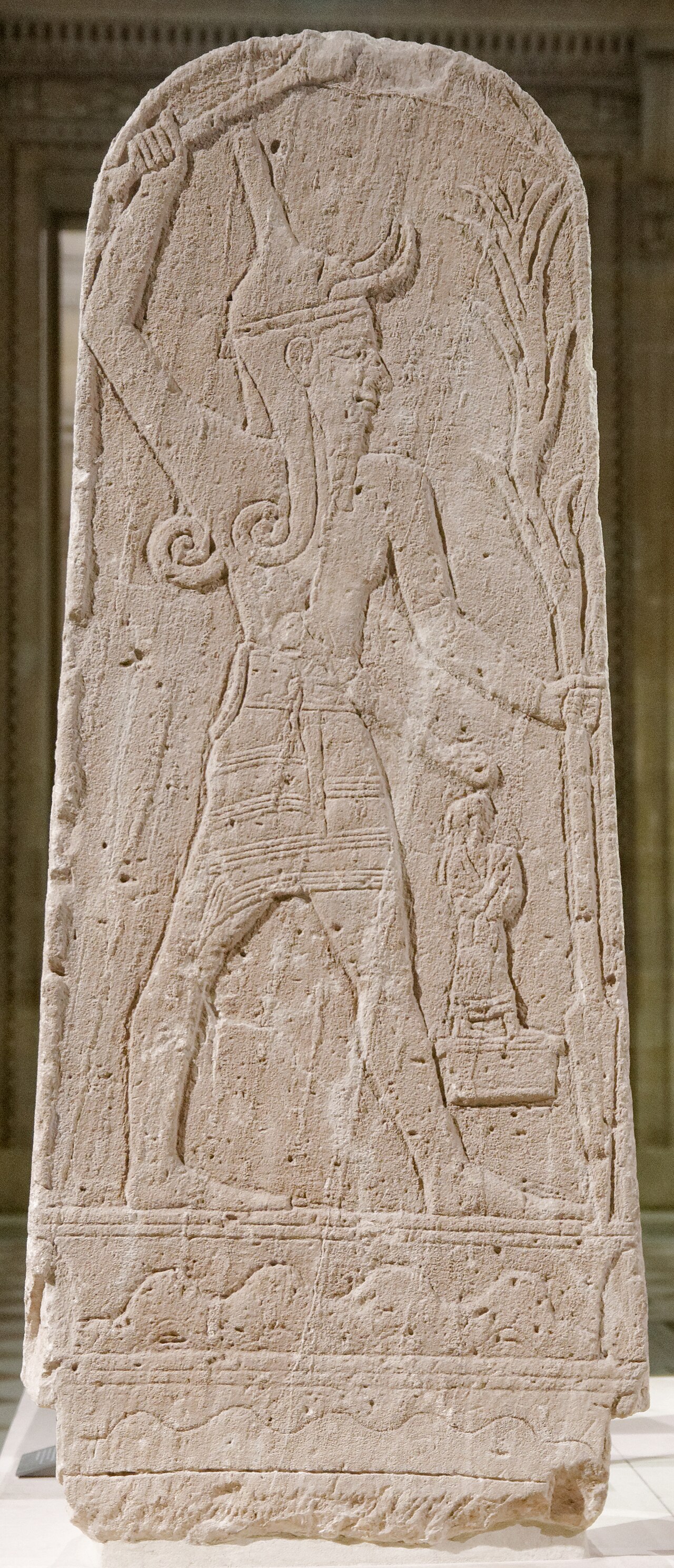
At Ugarit, Shachar (Dawn) and Shalim (Dusk) are twin gods (KTU 1.23). The mountain of assembly "in the far reaches of Tsaphon" (14:13) is Baal's mountain. In the Baal cycle, after Baal's death, El makes Athtar (a god linked with the morning or evening star in later traditions) king on Baal's throne; but Athtar is too small, his feet do not reach the footstool, so he descends to rule the earth (KTU 1.6 I 53–65). Many scholars see a myth of a star-god's failed ascent behind Isaiah 14; others prefer a Greek-style Phaethon parallel or no specific myth. No surviving text supplies the whole story; the site presents it as background, not source.
A taunt song (mashal) over a Babylonian king (or an Assyrian king of Babylon), dead and unburied: his ambition to rise to the gods' mountain ends in the pit. The star image is part of the satire.
The Targum and rabbinic tradition read the passage of Nebuchadnezzar (b. Pesachim 94a–b; Chagigah 13a), as the model of a mortal who claimed divinity. Classical Jewish tradition did not read helel as Satan.
The New Testament never quotes 14:12. Jesus' words against Capernaum echo 14:13–15 (Matthew 11:23; Luke 10:15); Luke 10:18 ("I beheld Satan as lightning fall from heaven") and Revelation 12:7–9 (the dragon cast out of heaven) speak of Satan's fall without citing Isaiah. The "morning star" is applied to Christ (Revelation 22:16; compare 2 Peter 1:19).
Origen (On First Principles 1.5.5) and Tertullian (Against Marcion 5.11, 17) read 14:12 with Ezekiel 28 as the fall of a heavenly being, the devil; this became the dominant Christian reading through the Middle Ages and Milton's Paradise Lost (1667). Luther and Calvin rejected it as a misreading of the context; most modern commentators read the king of Babylon, while some see a typological pointer to Satan's pride.
What "Lucifer" is and is not
"Lucifer" is not a Hebrew name and does not appear in the Hebrew Bible; it is the Latin translation of a Hebrew epithet. The Hebrew text does not say that Satan was called helel. The Satan reading is an interpretation that combines Isaiah 14, Ezekiel 28 and New Testament texts. It may be held as a theological reading, but it is not what the translation history alone shows.
Helel as "howl"?
Because the consonants of helel could also be read as a form of yalal, "howl!" (compare Zechariah 11:2), a few scholars have proposed "Howl, son of dawn!" Most keep "shining one," which fits the star imagery of vv. 12–13 and the ancient translations.
Ezekiel 28
Ezekiel 28:12–19 addresses the king of Tyre: "Thou hast been in Eden the garden of God… thou art the anointed cherub… I will cast thee to the ground." With Isaiah 14 it became the second pillar of the doctrine of Satan's fall. In context it too is a lament over a human king, using mythic imagery of a primeval being expelled from God's mountain.
What the evidence shows
- "Lucifer" comes from the Latin Vulgate, not from the Hebrew.
- Helel ben shachar means "shining one, son of dawn." Most scholars; "howl" is a minority reading.
- Isaiah 14:12 describes the fall of Satan. An early Christian interpretation; the context names the king of Babylon.Source: K. Kremser, "Helel ben Shahar – Lucifer (Isaiah 14:12)," Protokolle zur Bibel 30 (2021)
- The New Testament applies "morning star" to Christ. Revelation 22:16; compare 2 Peter 1:19.
- The Ugaritic myth of Athtar lies behind Isaiah 14:12–15.
Continue the journey
Journey of a PassageIsaiah 14:12–15: "O Lucifer, son of the morning": helel ben shachar"How art thou fallen from heaven, O Lucifer, son of the morning!" The Hebrew helel ben shachar, "shining one, son of dawn," became Greek heōsphoros and Latin lucifer, both ordinary names of the morning star; the KJV kept the Latin as a name.More from this lesson
Why this matters to the rest of Scripture
- The taunt song.
- The king of Tyre in Eden.
- Luke 10:18; Revelation 12:7–9Satan's fall in the New Testament.
- Revelation 22:16; 2 Peter 1:19The morning star.