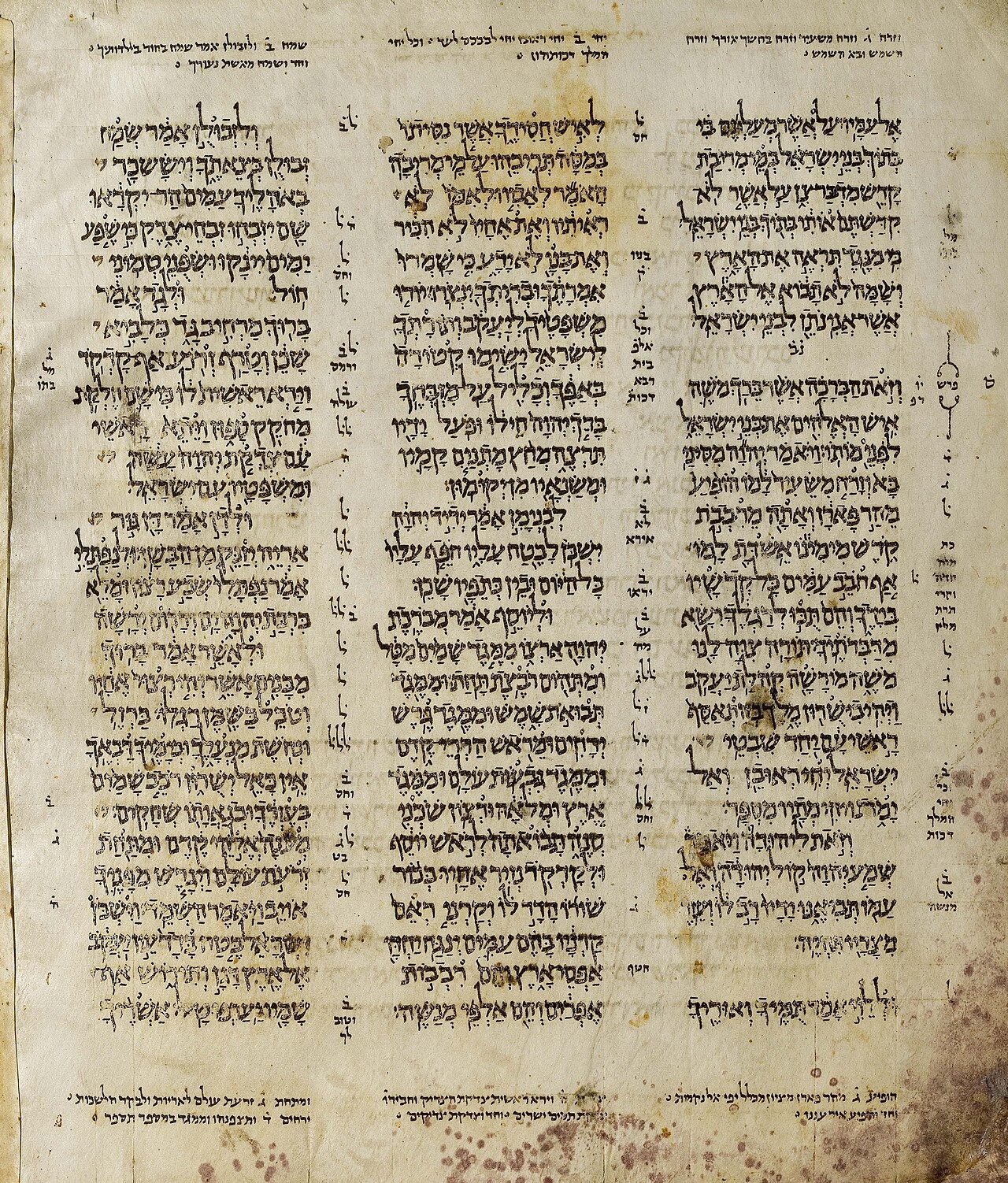
Isaiah 53: A Man of Sorrows
The fourth Servant Song: despised, wounded, silent, cut off, and vindicated
"Who hath believed our report? and to whom is the arm of the Lord revealed? For he shall grow up before him as a tender plant, and as a root out of a dry ground: he hath no form nor comeliness; and when we shall see him, there is no beauty that we should desire him. He is despised and rejected of men; a man of sorrows, and acquainted with grief: and we hid as it were our faces from him; he was despised, and we esteemed him not" (53:1–3).
"Surely he hath borne our griefs, and carried our sorrows: yet we did esteem him stricken, smitten of God, and afflicted. But he was wounded for our transgressions, he was bruised for our iniquities: the chastisement of our peace was upon him; and with his stripes we are healed. All we like sheep have gone astray; we have turned every one to his own way; and the Lord hath laid on him the iniquity of us all" (vv. 4–6).
"He was oppressed, and he was afflicted, yet he opened not his mouth: he is brought as a lamb to the slaughter, and as a sheep before her shearers is dumb, so he openeth not his mouth. He was taken from prison and from judgment: and who shall declare his generation? for he was cut off out of the land of the living: for the transgression of my people was he stricken. And he made his grave with the wicked, and with the rich in his death; because he had done no violence, neither was any deceit in his mouth" (vv. 7–9).
"Yet it pleased the Lord to bruise him; he hath put him to grief: when thou shalt make his soul an offering for sin, he shall see his seed, he shall prolong his days… He shall see of the travail of his soul, and shall be satisfied: by his knowledge shall my righteous servant justify many; for he shall bear their iniquities. Therefore will I divide him a portion with the great… because he hath poured out his soul unto death: and he was numbered with the transgressors; and he bare the sin of many, and made intercession for the transgressors" (vv. 10–12).
| Verses | What it says | What to notice |
|---|---|---|
| 53:1 | Who has believed what we heard? To whom has the LORD's arm been revealed? | "We": nations and kings (52:15)? Israel? The prophet's circle? Quoted in John 12:38; Romans 10:16. |
| 53:2 | Like a shoot, a root from dry ground; no form, no majesty, no beauty to draw us | Plant imagery as in 11:1. |
| 53:3 | Despised, forsaken by people, a man of pains, knowing sickness; as one from whom faces are hidden; we did not value him | "Sorrows" (makh'ovot) are pains; "grief" (choli) is sickness. |
| 53:4 | Surely he carried our sicknesses and bore our pains; we thought him struck by God | The turn: the onlookers' misjudgment. Matthew 8:17 applies it to healing. |
| 53:5 | Pierced for our transgressions, crushed for our iniquities; the discipline that made us whole on him; by his wounds healing for us | 1 Peter 2:24. |
| 53:6 | All of us strayed like sheep; the LORD made the iniquity of us all strike him | Hifgia: "caused to meet/fall on." |
| 53:7 | Oppressed and humbled, he did not open his mouth; like a lamb led to slaughter, a ewe silent before shearers | Read by the Ethiopian official in Acts 8:32. |
| 53:8 | By oppression and judgment he was taken; who considered his generation? Cut off from the land of the living; for my people's transgression the blow was his | The most uncertain verse in the Hebrew. |
| 53:9 | His grave was set with the wicked, and with a rich man in his death, though he had done no violence and no deceit was in his mouth | 1 Peter 2:22 quotes the last line. |
| 53:10 | The LORD willed to crush him with sickness; if his life is made a guilt offering (asham), he will see offspring and prolong days; the LORD's will prospers in his hand | Asham: the reparation offering (Leviticus 5:14–6:7). |
| 53:11 | After the anguish of his soul he will see (light) and be satisfied; by his knowledge the righteous one, my servant, will make many righteous and bear their iniquities | "Light": the Great Isaiah Scroll, 1QIsa-b, 4QIsa-d and the Greek. See "The Missing Light." |
| 53:12 | A portion with the many; spoil with the strong; because he poured out his life to death, was counted with transgressors, bore the sin of many, and intercedes for transgressors | Luke 22:37 quotes "numbered with the transgressors." |
Who is speaking?
The song has three voices: God introduces and concludes (52:13–15; 53:11b–12), and a "we" speaks in between (53:1–11a). The "we" may be the nations and kings of 52:15, astonished at what they now understand; or Israel, confessing its misjudgment of a righteous figure among them; or the prophet's disciples. Who the "we" are shapes who the servant is. See "Who Is the Servant?"
The Hebrew text (Masoretic Text, with the Great Isaiah Scroll, 1QIsa-b and Cave 4 copies agreeing in substance) describes a servant who suffers and dies ("cut off from the land of the living," "poured out his soul unto death," given a grave), whose suffering is understood by onlookers as being for their transgressions, whose life is made an asham, and who is then vindicated: he sees offspring, prolongs days, sees light, is satisfied, and receives a portion with the great. The text never names the servant. In Isaiah 40–55 "servant" most often means Israel/Jacob (41:8; 44:1–2, 21; 45:4; 49:3), but in 49:5–6 and 53:8 the servant is distinguished from "my people."
Daniel 11:33–35 and 12:3 (2nd century BC) call the faithful teachers maskilim ("the wise," from yaskil, 52:13) who "make many righteous" (53:11) and who suffer: an early application of the servant to the righteous among Israel. The Wisdom of Solomon (2:12–20; 5:1–7) reuses the song's pattern for the persecuted righteous man. The Targum (Aramaic, final form centuries later) calls the servant "my servant the messiah" in 52:13 but transfers the suffering to the nations and to Israel. The Talmud names the messiah "the leper" from 53:4 (b. Sanhedrin 98b). Origen (Against Celsus 1.55, c. AD 248) reports a Jewish teacher who said the passage spoke of the whole people as one, scattered among the nations. Medieval commentators such as Rashi and Ibn Ezra read the servant as Israel; others (collected by S. R. Driver and A. Neubauer, 1876–77) read the messiah.
The New Testament applies the song to Jesus in several distinct ways: to his healings (Matthew 8:17), to his rejection by unbelief (John 12:38; Romans 10:16), to his being counted with transgressors (Luke 22:37), to his silent, humiliating death as the passage Philip explains (Acts 8:32–35), and to his innocent suffering as an example and his bearing of sins for believers (1 Peter 2:21–25). Allusions ("for many," Mark 10:45; 14:24; "delivered for our offences," Romans 4:25; "bear the sins of many," Hebrews 9:28) are debated. 1 Clement 16 (c. AD 96) quotes the whole song. See "Isaiah 53 in the New Testament."
Historians can establish that Jesus of Nazareth was crucified under Pontius Pilate, and that his followers very early interpreted his death through Isaiah 53 among other scriptures (1 Corinthians 15:3, "according to the scriptures"). Whether Jesus himself understood his death through Isaiah 53 is debated among scholars (J. Jeremias argued yes; M. Hooker, Jesus and the Servant, 1959, argued the evidence is thin). Whether the song is a prediction fulfilled in Jesus is a question of faith. Modern Christian readers read it as prophecy of Jesus' atoning death; modern Jewish readers usually read it of Israel's suffering among the nations; many critical scholars read it of an exilic figure or of Israel, and debate whether it teaches vicarious atonement at all (R. N. Whybray, 1978, argued it does not; others, such as B. Janowski, argue it does).
"Wounded," "pierced" or "profaned"?
Mecholal (53:5) comes from chalal, "to pierce" or "to wound" (the same verb as "wounded the dragon," 51:9), and the Greek reads "wounded." In 53:10, where the Masoretic Text has hecheli ("he made him sick"), the Great Isaiah Scroll has a form of the same root chalal, "and he pierced (or profaned) him" (described from a transcription), while 4QIsa-d agrees with the Masoretic Text. These are not the Hebrew of Zechariah 12:10 or Psalm 22:16, the verses usually meant by "they pierced."
The guilt offering (53:10)
Asham is the sacrifice for reparation after a trespass, often with restitution (Leviticus 5:14–6:7). "If his soul shall make (or: if you make his soul) an asham" is grammatically difficult: the subject may be the servant himself, God, or "you." The library's Greek reads "if you make an offering for sin, your soul will see a long-lived seed," moving the sacrifice to the readers. Whether the song presents the servant's death as a sacrifice that atones for others, or as suffering caused by others' sins and later recognized, is one of the most debated questions in Old Testament theology.
What the evidence shows
- Isaiah 53 does not name the servant.
- The Hebrew witnesses agree on Isaiah 53 in substance, with some significant variants (53:3, 8, 9, 10, 11, 12). Described from transcriptions; see the investigations.
- Daniel 11–12 applies the servant's language to the faithful teachers.
- Origen reports a Jewish reading of the servant as the people of Israel. Against Celsus 1.55; reported.
- Isaiah 53 teaches vicarious atonement.
- Isaiah 53 is a prophecy of Jesus' death and resurrection. The early Christian reading; Jewish tradition reads it otherwise.
Continue the journey
Journey of a PassageIsaiah 53:1–3: "Who hath believed our report?… despised and rejected""Who hath believed our report?… He is despised and rejected of men; a man of sorrows, and acquainted with grief." John 12:38 and Romans 10:16 quote v.More from this lesson
Why this matters to the rest of Scripture
- Philip and the Ethiopian official.
- "By whose stripes ye were healed."
- Daniel 11:33–35; 12:3The wise who make many righteous.
- Psalm 22; Zechariah 12:10Other texts read of the passion.