Isaiah 57: The High and Lofty One
The righteous perish unnoticed, worship in the valleys, and the God who dwells with the crushed
"The righteous perisheth, and no man layeth it to heart: and merciful men are taken away, none considering that the righteous is taken away from the evil to come. He shall enter into peace: they shall rest in their beds, each one walking in his uprightness" (57:1–2).
"But draw near hither, ye sons of the sorceress, the seed of the adulterer and the whore… Enflaming yourselves with idols under every green tree, slaying the children in the valleys under the clifts of the rocks? Among the smooth stones of the stream is thy portion… Upon a lofty and high mountain hast thou set thy bed… And thou wentest to the king with ointment… When thou criest, let thy companies deliver thee; but the wind shall carry them all away… but he that putteth his trust in me shall possess the land, and shall inherit my holy mountain" (vv. 3–13).
"For thus saith the high and lofty One that inhabiteth eternity, whose name is Holy; I dwell in the high and holy place, with him also that is of a contrite and humble spirit, to revive the spirit of the humble, and to revive the heart of the contrite ones. For I will not contend for ever, neither will I be always wroth… I have seen his ways, and will heal him" (vv. 15–18).
"I create the fruit of the lips; Peace, peace to him that is far off, and to him that is near, saith the LORD; and I will heal him. But the wicked are like the troubled sea, when it cannot rest, whose waters cast up mire and dirt. There is no peace, saith my God, to the wicked" (vv. 19–21).
| Verses | What it says | What to notice |
|---|---|---|
| 57:1–2 | The righteous perish, unnoticed; they are taken from coming evil and rest in peace | "Rest in their beds": the grave as a resting place. |
| 57:3–5 | Sons of a sorceress; mockers; burning under green trees; slaughtering children in the wadis | The language of Jeremiah 2:20; 7:31; 19:5. Whether it describes current practice or recalls pre-exilic sins is debated. |
| 57:6 | Among the smooth stones of the wadi is your portion; to them you pour offerings | Chalqe nachal, a pun: "smooth stones" and "portion" share a root. Perhaps standing stones or offerings to the dead. |
| 57:7–8 | A bed on a high mountain; a memorial (zikkaron) behind the door; uncovering, enlarging the bed | Sexual imagery for covenant betrayal (as Ezekiel 16; 23). Yad ("hand," v. 8) may be a euphemism; its meaning is uncertain. |
| 57:9–10 | You went to the king (la-melekh) with oil; sent envoys far, down to Sheol; wearied but did not give up | La-melekh may be "to the king" (a foreign ruler) or "to Molech" (compare 30:33). |
| 57:11–13 | Whom did you fear, that you lied? Your collection will not save you; those who trust me will inherit the land | Kibbutsayikh, "your collection" of idols (or "your gathered helpers"). |
| 57:14 | Build up, build up, clear the way; remove the obstacle from my people's path | Echoes 40:3 and 62:10; the road is now moral. |
| 57:15 | The High and Exalted One, whose name is Holy: I dwell on high and with the crushed and lowly | 1QIsa-a and 4QIsa-d: "he dwells," third person. |
| 57:16–18 | I will not accuse forever; I struck him for his greed; I hid; I have seen his ways and will heal and lead him | 1QIsa-a lacks "and I will lead him" (v. 18). |
| 57:19 | Creating the fruit of the lips: peace, peace, to the far and the near; I will heal him | Ephesians 2:17 applies it to Gentiles and Jews. |
| 57:20–21 | The wicked like the churning sea; no peace for the wicked | The refrain of 48:22. |
Valleys, stones and the dead
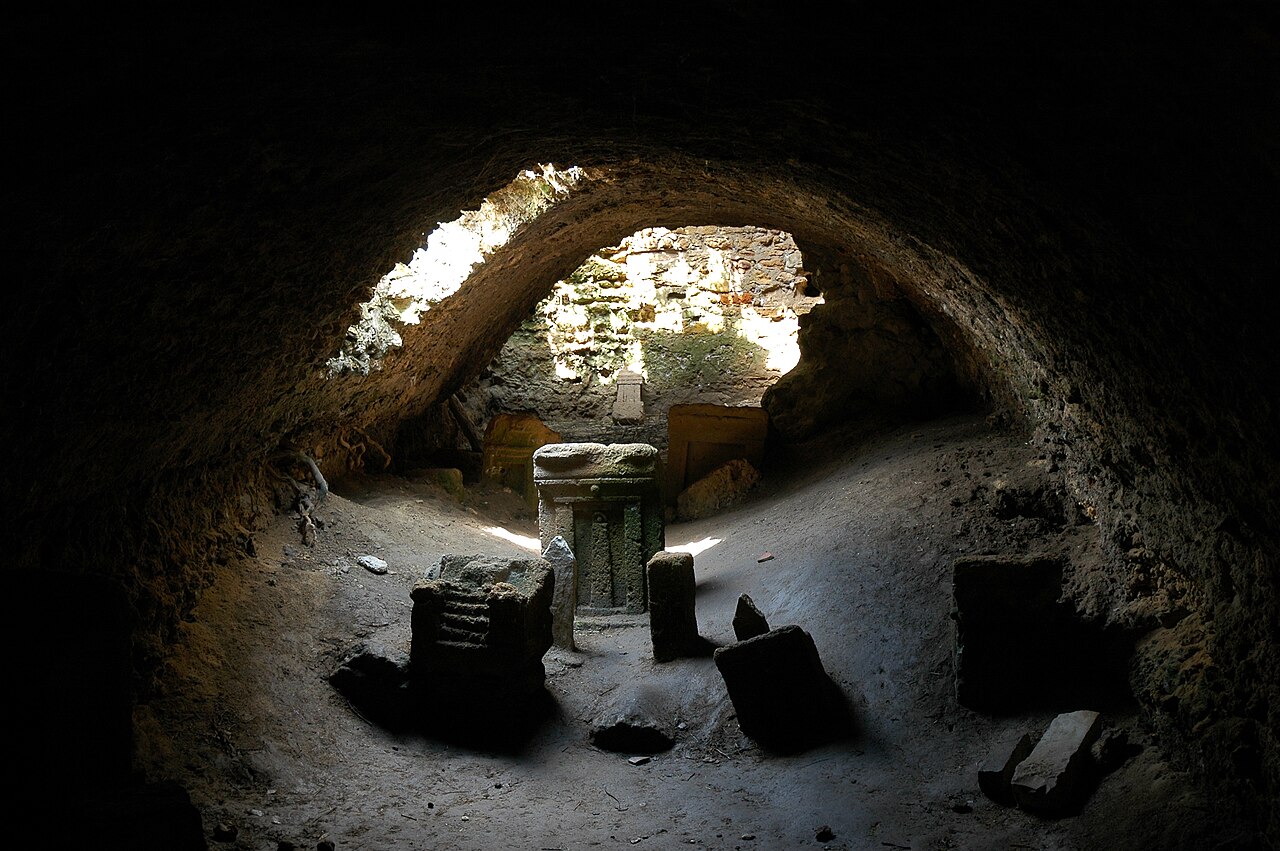
The accusations use places and objects known from Iron Age Judah and its neighbors: shrines on hills and under trees (2 Kings 17:10), standing stones, offerings for the dead, and child sacrifice associated with the Topheth in the Valley of Hinnom (2 Kings 23:10; Jeremiah 7:31). Archaeology has found cult places, standing stones and household figurines in Judah, and infant burial precincts called tophets at Carthage and other Phoenician colonies. It has not found a Topheth in Jerusalem, and no excavated shrine can be matched to a particular line of Isaiah 57. The poem gathers traditional accusations; it does not map a site.
Transcendence and nearness
Verse 15 joins two ideas that the book has kept in tension since chapter 6: God "high and lifted up" (ram ve-nissa, 6:1; 57:15) and God present with the people. Here God's dwelling is both "the high and holy place" and "with him also that is of a contrite (dakka') and humble spirit." Dakka' is the root of "crushed" in the servant song (53:5, 10). Psalm 34:18 and 51:17 say the same of the broken heart. Isaiah 57:14–58:14 is read in synagogues on the morning of Yom Kippur (b. Megillah 31a).
"I dwell" or "he dwells"?
The Masoretic Text has God speak in the first person ("I dwell," eshkon). The Great Isaiah Scroll and 4QIsa-d have the third person ("he dwells," yishkon), as does the library's Greek; Jerome's participle ("habitans") has no person. The meaning is almost the same; the variant shows how the line between a prophet's description and God's speech could shift in copying (described from transcriptions; ISA-C4).
Imagery of sexual unfaithfulness
Like Hosea, Jeremiah and Ezekiel, the poem uses a female figure's sexual unfaithfulness to describe the people's worship of other gods ("thou hast enlarged thy bed," v. 8). Modern readers, including many who take the text as Scripture, have pointed out that such imagery depends on an ancient view of women's sexuality as a husband's possession, and that it shames a female figure for a whole people's sin. The site reports what the text says, explains its metaphor, and leaves the ethical question open (ISA-C9).
What the evidence shows
- Isaiah 57:5 refers to child sacrifice. The wording matches Jeremiah 7:31; 19:5; whether it was current practice is debated.
- A specific excavated shrine is described in Isaiah 57.
- 1QIsa-a and 4QIsa-d read "he dwells" in 57:15. Described from transcriptions.
- Isaiah 57:14–58:14 is the Yom Kippur morning haftarah. b. Megillah 31a; C check against the Talmud text.
Continue the journey
Journey of a PassageIsaiah 57:15–19: "The high and lofty One… with him also that is of a contrite spirit": I dwell, or he dwells?"For thus saith the high and lofty One that inhabiteth eternity, whose name is Holy; I dwell in the high and holy place, with him also that is of a contrite and humble spirit." The Masoretic Text has God speak in the first person, "I dwell"; the Great Isaiah Scroll, 4QIsa-d and the library's Greek have the third person, "he dwells." The passage ends "Peace, peace to him that is far off, and to him that is near" (v.More from this lesson
Echoes Across Civilizations
Optional: how other ancient peoples told similar stories. Open one to compare, then come back to the lesson.
Child sacrifice in crisisPhoenician / Punic · Greek
Did Israel's neighbors sacrifice children, and how does the Bible respond?
- Phoenician / Punic: The tophet of Carthage Shared literary world
- Greek: Iphigenia Resemblance only
Why this matters to the rest of Scripture
- "High and lifted up."
- Psalm 34:18; 51:17The broken and contrite heart.
- Peace to the far and the near.
- "No peace to the wicked."