Isaiah 10: Assyria, the Rod of My Anger
Unjust decrees, an empire that forgets it is a tool, a remnant that returns, and the advance on Jerusalem
"Woe unto them that decree unrighteous decrees, and that write grievousness which they have prescribed; to turn aside the needy from judgment, and to take away the right from the poor of my people, that widows may be their prey, and that they may rob the fatherless!" (10:1–2). The refrain closes: "his hand is stretched out still" (v. 4).
"O Assyrian, the rod of mine anger, and the staff in their hand is mine indignation. I will send him against an hypocritical nation… Howbeit he meaneth not so, neither doth his heart think so; but it is in his heart to destroy and cut off nations not a few" (vv. 5–7). Assyria boasts: "Are not my princes altogether kings? Is not Calno as Carchemish? is not Hamath as Arpad? is not Samaria as Damascus?… By the strength of my hand I have done it, and by my wisdom… and I have removed the bounds of the people, and have robbed their treasures" (vv. 8–13).
"Shall the axe boast itself against him that heweth therewith? or shall the saw magnify itself against him that shaketh it?" (v. 15). "And it shall come to pass in that day, that the remnant of Israel… shall no more again stay upon him that smote them; but shall stay upon the LORD, the Holy One of Israel, in truth. The remnant shall return, even the remnant of Jacob, unto the mighty God. For though thy people Israel be as the sand of the sea, yet a remnant of them shall return" (vv. 20–22).
"He is come to Aiath, he is passed to Migron; at Michmash he hath laid up his carriages… Gibeah of Saul is fled… As yet shall he remain at Nob that day: he shall shake his hand against the mount of the daughter of Zion" (vv. 28–32). "Behold, the Lord, the LORD of hosts, shall lop the bough with terror… and Lebanon shall fall by a mighty one" (vv. 33–34).
| Verses | What it says | What to notice |
|---|---|---|
| 10:1–4 | Woe to lawmakers who rob the poor, widows and orphans; the refrain ends | Legal injustice: unjust decrees and written oppression. |
| 10:5–7 | Assyria, rod of my anger, sent against a godless nation; but it intends to destroy | God's purpose and the empire's purpose differ. |
| 10:8–11 | Assyria's boast: Calno, Carchemish, Hamath, Arpad, Samaria, Damascus; why not Jerusalem? | Cities conquered by Assyria between 740 and 717 BC. |
| 10:12–14 | "By my strength and wisdom I have done it": nations robbed like a nest | Royal boasting style of Assyrian inscriptions. |
| 10:15–19 | Can the axe boast against the one who swings it? Fire on Assyria's forest | Tool imagery. |
| 10:20–23 | The remnant will return to the mighty God; a remnant only, though Israel is like sand | Shear yashuv: Isaiah's son's name (7:3). Quoted in Romans 9:27–28. |
| 10:24–27 | Do not fear Assyria: the yoke will be broken; Midian and the Red Sea remembered | Exodus memory. |
| 10:28–32 | The march: Aiath, Migron, Michmash, Geba, Ramah, Gibeah, Gallim, Laishah, Anathoth, Madmenah, Gebim, Nob | A vivid itinerary from the north to Jerusalem's edge. |
| 10:33–34 | The LORD lops the boughs; Lebanon falls | Sets up the shoot from the stump in 11:1. |
Assyrian boasting and the march on Jerusalem
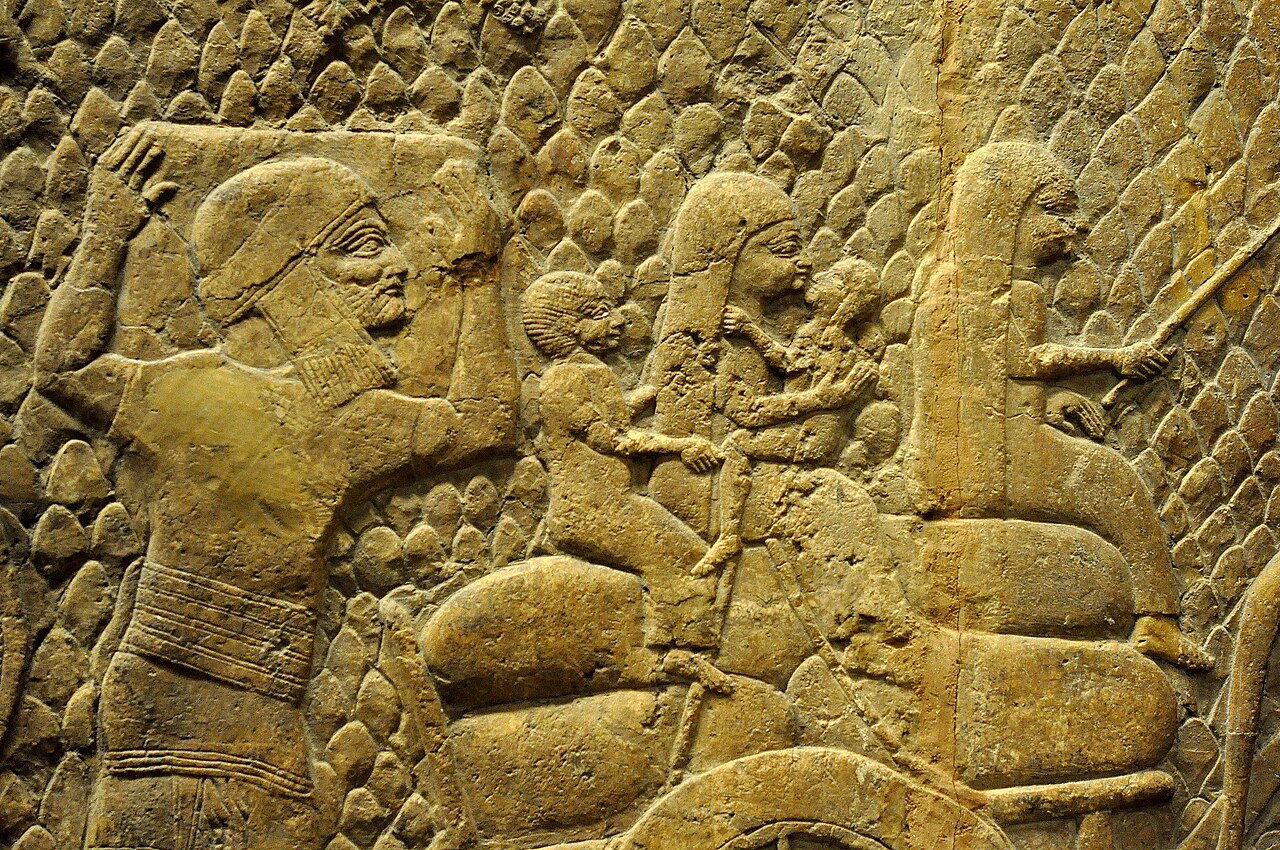
Assyrian royal inscriptions use the same rhetoric Isaiah mocks: kings who "by the strength of my hand" conquered cities, removed borders, deported peoples and took treasure. The cities named in v. 9 (Calno/Kullani, Carchemish, Hamath, Arpad, Samaria, Damascus) were taken by Tiglath-pileser III, Shalmaneser V and Sargon II between about 740 and 717 BC. The march of vv. 28–32 comes from the north through Benjamin, a route not used by Sennacherib in 701 (who came from the southwest after Lachish); it may describe an expected or imagined attack, or the threat of 734 or another campaign. Its historical setting is debated.
10:20–23 and Romans 9:27–28
Paul quotes 10:22–23 in Romans 9:27–28, in a Greek form ("Though the number of the children of Israel be as the sand of the sea, a remnant shall be saved"); the library's Greek also has "a remnant… will be saved" (Giguet: "un reste en sera seul sauvé") where the Hebrew has "will return." The Vulgate keeps "will be converted (return)." For Paul, the remnant is the Jewish believers in Jesus within Israel; for Isaiah, the survivors of Assyria's judgment who rely on God. Both readings are given.
"The mighty God" (el gibbor)
"The remnant… shall return… unto the mighty God (el gibbor)" (10:21): the same title given to the royal child in 9:6. In 10:21 it clearly refers to God. Interpreters who read 9:6 as divine names spoken over the child point to 10:21; those who read 9:6 as a title of the king note that royal language could be elevated. The parallel is real; its implication is debated.
What the evidence shows
- Calno, Carchemish, Hamath, Arpad, Samaria and Damascus were conquered by Assyria between about 740 and 717 BC.
- The march of 10:28–32 describes Sennacherib's 701 route. Sennacherib approached from the southwest; the setting of the march is debated.
- Romans 9:27–28 quotes Isaiah 10:22–23 in a Greek form.
Continue the journey
Journey of a PassageIsaiah 10:20–23: "A remnant shall return""The remnant shall return (shear yashuv)… unto the mighty God.More from this lesson
Why this matters to the rest of Scripture
- Paul quotes the remnant passage.
- Samaria's fall; Sennacherib's campaign.
- Habakkuk 1:6–11; 2:4Another prophet on an empire used by God and judged for its pride.
- Isaiah 7:3; 9:6Shear-jashub; el gibbor.