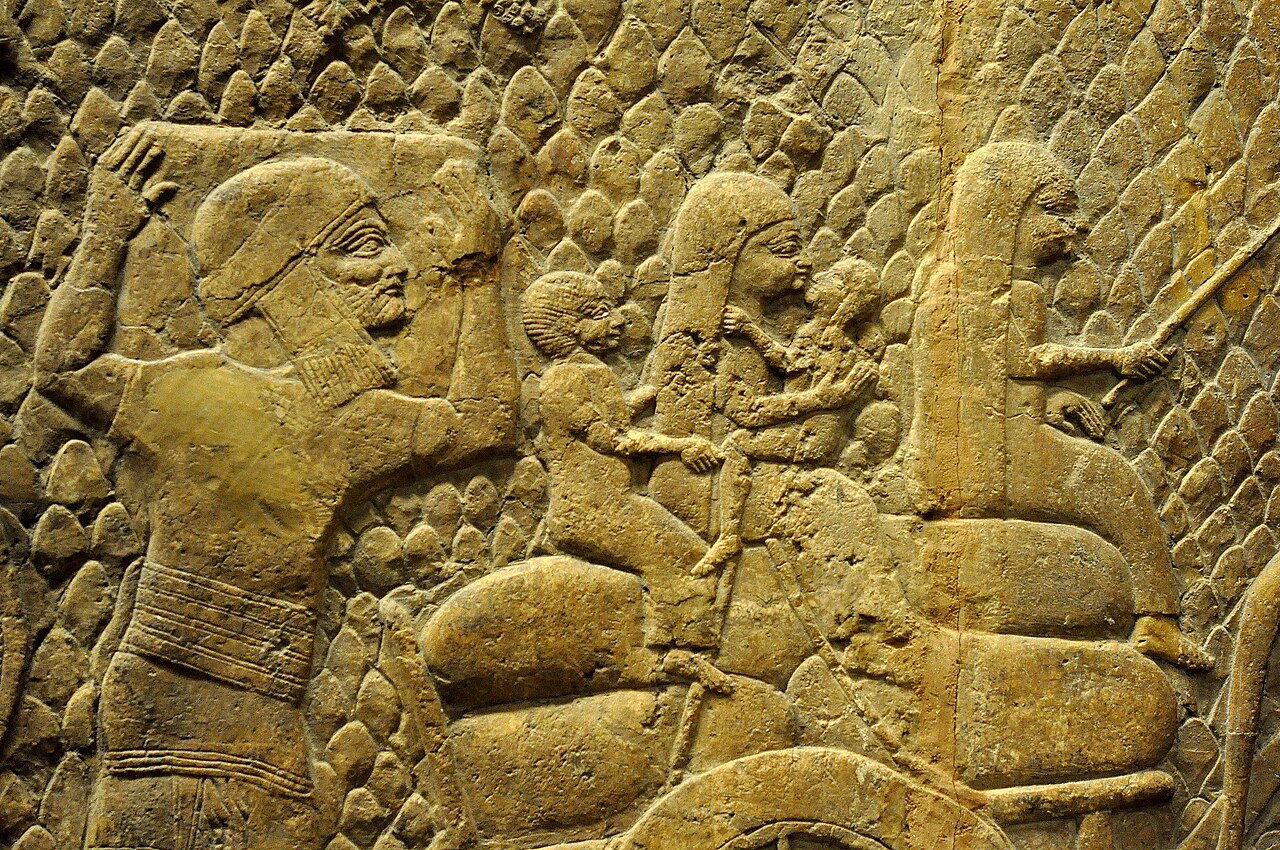
Isaiah 20: Naked and Barefoot
Sargon takes Ashdod, and a prophet's body becomes the message
"In the year that Tartan came unto Ashdod, (when Sargon the king of Assyria sent him,) and fought against Ashdod, and took it; At the same time spake the Lord by Isaiah the son of Amoz, saying, Go and loose the sackcloth from off thy loins, and put off thy shoe from thy foot. And he did so, walking naked and barefoot" (20:1–2).
"And the Lord said, Like as my servant Isaiah hath walked naked and barefoot three years for a sign and wonder upon Egypt and upon Ethiopia; So shall the king of Assyria lead away the Egyptians prisoners, and the Ethiopians captives, young and old, naked and barefoot, even with their buttocks uncovered, to the shame of Egypt" (vv. 3–4).
"And the inhabitant of this isle shall say in that day, Behold, such is our expectation, whither we flee for help to be delivered from the king of Assyria: and how shall we escape?" (v. 6).
| Verses | What it says | What to notice |
|---|---|---|
| 20:1 | The tartan comes to Ashdod, sent by Sargon, and takes it | Tartan (Assyrian turtanu): the commander-in-chief, a title, not a name. |
| 20:2 | Isaiah removes sackcloth and sandals and goes naked and barefoot | Sackcloth: a prophet's or mourner's garment. |
| 20:3–4 | A three-year sign: Egyptian and Kushite captives will be led off naked and barefoot | Assyrian reliefs show stripped captives. |
| 20:5–6 | Those who looked to Cush and gloried in Egypt will be ashamed: how shall we escape? | "This coastland": Philistia and Judah. |
Sargon II and Ashdod
Sargon's annals and display inscriptions tell how Azuri, king of Ashdod, withheld tribute and was replaced by his brother Ahimiti; the people then made a usurper, Yamani, king, who sought help from Egypt and Kush. Sargon's army took Ashdod (dated 712 or 711 BC) and its neighbors; Yamani fled to Kush and was handed over to Assyria by the Kushite king (named Shebitku in the Tang-i Var inscription from Iran, which has helped redate the Twenty-fifth Dynasty). Fragments of a basalt victory stele of Sargon were found at Ashdod in 1963. Isaiah 20:1 is the only biblical mention of Sargon; before the excavation of his palace at Khorsabad (from 1843), he was known almost only from this verse. The library's Greek garbles the names: "Tanathan" for the tartan and "Arna" for Sargon (Giguet).
Naked or stripped?
"Arom" can mean fully naked or stripped to an undergarment (compare 1 Samuel 19:24; John 21:7, where Peter is "naked" while fishing). Many interpreters think Isaiah wore only a loincloth, the dress of a captive or a slave. Prophetic sign-acts (Jeremiah's yoke, Jeremiah 27–28; Ezekiel lying on his side, Ezekiel 4) used the prophet's body as the message. The text describes a prophetic sign, not a model for behavior.
Three years
"Three years" (v. 3) may say how long Isaiah walked this way, or that the sign pointed to a three-year period (the Ashdod revolt lasted about 713–711 BC). The Hebrew can be divided either way; the library's Greek reads it as both (Giguet: "a voyagé trois ans… pour être pendant trois ans un sujet de signes").
What the evidence shows
- Isaiah 20:1 is the only mention of Sargon II in the Bible.
- Sargon II's forces took Ashdod in about 712/711 BC. Sargon's inscriptions; date reported (ISA-C6).
- A fragment of a Sargon II stele was found at Ashdod. Reported; catalogue check open.
- Isaiah walked completely naked for three years. Arom can mean stripped to a loincloth; "three years" may describe the sign's meaning.
Continue the journey
Journey of a PassageIsaiah 20:1–3: Sargon, the tartan, and the prophet's sign"In the year that Tartan came unto Ashdod, (when Sargon the king of Assyria sent him)…" Isaiah walks "naked and barefoot three years." The witnesses agree in Hebrew (the Great Isaiah Scroll, 4QIsa-a and 4QIsa-b preserve the verses).More from this lesson
Investigations
Optional deep dives: the ancient sources, the physical evidence, and every interpretation side by side, including unconventional ones, each labeled for what it is.
Tiglath-pileser III, Sargon II and the Fall of SamariaKings named: documented · Fall of Samaria: documented · One fall or two: debated
How do Assyrian records describe Israel's last decades?
Tiglath-pileser III names Menahem of Samaria and Jehoahaz (Ahaz) of Judah as tributaries, says Israel's people overthrew Pekah, and claims he made Hoshea king. Sargon II claims to have conquered Samaria and deported 27,290 people. The Babylonian Chronicle says Shalmaneser V ravaged Samaria. Together they confirm the biblical sequence while raising questions about who took Samaria and when.
Open the full investigation →Why this matters to the rest of Scripture
- Isaiah 30:1–7; 31:1–3Woe to those who go down to Egypt.
- Jeremiah 13; 27–28; Ezekiel 4–5Other prophetic sign-acts.
- Micah too goes "stripped and naked" in mourning.