myBibleHistory
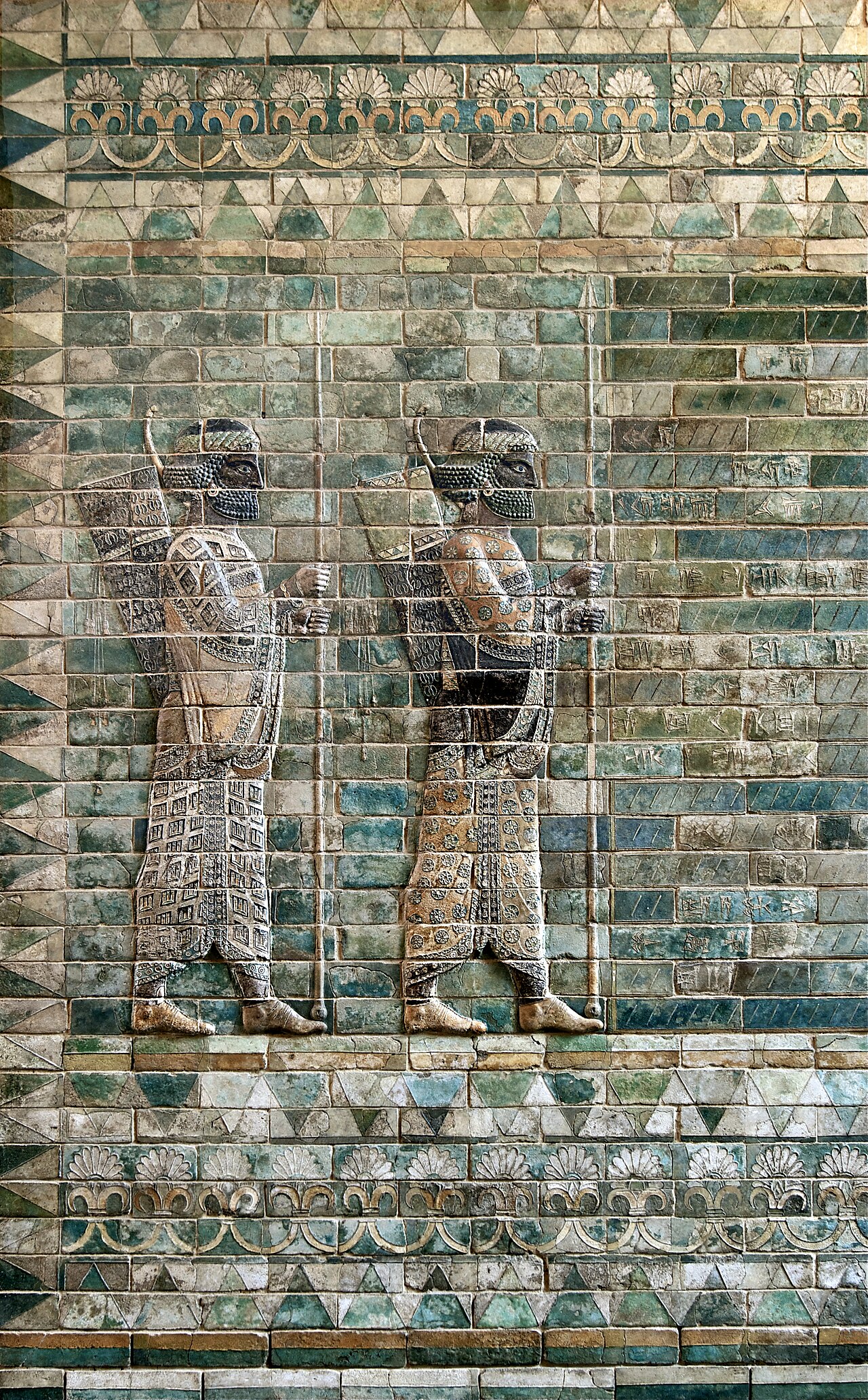
Glazed-brick frieze of Persian archers from the palace at Susa

Books of Scripture

Esther

A queen, a lot and a people's survival in Persia

10 chapters

Esther is set at the Persian court of Susa under Ahasuerus (Xerxes). Queen Vashti refuses to be displayed and is deposed; Esther, an orphaned Jewish woman raised by her cousin Mordecai, is taken into the palace and made queen while hiding her people. When the vizier Haman casts lots and obtains a decree to destroy every Jew in the empire, Esther risks her life to approach the king, unmasks Haman, and a counter-decree lets the Jews defend themselves. The festival of Purim remembers the reversal. The Hebrew book never names God; the Greek Esther adds six passages of dreams, decrees and prayers that do.

Lessons

  1. 1Banquets, Royal Power and VashtiEsther 1 · Ahasuerus, who rules 127 provinces from India to Cush, displays his wealth for 180 days and then holds a seven-day banquet in Susa. Queen Vashti holds her own banquet for the women. On the seventh day the merry king orders seven eunuchs to bring Vashti in her royal crown to show her beauty. She refuses. His counselor Memucan turns her refusal into an empire-wide threat, and a decree removes her and declares every man master of his house.
  2. 2Esther Enters the Court; Mordecai Saves the KingEsther 2 · Young women from every province are gathered into the house of the women at Susa under Hegai. Among them is Hadassah, Esther, an orphan raised by her cousin Mordecai, a Benjaminite whose ancestor was exiled with Jeconiah. On Mordecai's instruction she hides her people. After twelve months of preparation, she is taken to the king in his seventh year, in Tebeth, and he makes her queen. Mordecai, sitting in the king's gate, uncovers a plot by two eunuchs, Bigthan and Teresh; it is recorded in the chronicles.
  3. 3Haman, the Lot and the Death DecreeEsther 3 · The king promotes Haman son of Hammedatha the Agagite above all the princes. Everyone at the king's gate bows to him except Mordecai, who has told them he is a Jew. Haman decides to destroy all Mordecai's people. In Nisan of the twelfth year the lot (pur) is cast before him and falls on Adar. He offers the king 10,000 talents of silver; the king gives him his signet ring. On 13 Nisan letters go out in every language: on 13 Adar, kill all the Jews, young and old, women and children, and plunder their goods. "The king and Haman sat down to drink; but the city Shushan was perplexed."
  4. 4Mourning, Fasting and a DecisionEsther 4 · Mordecai tears his clothes and cries loudly in sackcloth before the king's gate; the Jews in every province fast and weep. Esther sends Hathach to learn why. Mordecai sends the decree and asks her to plead with the king. She answers that anyone who goes to the king uninvited dies unless he holds out the golden sceptre, and she has not been called for thirty days. Mordecai replies: if you keep silent, deliverance will arise from another place, but you and your father's house will perish; who knows whether you have come to the kingdom for such a time as this? Esther calls a three-day fast: "If I perish, I perish."
  5. 5Two Banquets and a Deadly StructureEsther 5 · On the third day Esther, in royal robes, stands in the inner court. The king holds out the golden sceptre and offers her up to half the kingdom. She invites him and Haman to a banquet, and there, asked again, invites them to a second banquet. Haman goes out joyful, sees Mordecai who will not rise or move, and goes home to boast to his wife Zeresh and his friends. Zeresh advises: make a structure fifty cubits high and have Mordecai hanged on it in the morning.
  6. 6The King's Sleepless NightEsther 6 · That night the king cannot sleep and has the chronicles read to him. He hears how Mordecai saved his life and learns nothing was done for him. Haman, arriving early to ask for Mordecai's death, is asked what should be done for the man the king delights to honor. Thinking it is himself, he proposes royal robes, the king's horse and a crown, and a herald. The king orders him to do it all for Mordecai the Jew. Haman goes home in mourning; Zeresh and his wise men say: if Mordecai is of the seed of the Jews, you will surely fall before him.
  7. 7Disclosure and the Downfall of HamanEsther 7 · At the second banquet Esther asks for her life and her people's: "we are sold, I and my people, to be destroyed." The king asks who dared; she names Haman. The king leaves in wrath for the garden. Haman throws himself on Esther's couch to beg for his life; the king returns and accuses him of assaulting the queen. Harbona points out the stake Haman built for Mordecai; Haman is hanged on it, and the king's wrath subsides.
  8. 8Counter-Edict, Self-Defense and PowerEsther 8 · The king gives Haman's house to Esther and his ring to Mordecai. Esther falls at the king's feet weeping and begs him to reverse Haman's letters. He says a decree sealed with the king's ring cannot be revoked, but they may write another. On 23 Sivan the scribes write in every script and language: the Jews may gather and defend themselves on 13 Adar, "to destroy, to slay, and to cause to perish" any armed force that attacks them, "both little ones and women," and take their spoil. Mordecai goes out in royal robes; the Jews have light and joy; many of the peoples of the land "became Jews."
  9. 9Violence, Numbers and PurimEsther 9 · On 13 Adar the day is reversed: the Jews gather against those who sought their hurt, and officials help them for fear of Mordecai. In Susa they kill 500 men and Haman's ten sons, but lay no hand on the plunder. At Esther's request a second day is granted in Susa: 300 more men; the ten sons are hanged. Elsewhere the Jews kill 75,000 (in the library's Greek, 15,000), and take no plunder. They rest and feast on the 14th, in Susa on the 15th. Mordecai and Esther write letters establishing Purim: feasting, gifts to one another and gifts to the poor, every year.
  10. 10Mordecai's Greatness and the EndingEsther 10 (Greek Addition F) · The Hebrew book ends in three verses: the king lays a tribute on the land and the islands; his deeds and Mordecai's greatness are written in the chronicles of the kings of Media and Persia; Mordecai is second to the king, great among the Jews, "seeking the wealth of his people, and speaking peace to all his seed." The Greek continues: Mordecai interprets his dream, God is named, and a colophon says the letter of Purim was brought to Egypt in the fourth year of Ptolemy and Cleopatra.
  11. 11Investigation: Susa, Xerxes and the Persian CourtEsther 1–10 · Esther's setting is real: Susa, Xerxes, Persian banquets, eunuchs, seals, couriers and records. Its persons and events are not attested outside the book. Scholars range from reading Esther as history, to a historical novella with real memories, to a court tale written for diaspora Jews. This investigation sets out what the evidence can and cannot decide.
  12. 12Esther's Three TextsEsther 1–10 and Greek Esther · Esther exists in three main forms: the Hebrew (Masoretic) text; the Old Greek (Septuagint), a fairly free translation with six additions; and the Alpha Text, a shorter Greek version with the additions but a different, briefer ending. They are not copies of one another. Scholars debate whether the Alpha Text translates a different Hebrew original.
  13. 13The Greek Additions A–FAdditions to Esther (Greek; Vulgate 10:4–16:24) · Six blocks of text in the Greek Esther, labeled A to F: Mordecai's dream (A) and its interpretation (F); the texts of Haman's decree (B) and the counter-decree (E); Mordecai's and Esther's prayers (C); and Esther's dramatic approach to the king (D). They make God the actor in the story. Catholics and Orthodox read them as Scripture; Protestants place them in the Apocrypha. Jerome moved them to the end, creating the chapter numbers 10:4–16:24.
  14. 14Esther, Power and ViolenceEsther 1–2; 3:13; 8:11; 9 · Esther raises hard questions: a queen deposed for refusing to be displayed; young women gathered for the king; a decree of genocide; a counter-decree permitting the killing of attackers' families; 75,000 dead. This lesson gathers what the text says, how different communities have read it, and why it mattered so much to people facing persecution.
  15. 15Purim and Jewish MemoryEsther 3:7; 9:17–32 · Purim takes its name from pur, the lot Haman cast. The Hebrew book ends by establishing the festival on 14 and 15 Adar, with feasting, food gifts and gifts to the poor. Outside Esther, Purim is first mentioned as "Mordecai's day" in 2 Maccabees. Some scholars propose that Purim adapted an older Babylonian or Persian festival; there is no evidence that settles its origin.

How Esther came to us

Who wrote it, how it was copied, and how it reached the Bible you hold. These lessons follow the book through history.

  1. ★How Esther Came to UsEsther's story is set under Xerxes (5th century BC); its composition date is uncertain, probably late Persian or Hellenistic. No copy has been found among the Dead Sea Scrolls, the only Hebrew Bible book so absent. The Hebrew text survives in medieval manuscripts and countless Purim scrolls; the Greek in two forms with six additions. Its place in Scripture was debated by both Jews and Christians.
  2. 5The Return and EzraPersia let the exiles go home; Ezra read the law to the whole people, and Scripture became the center of Jewish life.
  3. 6The SeptuagintJews in Egypt translated their Scriptures into Greek, creating the Bible of the early church and of the New Testament writers.
  4. 7The Dead Sea ScrollsA shepherd's discovery in 1947 gave us Bible manuscripts a thousand years older than any known before, and showed how faithfully the text was kept.
  5. 13Scribes, Jerome, and the MasoretesJerome gave the West its Latin Bible; Jewish scholars called the Masoretes guarded the Hebrew text letter by letter.

Journey of a Passage