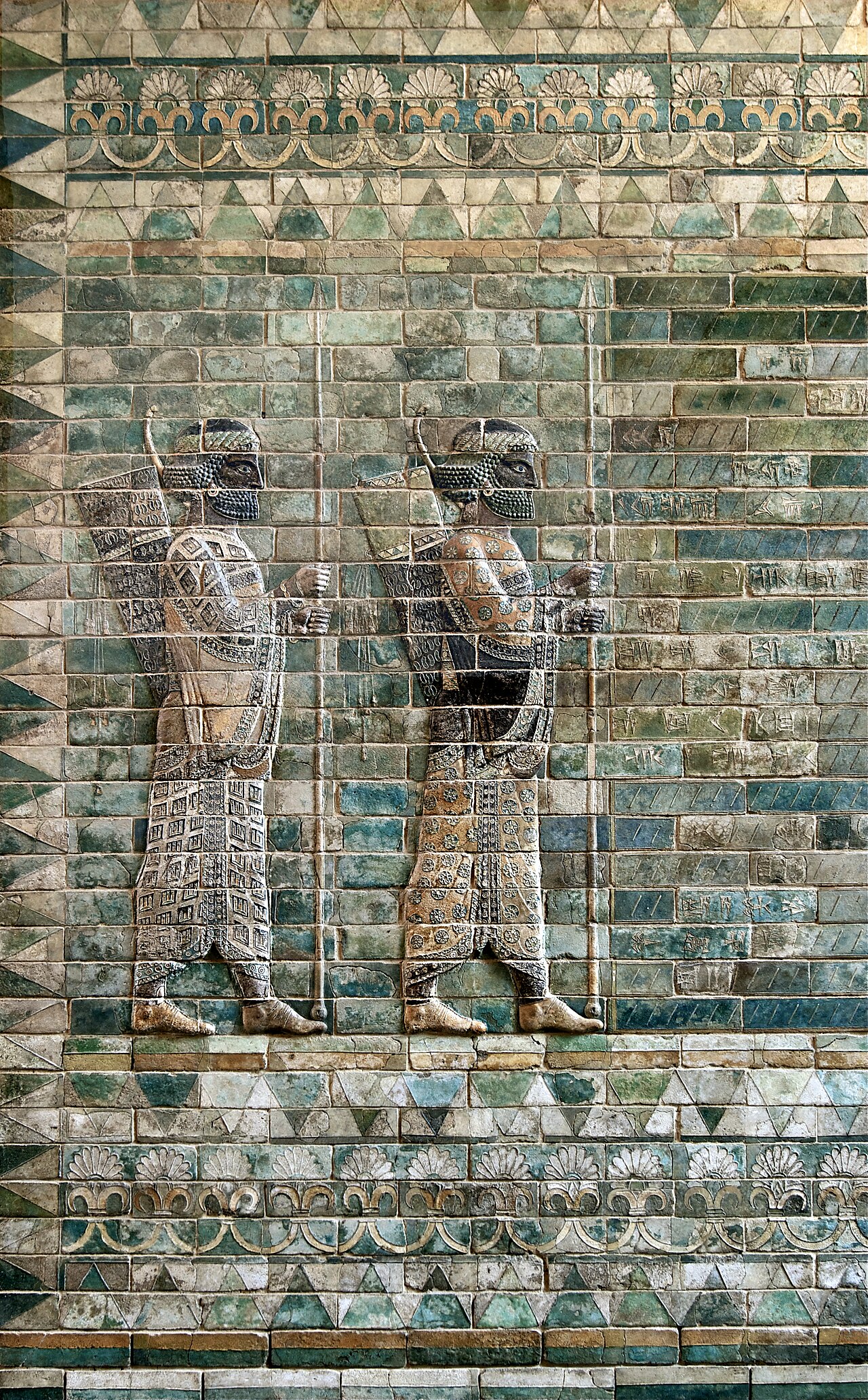
"On that day did the king Ahasuerus give the house of Haman the Jews' enemy unto Esther the queen. And Mordecai came before the king; for Esther had told what he was unto her." The king gives Mordecai the ring he took from Haman; Esther sets Mordecai over Haman's house.
Esther speaks again, falls at the king's feet and weeps, begging him "to put away the mischief of Haman." "For how can I endure to see the evil that shall come unto my people?" The king answers: "Write ye also for the Jews, as it liketh you, in the king's name, and seal it with the king's ring: for the writing which is written in the king's name, and sealed with the king's ring, may no man reverse."
On the twenty-third day of the third month, Sivan, the scribes write to the Jews, the satraps, governors and princes of the 127 provinces, "unto every province according to the writing thereof, and unto every people after their language, and to the Jews according to their writing, and according to their language." Couriers ride on swift horses bred from royal stock.
"Wherein the king granted the Jews which were in every city to gather themselves together, and to stand for their life, to destroy, to slay, and to cause to perish, all the power of the people and province that would assault them, both little ones and women, and to take the spoil of them for a prey, upon one day… upon the thirteenth day of the twelfth month."
"And Mordecai went out from the presence of the king in royal apparel of blue and white, and with a great crown of gold, and with a garment of fine linen and purple: and the city of Shushan rejoiced and was glad. The Jews had light, and gladness, and joy, and honour." "And many of the people of the land became Jews; for the fear of the Jews fell upon them."
"Both little ones and women"
The counter-decree mirrors Haman's words in 3:13 almost exactly. Grammatically, "little ones and women" may be the objects the Jews may kill (the attackers' families), as the KJV and most translations read, or (on a minority reading) the Jews' own little ones and women whom the attackers would strike. The text later reports men killed (9:6, 15) and no plunder taken. The site gives the Hebrew as it stands and both readings. The library's Greek (Giguet) has no such clause: it permits the Jews "to live according to their law" and to deal with their enemies.
Irrevocable decrees
The king cannot cancel Haman's decree (8:8; compare 1:19 and Daniel 6). Whether Persian law really worked this way is unknown; Diodorus (17.30) tells of Darius III regretting an execution he could not undo, which is sometimes cited. In the story it forces a second decree and a day of conflict.
Every script and language
Persian royal decrees were issued in several languages: Darius' Behistun inscription in Old Persian, Elamite and Babylonian, with an Aramaic copy found at Elephantine. Esther's "to the Jews according to their writing" is unusual: a decree in Hebrew script or language for a minority.
"Became Jews"
Mityahadim (8:17) occurs only here. It may mean converted, pretended to be Jews, or sided with the Jews. The library's Greek (Giguet) reads "many were circumcised and judaized," a conversion. The Hebrew says it was "for fear," which complicates any idea of willing conversion.
Mordecai's robes
Blue and white, a great golden crown and purple linen echo the palace hangings of 1:6 and royal Persian dress. Mordecai becomes a second Haman in office but not in character, the book insists.
Greek Addition E
The Greek gives the counter-decree's text after 8:12: the king denounces Haman as a Macedonian who sought to transfer Persian rule to the Macedonians, praises the Jews as "children of the most high and most mighty living God," revokes Haman's letters (contradicting the irrevocability of 8:8) and orders the Jews to live by their own laws. Like Addition B it was composed in Greek. The library's Greek (Giguet) lacks it; it appears in the Vulgate and KJV Apocrypha as chapter 16.
What the evidence shows
- The counter-decree's wording mirrors Haman's decree.
- Persian royal decrees were issued in multiple languages.
- "Little ones and women" are the attackers' families. Most translations; a minority reading differs.
- Greek Addition E revokes Haman's decree.
Continue the journey
Journey of a PassageEsther 8:11: "Both little ones and women"The counter-decree lets the Jews "destroy, slay and cause to perish" any armed force that attacks them, "little ones and women," and take the spoil.More from this lesson
Why this matters to the rest of Scripture
- Haman's decree, word for word in reverse.
- "No decree nor statute… may be changed."
- Foreigners who join themselves to the LORD.