Two Banquets and a Deadly Structure
"What is thy request? it shall be even given thee to the half of the kingdom"
"Now it came to pass on the third day, that Esther put on her royal apparel, and stood in the inner court of the king's house." The king sees her, "she obtained favour in his sight: and the king held out to Esther the golden sceptre… So Esther drew near, and touched the top of the sceptre."
"What wilt thou, queen Esther? and what is thy request? it shall be even given thee to the half of the kingdom." "If it seem good unto the king, let the king and Haman come this day unto the banquet that I have prepared for him." At the banquet of wine the king asks again; she answers: come again tomorrow with Haman, "and I will do to morrow as the king hath said."
Haman goes out "joyful and with a glad heart: but when Haman saw Mordecai in the king's gate, that he stood not up, nor moved for him, he was full of indignation." At home he calls his friends and Zeresh his wife and recounts his riches, his many children, his promotion, and the queen's invitation. "Yet all this availeth me nothing, so long as I see Mordecai the Jew sitting at the king's gate."
"Then said Zeresh his wife and all his friends unto him, Let a gallows be made of fifty cubits high, and to morrow speak thou unto the king that Mordecai may be hanged thereon: then go thou in merrily with the king unto the banquet. And the thing pleased Haman; and he caused the gallows to be made."
"To the half of the kingdom"
A courtly formula of generosity (compare Herod to Salome, Mark 6:23). Herodotus (9.109–111) tells how Xerxes, bound by a promise, had to give his mistress Artaynte a robe that Amestris had woven, with disastrous results. The formula is not a legal grant.
Why two banquets?
The text gives no reason. Interpreters suggest Esther was testing the king's favor, waiting for the right moment, making Haman overconfident, or that she lost courage. The delay sets up chapter 6, in which the king's sleepless night happens in between.
Gallows or stake?
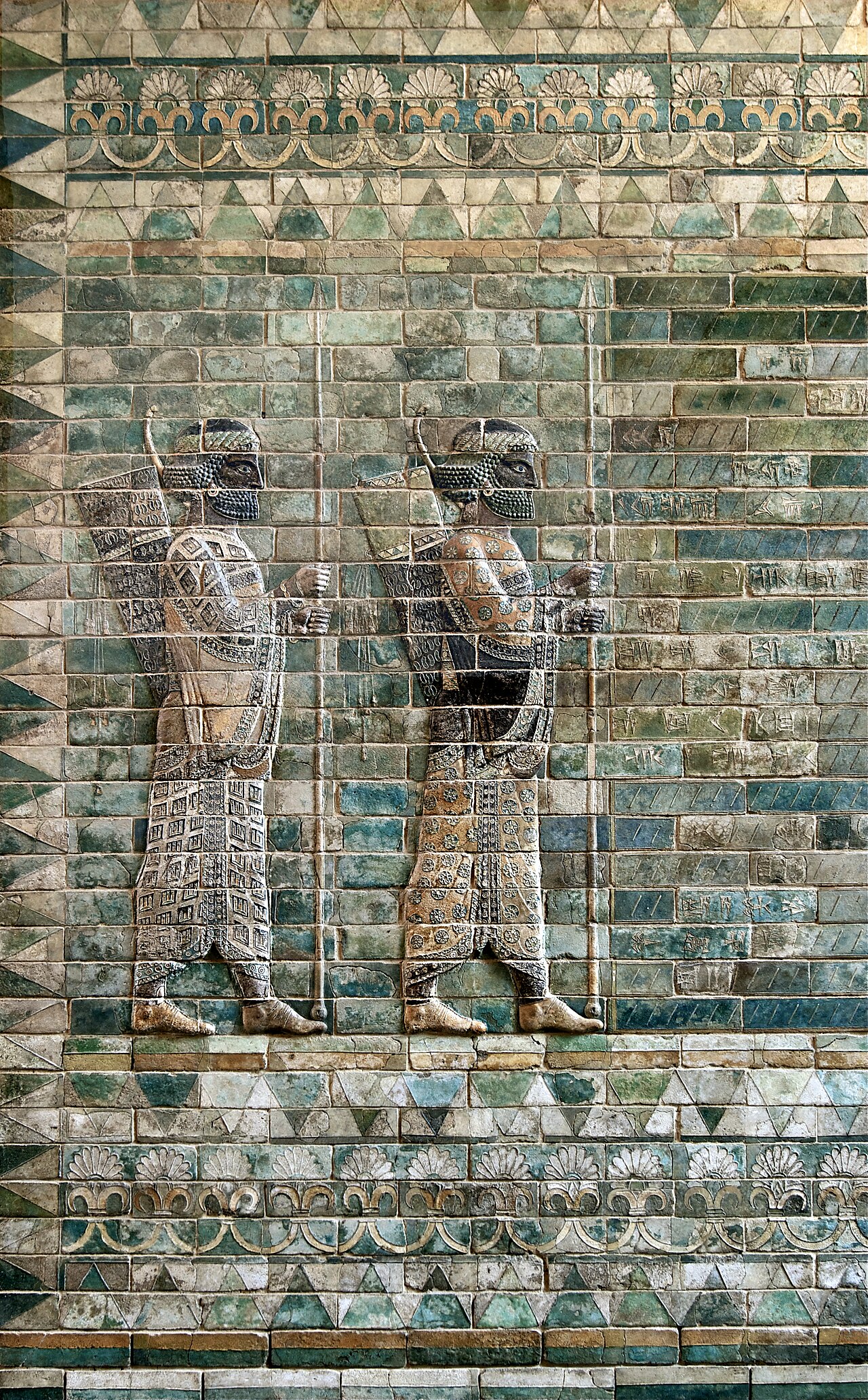
The Hebrew 'ets means "tree, wood, pole." The verb talah means to hang or suspend. Persians impaled or crucified enemies (Herodotus 3.159 on Darius impaling 3,000 Babylonians; Darius' Behistun inscription records impaling rebels). "Gallows" with a noose is anachronistic; a stake for impaling or displaying a body is more likely. The Vulgate calls it a "high beam" and then a "cross." Fifty cubits (about 23 m) is deliberately excessive.
Zeresh
Haman's wife Zeresh and his friends advise him here and warn him in 6:13. Her name may be Persian. She is one of several women in Esther (Vashti, Esther, Zeresh) whose words shape the plot.
Greek Addition D
The Greek replaces 5:1–2 with a dramatic scene: Esther, radiant but terrified, enters leaning on two maids; the king looks at her in fierce anger and she faints; "then God changed the spirit of the king to gentleness," he leaps from his throne, holds her and touches her neck with the sceptre. The library's Greek (Giguet) has this version at its 5:1–2 ("when she had finished praying"); the Vulgate and KJV Apocrypha print it as 15:1–16.
What the evidence shows
- Persian kings impaled enemies. Behistun inscription; Herodotus.
- The 'ets of Esther 5:14 was a gallows with a noose.
- Greek Addition D says God changed the king's spirit.
Continue the journey
Journey of a PassageEsther 5:1–2 and Addition D: Esther before the king: two versionsIn the Hebrew, Esther stands in the inner court, finds favor, and touches the sceptre, in two verses.More from this lesson
Why this matters to the rest of Scripture
- "Unto the half of my kingdom."
- "Pride goeth before destruction."
- "He is fallen into the ditch which he made."