Mourning, Fasting and a Decision
"Who knoweth whether thou art come to the kingdom for such a time as this?"
"When Mordecai perceived all that was done, Mordecai rent his clothes, and put on sackcloth with ashes, and went out into the midst of the city, and cried with a loud and a bitter cry." He comes as far as the king's gate, which no one may enter in sackcloth. In every province "there was great mourning among the Jews, and fasting, and weeping, and wailing."
Esther's maids and eunuchs tell her; she is "exceedingly grieved" and sends clothes, which Mordecai refuses. She sends Hathach, a eunuch the king had appointed to her. Mordecai tells him everything, "and of the sum of the money that Haman had promised to pay," gives him a copy of the decree, and charges her to go to the king "to make supplication unto him, and to make request before him for her people."
Esther answers: "All the king's servants, and the people of the king's provinces, do know, that whosoever, whether man or woman, shall come unto the king into the inner court, who is not called, there is one law of his to put him to death, except such to whom the king shall hold out the golden sceptre… but I have not been called to come in unto the king these thirty days."
Mordecai: "Think not with thyself that thou shalt escape in the king's house, more than all the Jews. For if thou altogether holdest thy peace at this time, then shall there enlargement and deliverance arise to the Jews from another place; but thou and thy father's house shall be destroyed: and who knoweth whether thou art come to the kingdom for such a time as this?"
Esther: "Go, gather together all the Jews that are present in Shushan, and fast ye for me, and neither eat nor drink three days, night or day: I also and my maidens will fast likewise; and so will I go in unto the king, which is not according to the law: and if I perish, I perish." "So Mordecai went his way, and did according to all that Esther had commanded him."
"From another place"
God is never named in the Hebrew Esther. "Another place" (maqom aher) has been read as a veiled reference to God (later Hebrew used Maqom, "the Place," as a name for God), as other human help, or as deliberately open. The fasting suggests prayer, but the Hebrew does not mention prayer. Faith readers see providence hidden in the story's coincidences; historians note the absence. Both are part of reading the book.
The law of the inner court
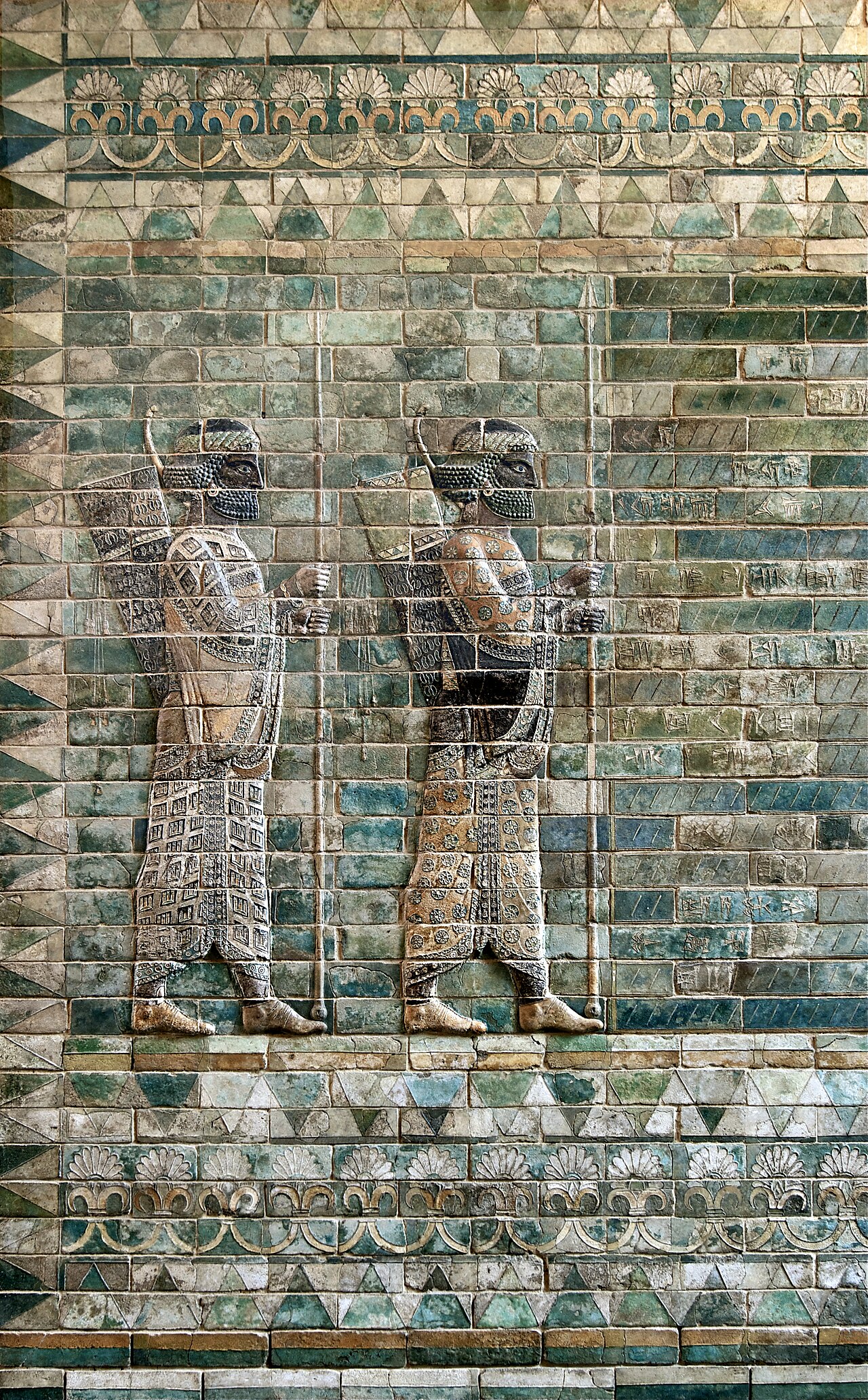
Herodotus (1.99; 3.118, 140) says no one could approach the Persian king unannounced; Persepolis reliefs show the king enthroned with an official before him and guards. A sceptre held out as a sign of favor fits the iconography of the Persepolis audience reliefs, which show the king holding a long sceptre.
Three days, night and day
A total fast of three days is extreme (compare Ezra 10:6, Jonah 3:7). Esther's fast on 13–15 Nisan would overlap Passover (14 Nisan), a point later rabbis noticed (Megillah 15a). The Fast of Esther, kept on 13 Adar before Purim, is a later custom.
Esther's agency
Esther first hesitates for a real reason: approaching uninvited could mean death, and she had not been summoned for a month. Then she gives orders, to Mordecai and to all the Jews of Susa. The chapter turns her from someone who is acted upon to someone who acts.
Greek Addition C
The Greek adds after 4:17 two long prayers. Mordecai prays that he refused to bow to Haman not from pride but so as not to set a man's glory above God's. Esther, in sackcloth and ashes, prays: "Thou knowest that I hate the glory of the unrighteous, and abhor the bed of the uncircumcised," that she loathes her crown and has not eaten at Haman's table. These prayers name God repeatedly and turn Esther into a pious Jew who keeps the food laws. The library's Greek (Giguet) has only a one-line summary at its 4:16 ("he prayed to the Lord"); the prayers appear in the Vulgate and KJV Apocrypha as 13:8–14:19.
What the evidence shows
- The Hebrew book of Esther never names God.
- "Another place" refers to God.
- Persian kings could not be approached without summons. Herodotus.
- Deliverance came through God's hidden providence.
Continue the journey
Journey of a PassageEsther 4:14: "From another place""Then shall there enlargement and deliverance arise to the Jews from another place." The Hebrew never names God; "another place" (maqom aher) has been read as a veiled reference to God, as other human help, or as open.More from this lesson
Why this matters to the rest of Scripture
- Fasting, weeping, and "who knoweth if he will return."
- A city fasts in sackcloth.
- "Ye thought evil against me; but God meant it unto good."