Investigation: Susa, Xerxes and the Persian Court
History, literature, or both?
If Esther happened as described, we might expect: a queen named Vashti, then Esther, in Persian sources; an official named Haman and a Jewish courtier Mordecai; an empire-wide decree against the Jews in Xerxes' twelfth year (474 BC) and fighting on 13 Adar; a festival of Purim attested soon after.
What has been found: Susa's palace (excavated, Darius I and later), Xerxes' inscriptions, the Persepolis Fortification and Treasury tablets (c. 509–457 BC) with thousands of officials' names and rations, Herodotus' history of Xerxes' reign. A Persepolis text names a Marduka, an official, in the time of Darius and Xerxes; the name was common. Nothing names Vashti, Esther, Haman or the decree.
The Case for the Biblical Account
Scripture's account
In Xerxes' reign a Jewish woman becomes queen and, with her cousin, averts an empire-wide massacre of Jews planned by the vizier Haman; Purim commemorates it.
What evidence would we expect?
Royal or administrative records of the queen, the vizier or the decree; Greek historians' mention of a Jewish queen; early references to Purim.
What has been found
Accurate Persian background (Susa, palace life, couriers, seals, banquets, Persian loanwords); a Persepolis official named Marduka; Herodotus naming Xerxes' queen Amestris; Purim first attested outside Esther as "Mordecai's day" in 2 Maccabees 15:36 (2nd–1st century BC).
Testing the evidence
Herodotus says Persian queens came from seven noble families (3.84); a Jewish orphan as queen conflicts with that, though Herodotus is not infallible. The 180-day feast, 127 provinces, 10,000 talents and 75,000 dead suggest literary exaggeration. The irrevocable law is unattested. Marduka is a single, common name.
The strongest reconstruction
Esther's author knew Persian court life well, which suggests composition in the Persian or early Hellenistic period by a diaspora writer. Whether a historical event lies behind it, perhaps a threatened pogrom and a deliverance remembered at Purim, cannot be confirmed or excluded.
What remains possible
That Esther preserves a real episode in literary form; that it is a historical novella; that it is a court tale like Daniel 1–6 and Ahiqar. New Persian documents naming Vashti, Esther or Haman would change the case.
Persian details the author got right
Persian loanwords (pathshegen, "copy"; ahashdarpenim, "satraps"; partemim, "nobles"; karpas, "cotton"); the royal courier system; sealing with the king's ring; seven counselors (compare Ezra 7:14 and Herodotus 3.31, 84); the king's benefactors recorded; banquets on couches; the palace at Susa. These show knowledge of Persia; they do not prove the plot.
The palace and the gate
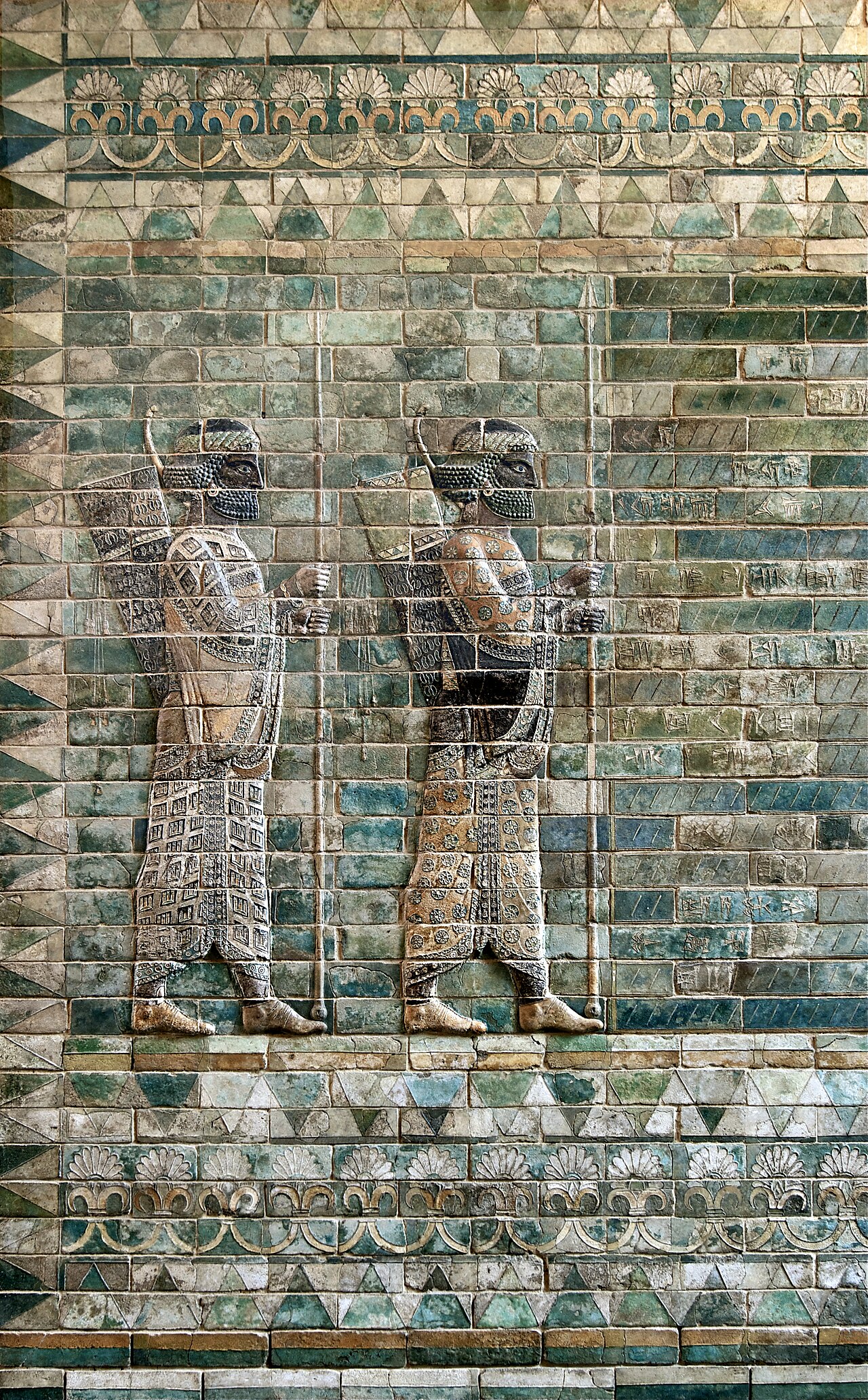
Excavations at Susa identified a monumental gatehouse ("Darius' Gate") east of the palace, inscribed by Xerxes. "The king's gate" where Mordecai sat may be imagined at such a building. This is context; no find links it to Mordecai.
Genre
Court tales (Joseph, Daniel 1–6, Ahiqar) tell of a wise outsider at a foreign court who is endangered and vindicated. Esther shares their pattern and their exaggerations. Faith readers can hold that God's providence works through real events and through a carefully crafted story; the site does not require one view.
What the evidence shows
- Susa's Achaemenid palace and gate have been excavated.Source: UNESCO World Heritage, Susa (no. 1455) ↗; Encyclopaedia Iranica, "Susa iii. The Achaemenid Period" ↗
- Vashti, Esther and Haman are named outside the Bible.
- A Persepolis official named Marduka is the biblical Mordecai.
- Esther's author knew Persian court life.
- Esther records a historical event.
Continue the journey
Ancient MysteriesWas Queen Esther Historical?Is there evidence outside the Bible for Esther, Mordecai, Haman or their events?More from this lesson
Investigations
Optional deep dives: the ancient sources, the physical evidence, and every interpretation side by side, including unconventional ones, each labeled for what it is.
Was Queen Esther Historical?Setting: documented · Persons and events: not attested outside the Bible
Is there evidence outside the Bible for Esther, Mordecai, Haman or their events?
The book's Persian setting is accurate in many details. No ancient source outside the Bible names Esther, Vashti, Haman or the decree; Herodotus names Xerxes' queen as Amestris and says queens came from noble Persian families. A Persepolis official named Marduka is a possible but unproven match for Mordecai. The book's genre is debated: history, historical novella, or court tale.
Open the full investigation →Esther or Amestris?Amestris: documented in Herodotus · Identification: unproven
Can Vashti or Esther be identified with Xerxes' queen Amestris?
Herodotus names Xerxes' wife Amestris, daughter of Otanes, mother of Artaxerxes I, and tells of her cruelty. Some have linked her name to Vashti or to Esther; others note she was queen throughout Xerxes' reign, which conflicts with both. The names alone cannot establish an identification.
Open the full investigation →Echoes Across Civilizations
Optional: how other ancient peoples told similar stories. Open one to compare, then come back to the lesson.
Persian banquets and royal womenPersian · Greek
What do Persian and Greek sources say about royal banquets and the women of the court?
- Persian: The Fortification tablets on royal women Possible historical contact
- Greek: Herodotus on Persian feasts and Amestris Resemblance only
The outsider at the king's courtAramaic / Assyrian · Egyptian · Greek
Did other ancient peoples tell stories of a wise outsider endangered and vindicated at a foreign court?
- Aramaic / Assyrian: The Story of Ahiqar Possible historical contact
- Egyptian: The Story of Sinuhe Resemblance only
- Greek: Herodotus' Persian court stories Resemblance only
Why this matters to the rest of Scripture
- Court tales of Jews at foreign courts.
- Another Jew at the court of Susa.
- An accusation against the Jews in Ahasuerus' reign.