myBibleHistory
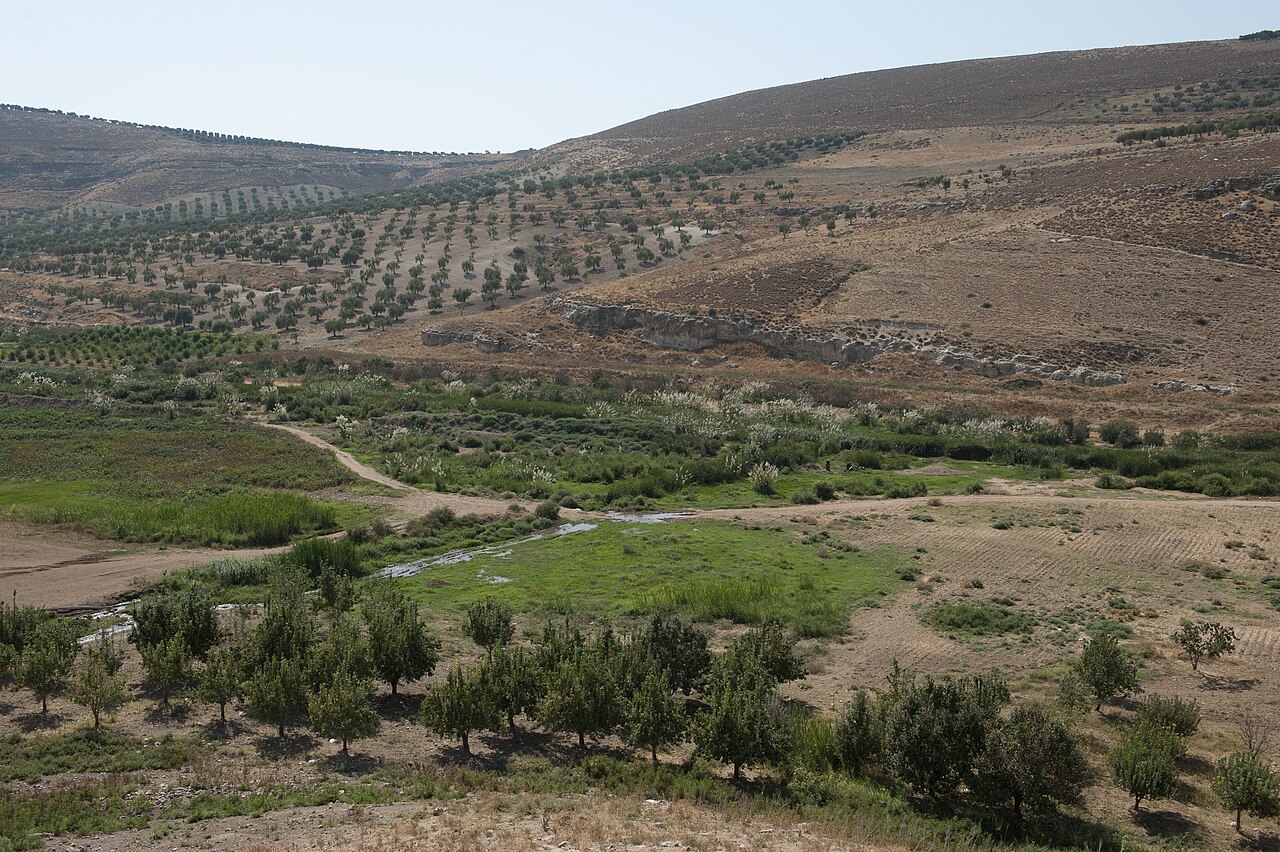
The ruins of the 'Ain Dara temple in Syria

Books of Scripture

1 Kings

The glory and division of the kingdom

22 chapters

1 Kings, the first half of the Hebrew book of Kings (in Greek, 3 Kingdoms; in older Latin Bibles, 3 Kings), runs from David's last days to the death of Ahab: Solomon's wisdom, the temple and its dedication prayer, the queen of Sheba, Solomon's downfall, the division of the kingdom under Rehoboam and Jeroboam, the golden calves of Bethel and Dan, Shishak's invasion, Omri and Samaria, and the prophet Elijah against Ahab and Jezebel: the widow of Zarephath, the contest on Carmel, the still small voice at Horeb, Naboth's vineyard, and Micaiah's vision of the heavenly council. Here the Bible first meets kings named in Egyptian, Moabite and Assyrian records, and a Greek edition that tells parts of the story in a different order, and once twice.

Lessons

  1. 1David's Last Days1 Kings 1 · David is old and cannot keep warm; a young woman, Abishag of Shunem, is brought to tend him. His son Adonijah, with Joab and Abiathar, holds a feast and acts as king. Nathan and Bathsheba remind David of his promise that Solomon would reign. David orders Solomon anointed at the Gihon spring. Adonijah's guests scatter; he clings to the horns of the altar.
  2. 2A Throne Secured1 Kings 2 · David charges Solomon to keep the law, and to deal with Joab and Shimei. David dies. Adonijah asks, through Bathsheba, for Abishag as wife; Solomon has him killed. Abiathar is banished to Anathoth; Joab, clinging to the altar, is struck down there; Shimei breaks his parole and is executed. "And the kingdom was established in the hand of Solomon."
  3. 3Solomon Asks for Wisdom1 Kings 3 · Solomon marries Pharaoh's daughter. At the great high place of Gibeon God appears in a dream: "Ask what I shall give thee." Solomon asks for a listening heart to judge the people; God gives him wisdom, and riches and honor besides. Two women come with one living baby and one dead. "Divide the living child in two." The true mother gives up her claim, and Solomon gives her the child.
  4. 4The Kingdom's Administration1 Kings 4 · Solomon's officials and twelve district governors, each supplying the court for one month. A day's provisions: thirty measures of fine flour, sixty of meal, cattle, sheep and game. Peace "from Dan even to Beersheba." Solomon's wisdom exceeds the East and Egypt: three thousand proverbs, a thousand and five songs, and lore about trees, beasts, birds and fish.
  5. 5Cedars and Forced Labor1 Kings 5 · Hiram king of Tyre sends greetings. Solomon asks for cedars of Lebanon for the temple; Hiram's men will float them down the coast in rafts in exchange for wheat and oil. Solomon raises a levy of thirty thousand men from Israel to work in Lebanon in shifts, with seventy thousand carriers and eighty thousand stonecutters in the hills.
  6. 6Building God's House1 Kings 6 · In the 480th year after the Exodus (the Greek says 440th), in Solomon's fourth year, the temple is begun: a long house sixty cubits long, with a porch, a main hall and an inner sanctuary twenty cubits square, lined with cedar and overlaid with gold, with two olive-wood cherubim ten cubits high. It takes seven years.
  7. 7Palaces and Bronze1 Kings 7 · Solomon spends thirteen years building his palace complex: the House of the Forest of Lebanon, the Hall of Pillars, the Hall of Judgment, and a house for Pharaoh's daughter. Hiram, a bronze-worker of Tyre, casts two great pillars named Jachin and Boaz, a huge basin called the Sea resting on twelve bronze oxen, ten wheeled stands and many vessels.
  8. 8The Ark and the Glory1 Kings 8:1–21 · At the feast in the seventh month the priests carry the ark into the inner sanctuary beneath the cherubim. It holds nothing but the two stone tablets. A cloud fills the house so that the priests cannot stand to minister. Solomon speaks: "I have surely built thee an house to dwell in." He tells how God chose David and David's son to build it.
  9. 9Solomon's Great Prayer1 Kings 8:22–66 · Standing before the altar with hands spread to heaven, Solomon prays: no house can contain God, but may His eyes be open toward this place. He asks God to hear prayers made toward it in every trouble: sin, defeat, drought, famine, the foreigner who comes from afar, war, and exile in a distant land. He blesses the people, and they celebrate for fourteen days.
  10. 10The Warning and the Kingdom's Works1 Kings 9 · God appears to Solomon a second time: the house is hallowed, but if Israel turns to other gods it will become a heap of ruins. Solomon gives Hiram twenty towns in Galilee, which Hiram calls "Cabul." A list of building works at Jerusalem, Hazor, Megiddo and Gezer, which Pharaoh had captured and given as a dowry. Forced labor. A fleet at Ezion-geber sails to Ophir for gold.
  11. 11The Queen of Sheba1 Kings 10 · The queen of Sheba hears of Solomon's fame and comes with a great caravan of spices, gold and precious stones to test him with hard questions. He answers all of them. Seeing his wisdom, his house and his worship, "there was no more spirit in her." She praises Israel's God and gives gifts. The chapter describes Solomon's gold, his ivory throne, his ships and his trade in horses and chariots.
  12. 12Solomon's Downfall1 Kings 11 · Solomon loves many foreign women; in his old age his wives turn his heart to other gods, and he builds high places for Chemosh and Molech. God declares that the kingdom will be torn from his son, leaving one tribe for David's sake. Adversaries rise: Hadad of Edom, Rezon of Damascus, and Jeroboam, to whom the prophet Ahijah gives ten pieces of a torn cloak. Jeroboam flees to Shishak in Egypt. Solomon dies after forty years.
  13. 13The Kingdom Divides1 Kings 12 · At Shechem the northern tribes ask Rehoboam to lighten the heavy yoke Solomon laid on them. He rejects the elders' advice and follows the young men: "My father chastised you with whips, but I will chastise you with scorpions." Israel rebels, stones Adoram the overseer of forced labor, and makes Jeroboam king. The prophet Shemaiah stops Judah's war. Jeroboam sets up golden calves at Bethel and Dan.
  14. 14The Prophet and the Altar1 Kings 13 · A man of God from Judah cries out against the altar at Bethel and foretells a king named Josiah who will burn priests' bones on it. Jeroboam's hand withers and is restored; the altar splits. Told not to eat or drink there, the man of God is deceived by an old prophet of Bethel, eats with him, and is killed by a lion on the way home. The old prophet buries him and asks to be buried beside him.
  15. 15Jeroboam, Rehoboam and Shishak1 Kings 14 · Jeroboam's son Abijah falls sick. His wife disguises herself and goes to the blind prophet Ahijah, who knows her at once and announces the end of Jeroboam's house; the child dies as she reaches home. In Judah, Rehoboam's people build high places. In Rehoboam's fifth year Shishak king of Egypt takes the treasures of the temple and the palace, including Solomon's gold shields, which are replaced with bronze.
  16. 16Asa and the Northern Kings1 Kings 15 · Abijam reigns three years in Judah. Asa reigns forty-one years, removes cult prostitutes and idols, and deposes his grandmother Maacah for an Asherah image, though the high places remain. When Baasha of Israel fortifies Ramah, Asa sends the temple treasure to Ben-hadad of Damascus, who attacks northern Israel. Asa builds Geba and Mizpah with Ramah's stones. In Israel, Nadab son of Jeroboam is killed by Baasha, who wipes out Jeroboam's house.
  17. 17Omri, Samaria and Ahab1 Kings 16 · The prophet Jehu condemns Baasha. His son Elah is murdered while drunk by Zimri, who reigns seven days before burning the palace over himself when the army makes Omri king. After a civil war with Tibni, Omri buys the hill of Samaria and builds his capital. His son Ahab marries Jezebel daughter of Ethbaal of Sidon and builds a temple for Baal in Samaria. Hiel rebuilds Jericho at the cost of two sons.
  18. 18Elijah and the Widow1 Kings 17 · Elijah the Tishbite tells Ahab there will be neither dew nor rain except at his word. Ravens feed him by the brook Cherith. When the brook dries, he goes to Zarephath in Sidonian territory, where a widow gathering sticks for a last meal shares her bread with him; her flour and oil do not run out. When her son dies, Elijah stretches himself on the child three times and he lives.
  19. 19The Contest on Carmel1 Kings 18 · In the third year of drought Obadiah, who has hidden a hundred prophets from Jezebel, meets Elijah. On Mount Carmel Elijah challenges 450 prophets of Baal: each side will prepare a bull, and the God who answers by fire is God. Baal's prophets cry and cut themselves all day; no one answers. Elijah drenches his altar with water and prays; fire falls. The people cry "The LORD, he is the God." The prophets of Baal are killed at the Kishon. Rain comes.
  20. 20Elijah at Horeb1 Kings 19 · Jezebel swears to kill Elijah. He flees to Beersheba, sits under a broom tree and asks to die. An angel feeds him twice, and he walks forty days to Horeb. In a cave God asks, "What doest thou here, Elijah?" Wind, earthquake and fire pass, but God is not in them; then comes a "still small voice." God sends him to anoint Hazael, Jehu and Elisha, and says seven thousand in Israel have not bowed to Baal. Elijah throws his mantle over Elisha.
  21. 21The Wars against Aram1 Kings 20 · Ben-hadad of Aram and thirty-two kings besiege Samaria and demand Ahab's silver, gold, wives and children. A prophet promises victory; Israel's young officers rout the Arameans while Ben-hadad is drinking. The next year Aram fights in the plain at Aphek, thinking Israel's God is a god of the hills, and loses again. Ahab spares Ben-hadad and makes a treaty. A prophet, wounded on purpose, tells a parable that condemns Ahab.
  22. 22Naboth's Vineyard1 Kings 21 · Ahab wants Naboth's vineyard next to his palace in Jezreel. Naboth refuses to sell his family's inheritance. Jezebel writes letters in Ahab's name: two false witnesses accuse Naboth of cursing God and the king, and he is stoned. Ahab takes the vineyard. Elijah meets him there: "Hast thou killed, and also taken possession?" When Ahab humbles himself, God delays the judgment on his house.
  23. 23Micaiah and the Heavenly Council1 Kings 22:1–28 · Ahab and Jehoshaphat of Judah plan to retake Ramoth-gilead. Four hundred prophets promise victory; Zedekiah makes iron horns. Jehoshaphat asks for another prophet: Micaiah son of Imlah, whom Ahab hates. Micaiah first mocks, then tells a vision: God on His throne with the host of heaven, asking who will entice Ahab; a spirit offers to be a lying spirit in the prophets' mouths. Micaiah is struck and imprisoned.
  24. 24Ahab's Death and the Royal Epilogues1 Kings 22:29–53 · Ahab goes to battle disguised; Jehoshaphat wears royal robes and is nearly killed. An archer's random arrow strikes Ahab between the joints of his armor. Propped up in his chariot, he dies at evening; dogs lick his blood at the pool of Samaria. Jehoshaphat reigns twenty-five years in Judah; his ships for Ophir are wrecked at Ezion-geber. Ahaziah son of Ahab begins to reign in Samaria.
  25. 25Historical Investigation: Solomon, the Temple and Archaeological Chronology1 Kings 3–11 · Kings describes a wealthy, centralized kingdom with a temple, palaces, fortified cities and international trade. Archaeologists agree that Jerusalem existed and that a dynasty of David ruled Judah, but they disagree sharply about the scale of 10th-century BC Israel. The debate turns on how pottery and building levels are dated, on radiocarbon results, and on what can be excavated in Jerusalem.
  26. 26Historical Investigation: The Divided Monarchy Outside the Bible1 Kings 12–22 · With the divided kingdom, the biblical story begins to meet outside records. An Egyptian pharaoh lists towns in Israel; a Moabite king names Omri; an Assyrian king names Ahab at Qarqar. These texts confirm names, dates and powers, and they also differ from Kings in what they emphasize.
  27. 27Interpretive Investigation: The Queen of Sheba across Traditions1 Kings 10:1–13 · The queen of Sheba gets thirteen verses in Kings, but she became one of the most retold figures in Jewish, Christian, Islamic and Ethiopian tradition. These retellings are important history of interpretation; none is evidence for the meeting itself.
  28. 28Ancient Mysteries and Echoes: Baal, Wisdom, Prophecy and Heavenly Assemblies1 Kings 3–4; 17–19; 22 · Solomon's wisdom, Elijah's contest with Baal and Micaiah's vision of the heavenly council all draw on ideas shared across the ancient Near East: royal wisdom, the storm god who gives rain, and the assembly of the gods. 1 Kings uses this shared language to make its own claims. Later legends about Solomon's magic and modern readings of these scenes as technology are assessed here too.

How 1 Kings came to us

Who wrote it, how it was copied, and how it reached the Bible you hold. These lessons follow the book through history.

  1. ★How 1 Kings Came to Us1 Kings is the first half of the Hebrew book of Kings, one of the Former Prophets. It names its sources: the Book of the Acts of Solomon and the chronicles of the kings of Israel and Judah, none of which survive. Kings was edited as part of a history from Joshua to Kings. Three Qumran scrolls preserve fragments. The Greek 3 Kingdoms is unusually different: material moved, expanded and, in places, told twice.
  2. 3Prophets, Priests, and ScribesAs Israel became a kingdom, royal scribes kept records, prophets' words were written down, and a lost book of the law was found in the Temple.
  3. 6The SeptuagintJews in Egypt translated their Scriptures into Greek, creating the Bible of the early church and of the New Testament writers.
  4. 7The Dead Sea ScrollsA shepherd's discovery in 1947 gave us Bible manuscripts a thousand years older than any known before, and showed how faithfully the text was kept.
  5. 8Hebrew, Greek, and SamaritanThree ancient lines of copying, Hebrew, Greek, and Samaritan, let us compare the text and see where it was preserved and where it changed.
  6. 13Scribes, Jerome, and the MasoretesJerome gave the West its Latin Bible; Jewish scholars called the Masoretes guarded the Hebrew text letter by letter.

Journey of a Passage