Historical Investigation: The Divided Monarchy Outside the Bible
Shoshenq, Omri and Ahab in Egyptian, Moabite and Assyrian texts
| Text | Date | Names | Agrees with Kings | Differs from or adds to Kings |
|---|---|---|---|---|
| Shoshenq I, Bubastite Portal, Karnak | c. 925 BC | Many towns in Israel and the Negev | A pharaoh's campaign in Rehoboam's fifth year (1 Kings 14:25) | Jerusalem not clearly listed; focus on the north |
| Mesha Stele (Louvre AO 5066) | c. 840 BC | Omri, his son, Chemosh, YHWH | Omri's dynasty ruled Moab (2 Kings 3:4) | Moab's victory told from Mesha's side |
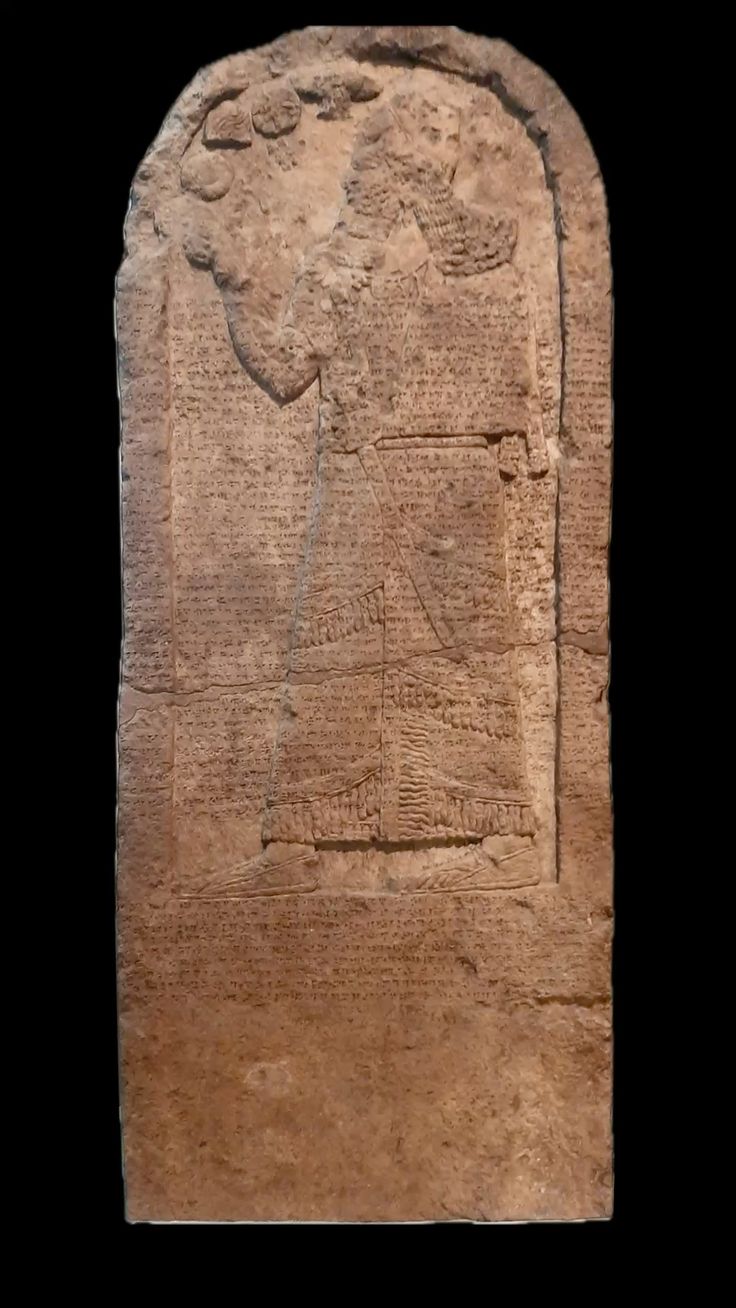
| Kurkh Monolith (British Museum) | 853 BC | "Ahab the Israelite," Adad-idri of Damascus | Ahab was a major king allied with Damascus at times | Qarqar not mentioned in Kings; Ahab's large chariot force |
| Tel Dan Stele | c. 840 BC | King of Israel, House of David | Two kingdoms; Aramean wars | Credits the deaths of Joram and Ahaziah to an Aramean king (2 Kings 9 credits Jehu) |
| Black Obelisk (British Museum) | 841 BC | Jehu "son of Omri" | Jehu was king (2 Kings 9–10) | Shows Jehu paying tribute to Assyria, not mentioned in Kings |
Chronology
Assyrian records, with an eclipse fixed in 763 BC, give absolute dates: Ahab at Qarqar in 853 BC, Jehu's tribute in 841 BC. Working back from these, Kings' reign lengths and synchronisms place the division of the kingdom about 931–922 BC. The synchronisms do not always add up, and scholars (Edwin Thiele and others) use co-regencies and different counting methods to reconcile them. The Greek tradition sometimes has different numbers (for example the placement of Jehoshaphat's accession).
Why Kings says so little about Omri
Kings judges kings by their faithfulness to the LORD and to Jerusalem, not by power or wealth. It refers readers to "the book of the chronicles of the kings of Israel" for the rest. Outside records care about tribute, battles and buildings. Each kind of source answers different questions.
What the evidence shows
- Shoshenq I campaigned in the southern Levant c. 925 BC.Source: Ancient Israel and Ancient Egypt (Cambridge Elements), on Shoshenq I ↗; K. Jansen-Winkeln, "Egypt and the North" (2015), on Shoshenq's campaign ↗
- The Mesha Stele names Omri.
- The Kurkh Monolith names Ahab.Source: Encyclopaedia Judaica (Jewish Virtual Library), on Ahab and Qarqar ↗
- The Black Obelisk depicts Jehu or his envoy.Source: Oracc, "The Black Obelisk of Shalmaneser III" ↗
- Kings' regnal numbers can be reconciled exactly.
Continue the journey
Journey of a Passage1 Kings 14:25–26: Shishak and Shoshenq: a text and an inscriptionThis is not a manuscript variant: all the witnesses checked agree that Shishak king of Egypt came up against Jerusalem in Rehoboam's fifth year.More from this lesson
On the map
Location securely identified Probable identification Proposed or debated location Biblical route (roads schematic) Scholarly proposal
- Shoshenq I's campaign (schematic). A schematic model only, using a few names from the Karnak list. The real route is reconstructed differently by different scholars, and the list is not a proven itinerary.
Investigations
Optional deep dives: the ancient sources, the physical evidence, and every interpretation side by side, including unconventional ones, each labeled for what it is.
Shoshenq I at KarnakCampaign: documented · Identification with Shishak: widely accepted · Jerusalem in the list: disputed
Does Egypt record Shishak's campaign?
Shoshenq I, founder of Egypt's 22nd Dynasty, recorded a campaign into the southern Levant on the Bubastite Portal at Karnak, with more than 150 place names. A fragment of his stele was found at Megiddo. Most scholars identify him with the biblical Shishak and date the campaign c. 925 BC. Jerusalem is not clearly named in the surviving list.
Open the full investigation →Omri and the House of OmriOmri: documented · Samaria: documented · Details of his rise: known only from Kings
What do outside sources say about Omri's dynasty?
Kings gives Omri twelve verses. The Moabite Mesha Stele says Omri "oppressed Moab many days"; Assyrian kings called Israel "the house of Omri" for over a century. Samaria, which Omri founded, has a royal acropolis with fine masonry and ivories. Omri is the first king of Israel attested in near-contemporary outside sources.
Open the full investigation →Ahab at QarqarAhab at Qarqar: documented · Numbers: Assyrian claim · Link to Ramoth-gilead: uncertain
What does the Kurkh Monolith say about Ahab?
Shalmaneser III's Kurkh Monolith describes the battle of Qarqar (853 BC) against twelve allied kings, including "Ahab the Israelite" with 2,000 chariots and 10,000 soldiers. It is the earliest contemporary text naming a king of Israel. Kings does not mention Qarqar, and the monolith does not mention Ahab's death.
Open the full investigation →Why this matters to the rest of Scripture
- Shishak.
- Omri.
- Mesha of Moab.