Kurkh Monolith
- Language
- Akkadian
- Composed
- c. 852 BC
- Oldest surviving copy
- British Museum
- Status
- Not scripture
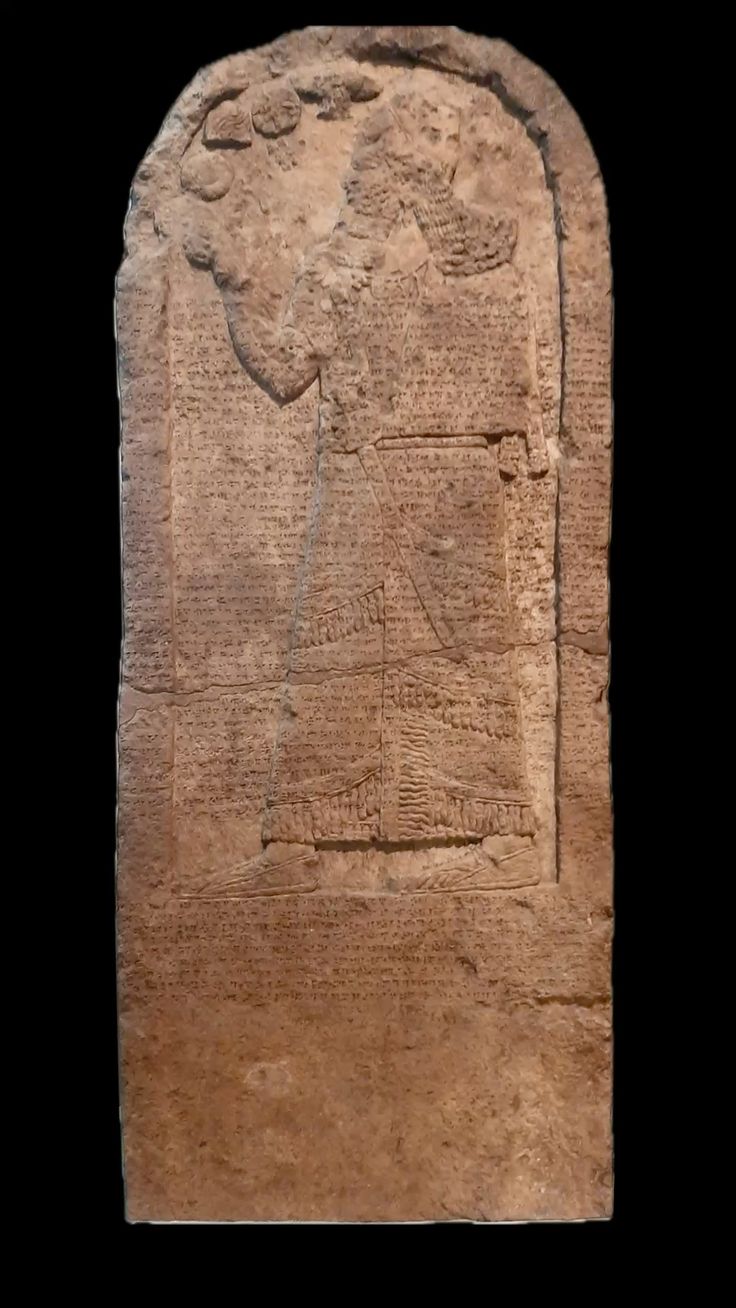
"2,000 chariots, 10,000 soldiers of Ahab the Israelite." Also names Adad-idri of Damascus.
Ancient Mysteries & Interpretations
Shalmaneser III's Kurkh Monolith describes the battle of Qarqar (853 BC) against twelve allied kings, including "Ahab the Israelite" with 2,000 chariots and 10,000 soldiers. It is the earliest contemporary text naming a king of Israel. Kings does not mention Qarqar, and the monolith does not mention Ahab's death.
Ahab at Qarqar: documented · Numbers: Assyrian claim · Link to Ramoth-gilead: uncertain
"So Ahab slept with his fathers" (1 Kings 22:40).
"2,000 chariots, 10,000 soldiers of Ahab the Israelite." Also names Adad-idri of Damascus.
Found at Kurkh (Üçtepe, Turkey) in 1861. Shalmaneser claims victory, but he had to fight the coalition again in following years.
Scholarly reconstruction
Ahab had a large chariot force inherited from Omri's state.
Scholarly reconstruction
2,000 may be a scribal error (perhaps 200).
Ahab was a leading member of an anti-Assyrian coalition in 853 BC. His death at Ramoth-gilead is known only from Kings and Chronicles.
What the evidence shows
Source: Encyclopaedia Judaica (Jewish Virtual Library), on Ahab and Qarqar ↗