Ahab's Death and the Royal Epilogues
"A certain man drew a bow at a venture"
"I will disguise myself, and enter into the battle; but put thou on thy robes." The king of Aram tells his chariot captains: "Fight neither with small nor great, save only with the king of Israel." They turn on Jehoshaphat, who cries out, and they leave him. "And a certain man drew a bow at a venture, and smote the king of Israel between the joints of the harness."
"Turn thine hand, and carry me out of the host; for I am wounded." Ahab is held up in his chariot facing the Arameans and dies at evening, the blood running into the chariot. "Every man to his city, and every man to his own country." He is buried in Samaria; the chariot is washed at the pool of Samaria, "and the dogs licked up his blood… according unto the word of the LORD." His ivory house and the cities he built are recorded "in the book of the chronicles of the kings of Israel."
Jehoshaphat son of Asa reigns twenty-five years in Jerusalem; he walks in Asa's ways, though the high places remain. He makes peace with Israel and removes the remaining cult prostitutes. "Jehoshaphat made ships of Tharshish to go to Ophir for gold: but they went not; for the ships were broken at Ezion-geber." Ahaziah son of Ahab reigns two years over Israel, serving Baal "according to all that his father had done."
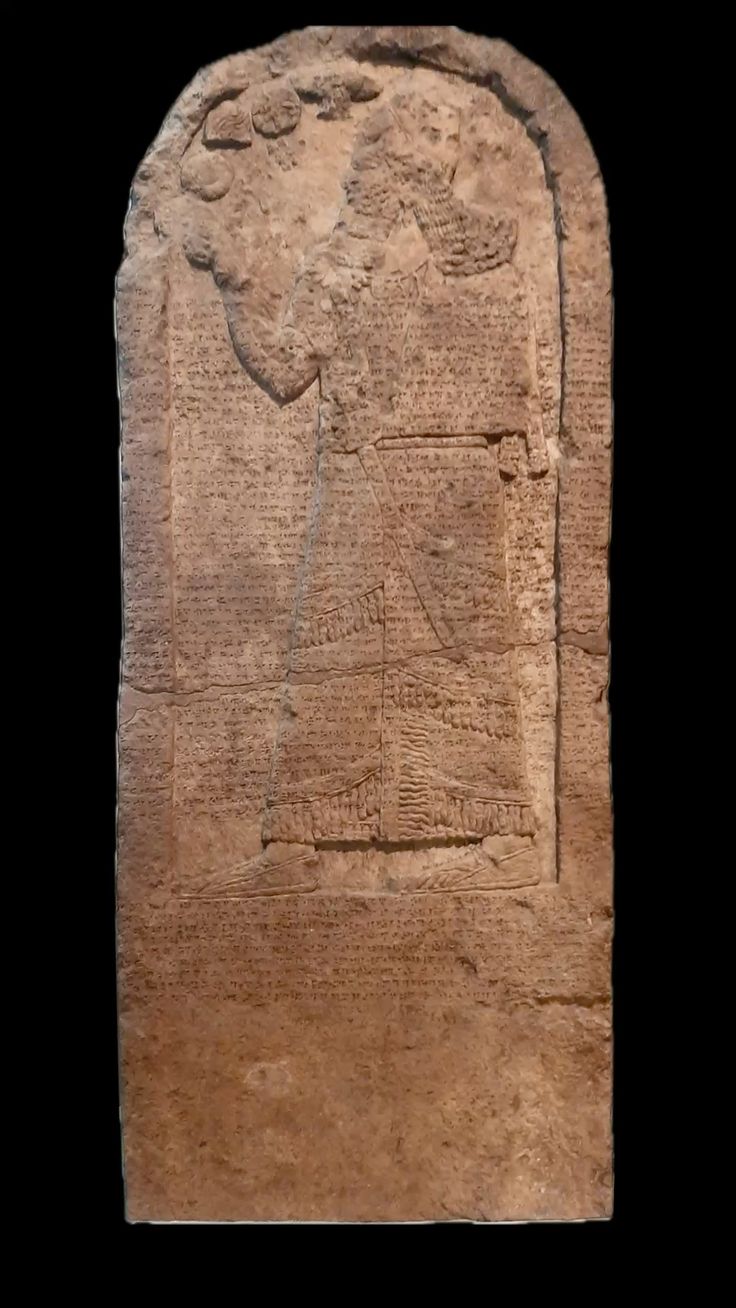
Ahab at Qarqar
The Kurkh Monolith of Shalmaneser III (British Museum) describes the battle of Qarqar on the Orontes in 853 BC against a coalition of twelve kings, including "Ahab the Israelite" with 2,000 chariots and 10,000 soldiers, the largest chariot force listed. This is the earliest outside mention of a king of Israel by name in a contemporary text. The figures are Assyrian claims; some scholars think the number of chariots was miscopied. Kings does not mention Qarqar. The monolith says nothing about Ahab's death at Ramoth-gilead; how the two events fit together is uncertain.
Ahab's house of ivory
More than 500 carved ivory fragments, many in Phoenician style, were found at Samaria, mostly from the 9th–8th centuries BC. They illustrate "the ivory house which he made" (22:39) and Amos 6:4, though they cannot be assigned to Ahab's reign specifically.
Ramoth-gilead
Ramoth-gilead is placed by most at Tell er-Rumeith in northern Jordan; other proposals exist. Ahab's death there is told only in Kings and Chronicles.
The Case for the Biblical Account
Scripture's account
Ahab's death; Jehoshaphat and Ahaziah (1 Kings 22:29–53).
What evidence would we expect?
Ahab as a major king; conflicts with Aram; a Judahite ally.
The discoveries
The Kurkh Monolith naming Ahab at Qarqar (853 BC); the Samaria ivories; Tell er-Rumeith fortifications.
Testing the discoveries
Ahab's power is documented; his death at Ramoth-gilead is not.
The strongest reconstruction
Ahab, a major ally against Assyria in 853 BC, died soon after in war with Aram, according to Kings.
What remains possible
The order of Qarqar and Ramoth-gilead; whether the Kurkh numbers are accurate.
What the evidence shows
- The Kurkh Monolith names Ahab the Israelite.Source: Encyclopaedia Judaica (Jewish Virtual Library), on Ahab and Qarqar ↗
- Ahab fielded 2,000 chariots at Qarqar. Assyrian claim; possibly miscopied.
- Ahab died at Ramoth-gilead. Known only from Kings and Chronicles.
Continue the journey
Ancient MysteriesAhab at QarqarWhat does the Kurkh Monolith say about Ahab?More from this lesson
Investigations
Optional deep dives: the ancient sources, the physical evidence, and every interpretation side by side, including unconventional ones, each labeled for what it is.
Ahab at QarqarAhab at Qarqar: documented · Numbers: Assyrian claim · Link to Ramoth-gilead: uncertain
What does the Kurkh Monolith say about Ahab?
Shalmaneser III's Kurkh Monolith describes the battle of Qarqar (853 BC) against twelve allied kings, including "Ahab the Israelite" with 2,000 chariots and 10,000 soldiers. It is the earliest contemporary text naming a king of Israel. Kings does not mention Qarqar, and the monolith does not mention Ahab's death.
Open the full investigation →Why this matters to the rest of Scripture
- Elijah's word about the dogs.
- Amos 3:15; 6:4Houses and beds of ivory.
- Jehoshaphat in Chronicles.
- Ahaziah and Elijah.