Naboth's Vineyard
"The LORD forbid it me, that I should give the inheritance of my fathers unto thee"
"Give me thy vineyard, that I may have it for a garden of herbs, because it is near unto my house: and I will give thee for it a better vineyard than it; or… the worth of it in money. And Naboth said to Ahab, The LORD forbid it me, that I should give the inheritance of my fathers unto thee." Ahab lies on his bed, "heavy and displeased," and will not eat.
"Dost thou now govern the kingdom of Israel? arise, and eat bread… I will give thee the vineyard of Naboth the Jezreelite." Jezebel writes letters in Ahab's name, sealed with his seal, to the elders of Naboth's city: "Proclaim a fast, and set Naboth on high among the people: And set two men, sons of Belial, before him, to bear witness against him, saying, Thou didst blaspheme God and the king." They do so; Naboth is stoned. "Arise, take possession of the vineyard of Naboth… for Naboth is not alive, but dead."
The word of the LORD comes to Elijah: "Hast thou killed, and also taken possession?… In the place where dogs licked the blood of Naboth shall dogs lick thy blood, even thine." Ahab: "Hast thou found me, O mine enemy?" "I have found thee: because thou hast sold thyself to work evil." Judgment is pronounced on Ahab's house and on Jezebel. Ahab tears his clothes, fasts and goes softly. "Seest thou how Ahab humbleth himself before me?… I will not bring the evil in his days."
Land that cannot be sold
Israel's law treated family land as held from God and kept within the family (Leviticus 25:23; Numbers 27; 36). Naboth's refusal is not stubbornness but faithfulness. Kings elsewhere in the ancient Near East could and did acquire land; Ugaritic royal grants and Mesopotamian documents record kings buying and confiscating fields.
Jezreel
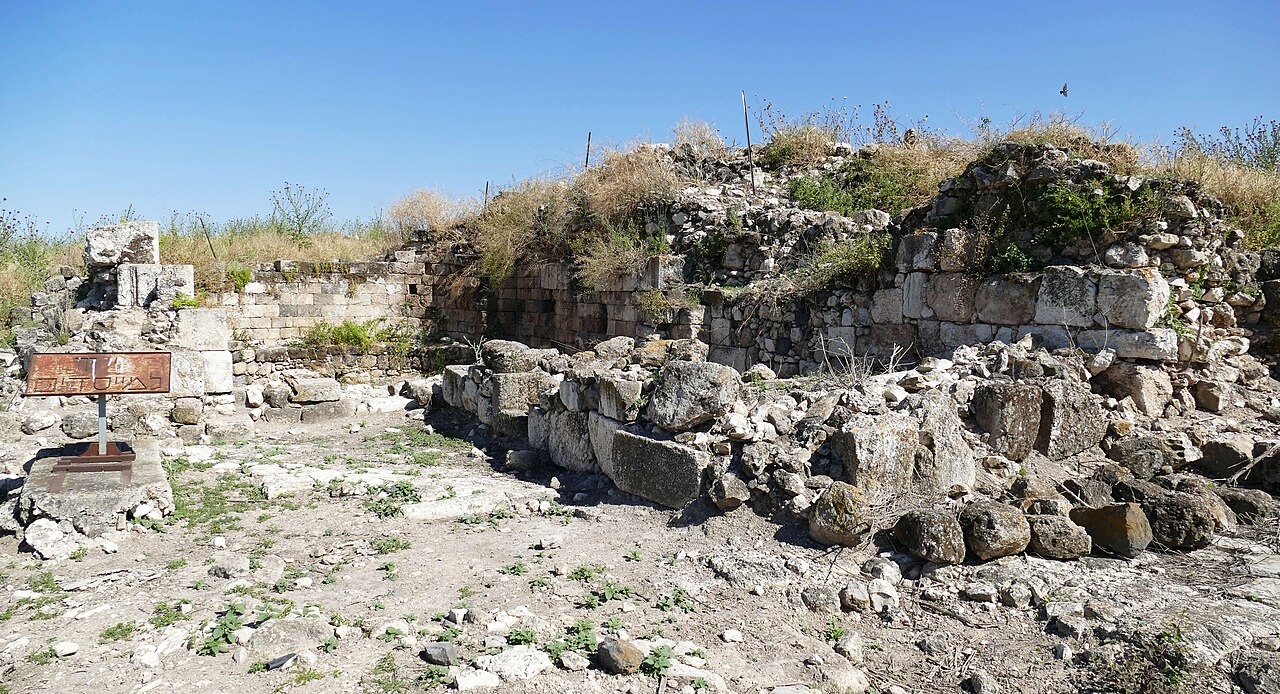
Tel Jezreel, excavated by David Ussishkin and John Woodhead (1990–96) and later by Norma Franklin and Jennie Ebeling, had a large Iron Age royal enclosure with a moat, generally dated to the Omride period. Winepresses and agricultural installations cut in the rock around the site show that vineyards grew there. No particular vineyard can be identified as Naboth's.
Jezebel
Jezebel acts with royal authority and uses the king's seal. A seal inscribed "yzbl" of unknown provenance has been suggested as hers; this is unverified. The story condemns her actions; it does not justify later uses of her name to condemn women generally or foreigners.
In the library's Greek, this story is chapter 20, directly after the Elijah chapters.
The Case for the Biblical Account
Scripture's account
Naboth's vineyard (1 Kings 21).
What evidence would we expect?
A royal residence at Jezreel; vineyard agriculture; ancestral land customs.
The discoveries
The Omride royal enclosure at Tel Jezreel; rock-cut winepresses nearby; ancient Near Eastern land documents.
Testing the discoveries
The setting is real; the event is known only from Kings (and 2 Kings 9:25–26).
The strongest reconstruction
A prophetic story about royal abuse of law, remembered as the reason for the fall of Ahab's house.
What remains possible
The location of the vineyard; whether the "yzbl" seal is Jezebel's.
What the evidence shows
- Tel Jezreel had an Iron Age royal enclosure.
- The "yzbl" seal belonged to Queen Jezebel.
- Israel's law restricted the sale of family land. Leviticus 25:23.
Continue the journey
Journey of a Passage1 Kings 20–21: Naboth before the Aramean warsThe Hebrew tells Ahab's wars with Ben-hadad (chapter 20) before Naboth's vineyard (chapter 21).More from this lesson
Echoes Across Civilizations
Optional: how other ancient peoples told similar stories. Open one to compare, then come back to the lesson.
Kings, land and inheritanceUgaritic · Babylonian
Could ancient kings take their subjects' land?
- Ugaritic: Royal land grants and transfers Resemblance only
- Babylonian: Laws of Hammurabi on fields Shared literary world
Why this matters to the rest of Scripture
- "The land shall not be sold for ever: for the land is mine."
- Inheritance shall not move between tribes.
- Jehu kills Joram at Naboth's plot.
- "They covet fields, and take them by violence."