"Now king David was old and stricken in years; and they covered him with clothes, but he gat no heat." His servants search for "a young virgin" and find Abishag the Shunammite, who serves him; "but the king knew her not."
"Then Adonijah the son of Haggith exalted himself, saying, I will be king." He has chariots and fifty runners; "his father had not displeased him at any time." Joab and Abiathar support him; Zadok, Benaiah, Nathan and David's mighty men do not. He sacrifices at the stone of Zoheleth by En-rogel and invites all the king's sons except Solomon.
Nathan tells Bathsheba: "Hast thou not heard that Adonijah… doth reign, and David our lord knoweth it not?" She goes to the king: "My lord, thou swarest by the LORD thy God unto thine handmaid, saying, Assuredly Solomon thy son shall reign after me." Nathan confirms. David: "Assuredly Solomon thy son shall reign after me." Zadok and Nathan anoint Solomon at Gihon; the people shout, "God save king Solomon," "so that the earth rent with the sound of them." Adonijah's guests flee; he takes hold of the horns of the altar. "If he will shew himself a worthy man, there shall not an hair of him fall to the earth."
Abishag
Abishag is chosen for her youth and beauty to serve an old king. Her position is one of vulnerability, not romance. She will become the object of a dangerous request in chapter 2. A traditional link with the "Shulamite" of Song of Songs 6:13 is a debated wordplay, not established.
Bathsheba and Nathan
Bathsheba, once taken by the king, now speaks for her son and secures the throne. The promise she cites is not recorded earlier in Samuel; readers debate whether David made it or was persuaded he had.
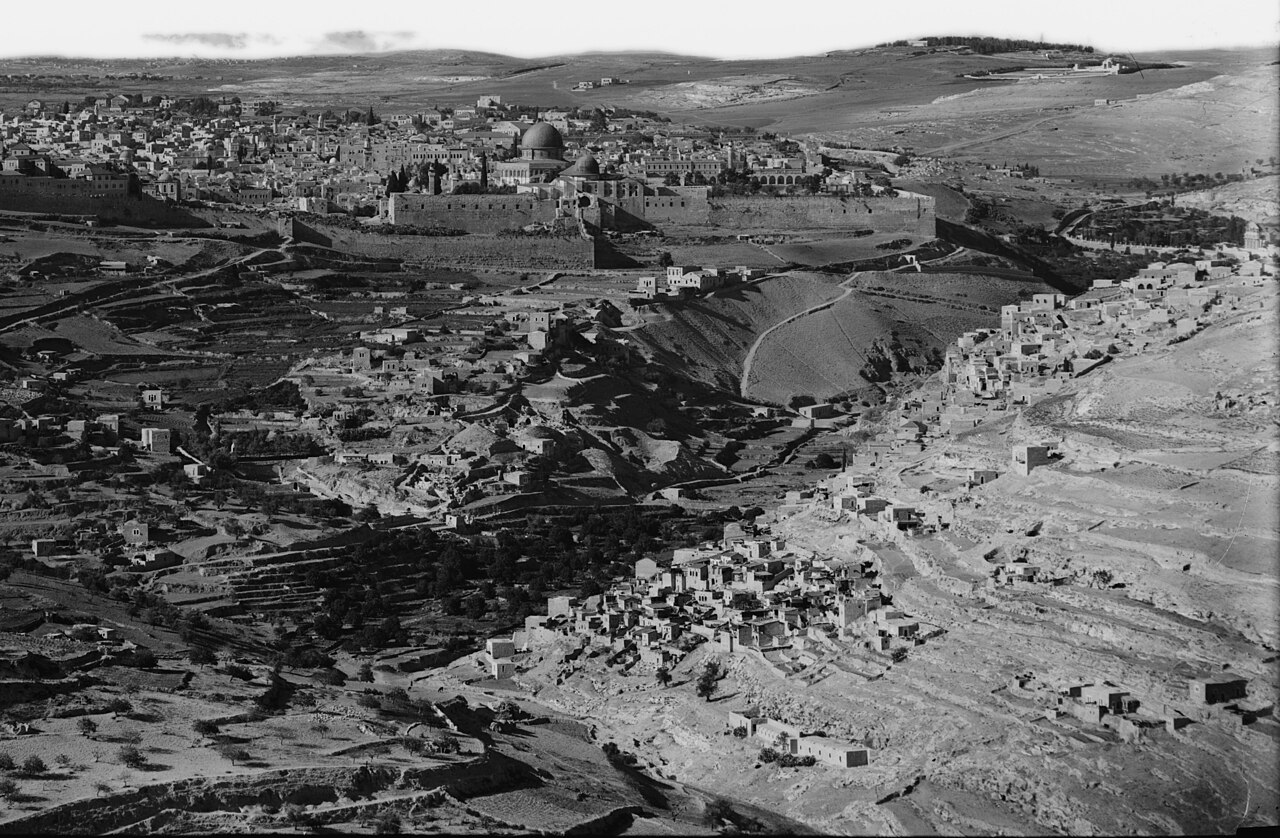
Gihon and En-rogel
Adonijah feasts at En-rogel, a spring south of the City of David (often placed at Bir Ayyub); Solomon is anointed at the Gihon, Jerusalem's main spring, close enough for Adonijah's guests to hear the shouting.
The Case for the Biblical Account
Scripture's account
The succession of Solomon (1 Kings 1).
What evidence would we expect?
Succession disputes in ancient monarchies; Jerusalem's springs.
The discoveries
The Gihon spring and its fortifications; succession struggles in Hittite, Assyrian and Egyptian courts.
Testing the discoveries
The setting is real; the events are known only from Kings.
The strongest reconstruction
The end of the Court History, defending Solomon's legitimacy.
What remains possible
Whether David's promise preceded Nathan's plan.
What the evidence shows
- The Gihon was Jerusalem's main spring.
- The account is pro-Solomon in perspective.
- David had promised the throne to Solomon.
Continue the journey
Connected elsewhere in ScriptureNathan's Parable: "Thou Art the Man"2 Samuel 12:24–25: Solomon, beloved of the LORD.More from this lesson
Why this matters to the rest of Scripture
- Solomon, beloved of the LORD.
- Chronicles' smooth succession.
- Taking the murderer from the altar.