Era 6 · The First Kings1 Kings
Historical Investigation: Solomon, the Temple and Archaeological Chronology
How large was Solomon's kingdom, and how would we know?
Three broad positions can be found among archaeologists and historians. The site lays them out, with what each relies on.
| Position | Main claim | Representative scholars |
|---|---|---|
| Traditional ("high") chronology | Six-chambered gates and palaces at Hazor, Megiddo and Gezer are 10th-century and fit 1 Kings 9:15; a real, substantial united kingdom | Yigael Yadin; William Dever; Amihai Mazar (modified) |
| Low chronology | Those buildings date to the 9th century, the Omride period; 10th-century Jerusalem was a modest highland town; the united kingdom was small or later idealized | Israel Finkelstein; Neil Asher Silberman |
| Intermediate / modified | Some monumental building and state formation began in the 10th century, at a smaller scale than Kings describes | Amihai Mazar; Avraham Faust; Yosef Garfinkel (Khirbet Qeiyafa) |
The evidence
| Evidence | Date | What it shows | Limits |
|---|---|---|---|
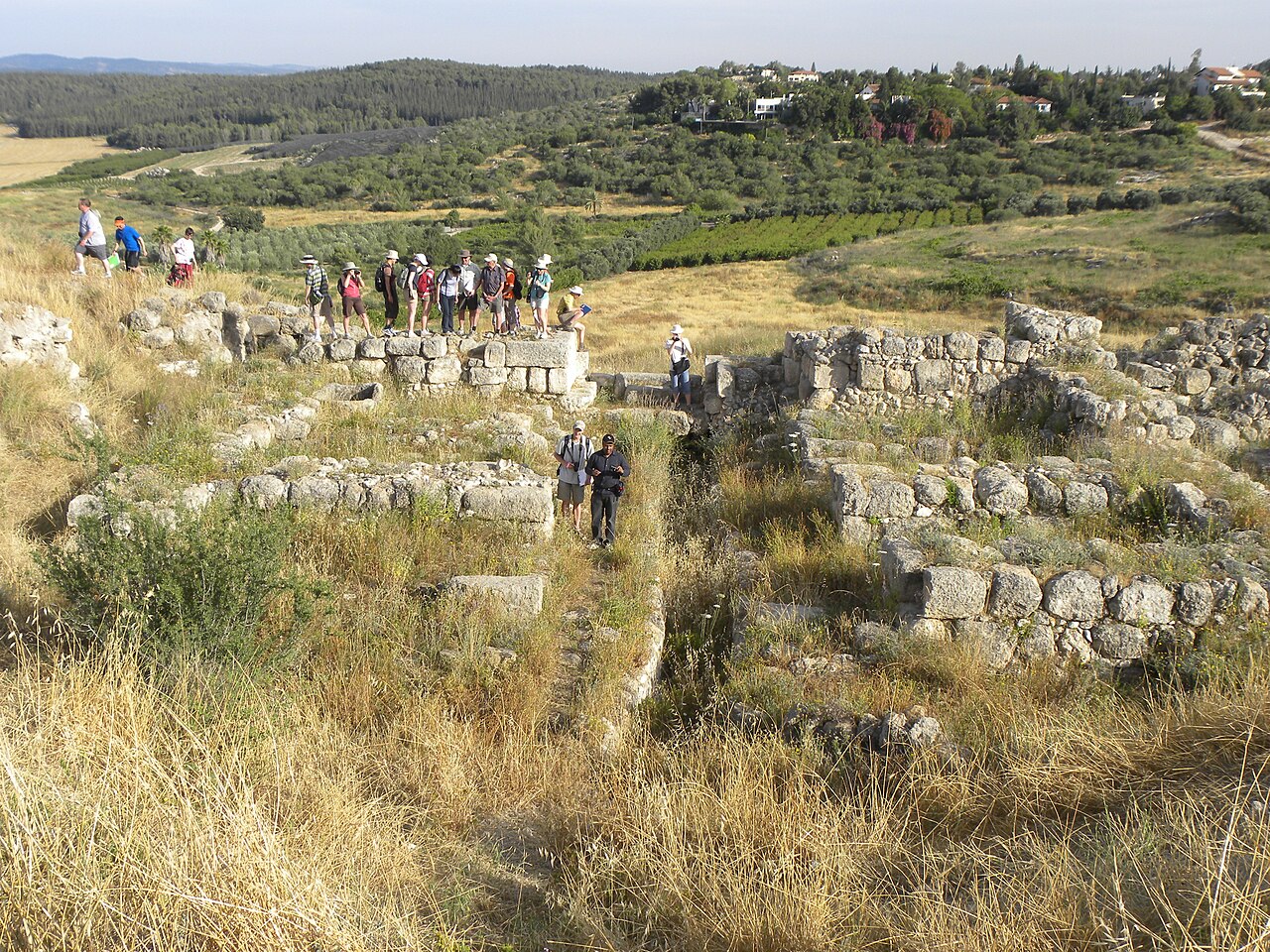
| Gates at Hazor, Megiddo, Gezer | 10th or 9th c. BC (debated) | Similar royal planning | Dating depends on pottery and radiocarbon |
| Tel Rehov radiocarbon series | 10th–9th c. BC | A prosperous town with an apiary; anchors the dating debate | Interpreted by both sides |
| Faynan and Timna copper mines | 10th c. BC | Large-scale industry, possibly Edomite | Who controlled it is debated |
| Khirbet Qeiyafa | c. 1000 BC | Fortified Judahite town with shrine models | Identity of its rulers debated |
| Stepped Stone and Large Stone Structures, Jerusalem | Iron I–II (debated) | Large public building in the City of David | Date and function disputed |
| 'Ain Dara, Tell Tayinat, Tel Motza temples | c. 1300–700 BC | The temple plan fits its time and region | None is Solomon's temple |
The site of the temple is beneath the Temple Mount, which is not excavated. Claims about the hidden ark, secret chambers or "Solomon's technology" come from later legends and modern speculation; no artifact supports them.
What the evidence shows
- The date of the six-chambered gates is debated.Source: I. Finkelstein, "High or Low: Megiddo and Rehov" ↗
- Tel Rehov's radiocarbon dates are central to the chronology debate.Source: Israel Antiquities Authority, Tel Rehov excavation report (apiary) ↗
- Regional temples share the plan of Solomon's temple.Source: J. Monson, "The New 'Ain Dara Temple: Closest Solomonic Parallel," BAR ↗; "Solomon's Temple in Context," BAR (critique of the 'Ain Dara comparison) ↗; "Solomon's Temple: On Space, Power, and Ancient Evidence" (Oxford Academic) ↗
- Solomon ruled from the Euphrates to Egypt.
- No remains of Solomon's temple have been excavated.
Continue the journey
Journey of a Passage1 Kings 6:1: 480 years or 440?The Hebrew dates the temple's foundation to the 480th year after the Exodus; the library's Greek has the 440th.More from this lesson
Investigations
Optional deep dives: the ancient sources, the physical evidence, and every interpretation side by side, including unconventional ones, each labeled for what it is.
Temples like Solomon'sRegional parallels: documented · Solomon's temple: not excavated · Closest parallel: debated
Do excavated temples show what Solomon's temple was like?
Solomon's temple has never been excavated; its site lies under the Temple Mount. But temples with the same long-room, three-part plan, porch pillars and side chambers have been found at 'Ain Dara and Tell Tayinat in Syria and Turkey, and a monarchic-period temple at Tel Motza near Jerusalem. They show that the biblical description fits its time and region. None of them is Solomon's temple.
Open the full investigation →Solomon's Gates and the Chronology DebateGates: documented · Date: disputed · Builder: disputed
Did Solomon build the gates of Hazor, Megiddo and Gezer?
Yigael Yadin connected similar six-chambered gates at Hazor, Megiddo and Gezer with 1 Kings 9:15. The "low chronology" redates them to the 9th century BC, the time of Omri and Ahab. Radiocarbon studies (including Tel Rehov) have narrowed the debate but not ended it. The gates are real; their builder is disputed.
Open the full investigation →Echoes Across Civilizations
Optional: how other ancient peoples told similar stories. Open one to compare, then come back to the lesson.
Portable sanctuaries and royal tentsEgypt · Midianite (probably) · Ugarit (Canaanite)
Did other ancient peoples have portable shrines or tents for their gods and kings like the tabernacle?
- Egypt: Ramesses II's war camp at Kadesh Possible historical contact
- Egypt: Tutankhamun's gilded shrines and Anubis chest Possible historical contact
- Midianite (probably): The Timna tent shrine Possible historical contact
- Ugarit (Canaanite): The tents of the gods Shared literary world
Why this matters to the rest of Scripture
- The extent of Solomon's rule.
- Hazor, Megiddo and Gezer.