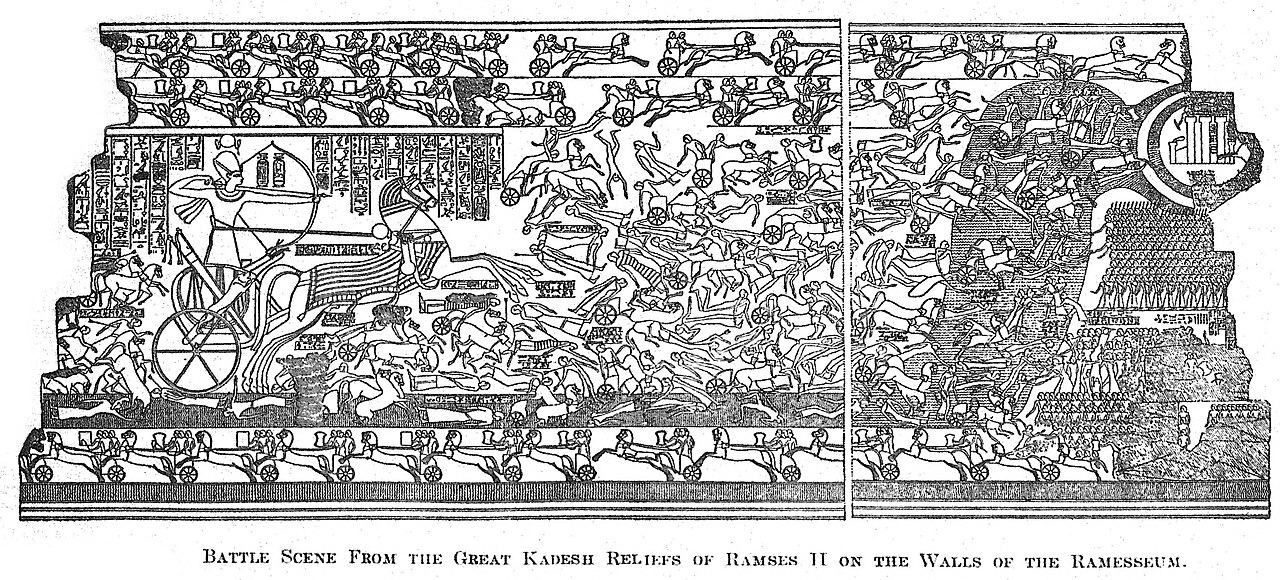
The army camp is a rectangle twice as long as it is wide, with the entrance on the east and the royal tent in the center: an outer reception tent and an inner throne room, guarded by images of Horus.
Similar
A 2:1 rectangular enclosure facing east
The ruler's tent at the center of the camp
An outer room and an inner room for the king
Different
A military camp for a human king
No ark or altar
Read it: M. M. Homan, To Your Tents, O Israel! (2002)
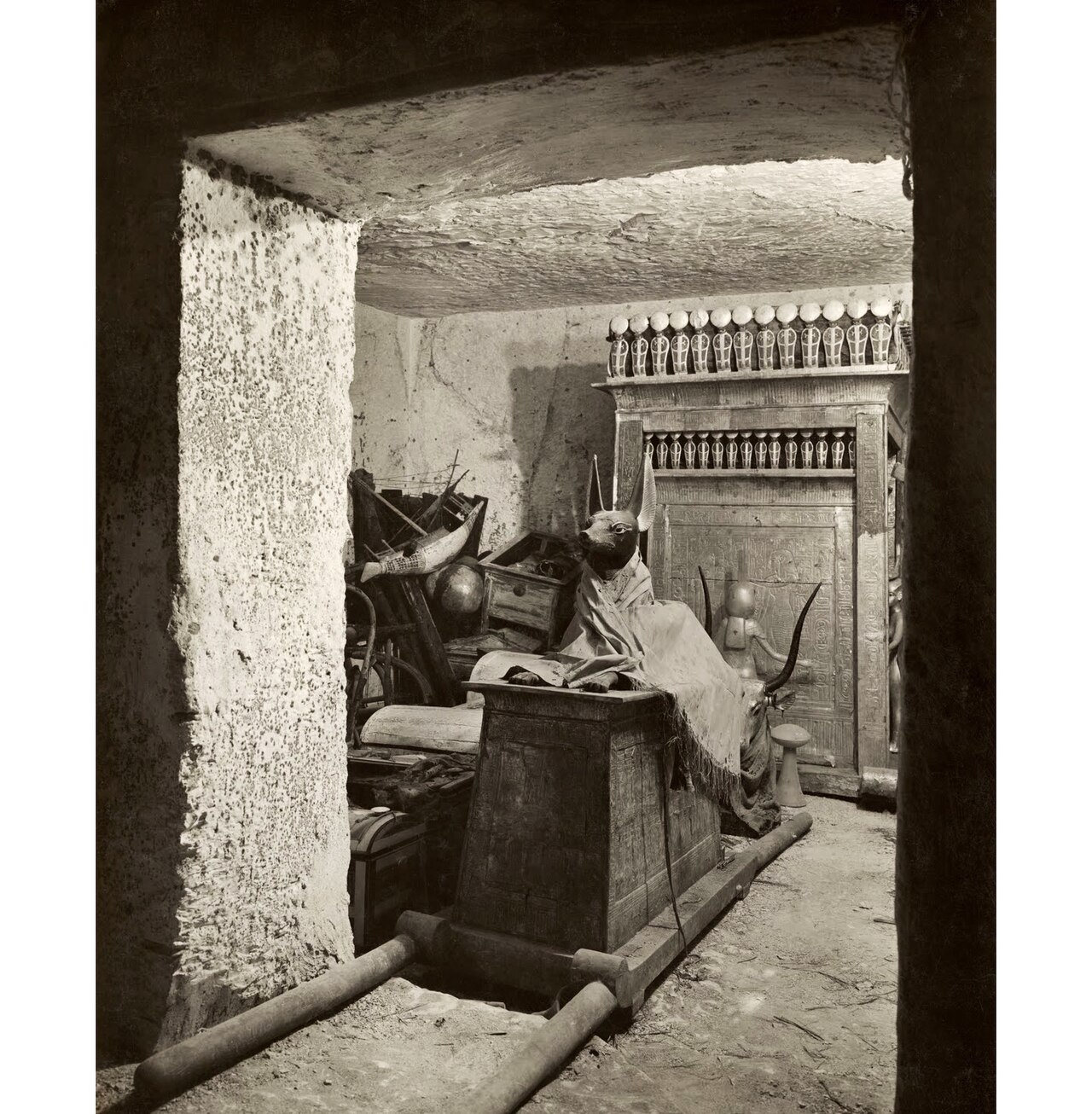
Four nested shrines of gilded wood, made in sections to be assembled around the sarcophagus, with a linen pall on a frame between them; a gilded chest topped with a figure of Anubis, mounted on carrying poles.
Similar
Wood overlaid with gold
Prefabricated sections assembled in place
A sacred chest carried on poles
Winged protective figures on the shrines
Different
Funerary objects for a dead king
Images of the gods, which the ark forbids
Read it: K. A. Kitchen, On the Reliability of the Old Testament (2003)
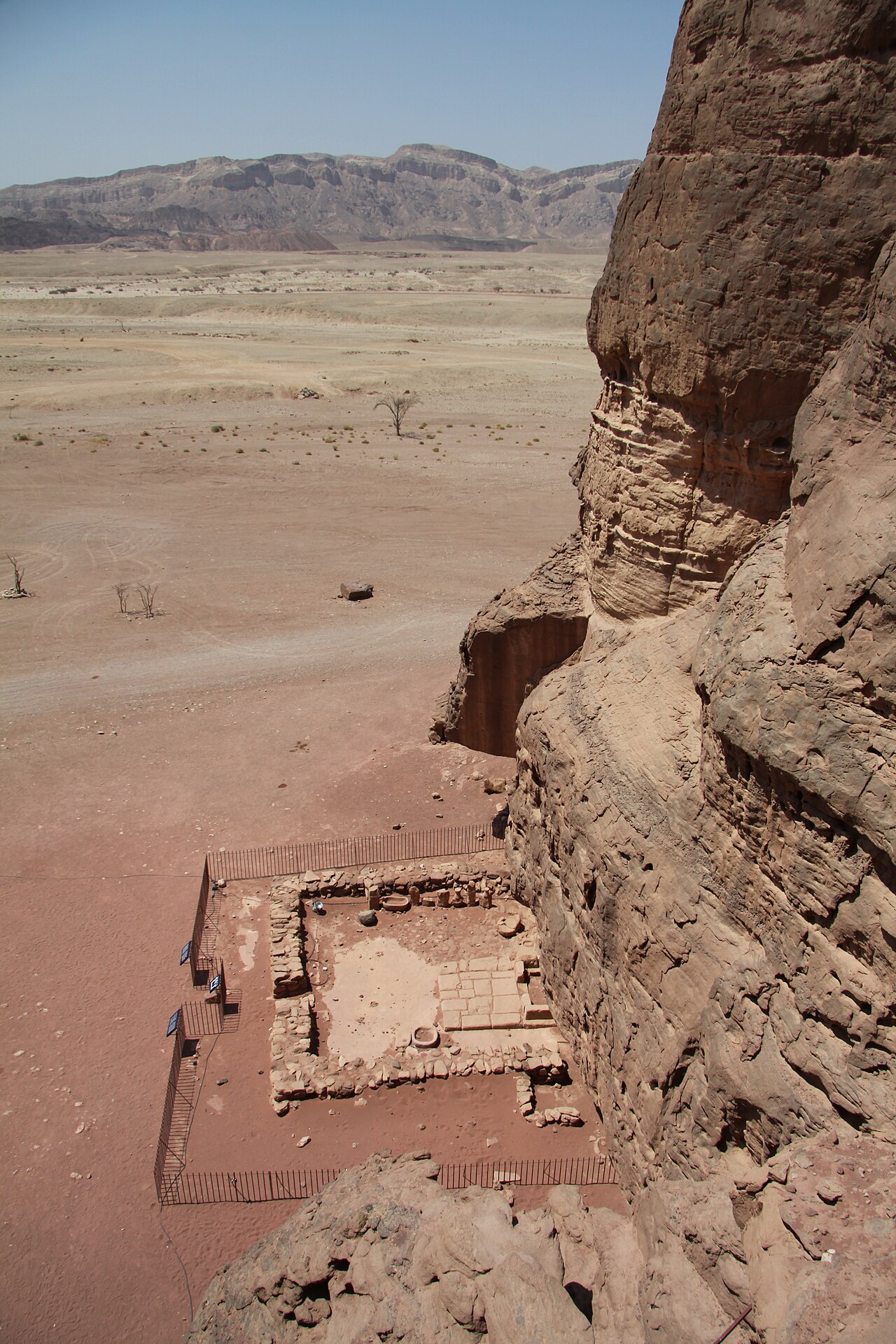
After the Egyptian miners left, a former Hathor shrine was turned into a tent sanctuary with standing stones; red and yellow woolen cloth with beads lay along its walls, and a copper snake with a gilded head was found inside.
Similar
A tent sanctuary in the desert, from the right region and period
Colored woolen curtains
Linked to Midian, Moses' in-laws
A bronze serpent (compare Numbers 21:9)
Different
Standing stones and reused Egyptian cult objects
Much smaller and simpler than the tabernacle
Read it: B. Rothenberg, Timna (1972)
Ugarit (Canaanite) · Northern Syria
The tents of the gods
Shared literary world
Composed
14th–13th centuries BC
Earliest surviving copy
Ugaritic tablets from Ras Shamra
Ugaritic poems describe the gods going home "to their tents" (ahl) and "to their dwellings" (mshknt), the same pair of words as Exodus' tent and tabernacle; El's abode at the source of the rivers is described with tent vocabulary.
Similar
A divine dwelling described as a tent
Shared vocabulary for tent and dwelling
Different
A mythological dwelling, not a sanctuary among people
Full investigations
The Ark of the Covenant →What happened to the ark, and have any claims to have found it been verified?
The Tabernacle and the Ark →On the mountain God shows Moses the pattern of a portable sanctuary: an ark covered with gold and guarded by cherubim, a table, a lampstand, curtains, a courtyard and an altar. Portable shrines and royal war tents from Egypt and the desert show this kind of sanctuary belonged to the Late Bronze Age world.
God Dwells Among His People →The people give so generously that Moses has to tell them to stop. Bezalel and the craftsmen build everything as commanded, and on the first day of the second year the tabernacle is set up. The cloud covers it, and the glory of the LORD fills it.
Building God's House →In the 480th year after the Exodus (the Greek says 440th), in Solomon's fourth year, the temple is begun: a long house sixty cubits long, with a porch, a main hall and an inner sanctuary twenty cubits square, lined with cedar and overlaid with gold, with two olive-wood cherubim ten cubits high. It takes seven years.
Historical Investigation: Solomon, the Temple and Archaeological Chronology →Kings describes a wealthy, centralized kingdom with a temple, palaces, fortified cities and international trade. Archaeologists agree that Jerusalem existed and that a dynasty of David ruled Judah, but they disagree sharply about the scale of 10th-century BC Israel. The debate turns on how pottery and building levels are dated, on radiocarbon results, and on what can be excavated in Jerusalem.