myBibleHistory

Ancient Mysteries & Interpretations

The Ark of the Covenant

The ark is the most sacred object in the Old Testament: a gold-covered chest holding the tablets of the covenant, carried across the Jordan, captured by the Philistines, brought to Jerusalem by David and placed in Solomon's Temple. Then the Bible falls silent about it. Traditions place it in a hidden cave, beneath the Temple Mount, in Babylon, or in Ethiopia. None has been verified.

Biblical history: traced to Solomon's Temple · Later fate: unknown · Claimed discoveries: unverified

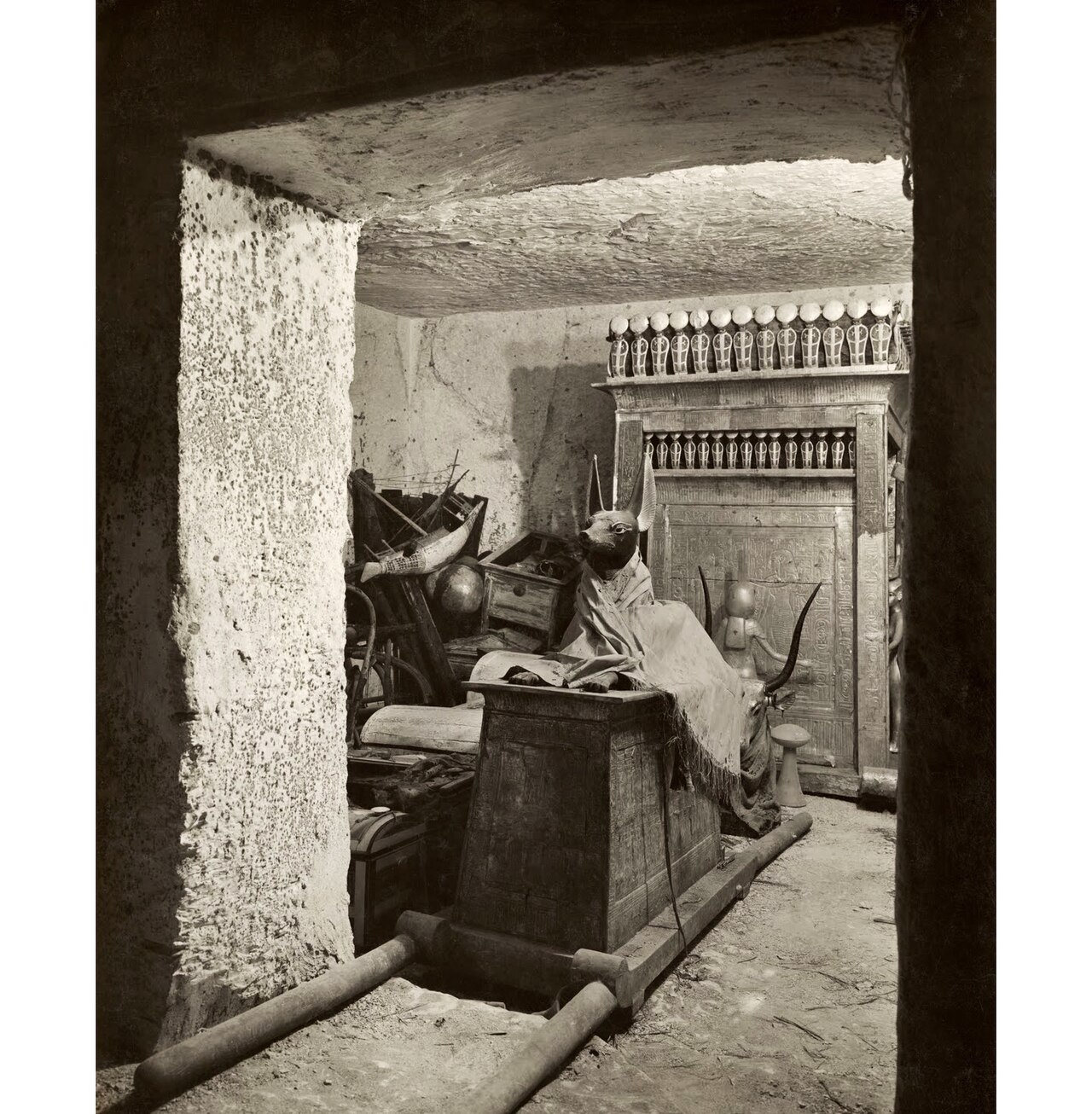
Tutankhamun's Anubis shrine on carrying poles
Authentic ancient artifactThe Anubis shrine from Tutankhamun's tomb (c. 1323 BC): a gilded wooden chest on carrying poles. Egyptian Museum, Cairo.Image credit

1 What Scripture says

Made at Sinai (Exodus 25; 37); carried before Israel and across the Jordan (Joshua 3–4); around Jericho (Joshua 6); kept at Shiloh (1 Samuel 3:3); captured by the Philistines and returned (1 Samuel 4–6); brought to Jerusalem by David (2 Samuel 6); placed in the Most Holy Place of Solomon's Temple, containing only the two tablets (1 Kings 8:6–9). Josiah orders the Levites to put it back in the Temple (2 Chronicles 35:3), the last mention. Jeremiah foresees a day when "they shall say no more, The ark of the covenant of the LORD: neither shall it come to mind" (3:16). John sees "the ark of his testament" in God's heavenly temple (Revelation 11:19).

2 What evidence we might expect

  • A historical record of the ark's removal or destruction.
  • If it survived, an object matching Exodus 25 whose age and origin could be examined independently.

3 What ancient sources survive

2 Maccabees 2:4–8

Language
Greek
Composed
2nd–1st century BC
Oldest surviving copy
Septuagint manuscripts, from the 4th–5th centuries AD
Status
Scripture for Catholic and Orthodox Christians (deuterocanonical)

Says Jeremiah hid the tent, the ark and the incense altar in a cave on Mount Nebo, to remain hidden "until God gathers his people together again."
Kebra Nagast

Language
Ge'ez
Composed
Compiled in the 14th century AD from older traditions
Oldest surviving copy
Medieval Ethiopian manuscripts
Status
Ethiopian national and religious epic

Tells how Menelik, son of Solomon and the Queen of Sheba, brought the ark to Ethiopia.

4 What discoveries exist

Where did it go?

ProposalBasisAssessment
Taken by Shishak of Egypt (c. 925 BC)1 Kings 14:25–26: he took the treasures of the TempleThe ark is not mentioned; later texts assume it was still in Jerusalem.
Destroyed or taken by Babylon (586 BC)2 Kings 25:13–17 lists Temple objects taken; 2 Esdras 10:22 says the ark was plunderedThe most likely fate historically, though Kings does not name the ark.
Hidden by Jeremiah on Mount Nebo2 Maccabees 2:4–8A pious tradition written centuries later; no physical evidence.
Hidden beneath the Temple MountMishnah Shekalim 6:1–2; rabbinic traditionCannot be investigated; excavation on the Temple Mount is not permitted.
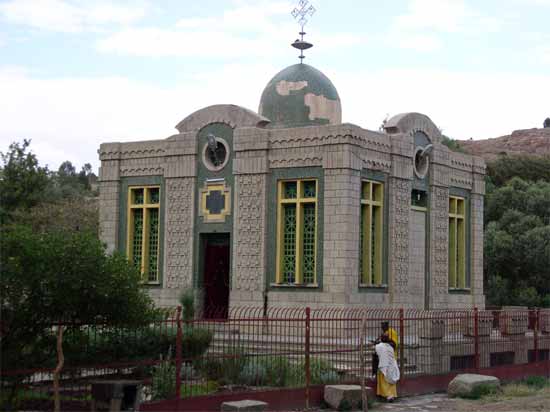
In Ethiopia, at AksumKebra Nagast; the Ethiopian Orthodox Church's chapel of St. Mary of ZionThe object is seen only by one guardian monk and has never been examined. Every Ethiopian church holds a tabot, a replica tablet, which shows how central the tradition is.
Under Golgotha (Ron Wyatt, 1982)Wyatt reported seeing the ark in a cave below the crucifixion siteNo photographs or independent verification; dismissed by archaeologists, including the Garden Tomb Association.
The Chapel of the Tablet at Aksum
Site or place photographThe Chapel of the Tablet at St. Mary of Zion, Aksum, Ethiopia, where the Ethiopian Orthodox Church says the ark is kept.Image credit

What the ark looked like

The closest physical parallels are Egyptian: gilded wooden chests with carrying poles and protective winged figures, such as those found in Tutankhamun's tomb. See the tabernacle lesson and the Echoes topic on portable sanctuaries.

5 How interpretations compare

Scholarly reconstruction

Lost or destroyed with the Temple

The ark was most likely taken or destroyed when Babylon sacked Jerusalem in 586 BC, if not earlier. The second Temple had an empty Most Holy Place (Josephus, War 5.219).

Source: J. Day, "Whatever Happened to the Ark of the Covenant?" in Temple and Worship in Biblical Israel (2005)

Traditional reading

In Aksum

The Ethiopian Orthodox Church holds that the ark is kept in Aksum, guarded continuously.

Assessment: A living tradition of great importance to Ethiopian Christians. The object has never been examined, so the claim cannot be tested.

Source: Kebra Nagast (The Glory of the Kings), Ge'ez, compiled 14th century; tr. E. A. W. Budge (1922); G. Hancock, The Sign and the Seal (1992)

Traditional reading

Hidden

Jewish traditions say it was hidden before the destruction, on Mount Nebo or beneath the Temple, to be revealed in the future.

Source: 2 Maccabees 2:4–8; 2 Esdras (4 Ezra) 10:22; Mishnah Shekalim 6:1–2

Alternative explanation

Found under Golgotha

Ron Wyatt claimed to have found the ark beneath the site of the crucifixion, with Jesus' blood on the mercy seat.

Assessment: No evidence has been produced; the claim cannot be verified.

Source: R. Wyatt, claims of 1982 (Wyatt Archaeological Research)

6 The strongest supported reconstruction

The ark's history can be followed in Scripture to Solomon's Temple and, last, to Josiah's reign. Its fate after that is unknown. Jeremiah 3:16 suggests that it was gone by his time or soon would be, and that God's people would not need it. No claimed discovery has been verified.

7 What remains possible or unknown

  • When and how the ark left the Temple.
  • What is kept in the chapel at Aksum.

8 How this material came to us

The ark appears in Jewish tradition (the Mishnah, the Talmud), in Christian theology (Hebrews 9:4–5; Revelation 11:19; Mary as the "Ark of the Covenant" in Catholic and Orthodox devotion), in Ethiopian liturgy, and in modern popular culture.

What the evidence shows

  • Independently documentedThe Bible traces the ark from Sinai to Solomon's Temple.
  • Strongly supportedThe second Temple's Most Holy Place was empty. Josephus, Jewish War 5.219; Mishnah Yoma 5:2.
  • Not independently verifiedThe ark is in Aksum.
  • Not independently verifiedRon Wyatt found the ark beneath Golgotha.

Where this connects