Era 4 · Covenant and WildernessExodus
God Dwells Among His People
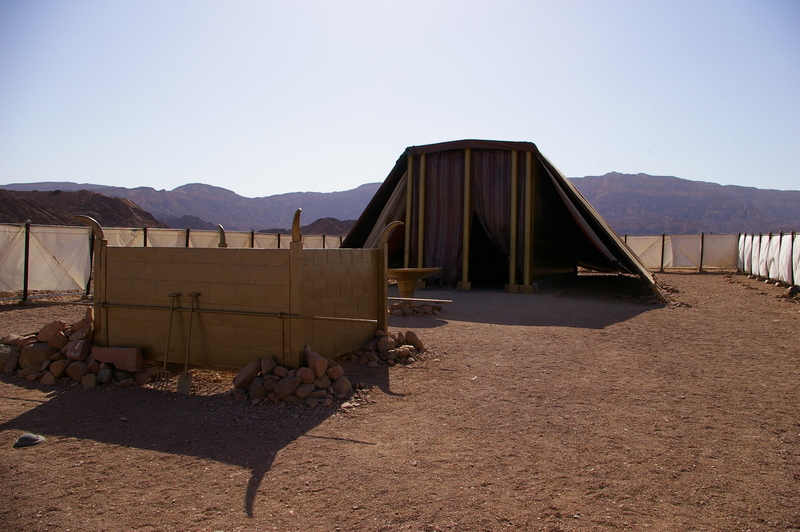
"The glory of the LORD filled the tabernacle"
Moses gathers the people: six days of work, a Sabbath of rest; and then the invitation, "Whosoever is of a willing heart, let him bring it." Men and women bring bracelets, earrings, rings, yarn, skins, wood, oil and spices. Women skilled in spinning spin blue, purple and scarlet yarn and goats' hair.
Every morning they bring more, until the craftsmen tell Moses, "The people bring much more than enough." Moses sends word through the camp to stop, "for the stuff they had was sufficient… and too much."
Bezalel, Aholiab and every skilled worker make the curtains, boards, veil, ark, table, lampstand, altars, basin, courtyard and priestly garments, exactly as commanded; the account repeats the instructions almost word for word. "According to all that the LORD commanded Moses, so the children of Israel made all the work. And Moses did look upon all the work, and, behold, they had done it… and Moses blessed them."
On the first day of the first month of the second year, Moses sets up the tabernacle, places the ark, hangs the veil, sets out the bread and lamps, burns incense, and offers sacrifices. "So Moses finished the work."
"Then a cloud covered the tent of the congregation, and the glory of the LORD filled the tabernacle. And Moses was not able to enter into the tent of the congregation, because the cloud abode thereon." Whenever the cloud lifted, Israel set out; when it stayed, they stayed, "throughout all their journeys."
Creation and tabernacle
Many readers, Jewish and Christian, have noticed that the tabernacle account echoes the creation story. The instructions come in seven speeches ("And the LORD spake unto Moses"), and the seventh is about the Sabbath. At the end, "Moses did look upon all the work… and Moses blessed them" (39:43) echoes "God saw every thing that he had made… and God blessed" (Genesis 1:31; 2:3), and "so Moses finished the work" (40:33) echoes "God ended his work" (Genesis 2:2). The tabernacle is pictured as a small world, ordered and complete, where God can dwell.
Creation and tabernacle
- Genesis 1:31
- "God saw every thing that he had made, and, behold, it was very good."
- Exodus 39:43
- "Moses did look upon all the work, and, behold, they had done it."
- Genesis 2:2–3
- "God ended his work… And God blessed the seventh day."
- Exodus 39:43; 40:33
- "And Moses blessed them… So Moses finished the work."
Glory that fills a house
The same scene happens again when Solomon dedicates the Temple: "the cloud filled the house of the LORD, so that the priests could not stand to minister" (1 Kings 8:10–11). Ezekiel later sees the glory leave the Temple before its destruction (Ezekiel 10) and return to a new temple (Ezekiel 43).
The Case for the Biblical Account
Scripture's account
The tabernacle is built and set up, and God's glory fills it (Exodus 35–40).
What evidence would we expect?
Textual evidence of how the account was transmitted; literary connections with creation and the Temple.
The discoveries
The Greek Septuagint's very different version of chapters 35–40; Dead Sea Scroll copies of Exodus; the creation parallels.
Testing the discoveries
The Greek order and length differ markedly from the Hebrew, a major textual question. The literary parallels are widely recognized.
The strongest reconstruction
Exodus closes deliberately with God's dwelling, linking creation, Sinai and the later Temple.
What remains possible
See How Exodus Came to Us for the Greek and Hebrew versions of these chapters.
The Greek version of the building account
In the Septuagint, Exodus 35–40 is arranged differently from the Hebrew: the priestly garments come before the tabernacle structure, some sections are shorter, and some items are missing or placed elsewhere (the incense altar is absent from the building account). Scholars debate whether the Greek translator worked from a different Hebrew text, abbreviated freely, or whether the chapters were finished by a different translator. It is one of the largest differences between the Greek and Hebrew in the Torah.
What the evidence shows
- The tabernacle account echoes the creation account in vocabulary and structure.
- The Septuagint's Exodus 35–40 differs markedly in order and length from the Hebrew.Source: J. W. Wevers, Text History of the Greek Exodus (1992); D. W. Gooding, The Account of the Tabernacle (1959)
- "The glory of the LORD filled the tabernacle."
Continue the journey
Echoes Across CivilizationsPortable sanctuaries and royal tentsDid other ancient peoples have portable shrines or tents for their gods and kings like the tabernacle?More from this lesson
Echoes Across Civilizations
Optional: how other ancient peoples told similar stories. Open one to compare, then come back to the lesson.
Portable sanctuaries and royal tentsEgypt · Midianite (probably) · Ugarit (Canaanite)
Did other ancient peoples have portable shrines or tents for their gods and kings like the tabernacle?
- Egypt: Ramesses II's war camp at Kadesh Possible historical contact
- Egypt: Tutankhamun's gilded shrines and Anubis chest Possible historical contact
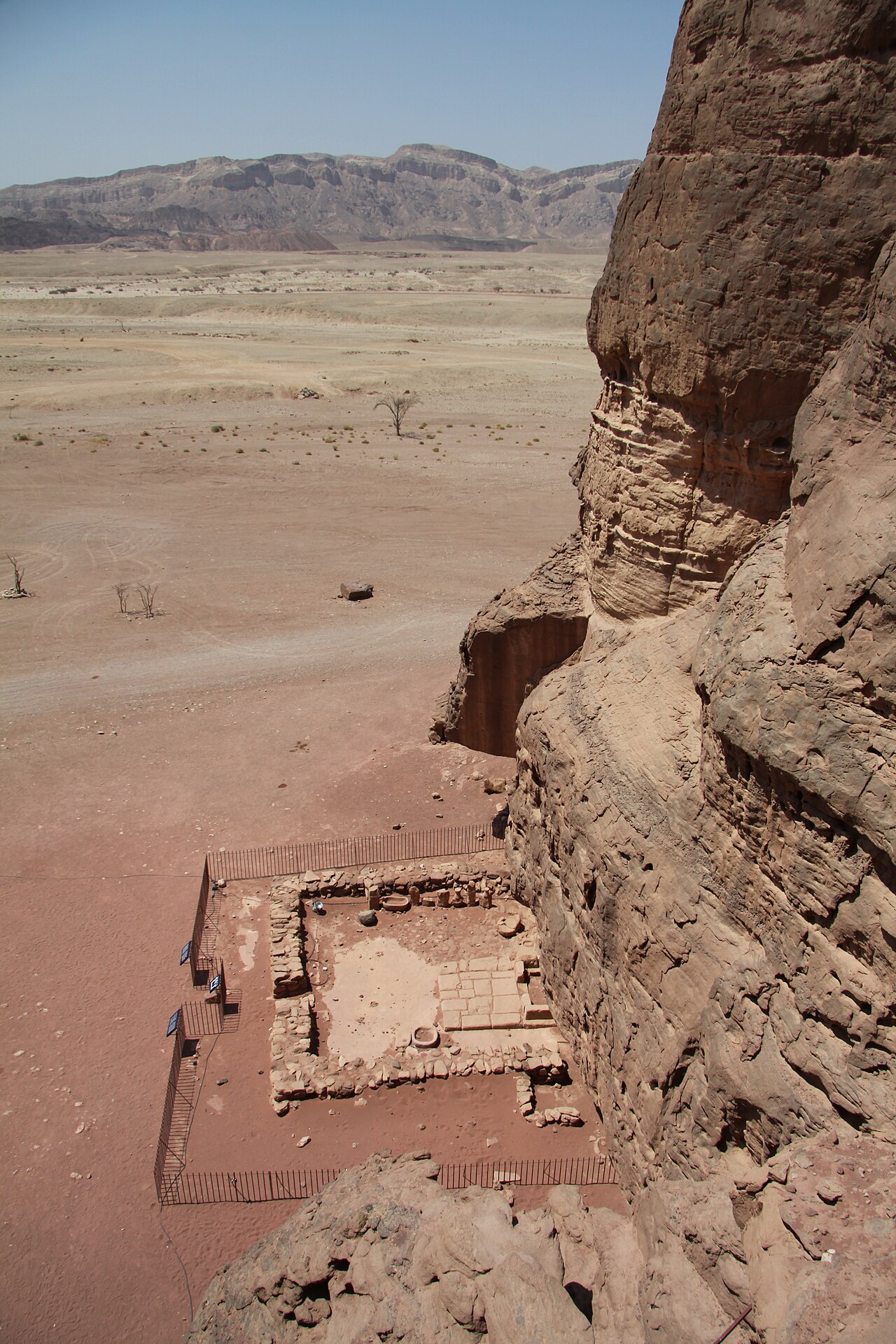
- Midianite (probably): The Timna tent shrine Possible historical contact
- Ugarit (Canaanite): The tents of the gods Shared literary world
Why this matters to the rest of Scripture
- Leviticus begins: God calls to Moses from the tabernacle he could not enter.
- The glory fills Solomon's Temple.
- The glory returns to the temple.
- The cloud leads Israel.
- "God loveth a cheerful giver."
- God dwells with His people; no temple, for God is its temple.