Era 3 · Egypt and DeliveranceExodus
Locusts and Darkness
"Knowest thou not yet that Egypt is destroyed?"
Moses warns of locusts. Pharaoh's servants break ranks: "How long shall this man be a snare unto us? let the men go… knowest thou not yet that Egypt is destroyed?" Pharaoh offers to let only the men go. Moses insists: "We will go with our young and with our old, with our sons and with our daughters." Pharaoh drives them out.
An east wind blows all day and night, and in the morning it brings locusts. They cover the ground until it is dark and eat every plant and fruit the hail had left. "There remained not any green thing." Pharaoh calls in haste: "I have sinned… forgive, I pray thee, my sin only this once." A strong west wind carries the locusts into the Red Sea.
Then, without warning, Moses stretches out his hand, and "there was a thick darkness in all the land of Egypt three days." No one can see anyone else or move from where they are, "but all the children of Israel had light in their dwellings."
Pharaoh offers more: go, children too, but leave the flocks. "Our cattle also shall go with us; there shall not an hoof be left behind." Pharaoh breaks off: "Get thee from me… in that day thou seest my face thou shalt die." Moses answers: "Thou hast spoken well, I will see thy face again no more."
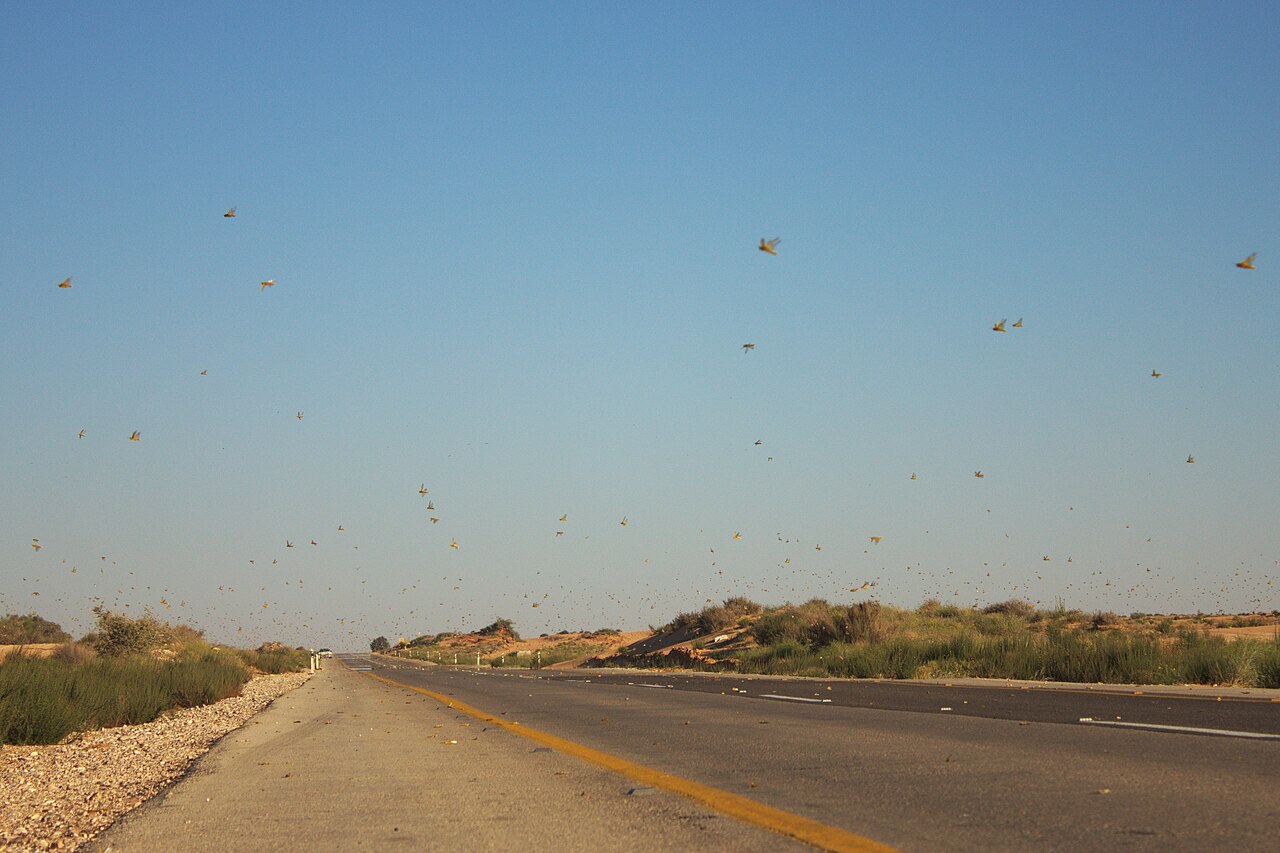
Locust swarms
Desert locusts are one of the oldest plagues known. Under the right conditions they swarm in billions, can travel more than a hundred kilometers a day on the wind, and eat their own weight in vegetation daily. Swarms devastated the Levant as recently as 1915. Exodus' east wind bringing them and west wind removing them fits how swarms travel.
Darkness that may be felt
Egypt's spring khamsin winds can raise sand and dust storms so dense that day turns dark for hours, sometimes days. Some interpreters connect the ninth plague with such a storm. The darkness "which may be felt" and the light in Israel's dwellings are presented as signs, not merely weather.
The sun god
Ra, the sun god, was among Egypt's greatest deities, and Pharaoh was called "son of Ra." Darkening the sun was a direct challenge to that theology, which Exodus 12:12 makes explicit: "against all the gods of Egypt I will execute judgment."
The Case for the Biblical Account
Scripture's account
Locusts, brought and removed by winds, and three days of darkness (Exodus 10).
What evidence would we expect?
Locust swarms and dust storms as real Egyptian phenomena; records of a severe year.
The discoveries
Locust swarms and khamsin dust storms are well documented in Egypt and the Levant.
Testing the discoveries
The phenomena are real; a particular historical occurrence matching Exodus has not been identified.
The strongest reconstruction
The plagues of chapter 10 describe disasters Egypt actually knew, at an intensity Exodus attributes to God.
What remains possible
As with the other plagues: natural events directed by God, events beyond nature, or memory shaped into theology.
What the evidence shows
- Desert locust swarms can strip vegetation over vast areas, carried by winds.
- Khamsin dust storms can darken the sky in Egypt.
- The ninth plague was a sandstorm.
- God darkened Egypt but gave Israel light.
Continue the journey
Next in the storyThe Last Warning and the Gods of EgyptMoses announces the final plague: the death of every firstborn in Egypt, from Pharaoh's son to the slave girl's.More from this lesson
Why this matters to the rest of Scripture
- The prophet's vision of a locust army and the day of darkness.
- Locusts in the visions of the end.
- Darkness over all the land at the crucifixion.