Moses and Aaron go to Pharaoh: "Thus saith the LORD God of Israel, Let my people go, that they may hold a feast unto me in the wilderness." Pharaoh's reply sets up the whole conflict: "Who is the LORD, that I should obey his voice?… I know not the LORD, neither will I let Israel go."
That same day he orders the taskmasters: stop giving the people straw for bricks. "Let them go and gather straw for themselves. And the tale of the bricks… ye shall lay upon them; ye shall not diminish ought thereof: for they be idle." The Israelites scatter over Egypt gathering stubble. When the quotas are not met, their Israelite foremen are beaten.
The foremen blame Moses and Aaron: "ye have made our savour to be abhorred in the eyes of Pharaoh… to put a sword in their hand to slay us." Moses turns to God: "Lord, wherefore hast thou so evil entreated this people? why is it that thou hast sent me?"
God answers: "I am the LORD: and I appeared unto Abraham, unto Isaac, and unto Jacob, by the name of God Almighty, but by my name JEHOVAH was I not known to them." Then four promises: "I will bring you out… I will rid you out of their bondage… I will redeem you with a stretched out arm… I will take you to me for a people, and I will be to you a God."
Moses tells the people, "but they hearkened not unto Moses for anguish of spirit, and for cruel bondage." Exodus pauses to list the families of Reuben, Simeon and Levi, tracing Moses and Aaron to their parents Amram and Jochebed, and notes their ages: Moses eighty, Aaron eighty-three.
Brick quotas in Egyptian records
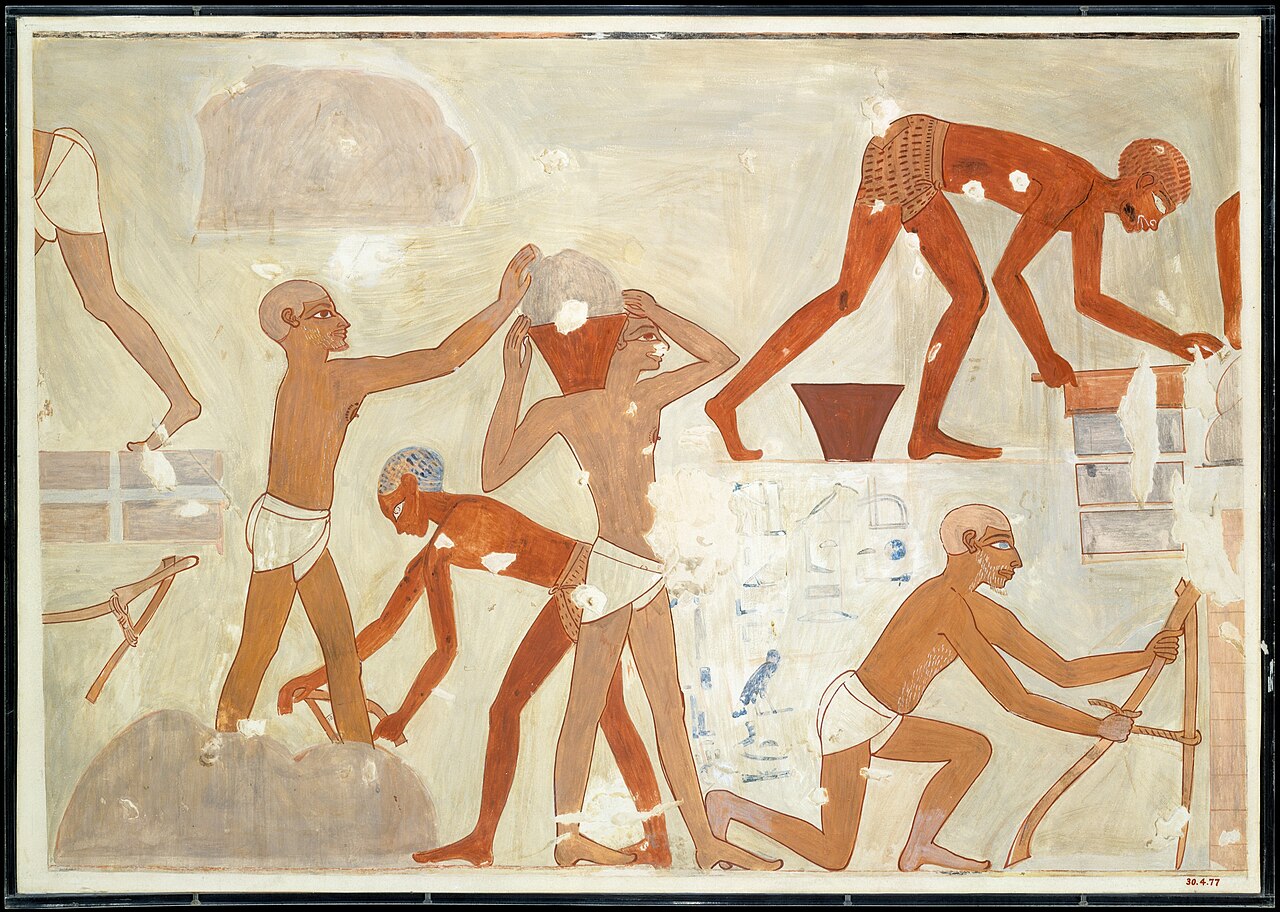
Egyptian administrators really did set brick quotas. The Louvre Leather Roll, from the fifth year of Ramesses II, records a target of 2,000 bricks for each of forty workmen and notes their shortfalls. Mudbricks were made of Nile silt mixed with chopped straw or chaff, which helps them hold together as they dry. Losing the straw supply would have been a real hardship.
Asking for time off to worship
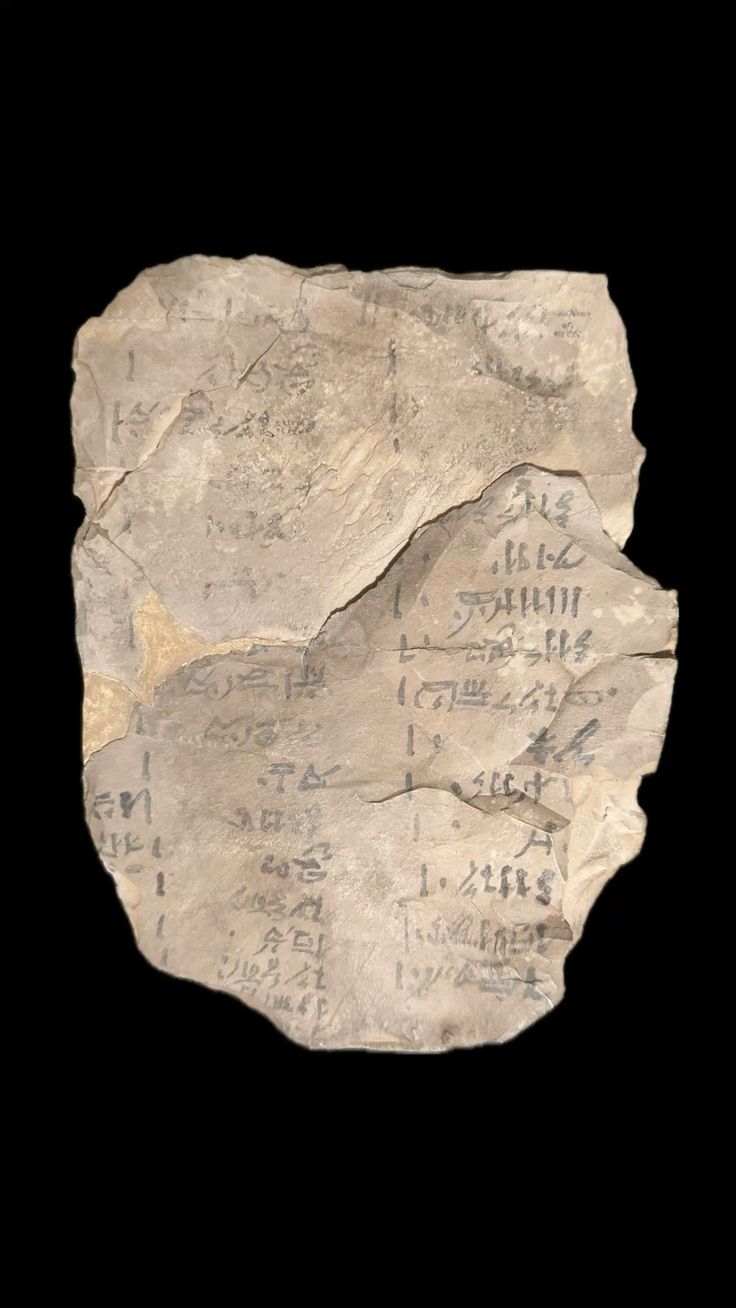
Moses' request, three days to sacrifice in the wilderness, was not absurd in Egypt. A workmen's register from Deir el-Medina, the village of the royal tomb builders (Year 40 of Ramesses II), records reasons for absence, including "offering to his god," "brewing beer," a scorpion sting, and family matters. Religious leave was a recognized reason to miss work.
"By my name… was I not known to them"
Genesis already uses the name LORD (YHWH) many times, even in the mouths of Abraham and Jacob. So what does Exodus 6:3 mean? Traditional readers answer that the patriarchs knew the name but not its full meaning, the LORD who keeps His covenant by redeeming His people. Source critics see two traditions: one in which the name was known from the beginning, one in which it was first revealed to Moses.
The Case for the Biblical Account
Scripture's account
Pharaoh refuses Moses, withdraws the straw while keeping the brick quota, and God renews His covenant promises (Exodus 5–6).
What evidence would we expect?
Organized brick production with quotas; foremen accountable to Egyptian overseers; recognized religious leave.
The discoveries
The Louvre Leather Roll's quotas; the Deir el-Medina absence register; Rekhmire's brick-making scenes with overseers.
Testing the discoveries
These are Ramesside-period documents, which fits the later date best, though brick quotas surely existed in other periods too. None names Israel.
The strongest reconstruction
Exodus 5 describes Egyptian labor administration with notable accuracy: quotas, foremen, shortfalls, and requests for religious leave.
What remains possible
That the episode records a real escalation; or that Israel's memory of oppression was told in authentic Egyptian terms.
What the evidence shows
- Egyptian records set daily or periodic brick quotas for workmen.Source: Louvre Leather Roll (Year 5 of Ramesses II): brick quotas for 40 workmen; discussed in K. A. Kitchen, On the Reliability of the Old Testament, ch. 6
- Egyptian workmen could be absent to make offerings to their gods.Source: Absence register from Deir el-Medina, British Museum EA 5634 (Year 40 of Ramesses II)
- Exodus 6:3 reflects a separate tradition about when the name YHWH was revealed.
- "I will take you to me for a people, and I will be to you a God."
Continue the journey
Next in the storyBlood, Frogs, Gnats, and FliesAaron's staff swallows the magicians' staffs.More from this lesson
Why this matters to the rest of Scripture
- "For this same purpose have I raised thee up, that I might shew my power in thee."
- Mary: "He hath shewed strength with his arm."
- "I… will be their God, and they shall be my people": the covenant formula renewed.