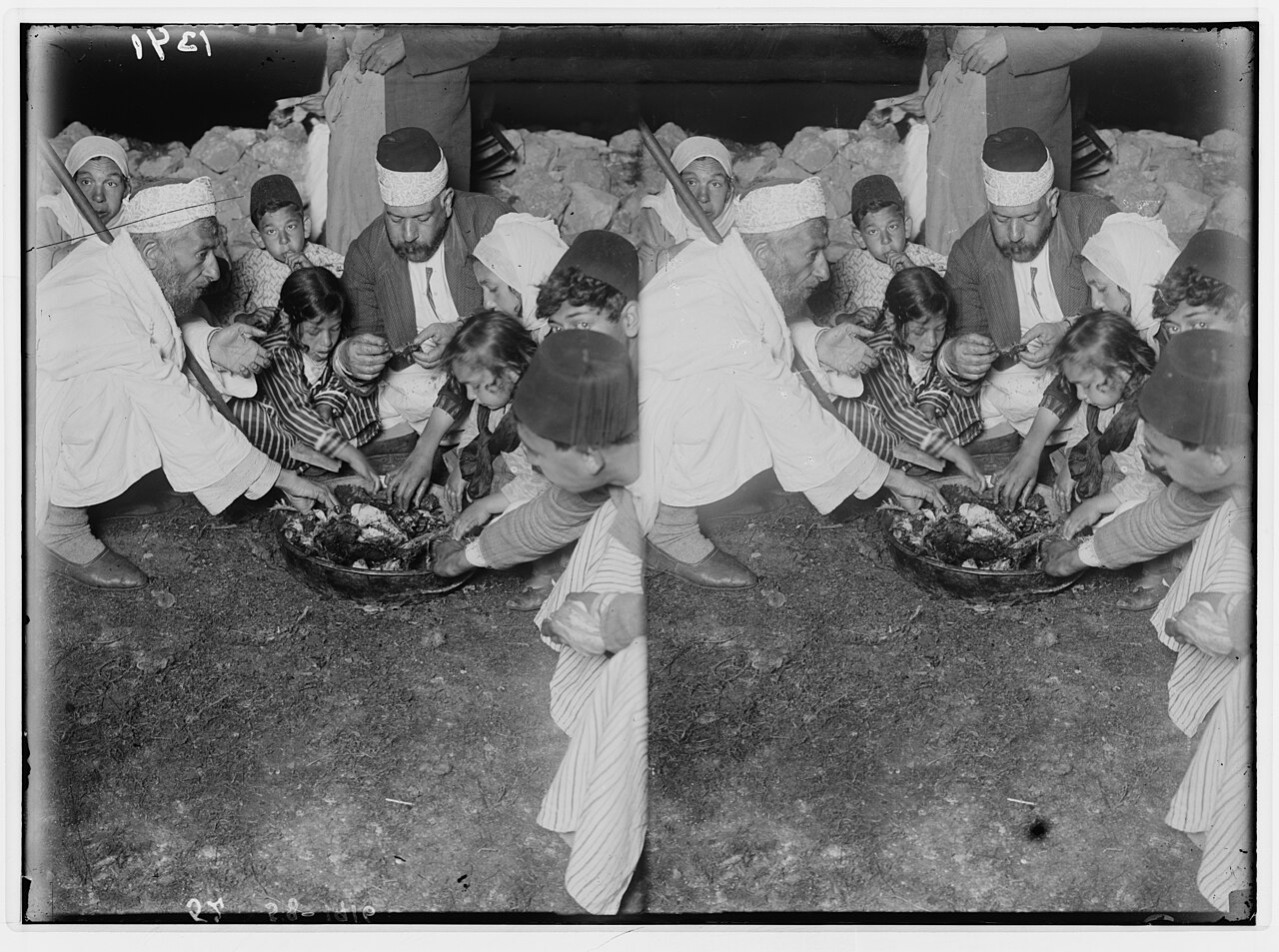
"This month shall be unto you the beginning of months." On the tenth day each household chooses a lamb, a year-old male without blemish. On the fourteenth, at twilight, they kill it, put its blood on the two doorposts and lintel with a bunch of hyssop, and eat it that night, roasted, with unleavened bread and bitter herbs, "with your loins girded, your shoes on your feet, and your staff in your hand… it is the LORD's passover."
"When I see the blood, I will pass over you, and the plague shall not be upon you to destroy you." This day will be a memorial forever, and for seven days Israel will eat unleavened bread. "When your children shall say unto you, What mean ye by this service? ye shall say, It is the sacrifice of the LORD's passover."
At midnight the LORD strikes every firstborn in Egypt, from Pharaoh's son to the captive in the dungeon, and the firstborn of the cattle. "There was a great cry in Egypt; for there was not a house where there was not one dead." Pharaoh summons Moses and Aaron by night: "Rise up, and get you forth… and bless me also."
The Egyptians press them to leave quickly. Israel carries its dough before it was leavened, in kneading troughs bound in their clothes, and the Egyptians give them silver, gold and clothing. They journey from Rameses to Succoth, "about six hundred thousand on foot that were men, beside children," with "a mixed multitude" and flocks and herds. "And it came to pass at the end of the four hundred and thirty years… all the hosts of the LORD went out from the land of Egypt."
God claims every firstborn of Israel as His own, to be redeemed, "for with a strong hand hath the LORD brought thee out of Egypt." The memory is to be "for a sign unto thee upon thine hand, and for a memorial between thine eyes."
A feast still kept
Passover has been kept for some three thousand years. Jewish families celebrate the Seder with unleavened bread (matzah), bitter herbs, four cups of wine, and the telling of the story to the children, exactly as Exodus 12:26 commands. The Samaritan community still sacrifices lambs on Mount Gerizim every year, the closest surviving form of the biblical rite.
The oldest Passover document outside the Bible
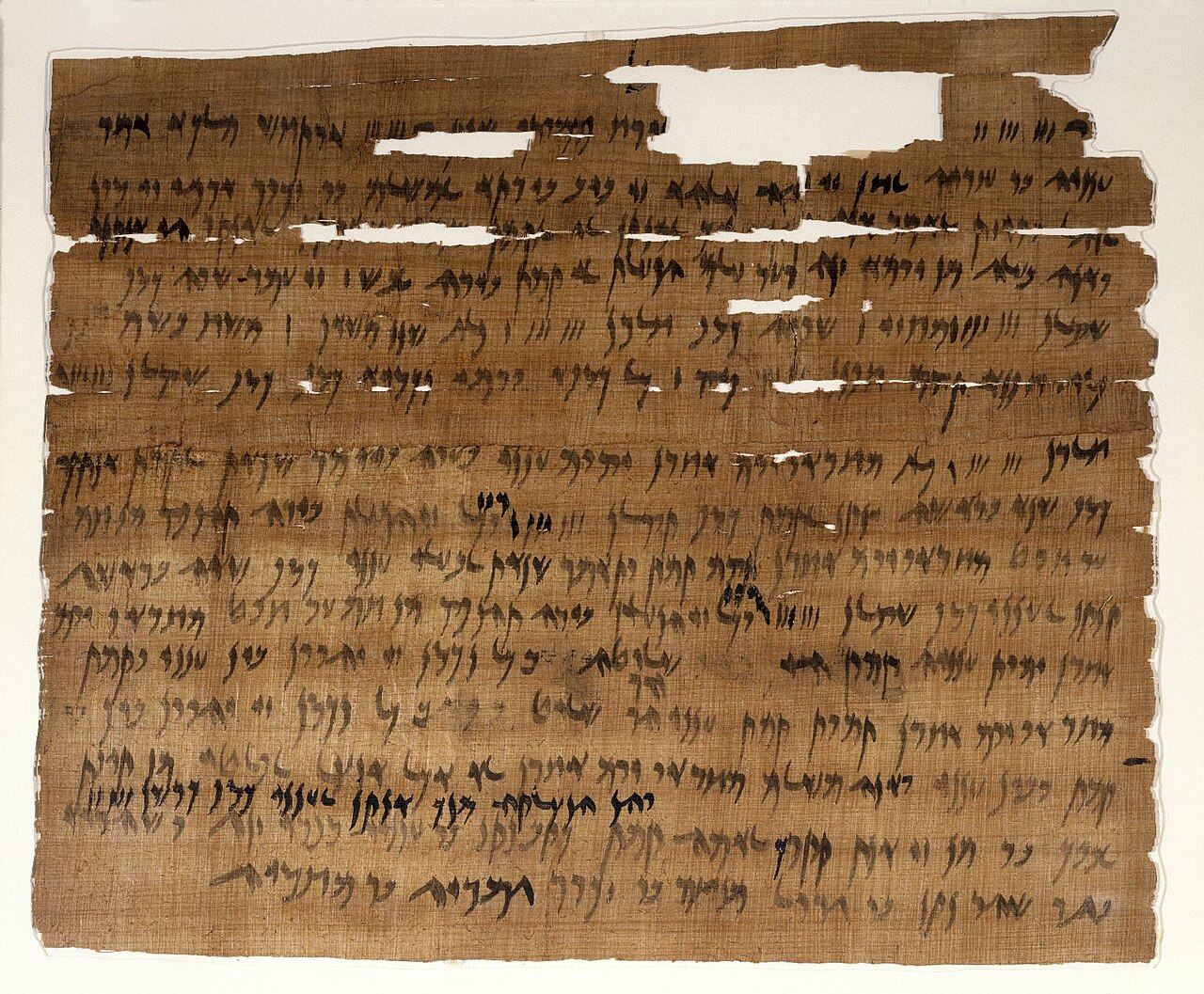
Among the Aramaic papyri of the Jewish military colony at Elephantine, on Egypt's southern border, is a letter of 419 BC instructing the garrison to keep the Feast of Unleavened Bread from the 15th to the 21st of Nisan, to stay pure, and to put away leaven. It shows Jews living in Egypt itself observing the festival in the Persian period.
Signs on the hand and between the eyes
Exodus 13:9 and 16 became the basis of tefillin (phylacteries), small boxes with Scripture passages worn on the arm and forehead. Tefillin containing these texts have been found among the Dead Sea Scrolls.
The Case for the Biblical Account
Scripture's account
Israel keeps the first Passover; the firstborn of Egypt die; Israel departs in haste (Exodus 12:1–13:16).
What evidence would we expect?
An ancient and continuous festival; early documentary evidence of its observance; the route stations Rameses and Succoth as real places.
The discoveries
The Elephantine Passover papyrus (419 BC); Passover and Unleavened Bread in all strands of the Pentateuch; Qumran tefillin; the continuing Samaritan sacrifice; Rameses and Succoth (Tjeku) as eastern Delta locations.
Testing the discoveries
A festival's age shows how deeply the memory was held, not every detail of the event. Some scholars think Passover combined an older herders' spring sacrifice with Unleavened Bread, a farmers' festival, before both were tied to the Exodus.
The strongest reconstruction
Israel's central feast has commemorated the Exodus for as far back as any evidence reaches. Its origin, by the Bible's account, is the night of deliverance.
What remains possible
That the festival began at the Exodus as Exodus says, or that older seasonal rites were given new meaning by the Exodus memory.
Six hundred thousand men?
Taken literally, 600,000 men implies about two million people. Supporters note God's miraculous provision in the wilderness made any number possible.
The Hebrew eleph, "thousand," can also mean a clan or a military unit. Read that way, the totals are far smaller, perhaps tens of thousands. Colin Humphreys and others have proposed versions of this reading.
Others think the census numbers reflect later Israel's size projected back, or a symbolic way of expressing a great people.
What the evidence shows
- Jews in Egypt kept the Feast of Unleavened Bread by at least 419 BC.Source: The Elephantine "Passover Papyrus" (419 BC), Aramaic; in B. Porten, The Elephantine Papyri in English (1996)
- The Samaritans still sacrifice Passover lambs on Mount Gerizim.
- Six hundred thousand men left Egypt.Source: C. J. Humphreys, "The Number of People in the Exodus from Egypt," Vetus Testamentum 48 (1998)
- God passed over Israel's homes and struck Egypt's firstborn.
Continue the journey
Connected elsewhere in ScriptureThe Sabbath and the Spring FeastsLeviticus 23:4–8: Passover and Unleavened Bread in the festival calendar.More from this lesson
Why this matters to the rest of Scripture
- Passover and Unleavened Bread in the festival calendar.
- "Christ our passover is sacrificed for us."
- "A bone of him shall not be broken" (Exodus 12:46).
- Jesus' last Passover with His disciples.
- The Passover law repeated.