Era 3 · Egypt and DeliveranceExodus
When Did the Exodus Happen?
Fifteenth century, thirteenth century, or something more complex
The Bible does not name the Pharaoh of the Exodus, but it does give numbers. God tells Abraham his descendants will be afflicted "four hundred years" (Genesis 15:13). Exodus 12:40 says Israel's sojourn lasted "four hundred and thirty years." And 1 Kings 6:1 says Solomon began the Temple "in the four hundred and eightieth year after the children of Israel were come out of the land of Egypt."
Those numbers have been used to date the Exodus for centuries. But the Bible's own manuscripts disagree on one of them, and Egypt's own records raise questions about another. This lesson lays out the evidence so that every later Exodus lesson can be read against it.
| Early date (c. 1446 BC) | Late date (13th century BC) | Complex origins | |
|---|---|---|---|
| Key text | 1 Kings 6:1: 480 years before Solomon's 4th year (c. 966 BC) | Exodus 1:11: Israel built Raamses | No single date |
| Pharaoh | Amenhotep II (oppression under Thutmose III) | Ramesses II | Several movements over time |
| Support | Takes the biblical numbers at face value; Judges 11:26 (300 years from Israel's arrival in Transjordan to Jephthah) | Pi-Ramesse built in the 13th century; Egyptian place names in Exodus fit the Ramesside Delta; Israel appears in Canaan c. 1208 BC | Memories of Levantine people leaving Egypt (including the Hyksos expulsion, c. 1550 BC) combined into Israel's national story |
| Challenges | "Raamses" must be an updated name; little Egyptian evidence for this period in the Delta | The 480 years must be schematic (e.g., 12 generations × 40) | Moves furthest from the biblical account as written |
The anchor: the Merneptah Stele
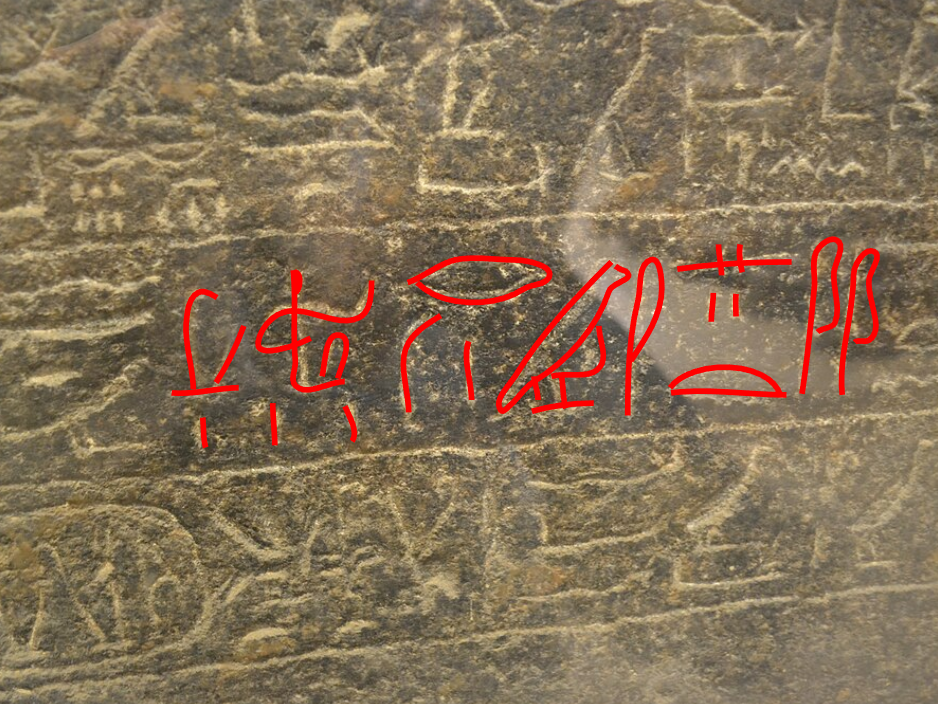
In about 1208 BC, Pharaoh Merneptah, son of Ramesses II, celebrated a campaign in Canaan with a victory hymn carved on a granite stele. Among the defeated it lists: "Israel is laid waste; his seed is not." The sign used marks Israel as a people, not a city or land. Whatever date one adopts, Israel was a recognized people in Canaan by the late 13th century BC.
430 years, or about 215?
Exodus 12:40 in the Hebrew text says the sojourn "in Egypt" lasted 430 years. The Greek Septuagint and the Samaritan Pentateuch say the 430 years covered the time "in the land of Canaan and in the land of Egypt." Paul seems to follow the longer reckoning from Abraham's promise to the Law (Galatians 3:17). On that reading, the time in Egypt itself was about 215 years. See the Journey of a Passage.
The Case for the Biblical Account
Scripture's account
Israel lived in Egypt, or in Canaan and Egypt, 430 years, and left Egypt 480 years before Solomon's Temple (Exodus 12:40; 1 Kings 6:1).
What evidence would we expect?
A period in Egyptian history when Semitic people lived in the eastern Delta, were used for building, and could have left; place names in the story that existed at that time; Israel appearing in Canaan afterward.
The discoveries
Semitic populations in the Delta across many centuries; Pi-Ramesse in the 13th century; Israel in Canaan by c. 1208 BC; changes in the central highlands of Canaan, with many new small villages from about 1200 BC.
Testing the discoveries
The early date fits the biblical numbers but must explain the name Raamses. The late date fits the place names but must explain the 480 years. Neither date has direct Egyptian confirmation.
The strongest reconstruction
Both dating models are held by serious scholars who take the account as historical. The evidence does not yet decide between them.
What remains possible
An Exodus in the 15th century, in the 13th century, or historical memories of more than one movement.
Two ways to read 480 years
Most defenders of the early date take 480 as an exact interval, supported by Judges 11:26's 300 years. They see "Raamses" as a later scribe's update of an older place name, like "Dan" in Genesis 14:14.
Many defenders of the late date read 480 as twelve generations of forty years, a round way of counting, and note that the Bible's own genealogies (for example 1 Chronicles 6) suggest a shorter span.
What the evidence shows
- Israel was a people in Canaan by about 1208 BC.Source: Merneptah Stele (Cairo JE 31408), c. 1208 BC
- Pi-Ramesse was built in the 13th century BC.Source: M. Bietak, Avaris: The Capital of the Hyksos (British Museum Press, 1996)
- The Exodus took place about 1446 BC.
- The Exodus took place in the 13th century BC.
- Exodus 12:40 reads differently in the Hebrew and in the Greek and Samaritan texts.
Continue the journey
Journey of a PassageExodus 12:40: 430 years in Egypt, or in Canaan and Egypt?The Hebrew says Israel's sojourn "in Egypt" lasted 430 years.More from this lesson
Investigations
Optional deep dives: the ancient sources, the physical evidence, and every interpretation side by side, including unconventional ones, each labeled for what it is.
Berlin Pedestal 21687: An Earlier Mention of Israel?Pedestal: authentic · Reading "Israel": disputed · Date: debated
Does a name ring on an Egyptian statue base mention Israel two centuries before the Merneptah Stele?
A broken granite statue pedestal in Berlin's Egyptian Museum carries three name rings of conquered enemies. Two read Ashkelon and Canaan. In 2010 Manfred Görg, Peter van der Veen and Christoffer Theis proposed that the third reads "Israel," which would place Israel in Canaan by the 14th century BC or earlier. The reading and the date are both disputed.
Open the full investigation →Why this matters to the rest of Scripture
- "In the four hundred and eightieth year after the children of Israel were come out of the land of Egypt."
- Paul counts 430 years from the promise to the Law.
- "Thy seed shall be a stranger in a land that is not theirs… four hundred years."
- Hebrew, Greek, and Samaritan →Why the three ancient text traditions sometimes differ.