Era 6 · The First Kings1 Kings
The Kingdom's Administration
"Judah and Israel were many, as the sand which is by the sea in multitude"
Solomon's officials: priests, scribes, a recorder, Benaiah over the army, Azariah over the governors, Ahishar over the household, "and Adoniram the son of Abda was over the tribute [mas, forced labor]." Twelve governors over all Israel "provided victuals for the king and his household: each man his month in a year made provision."
"Judah and Israel were many, as the sand which is by the sea in multitude, eating and drinking, and making merry." Solomon rules from the River to the land of the Philistines and the border of Egypt. "And Judah and Israel dwelt safely, every man under his vine and under his fig tree, from Dan even to Beersheba."
"And God gave Solomon wisdom and understanding exceeding much… And Solomon's wisdom excelled the wisdom of all the children of the east country, and all the wisdom of Egypt… And he spake three thousand proverbs: and his songs were a thousand and five. And he spake of trees, from the cedar tree that is in Lebanon even unto the hyssop… he spake also of beasts, and of fowl, and of creeping things, and of fishes."
Twelve districts
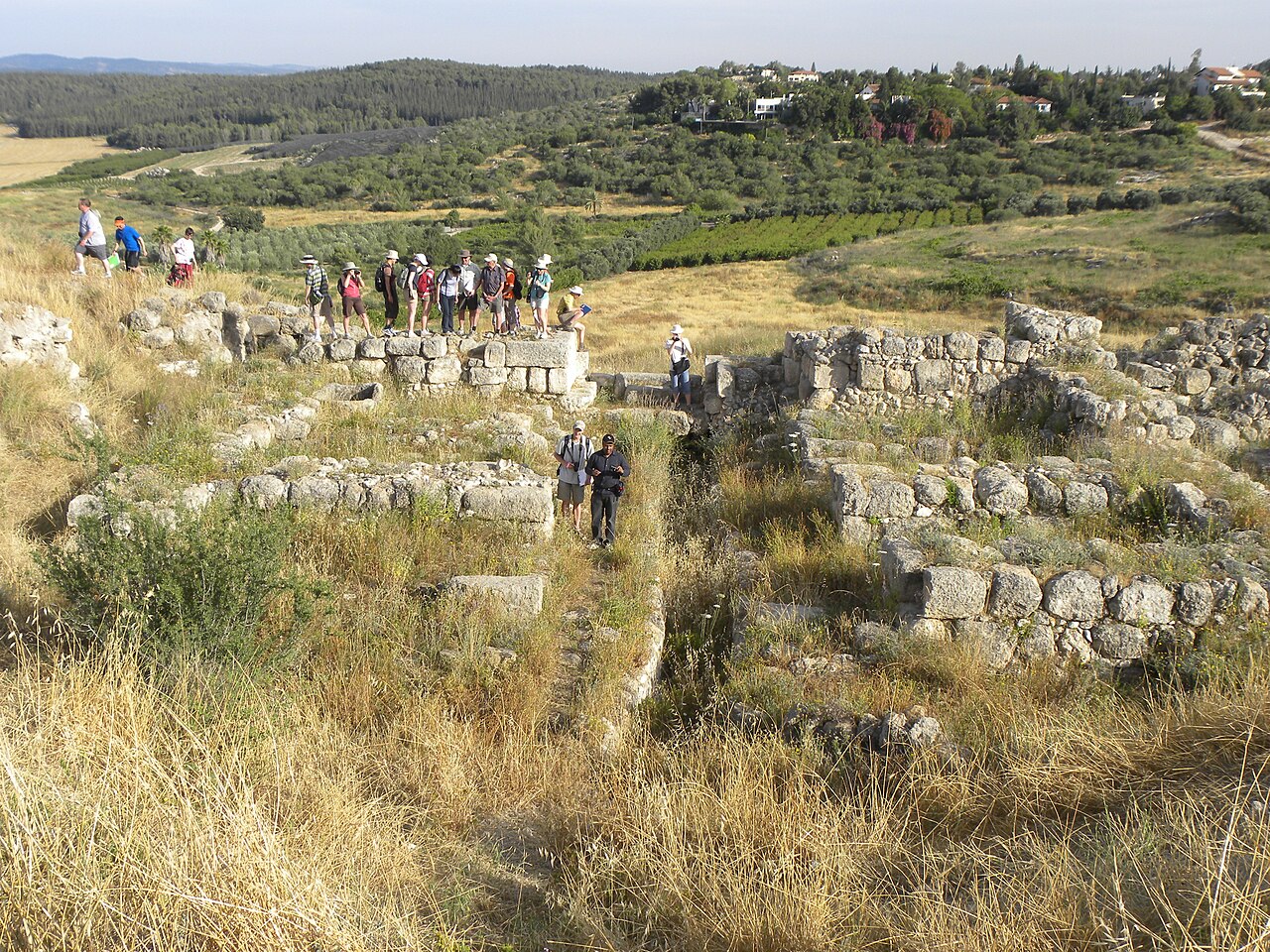
The districts only partly follow tribal lines and leave out Judah, which some see as a privilege for Judah and a burden on the north, a grievance that surfaces in chapter 12. Several district towns (Megiddo, Taanach, Beth-shean) are excavated.
Wisdom of the East and of Egypt
Egypt and Mesopotamia had long traditions of wisdom literature (the Instruction of Amenemope, the Sayings of Ahiqar) and of lists classifying plants and animals. The numbers of Solomon's proverbs and songs are the Bible's claim; the book of Proverbs attributes collections to him (Proverbs 1:1; 10:1; 25:1).
Hebrew and Greek order
The Greek arranges this material differently: parts of 4:20–5:14 appear in other places in 3 Kingdoms (including the additions in chapter 2). The Hebrew and Greek also number these verses differently (Hebrew 5:1–14 = English 4:21–34).
The Case for the Biblical Account
Scripture's account
Solomon's officials, provisions and wisdom (1 Kings 4).
What evidence would we expect?
Administrative centers; scribal culture; wisdom literature.
The discoveries
Iron Age administrative buildings at Megiddo, Hazor and Gezer (dates debated); Egyptian wisdom texts; Hebrew inscriptions increasing in the 9th–8th centuries BC.
Testing the discoveries
A 10th-century administration of this scale is debated.
The strongest reconstruction
A royal list, possibly drawing on administrative records, presented as Solomon's golden age.
What remains possible
The date of the district list.
What the evidence shows
- Egypt and Mesopotamia had developed wisdom literatures.
- Solomon composed 3,000 proverbs.
- The district list reflects a 10th-century administration.
Continue the journey
Echoes Across CivilizationsThe wise kingDid other ancient kings claim divine wisdom and fame for justice?More from this lesson
Echoes Across Civilizations
Optional: how other ancient peoples told similar stories. Open one to compare, then come back to the lesson.
The wise kingBabylonian · Egyptian · Aramaic / Assyrian
Did other ancient kings claim divine wisdom and fame for justice?
- Babylonian: Hammurabi's prologue and epilogue Shared literary world
- Egyptian: Royal and scribal instructions (Amenemope, Merikare) Possible historical contact
- Aramaic / Assyrian: The Words of Ahiqar Resemblance only
Why this matters to the rest of Scripture
- "The proverbs of Solomon."
- "Every man under his vine and under his fig tree."
- "Thy father made our yoke grievous."