Era 6 · The First Kings1 Kings
Cedars and Forced Labor
"And king Solomon raised a levy out of all Israel"
"Hiram was ever a lover of David." Solomon: "Thou knowest how that David my father could not build an house unto the name of the LORD… But now the LORD my God hath given me rest on every side… command thou that they hew me cedar trees out of Lebanon… for thou knowest that there is not among us any that can skill to hew timber like unto the Sidonians."
Hiram: "My servants shall bring them down from Lebanon unto the sea: and I will convey them by sea in floats unto the place that thou shalt appoint." Solomon gives Hiram twenty thousand measures of wheat and twenty measures of pure oil yearly. "And there was peace between Hiram and Solomon; and they two made a league together."
"And king Solomon raised a levy out of all Israel; and the levy was thirty thousand men… ten thousand a month by courses: a month they were in Lebanon, and two months at home." Seventy thousand bore burdens, eighty thousand hewed stone, with 3,300 overseers. "They brought great stones, costly stones, and hewed stones, to lay the foundation of the house."
Two Hirams
Hiram king of Tyre (here) and Hiram the bronze-worker of Tyre (chapter 7, called Huram-abi in Chronicles) are different people. Josephus, citing Tyrian records through Menander, names a King Hiram of Tyre; no inscription of his own time survives, and no treaty between Hiram and Solomon has been found.
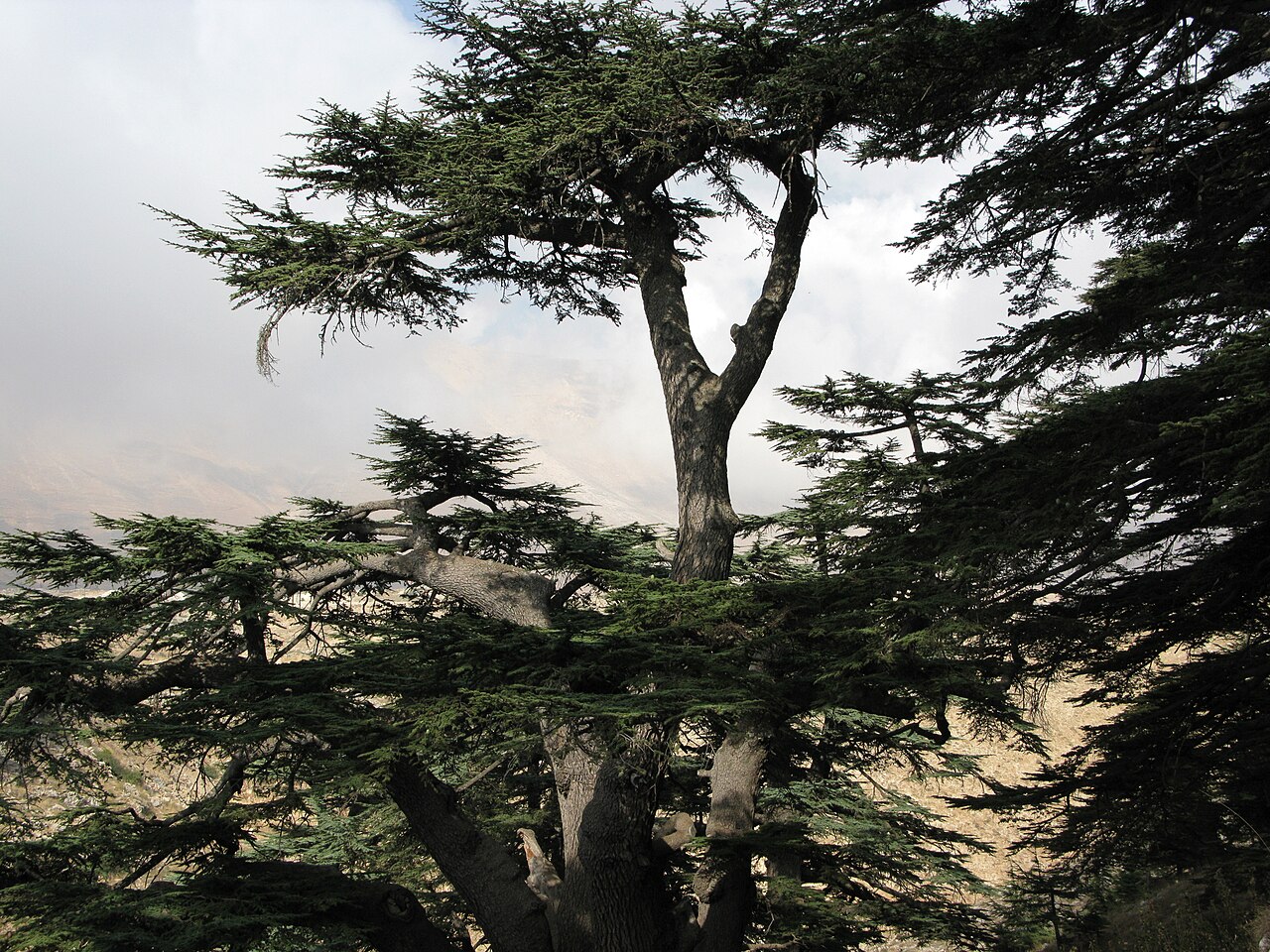
Cedar of Lebanon
Egyptian and Mesopotamian kings boasted of cutting cedar in Lebanon for temples and palaces (Tiglath-pileser I, Nebuchadnezzar). Timber floated along the coast is shown on Assyrian reliefs from Khorsabad.
The levy
Mas means corvée, forced labor for the state. 1 Kings 9:20–22 says Israelites were not made slaves, only Canaanite survivors; 5:13 says the levy was "out of all Israel." Both statements stand in the text; readers distinguish permanent slavery from rotating corvée. The burden fuels the revolt of chapter 12.
The Case for the Biblical Account
Scripture's account
Hiram's cedars and Solomon's levy (1 Kings 5).
What evidence would we expect?
Phoenician timber trade; corvée labor in ancient states.
The discoveries
Royal inscriptions about Lebanon cedar; the Khorsabad timber relief; corvée in Mesopotamian and Egyptian records.
Testing the discoveries
The practices are well documented; the treaty is not.
The strongest reconstruction
A tradition of Phoenician help in Jerusalem's building works.
What remains possible
The scale of the labor force.
What the evidence shows
- Lebanese cedar was prized for temples across the ancient Near East.
- A Hiram–Solomon treaty survives.
- Josephus cites Tyrian records naming King Hiram. Against Apion 1.116–120.
Continue the journey
Connected elsewhere in ScriptureLabor, Timber and Huram2 Chronicles 2: The Chronicler's account.More from this lesson
On the map
Location securely identified Probable identification Proposed or debated location Biblical route (roads schematic) Scholarly proposal
- Cedar from Lebanon to Jerusalem. Illustrative. Timber floated in rafts down the coast "unto the place that thou shalt appoint" (2 Chronicles 2:16 names Joppa), then carried inland. Exact route unknown.
Why this matters to the rest of Scripture
- The Chronicler's account.
- Who was enslaved.
- The grievous yoke.
- Cedar from Lebanon for the second temple.